Founder · CEO · Tirios
Sachin Latawa
He once decided which billion-dollar buildings Carl Icahn would buy. Now he is selling slices of a house to anyone with $100.
Austin, Texas · Proptech · est. 2021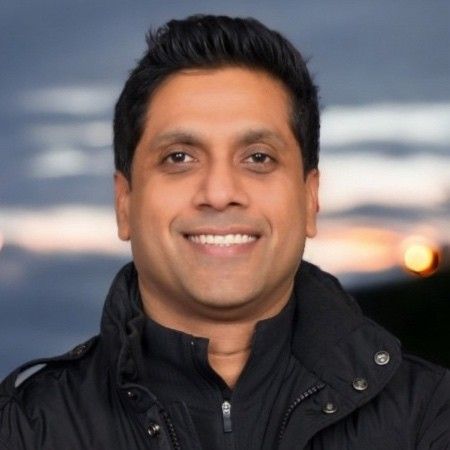 The $100 landlord
He once decided which billion-dollar buildings Carl Icahn would buy. Now he is selling slices of a house to anyone with $100.
Austin, Texas · Proptech · est. 2021
The $100 landlord
The pitch fits on a coffee receipt: one hundred dollars and you own a piece of a rental house in Texas. That is the whole idea behind Tirios, the company Sachin Latawa started in Austin in 2021. Most founders dress up a small idea to look enormous. Latawa took an enormous idea - the $10 trillion American housing market - and shrank the price of admission until it was smaller than a tank of gas.
He has standing to do it. For three years Latawa was CFO of Real Estate at Icahn Enterprises, Carl Icahn's publicly traded conglomerate. The portfolio he managed was not a tidy spreadsheet. It was homebuilding operations and residential master-planned communities, distressed assets bought at the bottom, net-lease office towers, resorts, industrial warehouses - more than $1.1 billion in assets under management and over a billion dollars in transactions across all of it. That is the kind of resume that usually leads to another corner office, not a startup.
Latawa noticed something uncomfortable about the world he had been operating in. Real estate is widely agreed to be one of the better long-term, income-producing assets a person can own. And almost nobody owns it. By his count, roughly 5% of people have any real exposure to it as an investment. The single-family rental market in particular is a strange beast: a $10 trillion category where, as he puts it, about 90% of the assets are held by individual investors rather than big institutions. Fragmented, illiquid, and gated behind down payments and closing tables.
So Tirios buys curated single-family homes, divides them into fractional shares, and sells those shares for as little as $100. You can hold a sliver of a rental house the way you would hold a share of a company. The rent flows back proportionally. If you want out, there is a secondary market to trade your shares rather than waiting for an entire property to sell.
Underneath the simple front door sits more machinery than the price suggests. Tirios runs an AI underwriting engine that can evaluate 5,000 to 7,000 properties in minutes, sorting the handful worth buying from the thousands that are not. Once a property is in, the company keeps two sets of books on purpose: a traditional record and a blockchain twin. The tokenized version is meant to make ownership transparent and transactions fast, while the physical deed stays exactly where deeds belong. It is web3 plumbing hidden behind a web2 faucet.
Even the tenants meet a machine first. Tirios deploys a large-language-model property manager that handles roughly 80% of tenant interactions on its own - the maintenance requests, the questions, the routine back-and-forth that usually eats a property manager's week. The 20% that needs a human gets one.
Latawa picked Austin to start, and not by accident. The regulatory climate, the population growth, and the tech ecosystem made it a sensible first market. The plan from there reads like a campaign map: Dallas and San Antonio within a year, more states after that. The internal goal he has floated is steep - scaling from around 10 properties to roughly 400 inside two years. Whether the number lands or not, the direction is unmistakable.
In 2024 the company took a serious procedural step, filing with the SEC under Regulation A+, the so-called mini-IPO route that lets ordinary, non-accredited investors buy in legally. For a platform whose entire reason to exist is letting regular people invest, the paperwork is not a footnote. It is the point. “Our platform is designed for utmost simplicity and inclusivity,” Latawa said around the filing, adding that his target investors “often feel restricted by traditional investment practices.”
He does not just build the on-ramp; he stands at the bottom of it explaining the highway. Latawa hosts a podcast with the least subtle title in fintech - The $100 Real Estate Investor - where he interviews financial experts and walks beginners through building wealth from a hundred bucks up. He writes for Inman, the real estate trade press, and publishes a steady stream on Substack about housing, alternative assets, stablecoins, and tokenization. There is even a game show wrapped into the brand, Real Deals Real Prizes, where Zillow-scrolling amateurs across the country test their market instincts for prizes. The teaching and the product are the same gesture, repeated.
His credentials say he could have stayed in the rarefied air. He went through two Harvard executive real estate programs back to back, in 2018 and 2019, the kind of finishing school reserved for people who already manage other people's billions. Instead he pointed all of that experience downward, at the people who have never been allowed into the room.
The clearest signal of where his head is came most recently. In early 2026, Tirios and Latawa pledged $100 million to a Future Impact Fund aimed squarely at the housing crisis for the next generation, with enrollment opening that year. It is a big, round, attention-grabbing number. It is also consistent with everything else he has built: a man who keeps insisting that the door to ownership should open for the many, then keeps trying to widen it.
There is a tidy symmetry to the career. He spent years deciding which enormous properties a billionaire should own. Now he spends them making sure a billionaire is not the only one who gets to. The math changed. The asset did not.
New paths into ownership and real estate investing are no longer optional. They are necessary.
Our platform is designed for utmost simplicity and inclusivity.
Currently, there are no good ways for people to invest in single-family - without substantial capital and time.
Profiles, press, and the platform itself.