Founder / Engineer / Operator
Michael Ulin
He keeps pointing machine learning at the industries nobody calls glamorous - and keeps winning.
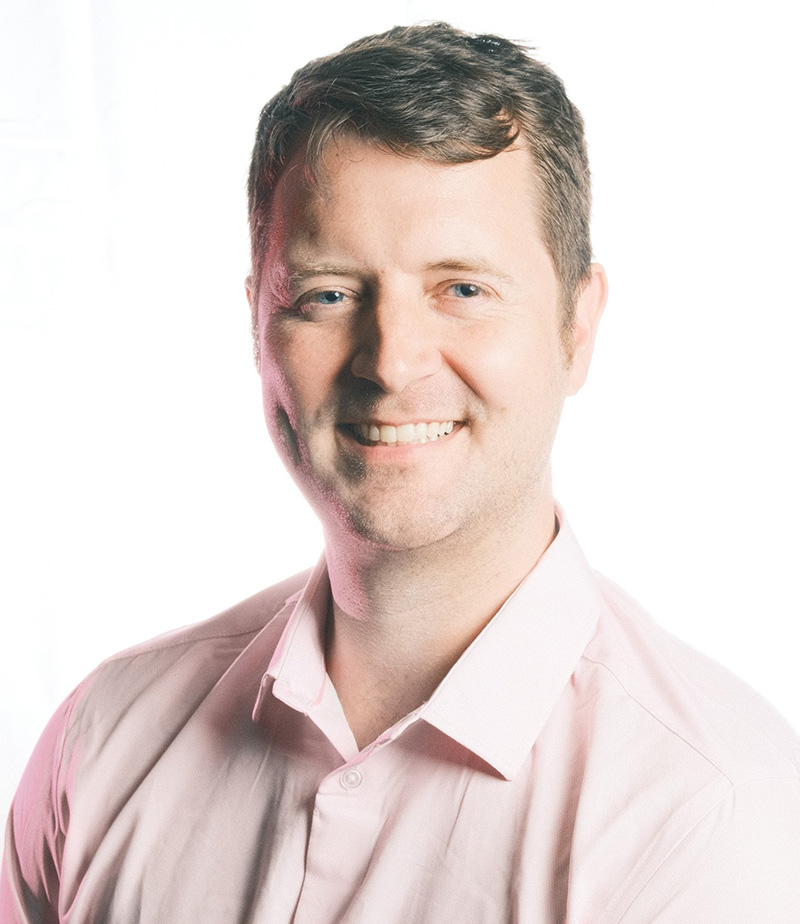
// Michael Ulin. Coding the core, not just pitching it.
He keeps pointing machine learning at the industries nobody calls glamorous - and keeps winning.
// Michael Ulin. Coding the core, not just pitching it.
Most engineers chase the demo that dazzles in a keynote. Michael Ulin chases the regulatory filing. The patent claim. The insurance risk model nobody outside an actuarial department wants to read. That instinct - run toward the dense, the regulated, the consequential - is the thread that ties together three AI companies and a career that started inside a Federal Reserve bank.
Right now he is building Trarian from Bend, Oregon, where he serves as co-founder and CTO. The pitch is deceptively narrow: AI underwriting for patents. Decide which inventions are worth defending, which claims hold up, which deep-tech bets are actually durable. It is a problem most people would find unbearably specialized. For Ulin, that is the entire appeal. He has spent a decade discovering that the hardest, dullest-sounding corners of the economy are exactly where machine learning earns its keep.
He is not new to founding. Before Trarian came Paxton AI, the legal generative-AI startup he co-founded as chief technology officer in 2023. Before that, ZestyAI, where he was the founding AI engineer and eventually VP of AI. The pattern is unmistakable: find an industry drowning in documents and rules, then teach a model to swim.
When generative AI first swept through legal tech, the horror stories arrived almost immediately: lawyers sanctioned for citing cases a chatbot had simply invented. Ulin and co-founder Tanguy Chau - the two met years earlier at McKinsey - looked at that failure and saw the actual product. Not a clever wrapper around someone else's model, but a system designed so it physically could not fabricate a citation. Paxton answers with verifiable sources or it does not answer at all.
The market agreed. Paxton AI raised a $6M seed round in 2023, led by WVV Capital with participation from Andrew Ng's AI Fund, Kyber Knight, 25Madison and others, including former Citi chairman Dick Parsons. The product went on to serve thousands of practicing attorneys, who shaped it through continuous feedback. Ulin's claim - that the tool could save a lawyer up to twenty hours a week - was the kind of number that gets a busy partner's attention.
His read on the field is unsentimental. AI will not just speed lawyers up, he argues; it will change how legal work is priced and delivered, letting small firms punch at large clients and putting basic legal help within reach of ordinary people. The professionals who thrive will be the ones who treat AI literacy as a core skill rather than a novelty.
Ulin earned his stripes at ZestyAI, the property-insurance startup where he built the machine-learning models that assess climate and structural risk on individual buildings. The work was not academic. ZestyAI's models help underwrite trillions of dollars of insured property across the United States, and the company landed on CB Insights' Top 100 AI Startups list and its Top 50 Insurtech list while he was there. When a wildfire map or a roof-condition score quietly changes what a homeowner pays, there is a decent chance a model lineage Ulin helped create is somewhere underneath it.
It is the same shape of problem, over and over. Insurance, law, patents - each is a fortress of rules, precedent, and paperwork. Each is the kind of thing that makes general-purpose AI stumble and specialized, carefully-built AI shine. Ulin keeps choosing the fortress.
If there is a single idea Ulin returns to, it is the gap between a thing that looks impressive on stage and a thing a customer pays for on Tuesday. He has talked about building real AI businesses rather than demos - a distinction that sounds obvious until you count how many AI launches are the latter wearing the former's clothes. His companies share a tell: they sit inside a workflow somebody is legally or financially obligated to get right. An insurer signing a policy. A lawyer filing a brief. An inventor deciding what to patent. There is no room there for a model that is usually correct.
That standard shapes how he builds. The hallucination-proof design at Paxton was not a marketing line bolted on after launch; it was the founding constraint. The risk models at ZestyAI had to survive contact with actuaries and reinsurers who price catastrophe for a living. The patent work at Trarian inherits the same discipline, because in deep tech a patent decision is hard to undo and quietly sets a company's competitive strategy for years. Ulin writes about exactly this - defensibility, the irreversibility of certain early choices - which is a strange thing for a founder to obsess over publicly, and exactly why it lands.
The biography has a geographic twist. After eight years in the Bay Area, Ulin moved to Bend, Oregon, for a fresh start during the pandemic - and then did something contrarian for a tech founder. He started arguing, publicly, that you should leave Silicon Valley too. His Substack, named "And Yet It Moves" after Galileo's defiant aside, makes the case: Oregon's startup community is supportive and inclined to help its own succeed, the lower cost of living stretches early runway, and a company can become a recognized name without drowning in Bay Area noise.
His advice is not to flee entirely. Spend time in both places, he says - bank the Silicon Valley credibility and network, then bring it to a grounded, collaborative ecosystem that lets you actually build. It is a founder's version of having it both ways, and he is living the experiment in real time.
The roots run back to Emory College, class of 2011, followed by a master's in data science from the University of New Haven - the formal training under the self-taught builder. Emory has since featured him among its entrepreneur honorees. From the Federal Reserve Bank of Atlanta to McKinsey to RPX to three AI startups, the resume looks eclectic until you notice every stop touched regulated, high-stakes, document-heavy work. He didn't wander into AI for the hype. He walked straight at the parts of it that are hardest to fake.
What comes next is more of the same conviction, aimed at new targets. Patent underwriting today. Probabilistic reasoning and AI forecasting alongside it. The throughline never changes: real businesses solving genuinely hard problems, built far from the usual map. Catch him mid-stride and you'll find the same person who started in a central bank - allergic to the easy demo, at home in the fine print.
AI underwriting for patents - deciding which inventions and claims are worth defending in deep tech, where decisions are hard to reverse.
Co-Founder & CTOGenerative AI for legal research and drafting, designed so it cannot invent cases. Raised $6M seed; used by thousands of attorneys.
Co-Founder & CTOProperty and climate risk models that help underwrite trillions in insured assets. CB Insights Top 100 AI & Top 50 Insurtech.
Founding AI Engineer & VP of AIGenerative AI can save lawyers up to 20 hours per week.
Paxton was built from the ground up so it cannot cite cases that do not exist - every claim comes with a verifiable citation.
Lawyers need to develop AI literacy; it is becoming a core professional competency.
The best approach is to spend time in both places - Silicon Valley credibility, Oregon's grounded ecosystem.