A billion people can watch the same cricket match, but an advertising system must make its decisions one impression at a time. It has milliseconds to guess whether attention will become an install, a subscription or a sale. Sunil Rayan has spent his career near that peculiar junction: enormous crowds on one side, individual outcomes on the other.
Today he is Chief Business Officer at Moloco and General Manager of Moloco Ads, the company's flagship business. Before that came Disney+ Hotstar, Google, McKinsey and an early stretch in software and technology. The institutions look like separate continents. Follow the work, however, and a bridge appears. Each job asked him to turn complexity into something a customer could use, a team could sell and a spreadsheet could defend.
His first tool was engineering. Rayan earned a degree in computer engineering from the University of Madras, then worked in the technology industry before spending eight years at McKinsey. Consulting gave him a view from the other side of the screen: not only how systems function, but why organizations fail to act on what those systems know. In 2011, he co-authored a McKinsey Quarterly article based on interviews with roughly 100 sales executives. Its central argument was practical. The sales force is not merely a distribution arm; it is a listening device for finding the next market.
The engineer learns to sell
That combination - technical fluency joined to commercial curiosity - became more valuable as software started deciding where advertising money went. Rayan joined Google and stayed for more than seven years. He led the global mobile app ads business, where the humble app install was becoming a serious economic instrument, and later helped build Google Cloud solutions for games.
Mobile games make unforgiving teachers. A campaign can acquire thousands of players and still destroy value if too few remain, pay or return. The seductive metric is volume. The durable metric is lifetime value. Rayan's later public conversations keep returning to that distinction. Advertising is not finished when somebody looks. It is finished when the economics after the look make sense.
The next assignment moved him from the economics of apps to the theatre of mass entertainment. In June 2020, Rayan was appointed President and Head of Disney+ Hotstar. The timing could hardly have been more delicate. Viewing habits were changing rapidly, India was already mobile-first, and the product had to work as a subscription service, an advertising platform, a home for films and series, and the digital grandstand for cricket.
Fifty million seats, no auditorium
Under Rayan, the streaming business grew eightfold to more than 50 million subscribers. Disney+ and Disney+ Hotstar expanded across more than 20 markets in India, Southeast Asia, the Middle East and Africa. His team also launched the next generation of the Hotstar platform. Those numbers are clean. The business beneath them was not.
A streaming service must continually bargain with contradictory desires. Viewers want abundance without clutter, novelty without effort, and low prices without compromise. Rights are local; software must travel. Sport produces enormous peaks, while drama builds quieter habits over weeks. Rayan described the proposition with a cricketing phrase: an “entertainment all-rounder.” It needed live sport and video on demand, global Disney properties and programming in Indian languages, a free layer and paid tiers.
He also paid attention to discovery. A catalogue is not an experience until somebody can find what to watch. During his tenure he spoke about improving both how recommendations appeared and what the interface recommended. The difference is easy to miss. One is presentation. The other is judgment.
“We are invested in sports, and we will continue to invest in sports.”Sunil Rayan, during his Disney+ Hotstar tenure
Cricket supplied both spectacle and stress test. Live sport does not politely distribute demand across the afternoon. It sends everybody to the door together. Later, at Moloco, Rayan would describe technology that handled more than 32 million peak concurrent users during the 2023 Indian Premier League through a partnership serving JioCinema. It was a familiar problem in a new corporate setting: the crowd arrives at once, but relevance still has to be decided individually.
The open internet's hard bargain
Rayan left Disney+ Hotstar and joined Moloco in July 2022 as the company's first Chief Business Officer. Moloco had been founded by former Google machine-learning engineers with a proposition that was both technical and political: businesses outside the largest closed advertising platforms should be able to use sophisticated prediction systems on their own first-party data.
The appeal to Rayan is evident. At Google, he had seen performance advertising at global scale. At Hotstar, he had run a service where content, subscriptions and advertising shared the same roof. Moloco offered a place to combine those lessons across mobile apps, online marketplaces and streaming television.
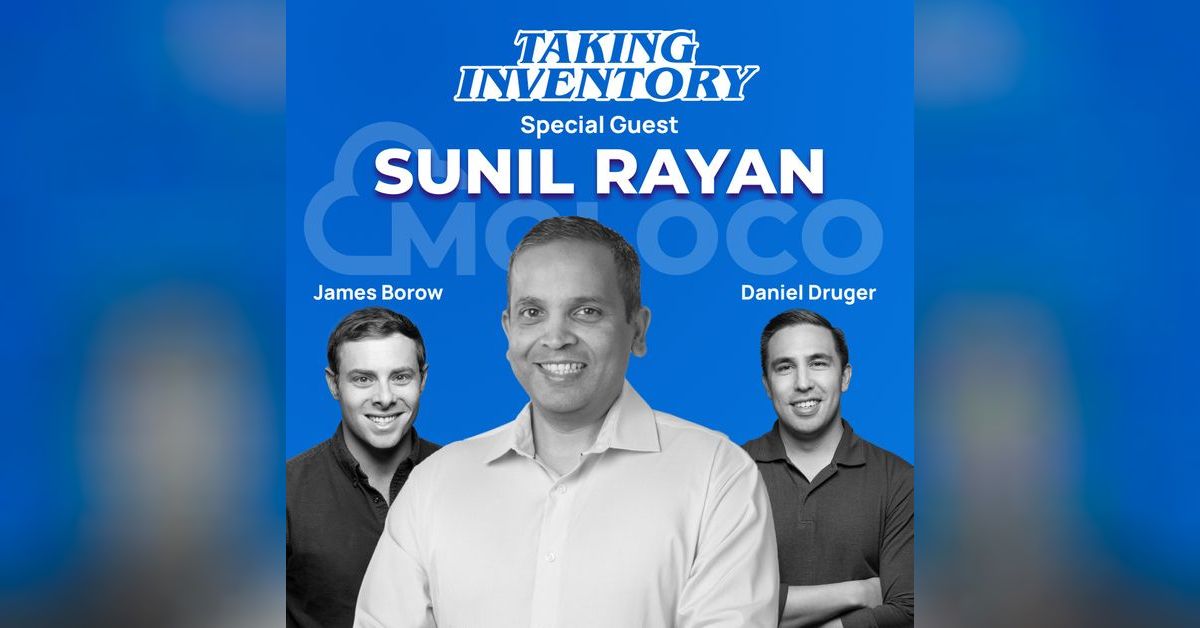
At APOS in 2023, he offered a compact account of how streaming advertising might change: widen the buyer pool beyond a small group of brand advertisers, replace fixed prices with prices shaped by outcomes, make formats interactive, and move from eyeballs to results. “OTT advertising needs disruption,” he wrote after the conversation. The interesting word is not disruption. It is outcomes.
Brand advertising has traditionally been content with correlation: the audience saw the message, therefore something useful may follow. Performance advertising asks for the receipt. Did the viewer install, subscribe, buy or return? Connected television complicates that demand because the big screen has long been optimized for reach, not response. Rayan's wager is that machine learning can make it accountable without shrinking it into a glorified mobile banner.
The machine can rank possibilities. The operator still has to choose which outcome deserves the ranking.
That work now sits alongside retail media, where marketplaces build advertising businesses from their own shopping data. Moloco's work with Wayfair, which Rayan publicly celebrated in 2025, joined shopper behavior, purchase history and browsing context to advertising decisions. The same pattern returns: a vast catalogue, a finite moment of attention, and a prediction about what should happen next.
Global scale, local evidence
Rayan's career has been international without becoming abstract. In 2024 he called India Moloco's fastest-growing market and noted that, apart from South Korea, it was the only one where the company operated across gaming, streaming and e-commerce. Moloco had 30 clients there at the time and was building an engineering centre whose products would serve other countries too. The market was not merely a sales territory. It was a laboratory where his three professional worlds overlapped.
His public manner is notably spare. Posts tend to praise customers, partners and teams; the fireworks are usually supplied by the numbers. Moloco CEO Ikkjin Ahn described him on arrival as “humble and ambitious,” a pairing that sounds contradictory only if ambition must make a racket. Rayan's LinkedIn biography uses “impact-focused.” Both descriptions fit an operator who prefers the measurable consequence to the decorative claim.
By 2026, his remit included both the chief business officer title and direct leadership of Moloco Ads. He was also explaining a new agency partner program built around co-selling, co-building and shared case studies. The move matters because platforms fond of automation can be tempted to treat human intermediaries as historical clutter. Rayan's approach was more diplomatic: invite agencies close enough to shape the program, then give them a visible stake in its proof.
The program also reveals how he thinks about adoption. An algorithm does not enter a market alone. Someone has to translate its promise into a client's planning cycle, decide which result matters, and defend the experiment when an old benchmark looks safer. Moloco began with roughly a dozen agency partners, including Dentsu UK & Ireland, PMG, M+C Saatchi Performance, SplitMetrics, RocketLab and Admiral Media. The three-part design was straightforward: pitch together, build together, and publish evidence that keeps the agency in the foreground. For a company selling automated decisions, it was a conspicuously human arrangement. Trust would be distributed before technology could be.
There is wit in the arc. A computer engineer spent eight years advising companies, then helped software buy advertising, helped entertainment travel across borders, and now helps advertising software explain itself to companies. The path has not escaped complexity. It has accumulated useful varieties of it.
Attention remains the raw material. Cricket commands it. A recommendation directs it. An advertisement rents it. Rayan's working life has been about what happens one beat later, when attention either dissolves or becomes an action worth counting. The internet has many ways to collect an audience. His question is the less glamorous and more valuable one: what did the audience do next?