A weather forecast and a holiday search helped give Admixer its first advertising inventory. Long before it sold the technology for other companies to run their own auctions, founder Alexey Boltivets was working with Meteoprog and Turistua. He had websites to monetize, clients to serve and a reason to wonder whether selling each placement separately was the right business.
In a 2013 interview with AIN, Boltivets recalled encountering advertising networks while expanding Meteoprog abroad, including into Poland. The attraction was straightforward: combine sites and operate the network. Development began in late 2008; he dated the operating launch to March 2009. The two familiar websites became its first publishers.
That origin still helps explain Admixer. It makes tools for people who already have an advertising business, an audience or a relationship worth developing. The software handles buying, selling, audience data and creative production. The commercial ambition is larger: let a customer operate more of the business around those tools.
The auction has two doors
Start with the names. Admixer DSP, its demand-side platform, serves advertisers and agencies buying media. Admixer SSP, the supply-side platform, serves publishers and app developers selling space. One customer wants to reach an audience; another wants to earn money when that audience visits. Admixer supplies technology on both sides.
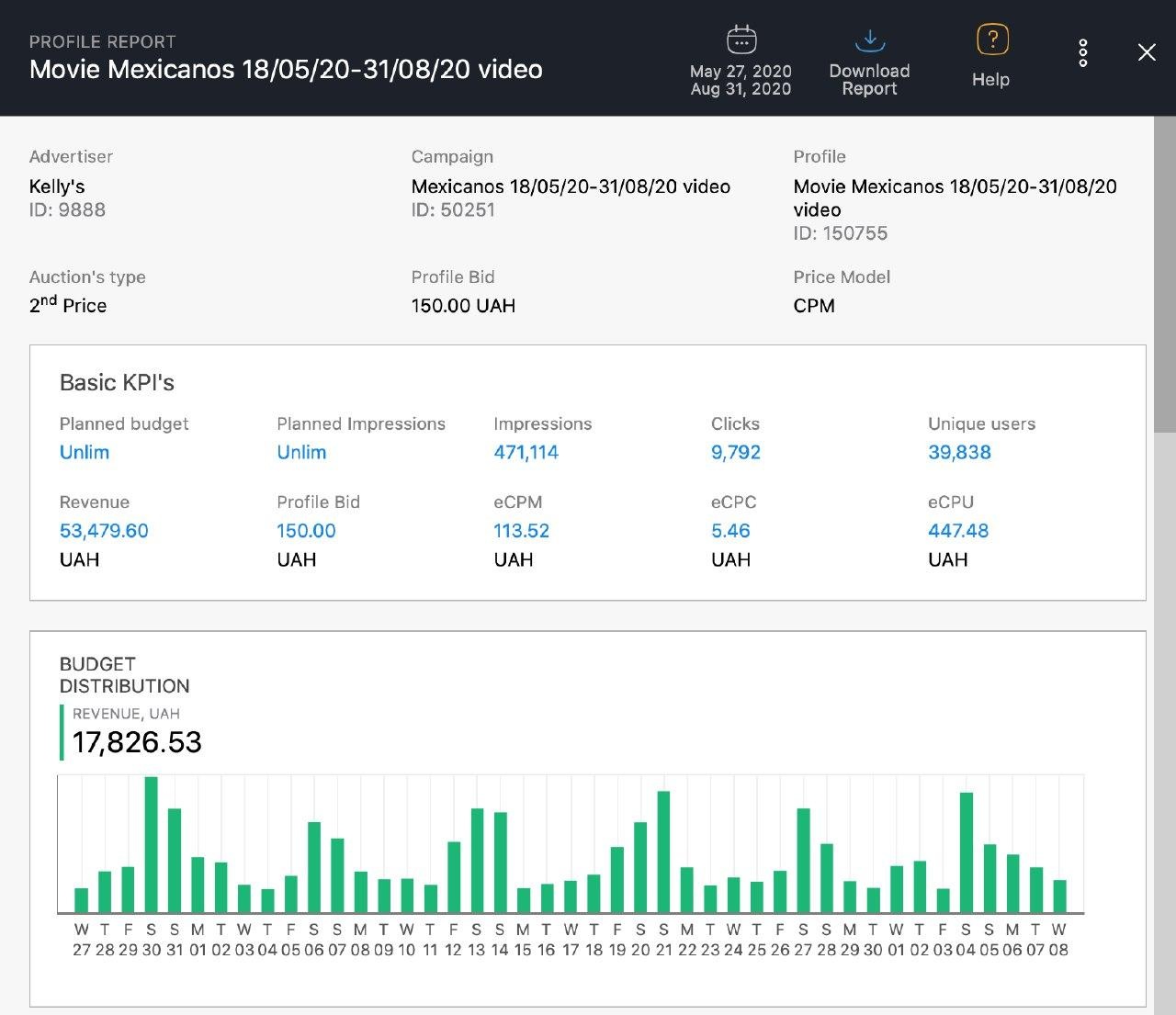
The buying platform supports open auctions, private marketplaces and negotiated deals. Buyers can select audiences and placements, control frequency and review performance. Its reporting breaks results down by such dimensions as geography, audience and inventory source. Clients can operate the software themselves or commission managed campaigns, including planning, creative management and optimization.
A simplified product map. External buying and selling platforms can connect too.
Across the other door, the SSP connects inventory to demand partners and lets owners monitor revenue. Its advertised coverage extends from desktop and mobile to connected television and digital outdoor screens. That makes Admixer relevant to several kinds of media owner, rather than only websites selling rectangular banners.
There is also an audience-data layer. Admixer DMP collects and organizes information from websites, apps, advertising events and customer systems. Users can combine segments, activate them in campaigns and transfer data through APIs. The useful distinction is between having a customer database and being able to use its permitted audience information in a buying workflow.
Put your own name on the machinery
The more distinctive proposition sits beyond the individual buying and selling tools. Agency Tech Stack joins campaign management, direct publisher relationships, audience data, creative tools and reporting. An agency can build its own marketplace, package inventory and define pricing rules. Existing systems can connect through APIs.
For an agency, that is a different purchase from another login for a media buyer. It is a way to organize several clients and revenue sources within its own operation. Admixer’s published testimonials include GroupM, OMD and dentsu’s Amplifi. They emphasize planning, trading desks, creative preparation and support - the daily work between winning a client and sending the report.
RTB Stack takes the operating proposition further. Introduced in May 2021, it lets customers establish an exchange under their own brand. The launch announcement described connections to outside buying and selling platforms, customizable interfaces and reports, private deals and inventory packages. Customers could use infrastructure developed through Admixer’s own SSP experience.
“We invested a lot into technical infrastructure”
Yaroslav Kholod, on the RTB Stack launch, May 2021
That development history matters. In the launch announcement, Kholod described years spent refining optimization, fraud controls and ad oversight after the SSP’s 2016 debut. Admixer was packaging machinery it had already operated. Buyers still have to assess whether that machinery fits their business, but the product’s lineage is unusually easy to follow.
Two fraud checks, one expensive blind spot
A 2021 company account offers a revealing example of that refinement. The SSP team initially used two anti-fraud vendors. Their capabilities overlapped. To stay within monthly limits, the setup checked every second or third impression, with another validator providing a cross-check. Fraudsters could recognize the pattern or strip out the checking pixel.
The team changed the allocation: concentrate the budget on a deeper integration with one validator and scan every impression. It also added pre-bid blocklists and internal detection. This is a historical account of an operating decision, not a promise that today’s platform catches every fraudulent ad request.
The lesson is worth borrowing. Count what a control actually examines before counting how many vendors supply it. Two contracts can buy overlapping coverage. The relevant cost decision here was where the verification budget went, and the observed weakness was predictable sampling.
Two validators. Sampled impressions. A detectable checking pattern.
Budget concentrated on one integration, with every impression scanned.
Infrastructure has a bill. So does independence.
RTB Stack’s current commercial pitch is explicit: infrastructure charges without a revenue share. It offers branded interfaces, tailored endpoints and connections across multiple formats. The practical appeal is that an operator can grow its trading business without this particular supplier taking an advertised percentage of revenue.
That charging structure deserves a calculation, not applause. A prospective exchange operator should compare the infrastructure quote, expected traffic, staffing and partner costs with the margin it expects to retain. That is an economic implication of the model, not a measured Admixer customer result. A platform with too little demand can remain an expensive empty marketplace.
Publisher cash flow has its own details. Admixer HB+ lists payments on a net-45 basis and a $200 minimum payout threshold. Its controls include floor prices, bidder management and reporting. A small publisher should weigh both the auction tools and the wait for payment when considering how the service fits its operation.
Different products, different terms. Zero revenue share does not mean free infrastructure.
For buyers who need only campaign execution, Admixer’s managed-service option offers a narrower starting point. For operators considering their own exchange, the decision is larger: who will recruit buyers, maintain publisher relationships and respond when performance slips? White-label software supplies capabilities; commercial relationships still require people.
Local knowledge, global connections
Admixer reports more than 3,500 business customers. Its homepage pairs that figure with testimonials from BAT Ukraine, BrandFormance and dentsu/Amplifi, illustrating how different the customers’ jobs can be. One discusses enterprise inventory management, another a network product, and another buying software combined with audience data.
Its market position crosses familiar procurement categories. The Trade Desk is an alternative for media buying; PubMatic supplies sell-side technology; TeqBlaze offers white-label exchanges. Admixer combines those broad categories with custom development and regional operating experience. The breadth gives customers options, although a wider portfolio alone says little about which supplier will perform better on a particular campaign.
Integrations provide something more concrete to inspect. Prebid’s public documentation lists Admixer adapters for both Prebid.js and Prebid Server, with display, video and native media types. This is useful to a publisher evaluating how the bidder fits an existing setup. It makes the connection inspectable beyond a partner logo on a sales page.
Admixer also offers custom engineering using proprietary modules. Its development site describes work on high-load systems, real-time data processing and advertising infrastructure. That helps explain the mix of product company and consultant: some customers can use an established tool, while others need existing components adapted to an unusual inventory or data problem.

The employer’s own description is specific enough to be interesting: flexible remote work, personal development plans, annual reviews, 21 paid vacation days and unlimited sick leave. It also advertises an energy-independent office and a pet-friendly workplace. Those are the company’s stated provisions, rather than an independent assessment of employees’ experiences.
The new bottleneck is the creative
Recent releases bring the story down to a familiar irritation: the advertisement that needs another size, another template or another approval. In November 2025, Admixer announced Creative Studio as the replacement for Admixer Creatives. It puts a template library, reusable assets, tracking and creative analytics inside its platforms. Product-feed formats also connect the creative workflow to retail advertising.
The May 2026 platform update tackled another problem with selling different properties together: their categories do not always match. It added controls over the taxonomies available for an advertising product, along with reporting and targeting improvements. The same announcement said native display and video formats for ride-hailing company Uklon Ads had been added in April.
Then came Native Builder, announced June 15. Advertisers upload a main image, GIF or video, add their logo and copy, and adapt the result across selected display sizes. Live previews help check the rendering; a size-blocking control lets buyers remove poorly performing sizes after delivery begins.
There is a readily copied production habit in the guidance: use a centered visual, avoid text baked into the image and put the essential message early. Small placements are unforgiving. Automatic resizing still needs somebody to notice when the product disappears into a crop or the offer becomes illegible.
Admixer’s trajectory has a consistent commercial logic. Begin with an audience to sell, build the tools needed to sell it, then make those tools available to other operators. The question for a customer is whether greater control will produce better decisions. A weather site once gave Admixer a reason to build a network. The next customer needs an equally concrete reason to run one.
Open the trading desk
Explore the products, company updates and a video demonstration.