At Patch, changing the price of an advertisement used to require a ticket. Someone pulled reports, decided what the inventory ought to fetch, and asked for the wrapper to be updated. Across a sprawling local-news network, this made precision pricing cumbersome. The auction could move at machine speed; the organization could not. That mismatch is a useful place to meet Aditude.
- Aditude sells ad infrastructure and operational help to publishers.
- Its tools put auction settings, testing, and reporting closer together.
- Publishers can retain their demand relationships and approve AI-proposed changes.
The auction is fast. The organization is slow.
Patch’s problem was more specific than “we need more revenue.” Its lean team was managing several responsibilities, and broad regional floor prices could not reflect every placement’s value. Aditude supplied Cloud Wrapper for configuration, Exec for consolidated reporting, and Prebid Server for additional auction competition. The intervention changed the workflow as well as the technology.
“The process was manual and archaic.”James Sang · Patch’s director of revenue operations
Aditude’s case study reports that Patch’s programmatic revenue grew 46.2% between January 2025 and July 2026. That is a vendor-published comparison over a particular period, not a promised return. The useful detail is the sequence: configuration first, reporting next, then another source of demand. Buying more competition was only part of the job.
A consultant discovers a product
Jared Siegal founded Aditude in 2019 after working in ad operations and partnerships at Answers.com and Playbuzz. He had watched analytics, development, and advertising teams operate in separate compartments. A change that made sense to one department could interrupt another department’s revenue. Aditude began as consulting work aimed at bringing those concerns together.

The company’s funding announcement describes the next turn: consulting became product development because existing technology and pricing did not meet its needs. That origin helps explain the present offering. Aditude combines software with people who can onboard partners, inspect a site, troubleshoot an integration, or help run a direct campaign. Expertise is part of what the customer buys.
Keep the relationships. Change the machinery.
Header bidding lets multiple demand sources compete for a publisher’s advertising opportunity. The wrapper coordinates that process. Aditude’s Cloud Wrapper gives operators an interface for changing partner parameters, auction timeouts, and price floors without requesting a code deployment for each adjustment. The company supports existing ad servers, including Google Ad Manager, alongside its own serving infrastructure.
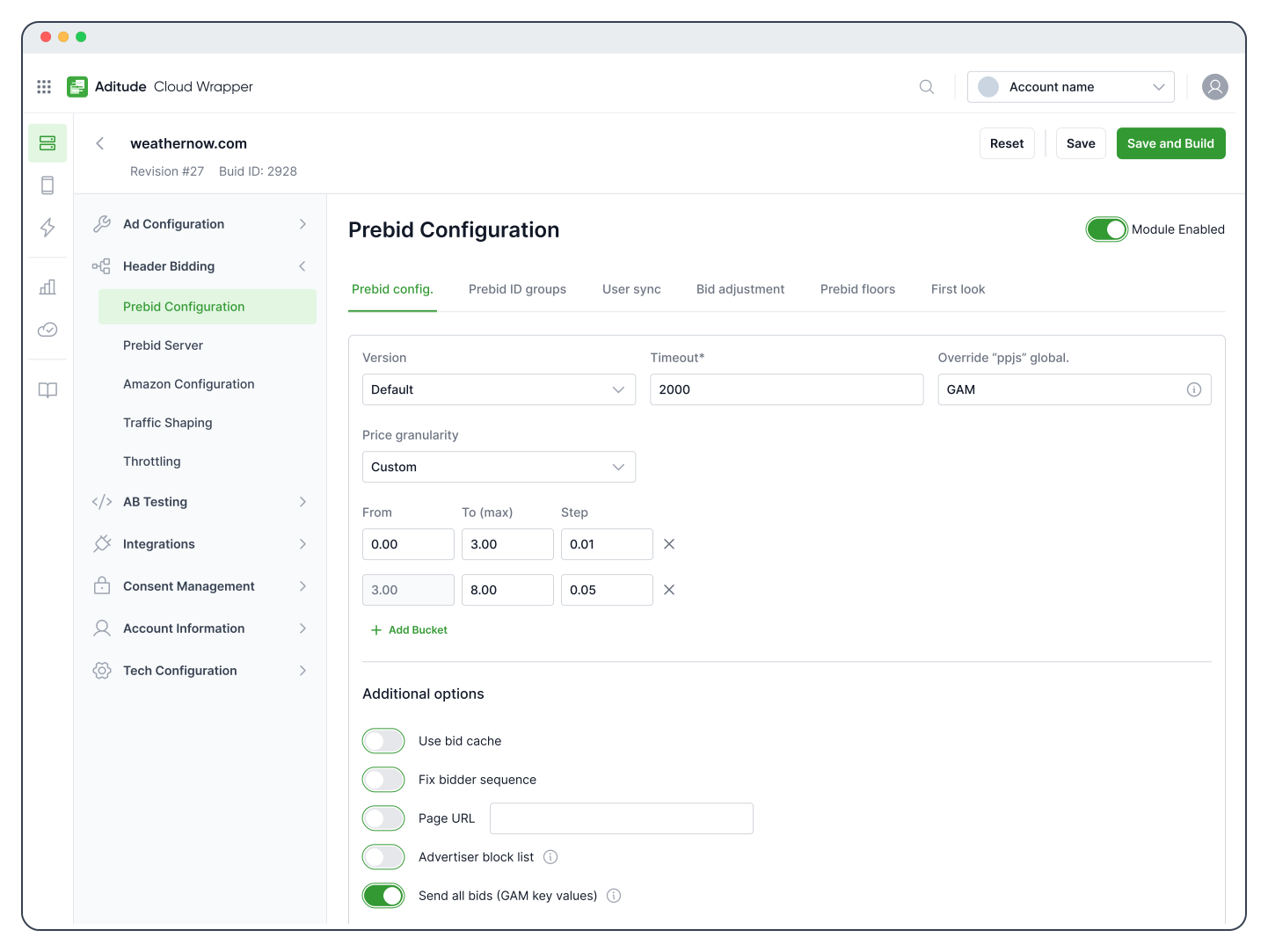
The other products address neighboring chores. Insights monitors advertising performance and flags problems. Exec gathers partner revenue reporting into a consolidated view. Managed Prebid Server supplies server-side auction infrastructure. App and video offerings extend the work beyond ordinary display ads. Together, they occupy the sell-side: helping the owner of an audience sell advertising, rather than helping a brand buy it.
wikiHow supplies a revealing customer preference. It wanted outside technical capacity while keeping its own SSP seats and Google Ad Manager setup. An SSP, or supply-side platform, connects publisher inventory to buyers. Keeping those direct relationships mattered to wikiHow; consolidating payments through another company did not automatically look like an improvement. Aditude’s appeal was help without forcing that trade.
That places it between two familiar choices: maintaining the stack internally and handing monetization to a managed provider. Its stated differentiation is configurable software paired with support and publisher control. Customers span news, utilities, and gaming, including Hearst Newspapers, Flightradar24, and Medal.tv. The product is technical; the buying question is organizational: who can operate it tomorrow morning?
Medal.tv illustrates how far that help can go. Aditude’s case study says the game-clipping platform moved from Google Ad Manager to Tude Server, now called Serve, about six months into the relationship. It cites revenue discrepancies and SSP integration inefficiencies as reasons for the switch. A wrapper can be the entry point; solving the publisher’s particular problem can require changing another layer.
Percentage of impressions meeting viewability criteria. Aditude’s customer case reports the improvement; the chart depicts reported outcomes, not a forecast.
Buying what code cannot supply
In August 2023, Aditude announced a $15 million Series A from Volition Capital after being funded by Siegal. The money was intended for products, hiring, marketing, and possible acquisitions. Its business model emphasized tailored technology pricing rather than the revenue-share arrangements common in managed ad operations. A publisher evaluating it needs a contract quote and a comparison of net economics.
The acquisition strategy soon became concrete. In March 2024, Aditude bought CPMStar, a gaming advertising business with established direct-sales relationships. Siegal told AdExchanger that building those connections internally could have taken years. CPMStar would continue operating separately, so using its demand did not require adopting Aditude’s ad-ops products. The purchase added commercial access, not merely another feature.
$15m Series A
CPMStar acquired
Hashtag Labs acquired
September brought Hashtag Labs, whose publisher controls and automation complemented Aditude’s infrastructure. The subsequent work was integration. Aditude’s 2025 retrospective describes a single-sign-on platform and an expansion into in-app Prebid Server. Buying two companies had created a larger collection of capabilities; making those capabilities convenient to use was a separate undertaking.
The machine still asks permission
By July 2026, Aditude was describing AWP, its agentic wrapper. The proposed loop is straightforward: monitor live performance, recommend a specific configuration change, obtain publisher approval, then execute and log the result. The approval step acknowledges something dashboards cannot contain: a sales commitment, a campaign relationship, or a coming change in the publisher’s inventory.
- Monitor
- Recommend
- Approve
- Execute
Publisher judgment sits between the recommendation and the live change.
A practical lesson comes from LoveToKnow, which started with a WordFinder test in 2022 before moving more properties. Test a bounded slice, inspect the results, and expand deliberately. Aditude’s Insticator case likewise describes A/B testing and tuning lazy loading and refresh. Those methods are more portable than a customer’s headline percentage.
The approach needs usable performance data, integration work, and someone accountable for decisions. A higher floor can reduce fill; an extra partner can add latency. AWP’s own explanation allows for recommendations that underperform. The attraction is a shorter route from evidence to an adjustable setting. A publisher still has to decide whether that adjustment serves its readers and its business.