Sunil Patel’s approach to earning customers’ trust was, for a time, architectural. At his European repair shop in Houston, he added a glass wall. Customers could watch the technicians working on their cars. The bill would still arrive, of course. But the work behind it no longer had to happen out of sight.
A window is an admirably plain response to a complicated business problem. It makes no grand promise. It simply improves the view. For Patel, that gesture helps explain the company he went on to build: Tekmetric, the shop management software business he co-founded after years on the receiving end of inadequate tools.
Today, he leads a company whose platform connects inspections, estimates, customer messages and payments. The distance from a pane of glass to a software platform is considerable. The underlying question has stayed close: how do you help people understand what is happening to their car, their money and their working day?
A window before a dashboard
Patel remembers trying to win customers in the difficult economic conditions around 2007. The glass wall gave them a view of the repair process and helped the shop earn a following. It was a practical investment in credibility, made by an owner who had to get people through the door.
There is an imbalance built into the repair counter. The technician understands the machine; the owner knows what it feels like when it misbehaves. An estimate asks those two people to agree on work the owner may struggle to picture. Patel’s wall gave the conversation a little more evidence.
“Transparency is key.”
Sunil Patel
That preference would become part of his software thinking. Photographs and videos could show a vehicle owner what a technician had found. A shared communication thread could keep the shop owner, service advisor, technician and customer closer to the same account of events. The window had acquired a send button.
The blue station wagon
Long before Houston, there was a blue 1978 Ford Zephyr station wagon with vinyl seats. Patel grew up in Southern California, where his father worked as an engineer. Father and son spent hours repairing the family’s vehicles. He later connected those hours with his decision to open an automotive business.
It is a pleasantly unpolished beginning for a software founder. A family station wagon is unlikely to appear on a venture capital mood board. It does, however, provide repeated opportunities to learn how things fail, how to investigate them and how much patience a machine can extract from the people who need it.
Patel eventually spent 11 years operating Motorwerks Autogroup. His working life also included law enforcement and data security. The repair business supplied a long, daily education in customers, employees and the unglamorous dependencies that determine whether a vehicle leaves on time.
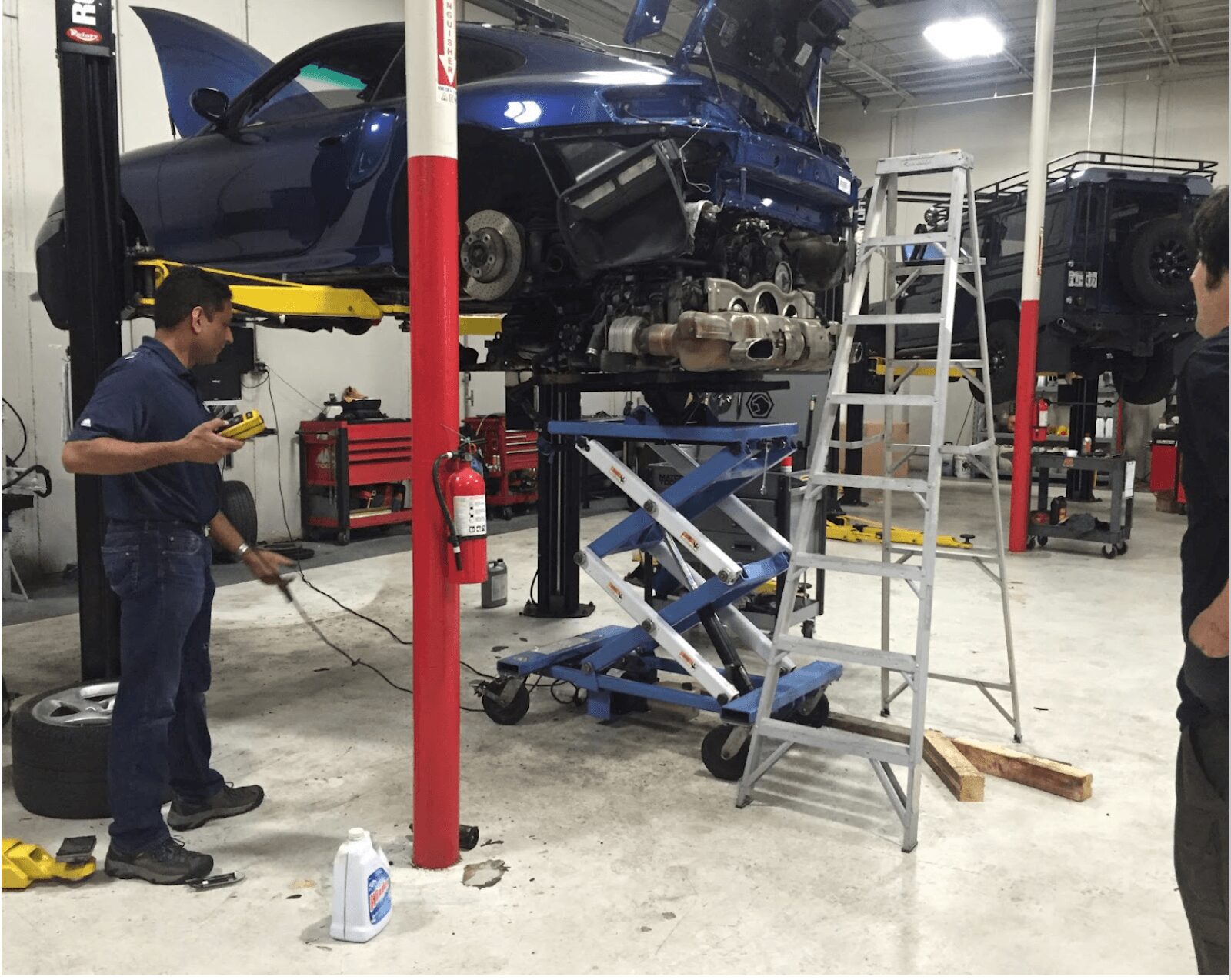
Running the shop meant living with the software as well as the cars. He tried different management systems and encountered weak reporting and unreliable tools. The frustration had the advantage of specificity. He knew which parts of the day were awkward because they were parts of his own day.
The software had to earn its keep
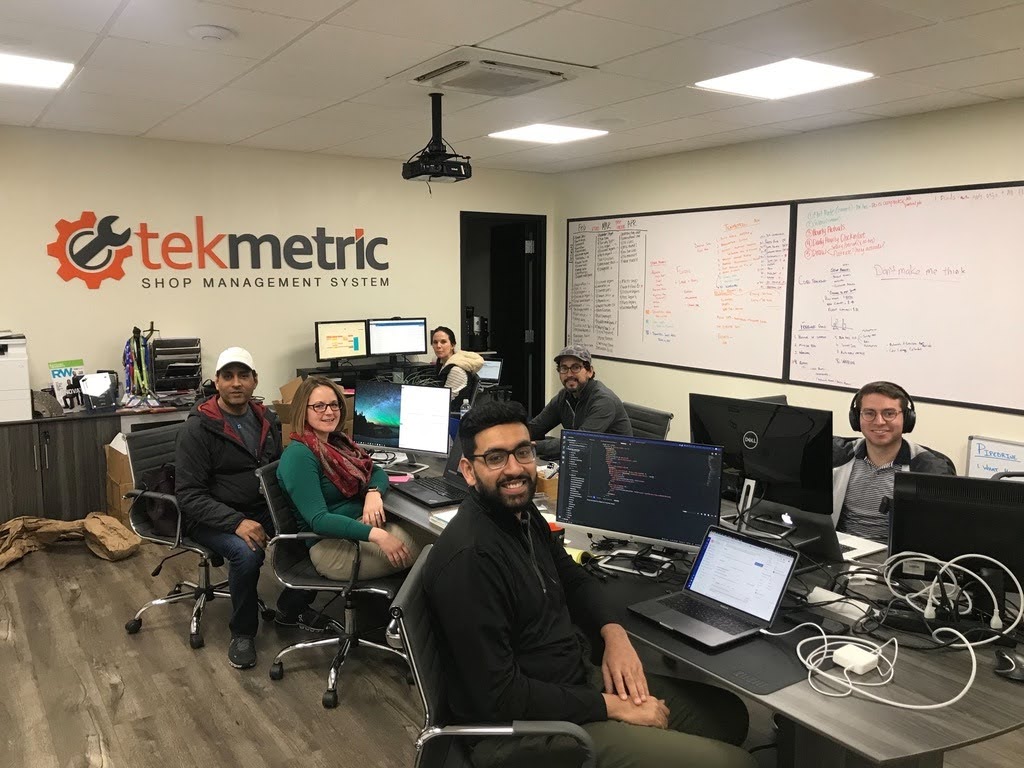
The idea for a better system began taking shape in 2015. Patel co-founded Tekmetric with Prasanth Chilukuri; his professional biography dates his role to 2016. The first official product launch followed in 2017. An idea, a team and a usable product each needed their own time.
His early experience also supplied a useful correction to the romance of giving things away. A customer he calls Shop Number Two received Tekmetric at no cost. Patel then discovered that the shop was paying for a competing system at the same time.
Free had bought an opportunity to be considered. The product still had to prove itself. After several months, the shop chose Tekmetric and remained a customer. Patel came away with a firmer appreciation of charging for the value his team provided. Generosity, it turned out, could coexist with an invoice.
- 2015Patel begins working on a better system.
- 2016The co-founder’s role begins.
- 2017First official product launch.
The distinction matters in a business serving other businesses. A shop can tolerate some experimentation, but its customers still expect their cars back. An owner’s enthusiasm is only one part of adoption. The tool has to fit the work closely enough that a busy team keeps using it.
An honest no travels a long way
Patel’s product philosophy begins with a question about the problem. He has described customers asking for buttons of different colors. His team’s task was to understand why they wanted the change. The requested button might be a proposed remedy for a difficulty that needed an entirely different answer.
Simon Sinek’s Start With Why became fundamental reading for the team. There is a useful discipline in that choice. Customer feedback can explain where a working day becomes frustrating; turning it into a product requires judgment about what will actually improve the work.
In a 2025 conversation about software, Patel put his preference plainly: “I want to figure out what we’re trying to solve.” Feature lists are easy to compare. A smoothly completed task offers a more demanding test. It asks the builder to understand the customer well enough to remove unnecessary effort.
His sales approach has occasionally involved telling a prospect that Tekmetric was a poor fit. One prospect in Colorado later signed up anyway. The candid answer had given the prospect a reason to expect candor elsewhere. A refusal had done some of the work usually assigned to a pitch.
The story has a certain commercial elegance. Honesty can make a business more attractive precisely because it leaves the customer room to judge. It is a cousin of the glass wall: an invitation to inspect the situation rather than accept a performance of certainty.
The bill has a backstory
In Patel’s account of shop communication, the ordinary phone call could become a bottleneck. A customer failed to respond; the shop followed up; people waited. Putting updates and inspection findings together helped connect the participants in a repair. His compact description of the customer’s position was: “Here are the facts, you decide.”
A conceptual illustration of Patel’s approach to repair communication.
Relationships also carried forward from his shop years. He had been a substantial WorldPac parts customer in Houston. In 2022, he discussed how long-standing relationships with WorldPac and Advance Auto Parts had developed into a Tekmetric partnership. Time spent ordering parts had become useful in a different kind of negotiation.
Outside investment brought another set of relationships. Tekmetric’s growth investment from Susquehanna Growth Equity was publicly announced in March 2022. The investor describes supporting senior leadership recruitment, payments development and the subsequent integration of Shopgenie. Building software had become the work of building a larger organization around it.
The October 2024 combination with Shopgenie extended the platform’s customer relationship tools. Booking, marketing and follow-up belong to the same shop day as inspections and repair orders. For Patel, the scope of the business had grown beyond the immediate problem at the counter while remaining attached to the people working there.
Patel has also been willing to describe himself as a learner while running the company. In 2022, he said he was receiving coaching and encouraged shop owners to find mentors. He recommended Patrick Lencioni’s The Five Dysfunctions of a Team. The founder who asks customers to consider a different way of working allows the same question into his own office.
His explanation of teamwork is concerned with how information moves: how people receive it, what they do with it and how an organization is arranged. Those concerns suit a founder whose product depends on cooperation between the repair bay and the front counter. Each participant can do a job well and still leave the next person waiting. Patel’s interest is in the connections between those jobs, where an individual’s good work either reaches the customer or disappears into another delay.
A bigger room, the same question
In April 2026, almost 1,000 owners, advisors and technicians gathered in Houston for Tektonic, Tekmetric’s first industry conference. Patel opened by returning to the difficulty of running a shop. The program brought people from different roles into a shared setting for training and practical discussion.
shops on the Tekmetric platform
Company-reported, April 2026
His interest in the people doing the work predates the conference. At Motorwerks, he bought Friday lunches, let the technicians choose the food and eventually began barbecuing behind the shop. Grilling duties rotated through the crew. The ritual gave colleagues something to share besides the next repair order.
By July 2026, he was also advocating a clearer future for young technicians. Tekmetric provides its platform free to trade schools, helping students encounter modern shop tools during training. His argument leaves room for technical progress and the people who will still have to make sense of the car in front of them.
The next conference is scheduled for April 1-3, 2027, at Houston’s George R. Brown Convention Center. The location keeps the gathering in the city where Patel learned the work firsthand. The scale has changed, and so has the equipment. There are more people to listen to now, each with a different view of the same familiar pressures: the job in progress, the information someone needs and the customer waiting to hear what happens next.
The boy working beside his father, the owner making repairs visible and the executive gathering an industry have a common concern: understanding the work well enough to improve it. Patel’s company has grown a long way from a Houston repair bay. The glass wall remains a good place to look through.
Keep the conversation going
Explore Patel’s work and hear him in conversation.
Tekmetric ↗Sunil Patel on LinkedIn ↗Watch: leadership and building Tekmetric ↗Watch: LIFT Your Shop conversation ↗Listen: The Remarkable SaaS Podcast ↗Read: the Motorwerks years and early customers ↗Read: Patel on technician careers and culture ↗Inside Tektonic 2026 ↗More writing from Sunil Patel ↗