Sanjay Varnwal built a business that could improve pictures of food, fashion, property and cars. The difficulty was that all those customers wanted something slightly different. A useful technology had acquired an exhausting social life. Every industry needed attention, and attention was precisely what the company could not manufacture.
In 2023, Spyne chose automotive. For a young business, turning away paying work is an awkward way to demonstrate commercial sense. Yet Varnwal’s account of the decision is unusually plain: serving several categories had made execution difficult. The company needed a customer it could understand in depth.
The choice gives his career a more interesting shape than a procession of funding announcements. Here is an engineer who spent years helping internet businesses grow, became a founder, and then had to decide which parts of his own creation to stop growing. There is a certain elegance to pruning. It remains considerably easier to admire in somebody else’s garden.
Today he is Spyne’s co-founder and CEO, building software for dealerships with fellow founder Deepti Prasad. His work runs from the photograph that first attracts a buyer to the conversation that might bring that buyer through the door. To understand that widening ambition, start with a much smaller business: helping photographers manage their work.
Before the car lot, the contact sheet
Varnwal studied at the Indian Institute of Technology, Kharagpur, with his public professional profile listing 2001 to 2005. His subsequent career included product and technology work at Yatra, Amazon and OYO. These were businesses in which an online presentation had to persuade someone to act in the physical world: book a journey, choose a room, buy a product.
Prasad brought a different route into the same problem. An economist by training, she had started Eventila, a photographer discovery platform and wedding planning blog, in 2015. Working with photographers exposed the practical friction behind the finished image. The picture might look effortless. Getting it made, edited, delivered and used was another matter.
Their early work together grew out of that friction. Spyne launched in July 2018, with Varnwal appearing in early coverage as Sanjay Kumar. Its original audience included creative professionals with large collections of photographs to organise and distribute. By August 2019, the company reported that more than 700 photographers had joined in its first ten months.
That early product belonged to the working life around photography. Sharing files, making content discoverable and shortening editing time offered plenty to do. A 2020 funding announcement described a network of more than 2,500 photographers across over 35 Indian cities. The venture was already dealing with the untidy logistics that sit behind a polished catalogue.
The co-founders had found a problem worth working on. They would still have to find the form of business they wanted to build around it.
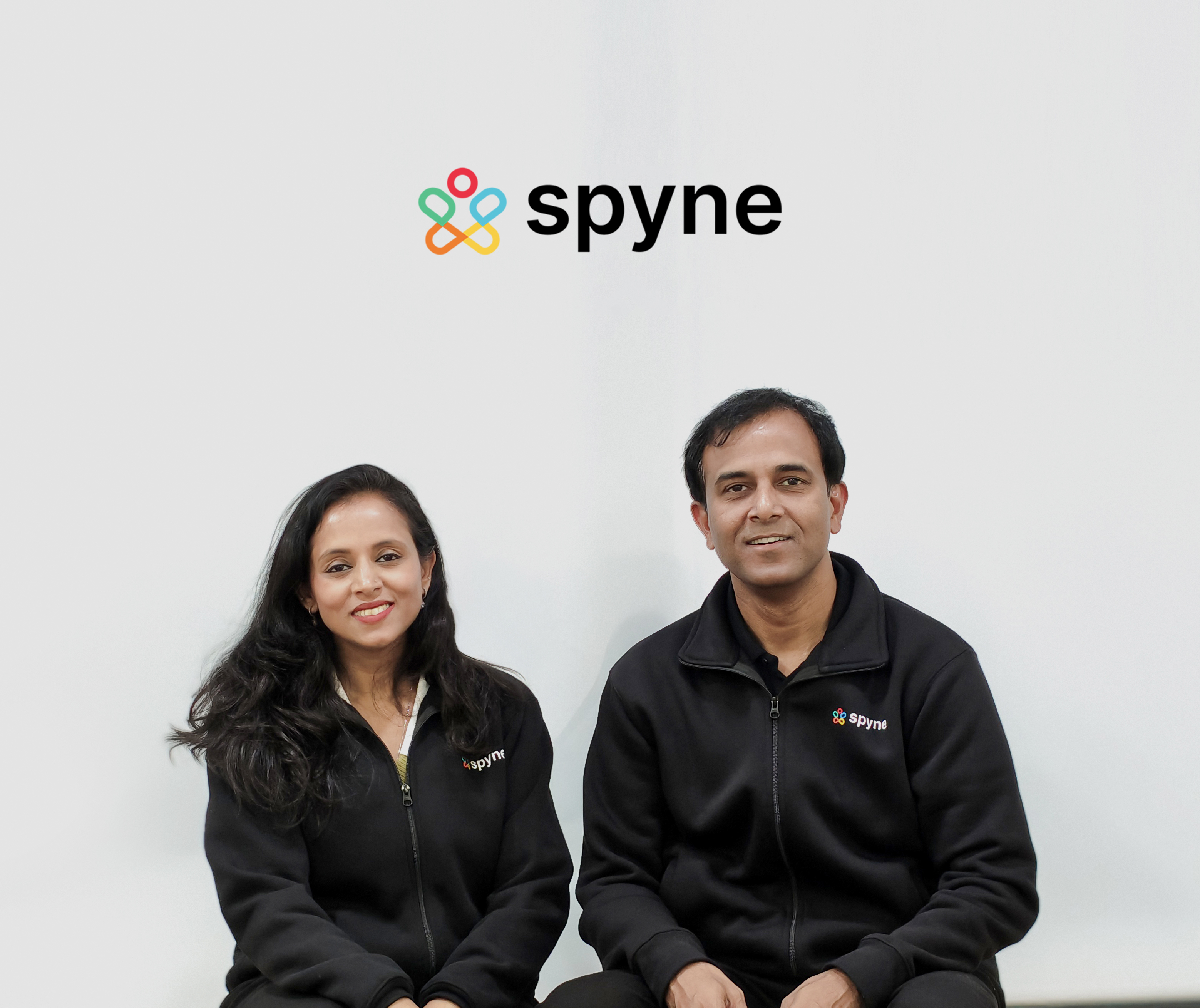
A photograph with a different customer
Varnwal later explained that the first content software idea had a ceiling. Photographers were a difficult customer group from which to build the scale he wanted. He described moving full time into the venture in 2018, then changing the product direction around the end of 2020. A failed approach became information, albeit information purchased at an inconvenient price.
By 2022, Spyne was using computer vision to help businesses produce catalogue images from smartphone photographs. A seller could shoot a product and process the image into something suitable for an online shop. The customer had shifted from the photographer managing a collection to the business needing pictures in the first place.
The appeal was practical. Traditional production meant finding a photographer, arranging a shoot, editing the results and getting them uploaded. Each handoff provided an opportunity for the calendar to become a nuisance. Spyne put more of that work inside software, with access through its own platform and integrations.
An automotive AI product launched in June 2021. For a while, it sat beside offerings for other categories. The breadth was understandable: once a company can improve images, many markets look inviting. Unfortunately, a meal, a dress and a used car do not share a buying process merely because all three can be photographed.
One customer, fewer competing instructions
The automotive focus gave Spyne a more coherent brief. Its tools could help independent dealers, larger dealership groups and marketplaces present vehicles through images, 360-degree spins and marketing videos. The software was now organised around an industry rather than a photographic technique.
For Varnwal, this also meant choosing how to spend the team’s time. A feature request from a car dealer could inform work for another car dealer. The accumulated knowledge had somewhere to go. There is a difference between having customers in several industries and building a product whose customers make it more useful to one another.
His engineering background mattered here. He was accustomed to product systems, rather than treating a photograph as an isolated deliverable. A vehicle listing sits inside a chain of work: acquisition, preparation, publication, enquiries and appointments. Choosing the dealer as the customer made that chain easier to see.
The decision did not shrink the geography of his ambitions. Spyne pursued the United States and Europe, taking technology developed in India into markets with established dealership networks. A narrowly defined customer can still be found a very long way from the office.
- 2018Tools for photographers
- 2021Automotive AI product launches
- 2023Focus shifts to car dealers
- 2026Vini connects to CDK
The car has a daily bill
Ask Varnwal about vehicle merchandising and the conversation soon reaches inventory turnover. In his March 2026 discussion with Zach Klempf, he described dealerships as businesses that must keep capital moving. A car sitting unsold consumes money. A late listing delays the first chance to attract interest.
He put typical holding costs at roughly $40 to $80 per vehicle per day. These were his industry estimates, rather than a universal tariff. They explain why he cares about the interval between acquiring a car and putting a useful listing online. An attractive photograph has a financial purpose when it helps shorten that wait.
His comparison was with large retailers able to afford dedicated studios and tightly connected publishing systems. Smaller dealers still needed a credible digital presence. Spyne’s proposition was to put more of that production capability into a phone and software, making consistent merchandising easier to obtain.
It is a pleasingly unromantic explanation for a visual business. The finished picture may suggest glamour. The founder is interested in days, handoffs and the cost of having an expensive object standing still. A car can look magnificent while being a remarkably poor employee: occupying space, requiring attention, contributing nothing until it sells.
Estimated holding cost per car, per day, in Varnwal’s March 2026 interview.
Every extra day adds another bill.Capital buys a presence on the ground
In February 2025, Spyne announced a $16 million Series A led by Vertex Ventures, with participation from existing investors including Accel, Storm Ventures and Alteria Capital. The intended uses included US expansion and a broader automotive retail product. Funding gave the strategy more room to operate; the work of winning dealers remained.
Varnwal spoke about building a dedicated US business development team, including a country head, account executives and customer success staff. Selling software across an ocean involves more than making the product available. Someone has to understand the buyer’s routine, answer questions and stay involved after the contract.
Spyne subsequently brought in Dave Purgason to lead its US business. His experience included Cox Auto Trader, CallRevu and TRUECar. The appointment added automotive operating experience to a company whose founders had arrived through technology and visual content.
There is something revealing in that combination. Varnwal brought the perspective of other internet industries; local hires brought the habits and relationships of automotive retail. International expansion asks a founder to keep the useful parts of being an outsider while learning when to stop behaving like one.
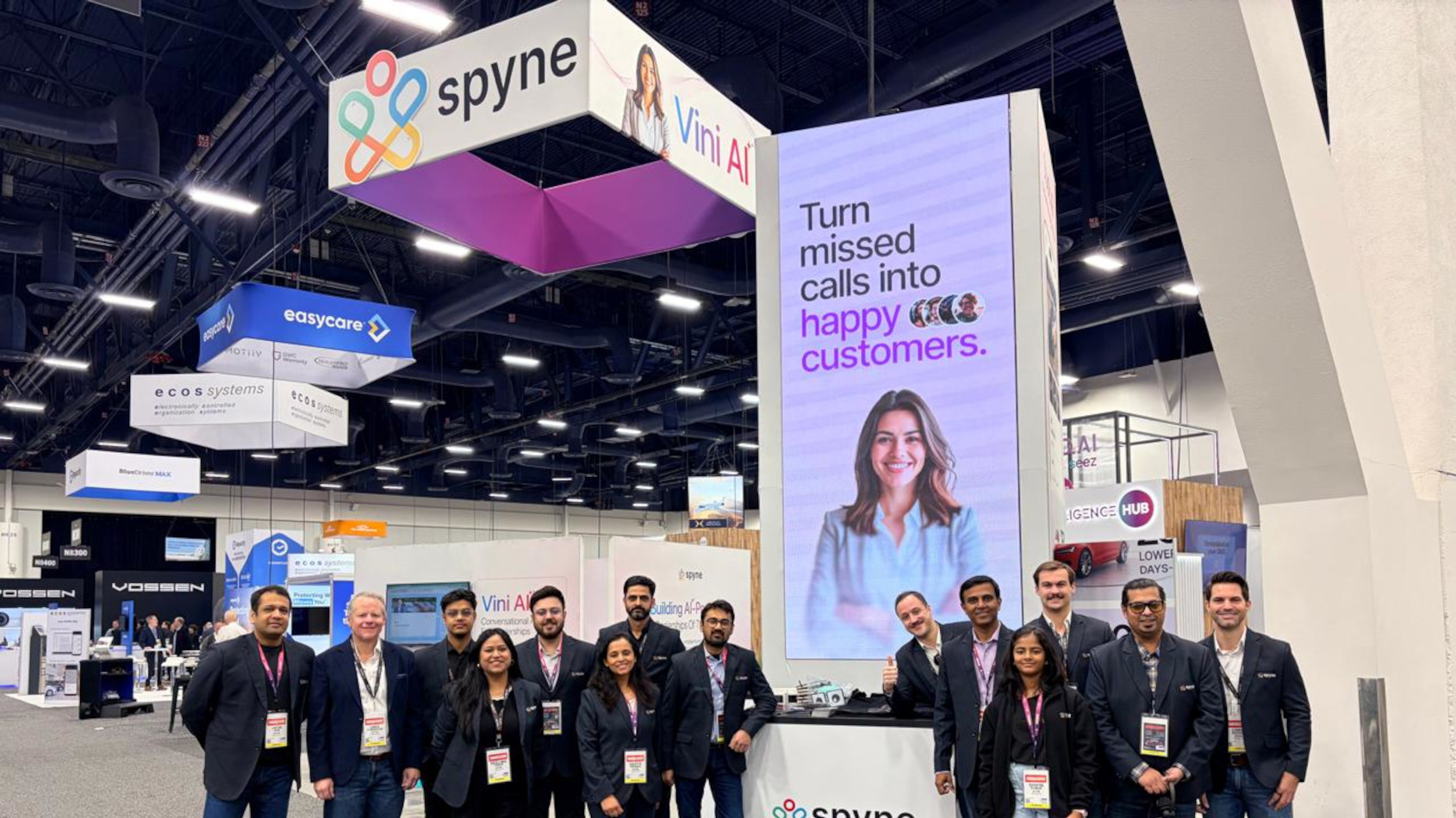
The listing acquires a voice
Once the vehicle is online, another delay becomes visible. A potential customer asks a question. Someone must answer, follow up and arrange the next step. Spyne expanded into this work with Vini AI, designed to handle customer conversations across sales and service.
By September 2026, the company had announced a CDK integration through the Fortellis Marketplace. This connected Vini to technology already used in dealerships, supporting inbound and outbound engagement. The development makes the progression from photographs to conversations easier to understand: both sit along the same route from inventory to a buyer.
Later that month, reporting put Vini’s deployment at 115 US dealerships. Its tasks included responding to questions, reconnecting with older prospects and scheduling appointments. These are specific jobs, with results a dealership can inspect. The ambition has expanded, while the work remains attached to one customer’s day.
Varnwal describes himself as a hands-on technology leader, involved with engineers and customers. In discussing product evaluation, he has described benchmark datasets, testing against earlier results and listening to users. The emphasis is on whether changes improve the business outcome. A convincing demonstration still has to survive a working dealership.
“As a techie myself, my role is intensely hands-on.”Sanjay Varnwal
A founder’s timing problem
There is a quieter detail in Varnwal’s founder story. Asked in 2023 what he wished he had known at twenty, he said he sometimes wished he had made the entrepreneurial move earlier. He had taken that step at thirty-four. The confidence to change course had arrived after years of building products for other companies.
In the same conversation, he mentioned reading Ben Horowitz’s The Hard Thing About Hard Things. It is an apt reading choice for someone whose business has required several changes of direction. The difficult part of a founder’s education is that the examination frequently arrives before the relevant chapter.
His stated ambition is now a broader operating system for dealerships, spanning more of the work around selling and servicing vehicles. That remains an ambition, with the practical burden that follows: each additional product must earn a place in the dealer’s routine.
The thread through Varnwal’s career is a repeated return to the transaction beneath the technology. Help a seller present something well. Remove a delay. Give a buyer an answer. Spyne’s next chapters will depend on how much of that work it can do reliably. The cars supply the glamour. The founder has chosen to work on the waiting.