The trouble with a warning is that it vanishes. A car drifts, a small black puck chirps, the driver corrects, and the whole incident disappears into the rear-view mirror. CARVI looked at that fleeting moment and saw two products. The first was obvious: the chirp. The second was stranger and potentially more valuable: the memory of what caused it.
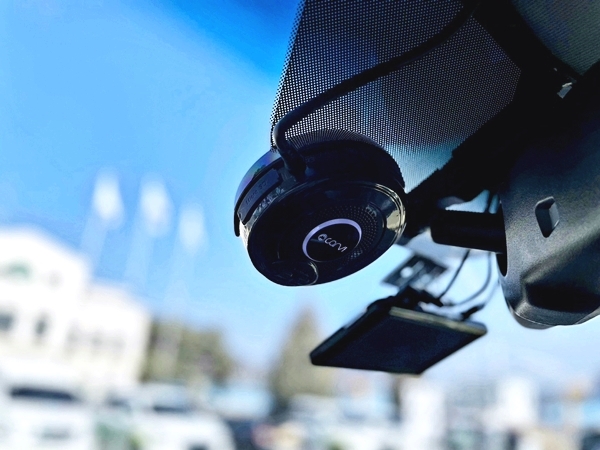
In its original consumer form, CARVI was a windshield camera linked to a phone. It watched lane markings and following distance, sounded forward-collision and lane-departure alerts, then summarized the drive. Here was advanced driver assistance for the large population of cars that had left the factory without it. The ordinary vehicle could acquire a watchful eye for $299, plus a reported $19 to $35 a month for data.
- What it does: turns video, sensors and road context into safety warnings, driver coaching and accident evidence.
- Who buys it: drivers, fleets, mobility operators and insurers; fleets had become the majority by 2018.
- What is different: CARVI tries to explain a risky event, not merely count it.
- What founders can copy: sell an immediate benefit first, then study the data exhaust for the larger business.
- The catch: cameras need a clear view, software needs reliable signals, and insurance innovation needs institutional permission.
The hockey puck learns to keep score
Founder Kevin Eunsu Lee is an engineer, and the early product had an engineer's delightful literalness. The puck-shaped unit came in black, white and rose gold. Its 720p camera could tilt electronically so the owner could calibrate it after moving it between cars. It used the camera view to find lanes and vehicles; the app turned sudden starts, abrupt stops, tailgating and unsignaled lane changes into a post-drive report.
The 2015 crowdfunding campaign gave the ambition a price list. Super-early supporters paid $249, ordinary buyers $299, hackers $499 for a development kit, and driving schools could take a "Baker's dozen" for $3,500. The campaign raised a little more than $105,000. It was a clean consumer proposition: bolt a modest piece of perception onto the car you already owned.
Then reality got into the passenger seat. The App Store warned that crowded urban Wi-Fi could upset the phone connection, tunnels could remove GPS, and background location could drain the battery. One reviewer complained of overheating and crashes. These were not philosophical objections to computer vision. They were the small irritations that decide whether a safety product is trusted on the hundredth commute.
The first thing to wobble was not the algorithmic dream. It was the connection to the phone.
That is the first useful lesson in CARVI. A safety device is a chain, and the cleverest link does not excuse the weakest one. Camera placement, calibration, glare, lane quality, GPS and connectivity all have votes. This system assists a human driver; it does not steer or brake, and it is not autonomous driving in miniature.
A hard brake is a fact without a motive
Traditional telematics is fond of clean numbers: distance, time, speed, acceleration. The numbers are cheap to capture and easy to put in a score. They can also be comically incomplete. A hard brake might describe a reckless driver who charged a yellow light. It might describe a prudent driver avoiding a child. The accelerometer records the same jerk; the road tells two different stories.
The same event, with its alibi attached
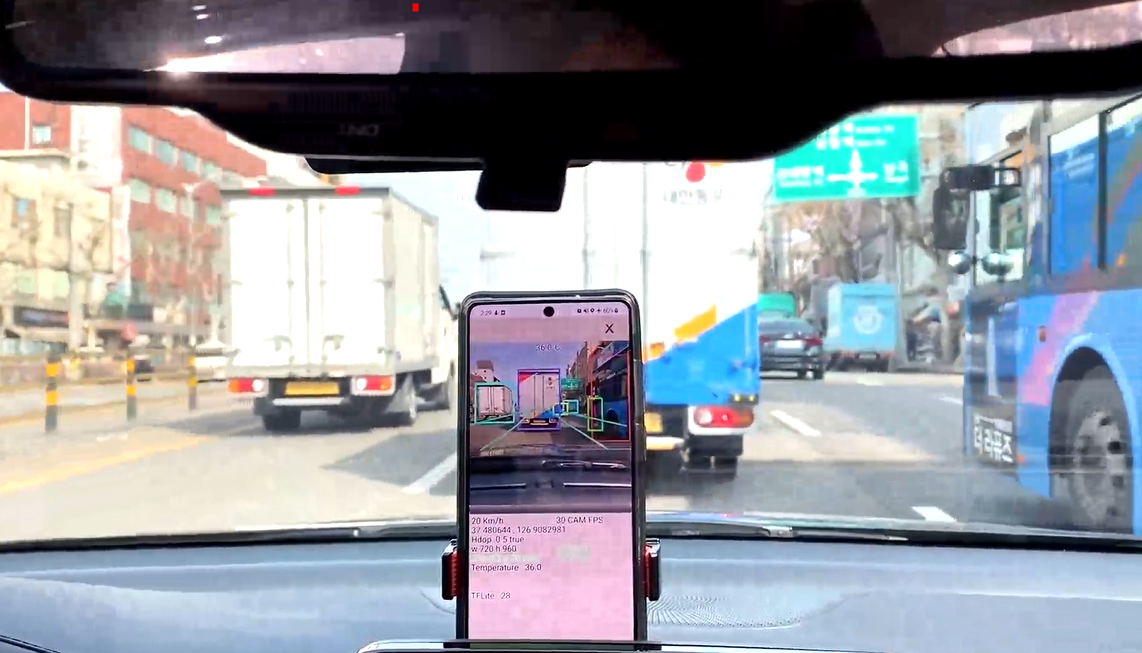
CARVI's central claim is that video plus location and road geometry can supply the missing motive. Its partnership with HERE Technologies in 2019 made the idea concrete: marry camera and sensor events to map context, then use the result for coaching, faster claims and fleet management. CARVI calls the broader approach behavior-based insurance, or BBI. Instead of pricing mostly by demographic proxies or simply by miles driven, an insurer could price observed habits.
The customer who cared more was running a fleet
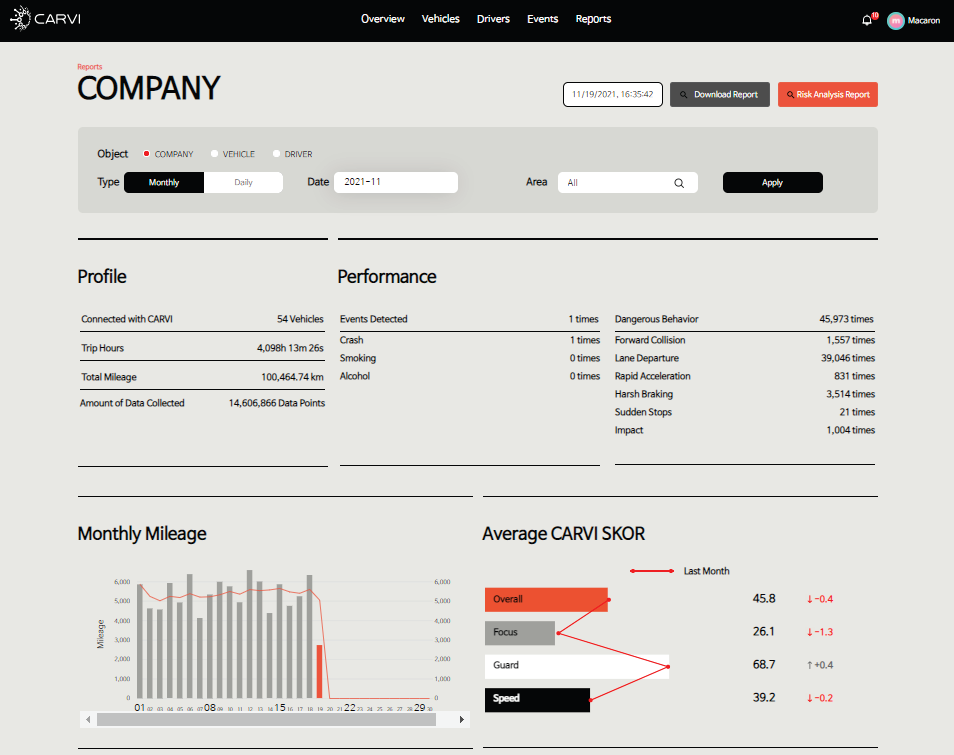
By 2018, WIRED reported CARVI devices on nearly 60,000 vehicles and said most customers were fleet operators. That fact explains the company's evolution better than any slogan. A private driver may enjoy a weekly score. A fleet manager has salaries, repairs, downtime, insurance and dozens of difficult conversations riding on it. The same alert becomes a management instrument.
CARVI's current menu reflects that pull. CARVI T packages image recognition, sensors and communications into a compact B2B device. The contextual data platform tracks vehicles, drivers and events. Automatic first notice of loss can send location, video and a report after impact. Accident-reconstruction software works from sequential images to restore the paths of the subject vehicle and the vehicle ahead. The patent record shows continuing work on curved-lane detection, median strips and path reconstruction.
One camera, five increasingly expensive questions
The business model stretched accordingly. Hardware remained the eye, but recurring connectivity, analysis and enterprise workflows became the memory. Insurers could use the record to sort high- and low-risk drivers, automate parts of a claim and test safer-driver discounts. Mobility and delivery businesses could watch operating risk. Drivers could receive an alarm now and a fairer premium later - if the insurer agreed with CARVI's definition of fair.
The algorithm was not the hardest sale
CARVI raised institutional capital along the way, including backing associated with Samsung, KT, POSCO, IMM, SBI and G.N. Tech. A reported $16.5 million Series B arrived in 2020. It also gained something more useful than a logo wall: KT and Samsung worked with CARVI on a safe-driving demonstration at CES 2016, while HERE supplied location intelligence for the contextual-data proposition.
Yet Lee's public frustration in 2022 concerned neither lane detection nor fundraising. It was the conservatism of the Korean insurance market. A technically credible scoring system does not become an insurance product by force of elegance. It needs actuarial proof, regulatory comfort, consent, data governance, an insurer willing to change underwriting and enough drivers to make the model meaningful.
That distinction matters because the copyable part is not “add AI.” It is the sequence. Start with a benefit that arrives in seconds. Save the evidence created while delivering it. Ask who has the strongest economic reason to study that evidence. Then build the workflow that turns a curious dataset into an operating decision.
The sequence will not work everywhere. It weakens when the camera cannot see, when maps or signals are unreliable, when too few miles produce a noisy score, when drivers reject surveillance, or when an insurer cannot prove the score predicts losses without unfair discrimination. Factory-installed systems also keep improving, narrowing the consumer case for an aftermarket warning device. CARVI's answer is to move up the stack, where the product is less about adding eyes to one old car and more about giving an organization a memory across many of them.
CARVI did not abandon the warning beep. It kept asking who would pay to remember what happened before it.
That is where CARVI fits now: between the dashcam and the insurer, between an event and its explanation, between driver assistance and automated driving. The company sells no magical exemption from accidents. It offers something more prosaic and perhaps more useful - an attempt to make dangerous moments legible before they become expensive ones.