A car dealership is an excellent place to discover that attention has a price. There are cars to sell, customers to find and plenty of companies offering to introduce the two. For Nathaniel Stevens, working in his father’s business supplied an early question: could a local merchant reach the customer directly, without paying so many people for the privilege?
The question became Yodle, the local online marketing company he co-founded while at Wharton. Years later, it would become part of Web.com in a transaction valued at approximately $342.4 million. But the interesting distance in Stevens’s career is geographical as much as financial. The business began with lessons from a Connecticut dealership. Today, he leads the family auto group in Milford, alongside his work in software and investing.
There is something pleasingly circular about that itinerary. Technology careers are usually described as a succession of departures: leave home, leave school, leave the old industry behind. Stevens’s career keeps returning to the counter where someone has to answer a customer’s question, collect a payment and persuade that customer to come back.
The customer had already moved
At the dealership, Stevens worked on online marketing. Car-shopping sites stood between sellers and prospective buyers, and he wanted a more direct connection. Search advertising offered one. People were already typing their needs into a search box; the local businesses equipped to meet those needs were struggling to appear in the results.
His early company was called NatPal. Its eventual name, Yodle, was shorter, though hardly more solemn. With a $30,000 loan from his father, Stevens began building a service for businesses facing the same difficulty. The family business had supplied both the problem and the money to investigate it.
Stevens and his childhood friend Ben Rubenstein entered Penn’s Venture Initiation Program, which gave them office space, printing and other practical support. Those are wonderfully modest ingredients beside the eventual acquisition price. Free printing rarely features in the mythology of entrepreneurship. At the beginning, however, a printer that belongs to somebody else can be a meaningful financial advantage.
- 2005Yodle founded at Wharton, initially called NatPal
- 2007Court Cunningham appointed CEO
- 2016Web.com completes the acquisition
There was a creative streak before there was a company. Born in New Haven, Stevens attended Amity High School in Woodbridge. He won a Connecticut Congressional Art Award in eleventh grade, played piano and percussion in a classic rock and blues band, played All-State lacrosse and captained the varsity soccer team. His interests left little room for the tidy label of future finance person.
That combination makes the choice of business less surprising. A painting, a musical arrangement and a new company all involve making something that did not previously exist. They differ considerably in their paperwork. Stevens’s early biography describes his attraction to putting academic ideas into practice, bringing creativity into contact with something that had to work.
A business measured in ringing phones
Yodle’s proposition depended on translating the machinery of online advertising into a result an owner could recognize. A campaign could contain keywords, bids and tracking technology. The person paying for it wanted an interested customer. A dashboard was useful insofar as it explained whether the money was doing its job.
The early pitch illustrated an unusually local vision of the worldwide web. It walked through choosing a business category, a target area, a budget and a template, then generating keywords and tracking responses. The ambition was to make specialized advertising work repeatable. An electrician should not need to learn an entirely new profession before appearing in front of someone who needed an electrician.
The company’s first client was Snyder Optical in Philadelphia. Another early customer, a salon owner, listened to recorded calls to check his leads and discovered that a receptionist had turned away a bridal party because the appointment book did not extend far enough ahead. The advertising had brought an opportunity to the door. The calendar had politely shown it out again.
It was a small incident with a large implication. Customer acquisition and business operations meet at an awkward seam. Bringing in more inquiries helps only when a business can respond to them. For Stevens, that seam would become fertile ground for another company.
“A critical learning at Yodle was that client retention is important”
Nathaniel Stevens, discussing Punchey in 2012
His colleagues brought different pieces of the operation. Rubenstein worked on sales. John Berkowitz helped take the business into Washington, D.C. Kartik Hosanagar brought research on search advertising and algorithms. Milind Mehere added software-industry experience. The company assembled a team around the gap Stevens had noticed, rather than expecting the original observer to perform every job himself.
The signature that changed his job
That last distinction became personal. Stevens was Yodle’s initial chief executive. As the company raised money and prepared to grow, the investors wanted an experienced leader. Giving up the position was difficult for him. Founding a business gives someone an unusually persuasive argument for remaining in charge: without them, there would be nothing to manage.
He eventually accepted the change. In March 2007, Stevens signed the offer letter appointing Court Cunningham as chief executive, alongside director Robert Stavis. The letter set Cunningham’s employment to begin that April. A signature is a quieter event than an acquisition announcement, but this one marked a consequential division of work.
The founder’s contribution and the later chief executive’s contribution belong in the same story. Cunningham would lead the company through its subsequent expansion. By 2013, Yodle had reached 30,000 customers and about 1,000 employees, with $132 million in revenue for the previous year. Stevens had left in 2010 to return to Wharton, then started working on Punchey.
The company’s reach kept expanding. In late 2013 its Charlotte operation had 120 employees and plans to grow to 250. Across six offices, it employed more than 1,100 people and served over 40,000 local businesses. A service conceived around nearby customers was now a substantial organization with its own demands for staffing, support and coordination.
Approximate total consideration, including $42 million deferred.
Web.com completed the acquisition on March 9, 2016. The deal put a price on a company built by multiple founders, employees and investors over more than a decade. Those figures describe the business being purchased. The more revealing detail in Stevens’s own working life is that he had already returned to the local merchant’s next problem.
After the customer arrives
Punchey moved his attention toward payments, customer information and repeat business. When it launched publicly in 2012, it announced $1.7 million in funding from Stevens Ventures. The early product supported transactions across mobile devices, computers and the store counter, joining payments to promotions and communication.
A transaction creates useful information: someone bought something, at a particular time, from a particular business. Remembering that relationship can make the next interaction easier. Stevens’s argument was that payment processing, marketing and retention could work together, rather than occupying separate little islands of software.
That idea has continued into Punchey’s combination of payments, scheduling and customer management for service businesses. Stevens now serves as founder and executive chairman. Sylvain Mansier is chief executive. In April 2024, ShopKeep co-founder and former chief operating officer David Olk joined the board, adding experience in point-of-sale software to a company working in the same practical territory.
The checkout counter has also taken him into public debate. In November 2023, he appeared on Texas Public Radio’s The Source for a discussion about tipping. The questions included payment-screen prompts, social pressure and who receives the money. A device designed to make a transaction simpler can introduce a remarkably complicated moment between two people.
It is a useful reminder of what his companies are dealing with. Software becomes part of everyday manners. It decides what the customer sees, what the employee has to explain and what the owner can understand afterward. The technical problem and the human problem share a screen.
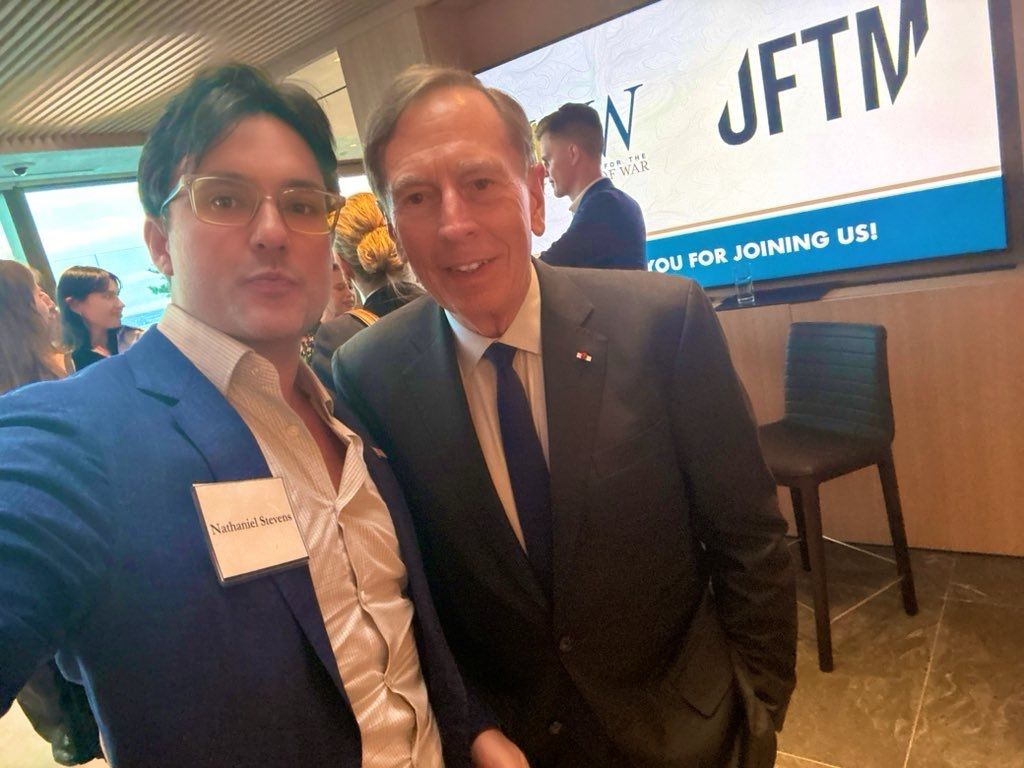
The road back to Milford
Through Stevens Ventures, he now backs businesses in areas including small-business software, financial services and online marketing. His stated interest is increasingly specific: systems designed around individual trades. Tattoo studios, pet groomers and auto detailers each have their own working routines. A program that understands those routines asks less translation of the person using it.
In a June 2026 essay, he set out the investment question in plain terms: does a product help the working day function, or merely add another dashboard? That is an aspiration rather than a promise that any particular investment will succeed. It does explain the continuity between the dealership, advertising and payments. Each starts with work someone already has to do.
Stevens Auto Group brings the argument back to its original setting. The business includes Stevens Ford of Milford, established in 1955, and Lincoln of Milford. As chief executive and dealer principal, Stevens is the third generation of his family to lead the operation. The company he helps run now is itself a local business, with all the ordinary obligations implied by those two words.
His account of coming back emphasizes continuity: a family enterprise can serve successive generations of customers, and accepting responsibility for it means carrying those relationships forward. There is no acquisition announcement that can finish that job. Tomorrow brings another customer.
The return gives his career a satisfying practical test. After years of selling tools to local operators and investing in people who build them, Stevens occupies the operator’s chair again. Somewhere between the search result and the showroom, an interested stranger still has to become a customer. He began by trying to shorten that distance. He is still working on it.
Follow the story
- Nathaniel’s website ↗
- LinkedIn ↗
- Instagram ↗
- Facebook ↗
- Stevens Ford on YouTube ↗
- Yodle: birth to buyout ↗
- The early Yodle pitch ↗
- The 2007 CEO appointment ↗
- Web.com acquisition figures ↗
- The One-Stop Online Marketing Shop ↗
- Listen: To tip or not to tip? ↗
- Why I Came Back to Run Stevens Ford ↗
- His vertical-software thesis ↗