At a pizza counter, a single order can come with more grammar than a term paper. Half mushroom, half pepperoni. Extra cheese on one side. Delivery, unless the customer arrives first. The order might come by phone, online, or from the person standing in front of the cashier. A generic register can total the bill. Whether it can keep the kitchen, the driver, and the customer on the same page is another matter.
The short order
- Instore sold iPad point-of-sale software to independent restaurants and retailers.
- Its historical software plans started at $39 and $59 a month, before setup, hardware, and card-processing costs.
- Slice acquired Instore in 2020 and launched a pizza-specific successor, Slice Register, in 2021.
- The lesson is in the workflow: put orders and customer records in the same system, then design for the trade’s awkward details.
The company behind that register began with a broader question. Own Group, Inc., founded in 2009, developed Instore as a point-of-sale system for small merchants. Its old LinkedIn page is now a signpost: “Own is now Instore; please connect to us at our Instore page.” The newer Instore page describes a product for restaurants and shops, with rewards, gift cards, employee management, online ordering, and reports. It is the kind of software that tries to make the till a modest operating system for a business.
A till with a memory
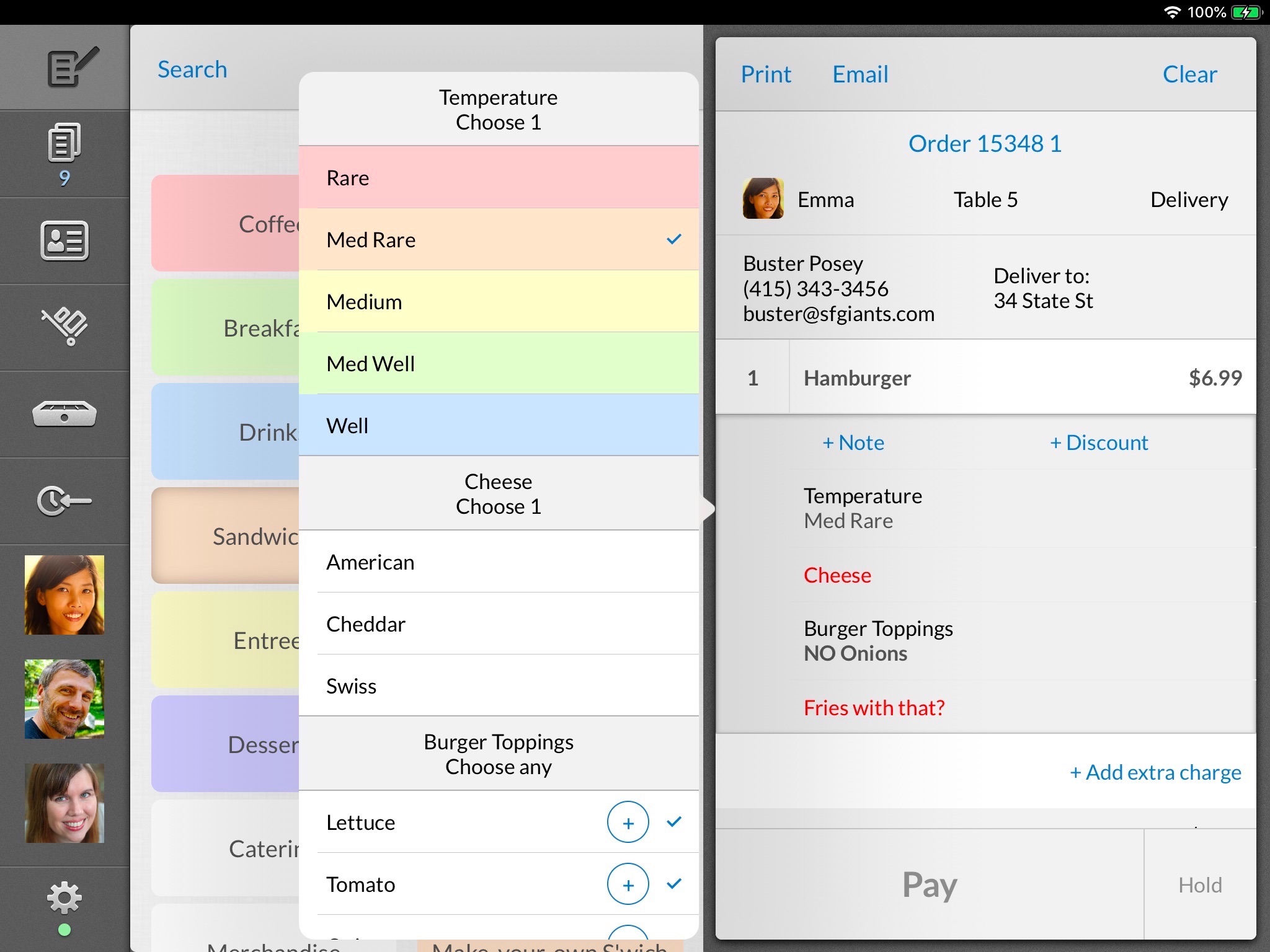
The original pitch was unusually humane for back-office software. Put the register on an iPad. Connect it to printers and a cash drawer. Let a shop owner see sales and employee activity in a browser, run promotions, and remember which customers return. Instore’s product description named quick-service restaurants, full-service restaurants, and retail shops. A contemporary review described two versions: Instore Pro and a lighter Instore Terminal. Neither was merely a card reader.
A server could park a restaurant order, attach a table number, and send a ticket to the kitchen. A manager could see clock-ins, inventory, and sales reports. Gift cards and rewards made the register part of the next visit as well as the present one. The app could keep taking orders during an internet interruption and forward stored transactions when service returned. At lunchtime, those details have a way of becoming less glamorous and more important.
The arithmetic deserves its own napkin. In a historical price review, Terminal started at $39 a month and Pro at $59. Setup added $99 or $199, respectively. Extra tablets cost more. So did compatible hardware; one basic iPad bundle was listed at $935.58, and a quick-service bundle at $1,253.57. Card-processing charges sat outside those figures. A merchant comparing point-of-sale systems had to ask for the first-year total, not admire the smallest monthly number. Those figures describe an earlier offer, not a current quote.
The features that arrived late
There was a seam in the product. A review of Instore praised its front-counter tools, then pointed to absent or still-planned back-office functions, including deeper accounting and supplier management, purchase orders, and ecommerce integration. The app’s later listing described online ordering among its capabilities, so the sensible reading is chronological: the platform changed over time. Still, the review catches a familiar trap. A register can be excellent at the moment of sale while leaving the owner to reconcile the rest of the business by hand.
That gap helps explain what made Instore a candidate for a different sort of company. Slice already worked with independent pizzerias and online ordering. Instore had years of restaurant POS work beneath its interface. Slice bought the San Francisco company in 2020; Instore’s CEO, Matt Niehaus, became Slice’s senior vice president for payments. The purchase price was not publicly disclosed. The result was Slice Register, introduced in March 2021.
“If you run a pizzeria, you are certainly great at making pizza, but you are typically less comfortable with the accounting side.”Matt Niehaus, then at Slice, speaking to TechCrunch in 2021
The first change was focus. Slice did not need to make an iPad till that could serve every kind of shop. It needed one that could handle pizza’s strange geometry: halves, toppings, delivery, pickup, and repeat callers. Its own account of Slice Register says it combined online, phone, and in-person orders in a single system, then attached customer histories, marketing tools, and reports. The purchase gave Slice a POS foundation; its network of pizzerias supplied a precise set of problems to solve.
The counter becomes a junction
The buyer changed the question
That is what distinguishes the second act. Square, Toast, Clover, and conventional restaurant systems could all compete for the same counter. Slice argued that a pizzeria had a more particular rival: the large chains with integrated ordering and customer data. At launch, Slice said more than 15,000 independent pizzerias were in its network. It could bring a register to businesses already using its ordering service, and it could make the data from a phone order and an online order describe the same guest.
This also changed the cost proposition. Slice initially offered Slice Register hardware and software without an upfront charge in 2021, with payment-processing fees still applying. A Slice blog post later that year described a $69 monthly subscription and an equipment promotion valued at about $3,000. These were launch-era offers, not timeless prices. They reveal something useful nevertheless: distribution, hardware subsidy, software fees, and processing rates are one commercial design. A cheap terminal cannot rescue an expensive system, and a free terminal has a business model attached to it.
Write down every way an order enters the shop. Follow each one until the kitchen receives it, the payment clears, and the customer can be recognized next time.
There is no public proof that Instore’s first broad product “failed,” and its acquisition is evidence of value rather than a postmortem. There is a narrower, better-supported lesson. The published review identified missing functions at one point in time; Slice’s launch materials then emphasized integrated online ordering and a specialized pizza workflow. The team moved from asking what a small merchant needs to asking what a pizza shop needs on a busy Friday. That is a change in the question, even if the underlying software was recognizably related.
Could another merchant copy the move? A bakery, florist, or repair shop could map its own awkward transactions first and buy software around them. Count the order sources, the modifiers, the handoffs, the repeat-customer information, and the real annual cost. The tactic works best where many merchants share the same peculiar workflow and the provider has a way to reach them. A lone shop with unusual accounting rules, heavy supplier-management needs, or a good existing system might get less from a specialized replacement. In such cases, integration with what already works may be the wiser purchase.
Instore started by making the register lighter. Its second life made the business around the register more specific. A pizza’s half-and-half toppings look trivial until they are written wrong, sent twice, or forgotten during the rush. The point of a good system is that nobody has to think about the register while dinner is being made.