A payment terminal is a wonderfully literal machine. A diner taps a card, a bank considers the proposition, and a receipt appears with the quiet confidence of a tiny white flag. For the restaurateur, however, that transaction arrives wrapped in a much larger opera: the table that needs turning, the server waiting on a tip, the ingredient whose price rose on Tuesday, the online order arriving through a separate screen, and the customer who would quite like to return next Friday. Matthew Hyman has spent most of his working life moving outward from the tap.
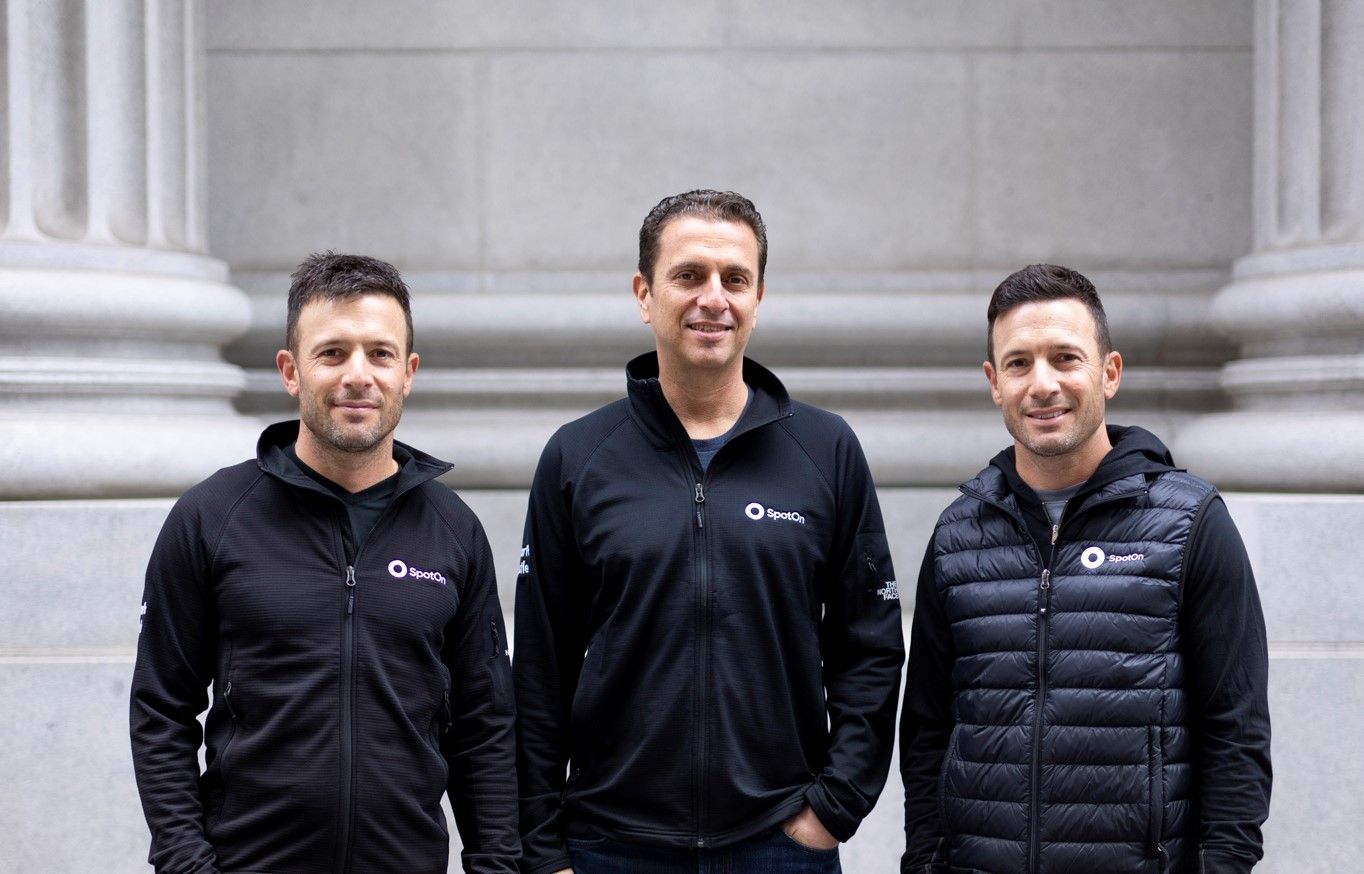
He began in payment processing around 2000 with his twin brother, Zach. Two exits and one stubborn software experiment later, Hyman co-founded SpotOn with Zach and Doron Friedman. The company now sells the premise that the point of sale should be less of a point and more of a nervous system: payments connected to ordering, reservations, labor, loyalty and the numbers that tell an operator whether dinner service made money.
Hyman's biography is sparse on private detail and crowded with businesses. This is fitting. His public language keeps returning to operators, products and systems, almost never to the founder mythology that technology executives are encouraged to manufacture. Even his favorite SpotOn maxim, “Think Big, Act Small,” keeps one foot firmly on the dining-room floor.
Three companies, one recurring customer
The brothers' first payments company was CardPayment Solutions. They started it as the technology economy was cooling in 2000, when accepting cards cost smaller merchants considerably more than it does today. Their proposition was plain: offer better service and better rates, and leave enough margin to build a durable company. They sold the business to iPayment about three years later, when they were 27.
There was an earlier chapter, and it belongs in the record. In 2001, Matthew and Zach Hyman and Productive Marketing settled Federal Trade Commission charges over the marketing and sale of auction-information guides. The agreement imposed consumer redress and barred specified practices. It also stated that the settlement was not an admission of a law violation. The episode preceded the long run of merchant-services companies that would define Hyman's career.
The second act was Central Payment, founded in the middle of the decade. The company processed transactions for small and midsize merchants, reached a 2012 joint venture with TSYS, and eventually grew into a national operation. In 2018, the brothers sold their final stake to TSYS at a reported valuation of $840 million. A tidy founder story might jump directly from that number to the next logo. The more revealing action had started years earlier, in an awkward attempt to sell something the existing machine did not understand.
The invoice that pointed beyond processing
Around 2011, Hyman described paying roughly $2,000 a month for help using Facebook to connect Central Payment with customers and prospects. It was an expensive way to discover that small businesses needed simpler marketing tools. The resulting SpotOn project took about 18 months and millions of dollars to develop. Its early form centered on loyalty and customer engagement, the kinds of software a merchant could use after the payment to bring a customer back.
The economics made sense. Loyalty companies needed distribution and revenue; a payments business already had both. The sales motion did not cooperate. Central Payment's representatives knew how to sell processing. Software required a longer explanation, more training and a conversation about how a business actually ran. The old channel treated the new product as homework.
The useful failure
Trying to sell loyalty software through a traditional payments force exposed a mismatch. The founders responded by building a separate software culture, then linking software and payments inside a new company.
That failure became a design brief. By 2017, the software had enough traction to spin out as SpotOn. The Hymans put in their own capital, later leading a $20 million investment in 2018. Friedman brought the perspective of a technology entrepreneur who had also run restaurants. The combination mattered: two decades of payment plumbing met the unruly choreography of hospitality.
“We truly believe that business is personal and our clients should never be on their own.”Matthew Hyman on SpotOn's “Make It Personal” value
Hospitality became a product requirement
Restaurant software is often sold as a list of capabilities. A restaurant experiences it as time. A lagging screen is a server stranded beside a terminal. A disconnected ordering system is a cook reading from competing queues. A support delay is a manager spending the evening as unpaid technical staff. SpotOn's pitch under Hyman has been to combine cloud software with local implementation, training and phone support, then treat responsiveness as part of the product rather than a cheerful extra.
In a 2024 restaurant-technology interview, Matt and Zach framed the market as a choice between old systems and impersonal technology. Their alternative was “technology delivered with a hospitality mindset.” It is a useful phrase because hospitality is judged in moments, not road maps. The soup can be excellent; if it arrives after the bill, the system has failed.
The company found its center among restaurants with one to 20 locations. These operators have enough complexity to need integrated reporting and labor tools, but not necessarily the headquarters staff to reconcile a bouquet of specialist apps. SpotOn's answer expanded from loyalty into point-of-sale, online ordering, reservations, scheduling, tip management and analytics. Acquisitions added restaurant POS, website building and labor management. The original payment did not disappear. It became the economic rail underneath a broader operating system.
A crisis made the values operational
The pandemic supplied a severe test. Restaurants lost dining rooms, retailers lost foot traffic, and SpotOn's own revenue fell with its clients'. Hyman described the response as a choice to pivot in support of those businesses. The company waived $1.5 million in software fees, helped clients with relief applications, introduced lower-cost private lending and accelerated commission-free online ordering. It hired while other technology companies pulled back and released more than 400 product innovations and upgrades in 2020.
This is where “Think Big, Act Small” becomes more than a handsome line for an office wall. The big decision was to keep investing while customers were in distress. The small actions were fee waivers, application help and a reordered product backlog. Hyman has said another value, “Be the Client,” is the one most central to daily operations. During a crisis, empathy acquired a shipping schedule.
The response also accelerated SpotOn's restaurant business. By May 2021, more than 30,000 businesses used its platform, and Hyman said the company was deliberately prioritizing product innovation and talent over immediate profitability. SpotOn raised $125 million that month. Later in 2021 it bought Appetize, moving into large venues, and acquired the labor-management company Dolce. In May 2022, a $300 million Series F valued SpotOn at $3.6 billion after its restaurant segment had tripled over the previous year.
“And the one I'm always going to go back to, no matter our size or reach, is ‘Think Big, Act Small.’”Matthew Hyman
The correction is still the strategy
Founders often present their third company as the inevitable result of the first two. Hyman's career looks more interesting when inevitability is removed. The early regulatory settlement is part of the record. So are the sales channel that resisted software, the expensive marketing lesson, and the pandemic decision that put SpotOn's own economics under pressure. Each chapter imposed a correction.
The durable insight was not simply that payments and software could share a bill. It was that an integrated product needs an integrated understanding of the customer. Restaurant operators do not wake up wanting financial technology. They want the schedule filled, the kitchen synchronized, the regulars remembered and the margin intact. The payment is evidence that all those systems briefly agreed.
Hyman's official biography says his passion is combining SpotOn's product and go-to-market capabilities to drive organic growth for small and midsize businesses. That sentence sounds like an executive memo. Beneath it is the more human ambition threaded through his public remarks: give smaller operators advantages usually reserved for companies with deeper pockets and larger teams.
After more than 20 years, the Hyman playbook remains unusually consistent. Stay close to the merchant. Notice the bill that should not be so large, the task that should not take so long, the software nobody wants to explain. Then build outward from the transaction until the technology begins to resemble service. A terminal can approve a card in seconds. Earning the next visit takes considerably longer.
Continue exploring