Alok Chanani had worked with people who could keep complicated buildings running. Yet the information needed to run their own businesses could be scattered across texts, spreadsheets and somebody else’s inbox. The equipment demanded precision. The office demanded a search party. For a former Army officer who had moved into commercial real estate and construction, this was an expensive arrangement to keep accepting.
There is a particular kind of business opportunity that becomes visible when you are the customer. You have a deadline. You need an answer. You care very little about whether the software involved belongs to an attractive investment category. Chanani came to commercial contracting from that side of the transaction, where a missed handoff eventually becomes somebody’s very concrete problem.
He co-founded BuildOps in 2018. By March 2025, the company had raised a $127 million Series C at a $1 billion valuation. Between those dates sits the more revealing story: an operator trying to make the machinery around skilled work behave with something resembling the competence of the people doing it.
An education in getting things there
Chanani says he joined the military shortly before September 11, 2001. The attraction was teamwork, camaraderie and a shared purpose. He began as a combat engineer and later commanded a unit in Iraq, where his responsibilities included transporting currency for infrastructure projects. Schools and water purification facilities were among the projects that money supported.
That background gives the word “operations” a weight it can lose in an office. Someone has to understand the objective, organize the resources and make sure the next person can do their part. A plan acquires value through execution. There are rather fewer prizes for a beautifully formatted intention.
After military service came Wharton, where he earned his MBA in 2010, and a return to Southern California. A Cornell graduate, he now had business school behind him too. His next education would take place in commercial property development and construction. He founded USA Commercial and worked on apartment developments around the country.
Property put him close to the people responsible for translating a building plan into a functioning place. Contractors became businesses he worked with, depended on and observed over time. This was useful preparation for a future founder: repeated contact with a customer before there was a product to sell.
The customer was already in the room
The mismatch bothered him. Commercial contractors could operate substantial businesses and work on complex sites while relying on an improvised collection of administrative tools. Their practical expertise had outgrown the systems carrying their information. Chanani knew the frustration as their client; he had a reason to notice where communication broke down.
His observation also changed the usual sales question. A contractor could have more work available than the company had capacity to complete. Finding another customer would add pressure to the same constrained team. The opportunity lay in helping the people already employed use their working day more effectively.
In 2022, he described owners spending too much time collecting information before they could make decisions. There is a quiet indignity in that: the person responsible for the company becomes its detective. The business may know the answer somewhere, but “somewhere” is an awkward place to keep a schedule.
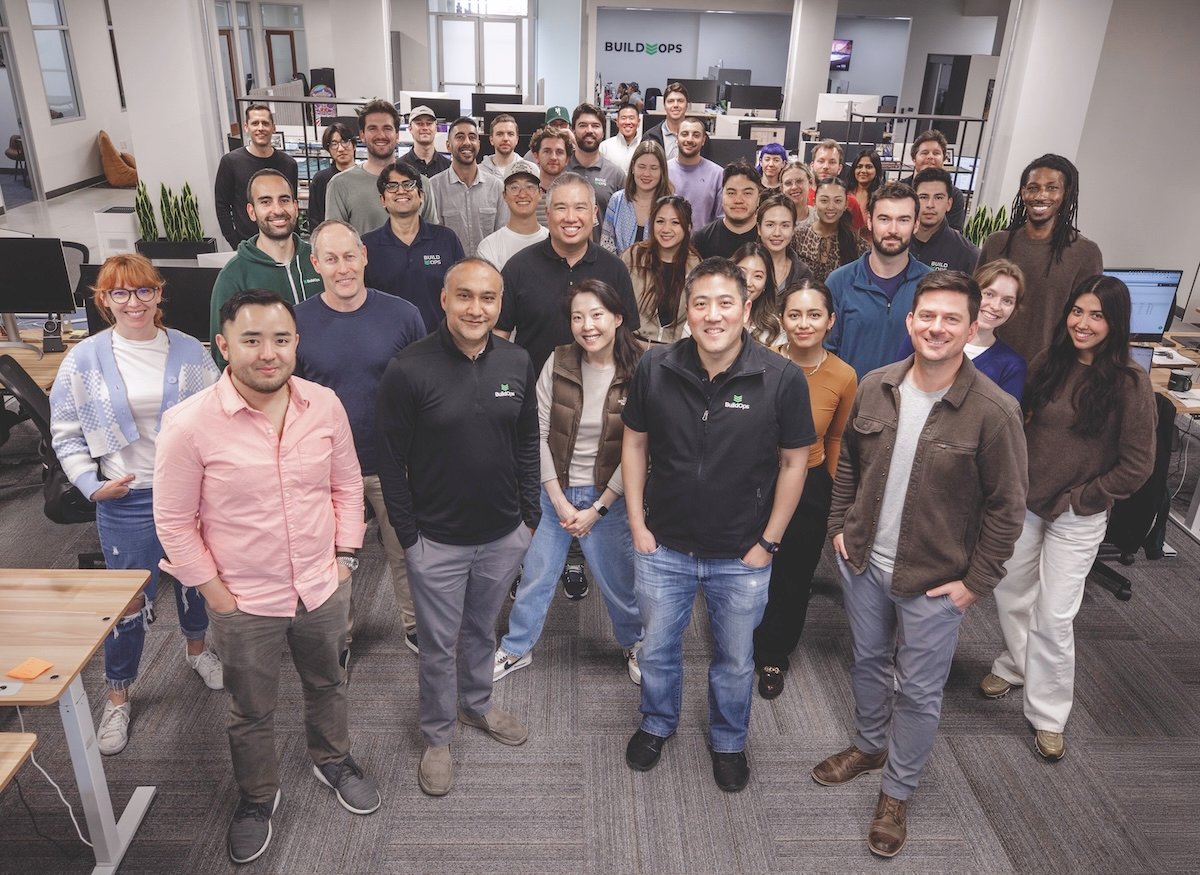
BuildOps brought scheduling, dispatch, project work and billing into a connected platform for commercial contractors. For Chanani, the market was familiar enough to be specific. HVAC, electrical and plumbing businesses have equipment histories, field crews and office teams to coordinate. Their administrative problems come attached to real work already in progress.
The advice he chose to leave on the table
An early product decision reveals how he approached the problem. Advisors suggested keeping BuildOps focused on service management. A narrower product would have meant a more defined category and fewer things to build. Anyone who has watched software development consume a calendar can appreciate the appeal.
Customers complicated the argument. Their businesses managed service and projects together, often using the same people and resources. They wanted those activities connected. Chanani and the team chose to invest in an integrated projects module, accepting more development complexity to address that working reality.
The decision mattered because a software boundary can create work for the person using it. If the same technician moves between service calls and installation projects, separating those worlds neatly on a vendor’s diagram does little for the dispatcher. A contractor still has to reconcile what the separate systems know.
Chanani has called delivering that module a favorite company memory. The detail is telling. The satisfying moment was a team completing a difficult piece of work after listening to customers. He remembers a product argument resolved through use, with the people paying for the software supplying the decisive evidence.
Shared people. Connected information. Fewer handoffs to reconcile.
A team has to know what it is doing
Chanani’s public discussions of leadership return to responsibility and trust. His military service provides a starting point, although he has described the transition into entrepreneurship as humbling. Business required him to work out the mission and the structure around it. A founder inherits very little of either.
His emphasis on teamwork complicates the familiar portrait of the solitary founder. A company needs people who understand the objective and can act together. The chief executive’s conviction cannot personally dispatch every technician or finish every product release.
“You can’t find success in the military as a lone wolf.”
Alok Chanani
Mentorship is another recurring subject. In his conversation with Fika Ventures, he discussed its importance to his development alongside the characteristics he looks for in a team. The relationship between those ideas is practical: leading a growing company includes being willing to learn from someone else.
He has also spoken about creating purpose by considering the customers of his customers. That moves the conversation beyond software users to the people relying on the buildings those users maintain. A maintenance record may look modest on a screen. Its usefulness belongs to a much larger chain of people trying to carry on with their day.
The company's Forge gatherings give that community a physical meeting place. Speakers have included military leaders and Mike Tyson; Mike Rowe was announced for the 2025 conference. It is a distinctive guest list for a software event. The common subject is work, leadership and the people expected to show up and perform it.
The billion-dollar interruption
The March 2025 financing put a conspicuous number beside Chanani’s idea. Meritech Capital led the $127 million round. The resulting $1 billion valuation made BuildOps a unicorn, an animal that remains considerably easier to locate in a funding announcement than on a commercial job site.
His announced priorities included faster development of AI features, more customer support and deeper industry relationships. Capital gives a company room to hire and build. It also creates expectations about how quickly those investments will become useful. The funding figure is immediate; the customer experiences the outcome over time.
There is a helpful piece of candor in his earlier comments about adoption. He has acknowledged that changing software is difficult for an organization. People have existing routines, however awkward those routines look from outside. A replacement has to earn its place during the working day, while the company using it still has jobs to complete.
That makes implementation part of the founder’s promise. The sale begins a relationship in which employees must learn a different way to coordinate. For someone whose opportunity came from observing the customer’s frustration, remaining attentive after the contract is signed is a reasonable test of the original idea.
There is also a difference between buying a tool and changing a habit. An office can introduce a new system and still have people reach for the familiar text message when a day becomes busy. The old route has the comfort of repetition. The new one has to demonstrate its value often enough to become ordinary.
That is where the contractor’s perspective remains useful. A field crew cannot pause its responsibilities while a vendor explains the elegance of an interface. The next appointment is still on the calendar. The office still needs the details. For a software founder, those constraints provide a demanding form of feedback: the product has to fit into a business that is already moving.
The next handoff
By June 2026, BuildOps said it served more than 1,500 commercial contracting businesses across North America. Chanani appeared on the 2026 LA500, his first year on the list. BuildOps also ranked No. 336 on the 2026 Inc. 5000, with 1,012 percent three-year growth. The early operating complaint now had a company of considerable scale behind it.
Growth changes the distance between a founder and the customer. More teams, more product decisions and more users create their own coordination demands. Chanani’s continuing task is to keep an organization built around contractors close enough to understand their work as it changes. Familiarity has to be renewed.
His ambitions include more practical automation and better use of operational information. That is a useful direction to judge in ordinary terms: whether a team can make a decision sooner, whether information arrives where it is needed, whether people can spend more of the day doing work they understand.
The settings in Chanani’s career have changed, from Iraq to Southern California property to a software company serving the trades. The recurring concern is recognizable. People have an objective and limited resources. Something has to reach the next person in time. He has spent much of his career paying attention to what happens in between.