The first thing to fail is rarely the building. It is the spreadsheet quietly pretending to be a system. One estimator has a price library; finance has Sage; the site manager has a stack of timesheets; and somebody called Dave knows which subcontractor invoice is actually a variation. As a contractor grows, those little islands turn into an archipelago. Eque2 has made a sizeable business out of building the bridges.
Based in Maidenhead, Eque2 sells business-management software for construction, contracting, housebuilding and maintenance. The company says more than 3,000 businesses use its products. Its latest filed accounts put turnover at £30.84 million for the year to April 2025, up 21.7 per cent, with an average workforce of 201. That is substantial scale for software concerned with such uncinematic things as retentions, applications for payment and the Construction Industry Scheme.
The software lives where the money gets awkward
Eque2 is easy to mistake for another project-management platform. It is more specific than that. Its territory is the commercial spine of a construction job: the estimate that wins the work, the orders and labour that consume the budget, the valuations that recognise progress, the retentions that delay cash, and the accounts that reveal whether anyone made money.
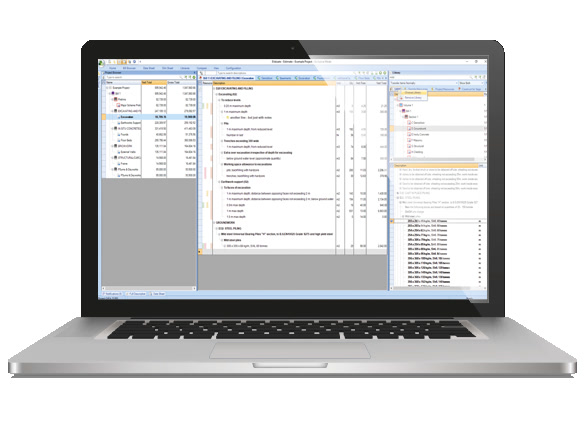
For smaller and mid-sized contractors, Construct adds job costing, purchasing, CIS processing, subcontractor management and contract reporting around familiar Sage 50 or Sage 200 accounts. For larger organisations, EVision places construction ERP on Microsoft Dynamics 365 Business Central. EValuate handles estimating, tendering and bills of quantities. Separate housebuilding software follows land appraisal through build, sales and customer care; maintenance tools schedule planned and reactive work; mobile apps carry approvals, purchase orders and timesheets to the field.
Tender
Estimate
Procure
Deliver
Final account
The distinction is the awkward vocabulary. Generic work-management software can assign a task. Eque2 is designed to know why a contractor needs a subcontractor payment certificate, a pay-less notice, a cost-value reconciliation or an HMRC-verified CIS deduction. Its products appear on the UK government's list of commercial CIS software suppliers. That domain knowledge is less photogenic than a 3D model, but it is much closer to the point at which profit leaks out of a project.
What changed their minds: the old system became work
Customer accounts repeat with almost comic precision. Multipave was managing job costs in spreadsheets and struggling with duplication, payment status and project performance. Persimmon's South West Wales groundworks team had elaborate Excel files that grew slower and more brittle as requirements changed. A.K.D Systems found paper timesheets increasingly time-consuming and risky as its workforce expanded. James Taylor Construction could not see committed order costs until invoices arrived. In each case, the existing workaround did not explode. It simply demanded more attention every month.
The buying moment tends to come when growth makes that attention unaffordable. Some customers want to keep Sage but need construction logic around it. Others need a single enterprise system instead of disconnected finance and operations. The appeal is evolutionary: familiar accounting foundations, specialised workflows, and fewer re-keyed numbers. Dulley Ceilings liked that Construct looked like Sage 50. Sizebreed made the same point. Familiarity reduced the cognitive toll of the switch.
“Previously it would take me up to two hours to pull this information from spreadsheets and now it's all done within two minutes.”KonFloor customer account
The results are concrete enough to be useful. King Builders reported cutting time spent on manual tasks by about 90 per cent. Kitchen Civils put the improvement in purchasing efficiency and accuracy at 50 to 60 per cent. Apple Orchard credited Construct Cloud with an 80 per cent increase in time-saving efficiency. John N Dunn Group said it could process twice as many invoices in the same time. ERH Group's cost-benefit analysis projected savings just shy of £500,000 over five years - explicitly by reducing firefighting and duplicate entry, not by removing staff.
A carve-out learns to compound
Eque2's own history resembles the integration story it sells. The operating business emerged in a £2.5 million deal in 2013 when management bought Sage Construction, a unit assembled partly from the earlier Tekton acquisition. Wes Simmons, then general manager of Sage Construction, became chief executive. The logic was blunt: Sage served many industries; the new company would concentrate on construction and contracting. Sage and Microsoft remained strategic partners.
Private equity supplied the next gears. LDC backed a £16 million secondary buyout in 2017. Over three years Eque2 acquired Miracle Dynamics, JNC Solutions and CliP IT Solutions, adding payroll, HR, job costing, maintenance and other products. During that period revenue rose 29 per cent, EBITDA 85 per cent and headcount 53 per cent. LDC exited in December 2020 in a £46.5 million transaction led by WestBridge.
WestBridge helped integrate the portfolio, expand management and push products towards software-as-a-service. By May 2024, when Bowmark Capital invested and WestBridge reinvested, Eque2's recurring revenue was growing at more than 30 per cent a year. The latest accounts show the operating company added 255 customers in FY2025. This is the classic vertical-software flywheel: specialise, buy adjacent workflow, connect it, then sell a broader system to the same kind of customer.
What did it cost?
Eque2's customer pricing is quote-led, so the honest buying budget includes more than a licence: implementation, data cleaning, migration, training and staff time all count. The publicly visible corporate price tags are clearer - £2.5 million for the 2013 carve-out, a £16 million buyout in 2017 and a £46.5 million exit transaction in 2020.
The moat is familiarity, with specialist plumbing
Eque2 competes with COINS, Access Coins Evo, Causeway, RedSky, 4PS Construct and newer cloud tools such as Archdesk. Procore and Autodesk compete for wider project-management budgets. At the small end, the stubborn alternative is Sage plus Excel - cheap, understood and already installed.
Eque2's answer is not to rip out every familiar tool. Construct wraps Sage; EVision uses Business Central; integrations add document capture, expense management and reporting. Many staff have worked in construction or contracting. In other words, the company combines the research-and-development budgets of large platforms with its own knowledge of British construction finance. That matters when a generic feature list runs into VAT, CIS, retentions or the statutory timetable for payment notices.
Its 2026 moves sharpen the same point. In June, Eque2 acquired Chalkstring, a cloud-native estimating and cost-management product for specialist contractors. The plan is to develop it towards the depth of EValuate while continuing to support established EValuate customers. In August, the company launched an EVision Subcontractor Portal covering online applications, assessment, certification and payment, including Construction Act notices. Both moves target the seams between companies, not merely departments.
The copyable lesson is boring on purpose
Software founders can copy Eque2's method without copying its market. First, choose a workflow where generic software almost fits but fails on industry nouns. Second, integrate with the incumbent system customers already trust. Third, measure the clerical pain in minutes, duplicate entries and delayed decisions, not airy transformation language. Finally, let adjacent products share data across a complete economic journey. Eque2 follows a job from tender to final account because that is where the customer can see the return.
Buyers can copy something too: begin with the fracture, not the catalogue. Map where an estimate is re-keyed, when a purchase commitment becomes visible, who owns a variation and how long a valuation takes. A live demo should use those real handoffs. The most persuasive Eque2 stories are not about buttons; they are about a report falling from two hours to two minutes or an invoice team doubling throughput.
The conditions matter
A broad ERP is a poor cure for a narrow annoyance. The approach is less suitable for a very small firm whose basic accounts and a disciplined spreadsheet still work, for a team seeking only drawing markup or site-task coordination, or for a company outside the UK whose tax and payment rules differ. It also underperforms when leadership will not standardise processes, clean data or give staff time to learn. Integration removes repeated work only after a business agrees what the work should be.
A market built from margin anxiety
Construction companies live with thin margins, long supply chains and project information that arrives from different places at different speeds. Eque2 sits between basic accounting and global project platforms. It is narrow enough to understand a retention, yet broad enough to sell from estimating through enterprise finance. That positioning explains both the customer range and the acquisition appetite.
The company is not selling the end of spreadsheets. No ERP has achieved that miracle. It is selling a smaller, more believable promise: the important number should not have to be typed twice, and managers should see trouble before the invoice makes it official. For an industry in which yesterday's price can spoil tomorrow's margin, that is useful plumbing - and, at £30.84 million in annual turnover, useful plumbing is clearly a business.