In July 2012, Janak Vakharia was explaining a piece of construction software that could send reports by fax. The fax is the detail that dates the conversation. Almost everything else sounds familiar: remote sites, awkward budgets, several currencies, people entering the same information twice. Fourteen years later, the machines around the building site have changed. Vakharia is still working on getting the numbers to agree.
That continuity is the interesting part of his career. With co-founder Seema Vakharia, he started the business behind Xpedeon in Mumbai in 1994. He has spent the intervening decades pursuing an unusually specific ambition: build software around the way construction actually works, then sell it across borders. A contractor should be able to follow a project through its commercial and financial life without assembling the answer from a small archaeology of spreadsheets.
Enterprise resource planning, or ERP, is an unpromising phrase for a personal obsession. It sounds like something discussed in a room with bad coffee. Yet Vakharia’s story has the ingredients of a more engaging enterprise: a small beginning, a difficult foreign market, repeated decisions to rebuild, and outside investment that arrived after the business had already learned to support itself.
A product company, from the start
The founding ambition was international. Mumbai was the starting point, rather than the intended limit. Vakharia wanted a product company: a business that would develop its own software and carry that product into other markets. Construction offered a particular opening because mainstream enterprise software did not adequately reflect the industry’s changing sites and project-based work.
His choice of industry imposed its own discipline. A project has a beginning and an end, but its financial story can cross accounting periods. The office needs to know what has been committed, the site needs materials, and someone must establish whether the work is making money. Those questions arrive together, however neatly the organisation chart has separated the people answering them.
The early business found customers in India before moving into the Middle East and then the UK. That sequence matters. Each new territory brought different contracts, financial requirements and working practices. Selling abroad also meant persuading customers to trust an unfamiliar supplier with processes that sat close to their money.
The regional detail is less glamorous than the phrase global expansion suggests. Vakharia has described accommodating India’s GST, VAT in the Middle East and NEC contract formats in Britain. A product crossing borders has to make room for those differences. The customer still needs familiar working rules, even when the supplier comes from elsewhere. That helps explain why international experience fed back into the software: each market supplied another set of requirements the team had to understand.
A formal marker survives from that expansion: Vakharia became a director of Algorithms Software UK Limited on 3 December 2001. It is a modest administrative fact with a larger implication. The international ambition had become an operating commitment, complete with the obligations that accompany a company on another continent.
Twenty-eight years between the company’s founding and its announced Norwest Series A.
The first British yes
Britain was a harder market to enter. Vakharia has recalled persevering until the company secured a first piece of business that helped further sales follow. A first customer in a mature market does more than contribute revenue. It gives the next prospective customer a less theoretical conversation.
There is no need to furnish that episode with an imaginary boardroom or a triumphant handshake. The useful detail is the persistence itself. The company continued pursuing a market where it had to establish credibility, and one customer helped open the next stage. In enterprise software, the breakthrough can look suspiciously like another meeting.
Years later, the customer relationships have become part of how Vakharia describes the work. In a public post about an annual gathering with JN Bentley, he named the visiting team and described reviewing the previous year while discussing the product roadmap. The conversation included the company’s AI plans. The relationship involved both looking back and agreeing what should happen next.
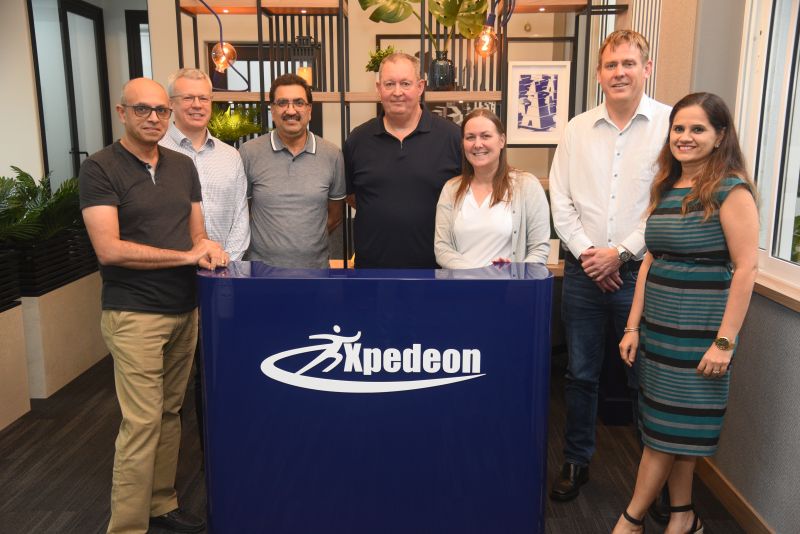
That is a revealing scale on which to view his career. A software business can announce a new market in a sentence. Keeping a customer engaged over years requires a continuing exchange about what works, what needs changing and what the supplier will build. The annual visit offers a less theatrical, more useful picture of international growth.
Learning enough to start again
Longevity brings an awkward question for a software founder: how much of the thing you built should you keep? In 2006, Vakharia and his team decided to rethink their legacy product. They used the industry knowledge accumulated since the company’s beginnings to build the modern Xpedeon platform. Experience became material for a new design.
The distinction between the company’s 1994 origin and the 2006 product rethink helps explain its development. This was a continuing business prepared to revisit its own work. The customer problem endured; the machinery used to solve it could be replaced. A founder who stays for decades has to make that decision more than once.
By 2012, Vakharia was discussing integrated costing, configurable reports and support for multiple companies, currencies and tax systems. He was also describing ways to avoid duplicate information and manual reconciliation. The vocabulary was less fashionable than today’s cloud language, but the commercial concern was already recognisable: provide a consistent account of what is happening across dispersed projects.
“The single biggest challenge is the disconnect between operations and finance.”
Janak Vakharia
That diagnosis gives his career a through-line. People at the site and people in finance can each possess accurate pieces of an incomplete picture. Connecting their work changes the quality of the discussion. A disputed number becomes easier to investigate when its origins can be followed through the same system.
Different responsibilities. Connected information.
Investment after the apprenticeship
The next rebuilding exercise took the product into cloud software. Vakharia described re-engineering the platform for a cloud-native SaaS model, responding to customers’ growing appetite for that approach. The change also supported his ambitions for a broader international business. A company already serving several regions was reconsidering how it delivered its product.
In December 2022, Xpedeon announced a Series A from Norwest Venture Partners. The announcement described expansion plans for North America, Europe and Asia-Pacific, alongside further development involving building information modelling and AI. For Vakharia, the funding marked a new stage in a business whose founding was nearly three decades behind it.
Niren Shah, who led Norwest India, described what Janak and Seema had built as a bootstrapped, profitable business. That description is important to the sequence. Institutional capital entered after the founders had established a working commercial operation. The investment would help fund expansion from that existing base.
Seema remains central to this account. She is Xpedeon’s co-founder and chief operating officer. Janak publicly acknowledges their shared role when discussing the company and its investor relationships. Reducing the story to one founder’s solitary determination would leave out a named builder of the business.
An invoice is a perfectly good place for AI
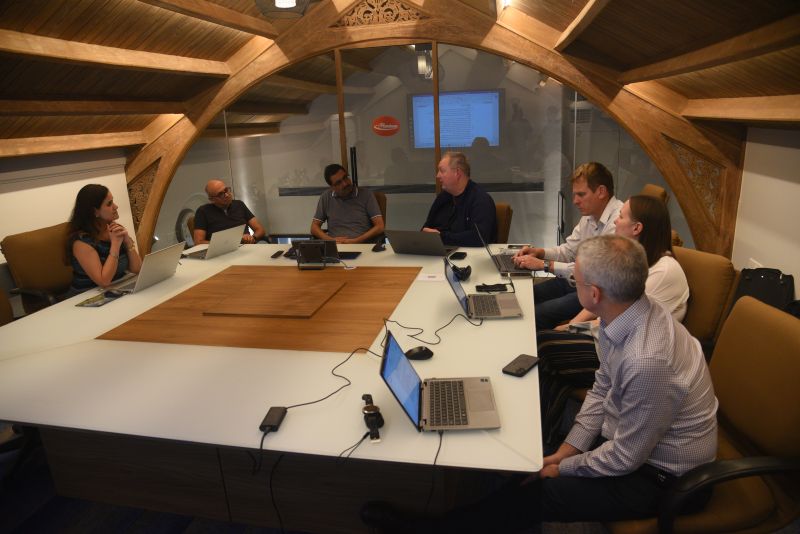
Vakharia’s recent technology interests include AI, connected equipment and automation. His examples are often gratifyingly practical. In an April 2025 interview, he described invoice matching that cross-checks delivery tickets, invoice details, quantities and rates. An invoice is hardly a glamorous ambassador for artificial intelligence. It is, however, something a contractor actually has to deal with.
He has also discussed RFID-based fuel tracking, linking refuelling to authorised equipment. These examples show how his technology agenda returns to the operational details of construction. A new capability earns its place by helping account for materials, equipment, time or money. The problem has a location and an owner.
Adoption presents a separate challenge. Vakharia has spoken about construction firms’ concerns over complexity, training and organisational change. His response includes onboarding, support and gradual modular rollouts. Even well-designed software needs people to understand their part in it. A product demonstration is considerably shorter than the working life that follows.
His sustainability argument follows similar practical lines. Better visibility into procurement and consumption can help teams avoid over-ordering and waste, while traceable records support reporting. He describes the contribution through the work the system helps people manage. The ambition is attached to orders, materials and decisions rather than left floating above them.
The piano, and the next project
There is a life beyond procurement. Vakharia’s interests include badminton, scuba diving and Western classical piano. His educational background includes a BSc in computer science and the Stanford Seed Transformation Program; his LinkedIn profile dates the latter to 2020-2021. Even an established founder had set aside time for a structured programme concerned with growing a business.
The piano is an appealing detail precisely because it need not explain the software. People are allowed hobbies without turning them into management theories. It adds another register to a public career otherwise full of cost controls, reporting and construction contracts. Somewhere beyond the quarterly discussion, there is music.
His public agenda continues to follow the industry’s changing work. He was advertised alongside Unanet’s Akshay Mahajan for a May 2026 webinar on data centre construction, with topics including supply chains, schedules and commercial visibility. The projects change; the coordination questions remain close to the ones that drew him into construction software.
Vakharia’s career is best understood at that patient scale. It runs from a Mumbai product business through foreign-market learning, a product rethink, cloud delivery and institutional backing. The fax has receded into office history. The ambition to give the site and the finance office a shared account of the job has proved much more durable.