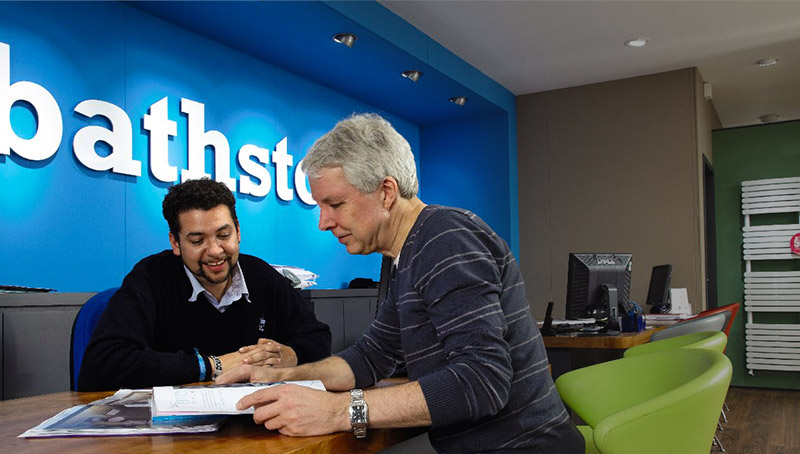
At bathstore, the future of bathroom shopping arrived on a tablet. An augmented-reality application let customers explore a design before committing to the real thing. The screen was the attractive part. Behind it sat a problem with considerably less showroom appeal: getting the right applications, settings and restrictions onto devices across 170 stores.
- Hexnode manages company devices, apps and policies from a central console.
- Its customer stories make a practical case for kiosk controls and responsive support.
- Its 2026 expansion reaches into threat detection, identity and AI-assisted operations.
Hexnode’s published account of that deployment offers a useful way into the company. Enterprise software often introduces itself with an acronym. This one is easier to understand through an ordinary question: once a business buys a clever screen, who makes sure it keeps doing its job?
Give the tablet a job description
Hexnode is the enterprise software division of Mitsogo. Founded in 2013, it is led by founder and CEO Apu Pavithran, with co-founders Bijo Paulose John as COO and Sahad M as CTO. Its main product, Hexnode UEM, gives IT teams a central place to enroll devices, distribute applications, enforce policies and administer a scattered fleet.
UEM means unified endpoint management. The endpoints include phones, tablets, desktops and other work devices. Hexnode supports Apple, Android and Windows environments, alongside platforms including Linux, ChromeOS and Fire OS. The point is to bring several kinds of equipment into an administrative system that follows the organization’s rules.
A showroom tablet is a particularly revealing example. The business wants some of the machine’s capabilities and very little of its freedom. Kiosk mode can restrict it to selected applications or websites. IT can distribute updates and configure settings remotely. The tablet becomes a purpose-built tool without the retailer having to manufacture purpose-built hardware.
Identity → apps → policies → remote attention
The feature list did not answer the phone
In Hexnode’s bathstore account, the first obstacle was inadequate support from other products Mark Guest had tried. Guest was new to the field. He needed help translating a retail requirement into an actual deployment. The account credits Hexnode’s support with helping him implement the system, including app delivery, Wi-Fi configuration and kiosk policies.
That distinction matters. Two products can promise similar controls while placing very different demands on the person configuring them. Here, the buying decision turned on the ability to have a useful technical conversation. The lesson for buyers is concrete: include a difficult setup question in the trial, and see how the answer changes the outcome.
The same administrative need appears elsewhere. Captain Cook Cruises equipped crew members with mobile devices for scanning tickets on Sydney Harbour. Kensington Exclusive Properties needed to deploy apps and track company iPhones used by traveling staff. Different scenery; familiar work behind the screen. These are historical, vendor-published customer accounts, rather than guarantees of a new buyer’s results.
The price of a well-behaved fleet
Hexnode sells subscriptions by managed device and feature tier. Its current cloud plans begin at 15 devices, with a 14-day trial. The displayed Pro rate is $2.20 per device per month; Enterprise is $3.20 and Ultimate $4.70. Ultra requires a quote. Billing choices matter, and the pricing page advertises an annual discount.
The important arithmetic starts with the required task. Desktop patch management and desktop remote control sit in Ultra. A buyer who needs those capabilities cannot budget using the entry tier. Enrollment work, application testing and policy design also consume staff time, even when the license is inexpensive.
Hexnode competes for the same buying decision as Microsoft Intune, Omnissa Workspace ONE, Jamf, SOTI and other management tools. Its case rests on managing mixed fleets and dedicated devices together. The comparison should follow the fleet: existing licenses, operating systems, kiosk requirements and support needs can change which product makes economic sense.
A central console also inherits the limits of the devices beneath it. Enrollment mode and operating-system permissions determine which controls are available. Android zero-touch enrollment, for example, depends on eligible devices and procurement arrangements. A personal phone and a company-owned kiosk should have different policies. Platform coverage alone does not settle those details.
Now the console wants to connect the dots
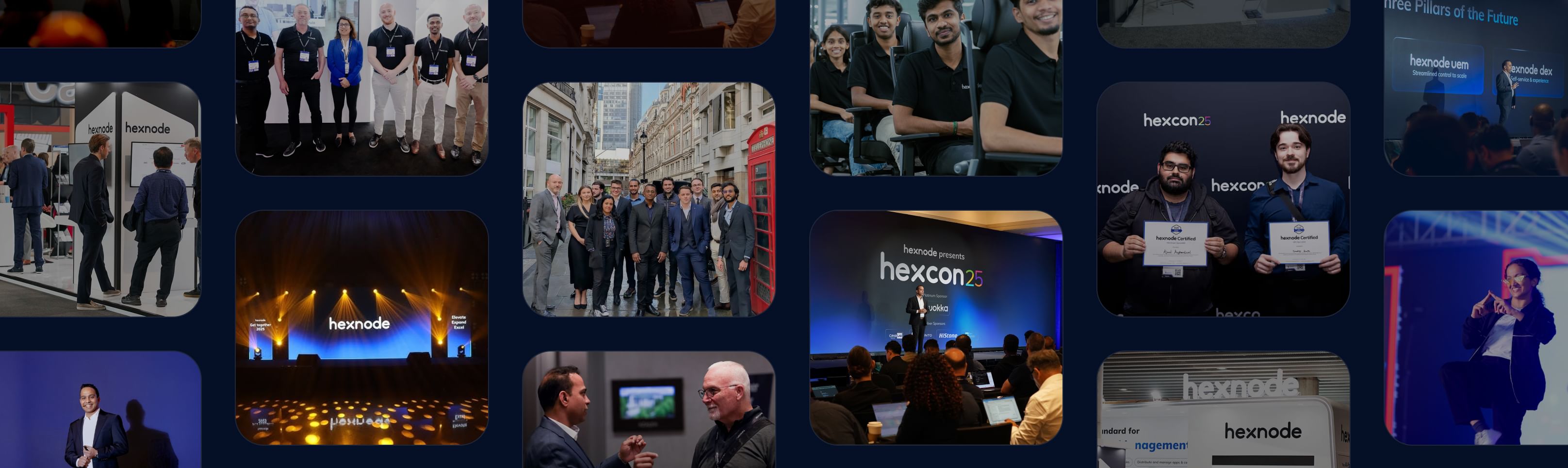
During 2026, Hexnode widened its ambitions. It announced XDR for threat detection and response in January, followed by a native identity provider in March. IdP ties access decisions to device compliance. Those moves place management, security and login decisions closer together.
“If you look at the real work of IT, nothing ever happens inside just one system.”Apu Pavithran / Synapse announcement, September 2026
September’s Synapse announcement proposed coordinating AI agents across Hexnode products and systems including ServiceNow, Zendesk, Microsoft Entra ID and BambooHR. Sensitive actions would pass through approval gates, with execution records showing what happened. The announcement scheduled an invite-only trial for later in 2026. It describes a direction and a forthcoming trial, rather than proving widespread deployment.
Copy the pilot, then scale it
The practical takeaway is pleasantly unglamorous. Write down a device’s job. Test enrollment, app delivery, restrictions and recovery on real hardware. Ask support to help with something awkward. Check what happens when a device loses connectivity or an employee leaves. Those are suggested buying tests, grounded in the work these deployments require.
Hexnode’s attraction is clearest where many ordinary devices must behave consistently across distant places. A tiny fleet may struggle to justify the subscription minimum; an organization already well served by another platform may gain little from switching. But the showroom story captures a durable need. A convincing demo lasts minutes. The tablet has to be ready again tomorrow.
Open another tab
Explore Hexnode ↗ Current plans ↗ Product news ↗ Learn the console ↗