At MRF Tyres, the tablet had a modest assignment: run the company’s app in a shop. A perfectly capable Lenovo device was being asked to behave like a piece of shop equipment. But ordinary tablets come with buttons, settings and the invitation to wander. A customer-facing tool could become somebody’s entertainment system with a few taps. The machine had too many talents for the job.
- 42Gears manages the fleet: enroll devices, deliver apps, enforce policies and troubleshoot remotely.
- Its kiosk tools narrow the job: approved apps, controlled browsing or looping videos.
- The economic bet: paying for control costs less than repeatedly touching every device.
- The surprise: its own stranded testing phones helped produce a second business, AstroFarm.
42Gears supplied SureMDM, SureLock and SureVideo. The first managed the tablets centrally; the second kept them inside the permitted app; the third could turn them into video displays. MRF’s published case study reports a 35% reduction in in-house technical support spending. That is a customer result presented by the vendor, rather than a prediction for the next buyer. Still, it points to the bill that arrives after the hardware invoice.
There is a small, lovely detail in the deployment. When connectivity failed, SureLock automatically opened the Wi-Fi controls so the user could reconnect. Even a carefully restricted device needs an escape hatch. The object of control is to keep the shop working; a tablet obediently displaying a broken connection would be a rather expensive ornament.
The tablet with too many talents
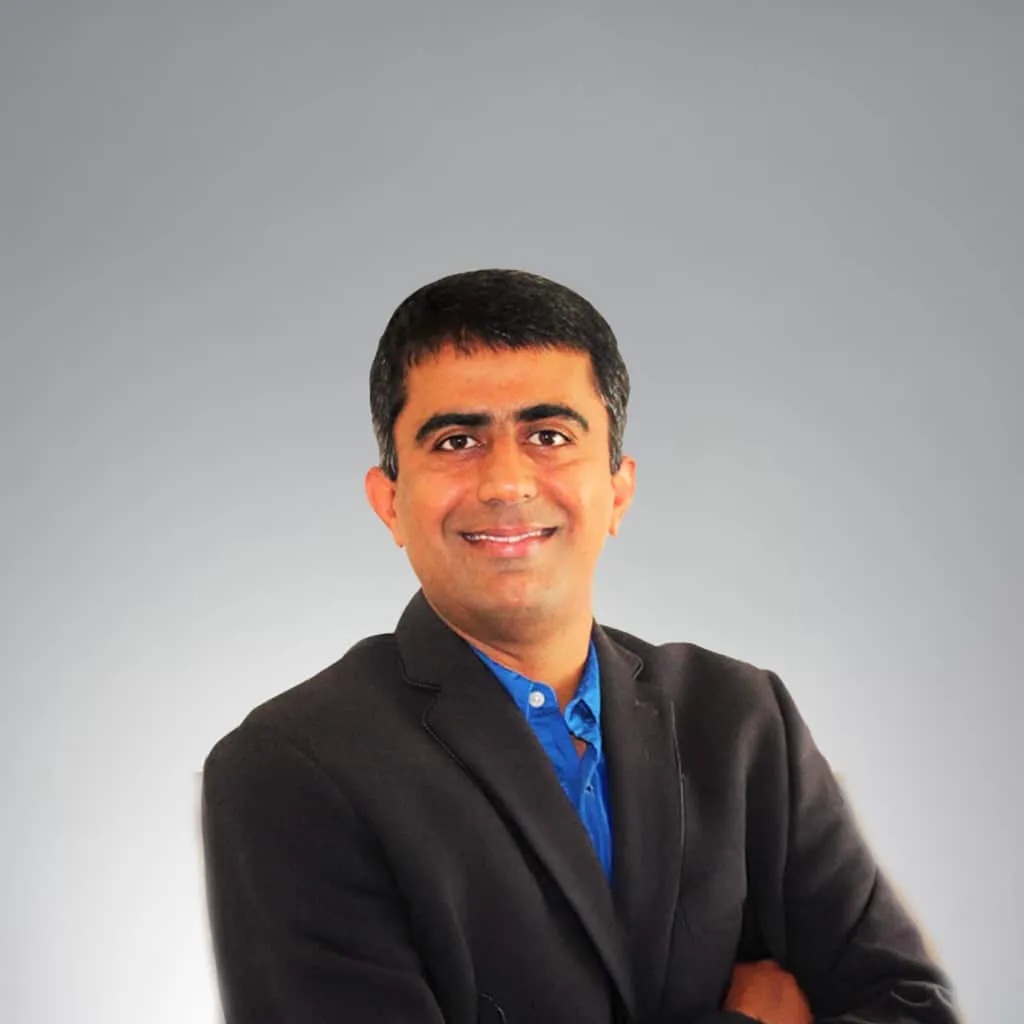
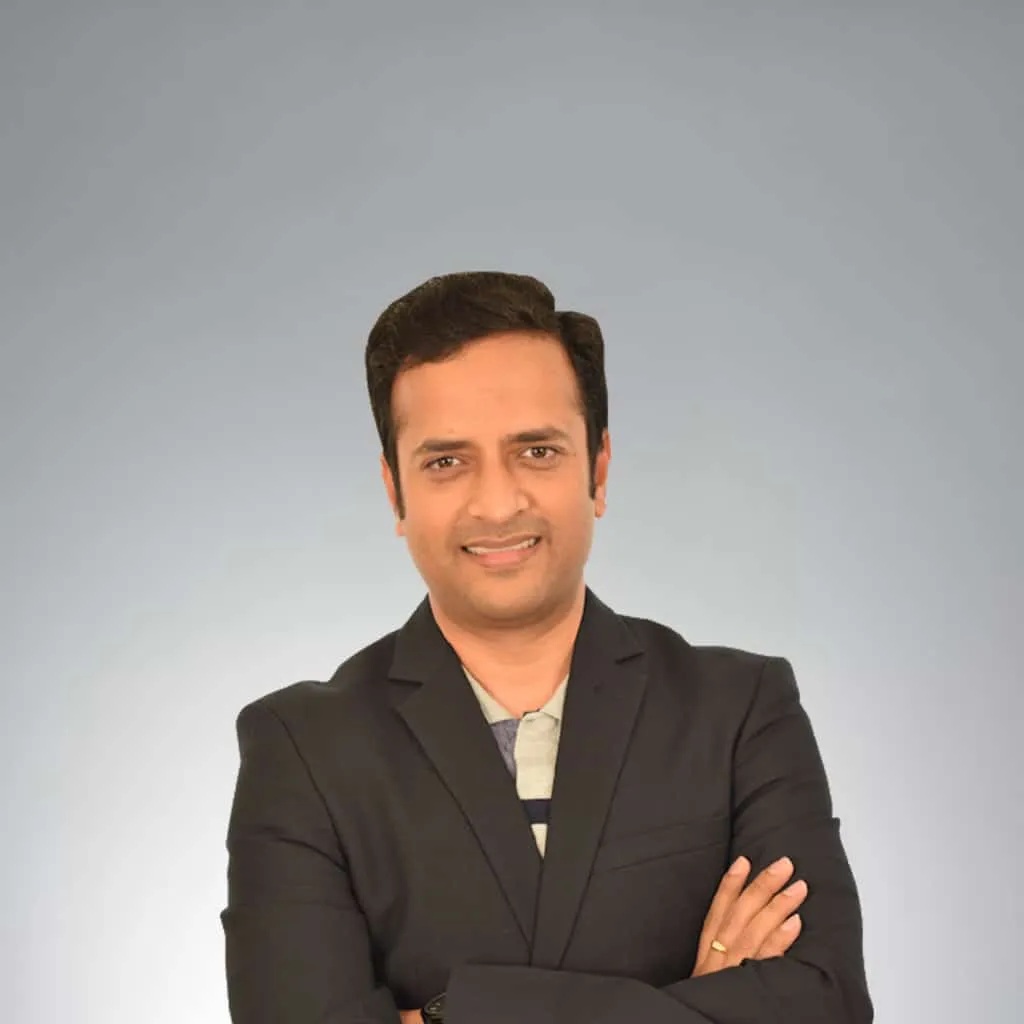
Onkar Singh and Prakash Gupta founded 42Gears in 2009. By June 2015, YourStory reported more than 5,000 clients in 90 countries, compared with roughly 150 customers five years earlier. Its current website reports more than 23,000 customers and seven million deployments. The scale has changed. The recognizable problem is still a collection of devices that becomes awkward when nobody can visit all of them.
The company’s name has a nerd’s wink: 42 comes partly from Douglas Adams’ The Hitchhiker’s Guide to the Galaxy. The gears are people and devices working together. A cosmic answer is an ambitious name for software whose daily triumph might be updating a tablet without putting an engineer in a car. Yet that unglamorous task explains why the business exists.
In a 2017 interview, CFO Ashok Poojari described 42Gears as bootstrapped and emphasized the discipline of limited resources. That historical description suits a company selling ways to avoid repeated spending. Its public social programs are similarly concrete: school meals through Akshaya Patra, support for children’s medical treatment, and school water and sanitation projects. These tell us what the company chooses to support, rather than how every employee experiences a working day.
Its buyers are IT teams supporting stores, warehouses, healthcare organizations and mobile workers. An office laptop belongs to one person. A shop tablet may belong to a location, a task or several shifts. That difference changes what “working properly” means. The screen should open the right application, keep its settings and be recoverable by someone miles away.
A fleet needs rules, and a way out
SureMDM is the central management product. It handles enrollment, configuration, application delivery, monitoring and remote support across mobile and desktop platforms, including Android, Apple operating systems, Windows, Linux and ChromeOS. Cloud and on-premise deployments give customers a choice about where the management system runs. Features still depend on platform and configuration; a broad compatibility list is the beginning of a buying conversation.

Around that console sit narrower products. SureLock restricts access to approved apps. SureFox controls browsing. SureVideo plays looping content. These are practical distinctions: a worker’s handheld, a public browser and a promotional display should not all receive the same rules. Buying “security” without specifying the job is like ordering shoes without mentioning whose feet they are for.
Collateral Opportunities, a healthcare technology provider, described the original friction precisely. Applications and updates had to be installed device by device; reboots happened individually; staff could leave the intended apps. It adopted SureMDM and SureLock, remotely delivered updates and scheduled restarts outside working hours. Its case study reports 90% less troubleshooting time and device setup taking half as long across a deployment of more than 600 Android devices.
“We don’t worry about how we will support these devices anymore.”
Michael Kusens / CTO, Collateral Opportunities
In the published 42Gears customer case study
This is an operating proposition with a security component: stop asking each person at each site to repeat a procedure correctly. Define it once, distribute it and give the support team visibility when something goes wrong. The attraction is less heroic troubleshooting.
The test phones nobody could reach
Then 42Gears encountered its own version of the problem. During pandemic remote working, developers and testers needed hardware sitting in other offices. The phones existed. Access did not. Shipping devices consumed time and money, and the company says the cost and risk could rival the value of the hardware itself.
AstroFarm, launched in November 2020, made company-owned devices available as a private testing farm. Engineers could reach real Android and iOS hardware remotely for development, debugging and automated testing. Instead of purchasing the same model for every location, teams could share a pool. The change was in access to existing inventory.
Those figures give the origin story some teeth. They do not establish that every team will save half its budget. A private farm requires owned devices, infrastructure and administration. A public testing cloud may be useful when the required model is one you do not possess. By August 2026, 42Gears was explicitly describing AstroFarm as a private layer alongside public device farms. The practical lesson is to share what you have before buying another copy.
The price of staying put
42Gears sells business software through subscriptions and partners. Published monthly Android SureMDM list prices, checked in September 2026, are $3.99 per device for Standard, $5.49 for Premium and $7.99 for Enterprise. Annual billing, negotiated volume terms, taxes and add-ons change the total. Identity and secure-access features can carry separate charges.
Illustrative arithmetic, before taxes, discounts or add-ons. Not a customer invoice.
A buyer should compare that subscription with the actual alternatives: support time, trips to branches, failed updates and whatever management licenses the organization already owns. Microsoft Intune covers cloud endpoint and application management. SOTI MobiControl addresses enterprise mobility, including rugged devices. Remote control and policy enforcement alone do not make 42Gears unique; other vendors sell them too.
Its particular case rests on the combination of dedicated-device controls, heterogeneous hardware, remote support and deployment choice. That is an editorial reading of the product mix, not a claim that it wins every comparison. An organization already satisfied with its existing endpoint system needs a specific operational reason to switch.
A printer joins the conversation
The boundary of the fleet keeps expanding. In July 2025, 42Gears announced a SATO collaboration covering supported industrial, desktop and mobile printers. Remote configuration includes print speed and label settings; diagnostics include printhead health. A label printer rarely appears in the glamorous illustrations of digital transformation. It becomes extremely noticeable when labels stop coming out.
The same widening logic applies to customers who manage other customers. SureMDM Hub gives service providers a multi-tenant console with separate client environments and centralized license administration. Moroccan integrator AGT MAROC reports up to 50% less administrative workload after adopting it. Here, the repeating task is tracking deployments and renewals rather than fixing an individual screen.
- 01EnrollBring hardware into view
- 02DefineGive it apps and rules
- 03MaintainUpdate and support remotely
- 04VerifyCheck user and device access
SureIdP, launched in June 2025, takes the company into identity and access management. It combines user verification with device compliance. The question becomes whether this person, on this device, should get access under the relevant conditions. Its arrival connects the older task of keeping hardware configured to the newer task of deciding who may use it.
Borrow the method before the software
For an operator, the useful first move is an inventory of repeated work. Which updates require a visit? Which settings do people accidentally change? Which test devices sit idle while another team orders duplicates? These are questions a buyer can copy from the customer stories without first signing a contract.
Then run a pilot on the actual hardware and enrollment mode, with the actual applications. Try an interrupted network, a failed update and the recovery route. Check which remote actions the operating system permits. Lockdown that blocks a needed workflow, a console that cannot reach its endpoints or a private lab missing the required test models will frustrate the purpose of the purchase.
42Gears’ most persuasive idea is the one demonstrated by MRF’s Wi-Fi escape hatch. A device has to be controlled enough to stay useful, and flexible enough to recover. The tablet can retain its many talents. At work, it needs to know which ones to keep to itself.
Put the devices to work
Explore the products, read deployment stories or watch the console in action.