A restaurant iPad has a peculiar career. It sits within reach of strangers, accepts their instructions and is expected to remain devoted to a single task. Give it too much freedom and it becomes an expensive distraction. Give it too little and nobody can order lunch. Somewhere between the two is a person in IT trying to make the thing behave.
- Mitsogo makes Hexnode, software for managing and securing work devices.
- Its customers need phones, tablets and computers to follow company rules across locations.
- The business has expanded into threat response and identity, with orchestration announced in 2026.
- The buying question: which everyday jobs will it remove from your IT team?
The tablet with a job description
Skyline Dynamics provides a useful opening scene. In Hexnode’s published customer account, the company deployed iPads as self-service kiosks across restaurants in different locations. Managing them manually became difficult. The machines had multiplied; the team’s ability to attend to each one had not.
That is a modest problem with substantial consequences. A kiosk needs a defined purpose. Someone must decide what appears on its screen, which applications belong there and how a change reaches the next location. The tablet’s physical presence is obvious. Its administrative needs are rather less photogenic.
Mitsogo occupies that space. Its enterprise software division, Hexnode, gives administrators a central place to manage devices. Kiosk controls can narrow a device to approved applications. App management distributes the software it needs. Remote tools let IT inspect or address supported problems without standing beside the machine. The appeal is easy to grasp if you have ever traveled somewhere to change a setting.
When the phone escaped the office
Mitsogo was founded in 2013. Its founders include Apu Pavithran, the CEO, Bijo Paulose John, the COO, and Sahad M, the CTO. The original opportunity was the growing presence of mobile devices at work. Offices had become accustomed to desktops. Phones and tablets brought another set of systems, permissions and habits through the door.
In a 2022 interview, Pavithran described starting with mobile device management and smaller businesses. As Android, Windows and other platforms gained ground alongside Apple devices, the product moved toward unified endpoint management. The acronym changed because the job changed: an administrator needed to deal with the whole fleet.
“Unified” is an ambitious word in an office where one person uses a Mac, another uses Windows and a counter runs Android. Hexnode’s supported platforms now extend across mobile and desktop operating systems, with television and specialized device support too. That breadth is useful precisely because companies rarely assemble their hardware with the tidiness of a software demonstration.
Four connected responsibilities. Product capabilities vary by platform and plan.
A console is only as good as the work it removes
The practical product is a collection of interventions. Enroll a device. Put it in the right group. Apply a policy. Install an application. Schedule supported updates. See whether the device complies. Help its user remotely. A management console earns its place by making those actions repeatable across machines.
The customer roster is correspondingly varied. Hexnode publishes stories from hospitality, transportation, retail and education, among other sectors. Captain Cook Cruises uses device lockdown aboard ships; other published examples concern hotel kiosks and retail mobility. A business phone and a public tablet need different rules, even when the same administrator manages both.
Hexnode says it serves more than 13,000 customers in over 100 countries and manages millions of endpoints. These are company-reported figures. They give a sense of the footprint, while saying little about whether a particular policy will work on your particular laptop. The latter is the more useful question during a trial.
Its competitive position rests on mixed-platform management, kiosk use cases and configurable subscriptions. Microsoft Intune is an alternative; Jamf Pro is another, particularly for Apple management. The breadth of a fleet can favor a shared console. Specialized workflows can favor a specialized tool. A buyer should be suspicious of any comparison that omits the devices actually sitting on the desks.
The bill has a device count
Mitsogo’s core business model is subscription software. Hexnode UEM charges by managed device, starts at 15 licenses and offers a 14-day trial. At research time, its pricing page displayed $2.20, $3.20 and $4.70 per device per month for Pro, Enterprise and Ultimate, with a billing selector and an annual discount. Ultra requires a quote.
For scale, 100 devices at the displayed $4.70 rate amount to $470 a month. That is simple arithmetic, not a complete procurement budget. Desktop remote control and advanced patching sit in higher-tier territory. Buyers should verify the billing cadence and exact features in their quote.
The more interesting cost is the administrator’s time. A low subscription can still be poor value if staff spend their afternoons working around a missing feature. A dearer plan can be sensible if it removes repeated visits or support tasks. Measure an actual task before and after the pilot; a dashboard screenshot cannot tell you what an hour costs.
A password is no longer the whole story
By 2026, the company was extending beyond management. Hexnode XDR, released on January 8 after its 2025 introduction, adds threat detection, investigation and response. That connects the administrative view of a device with the security question of what is happening on it. A suspicious endpoint demands a different response from an endpoint awaiting an ordinary update.
On March 4, Hexnode launched IdP, a native identity provider. Its proposition is that authentication should include device context. Correct credentials are useful evidence. Whether the device is enrolled and compliant is useful evidence too. Combining them makes access a decision about the user and the machine carrying the request.
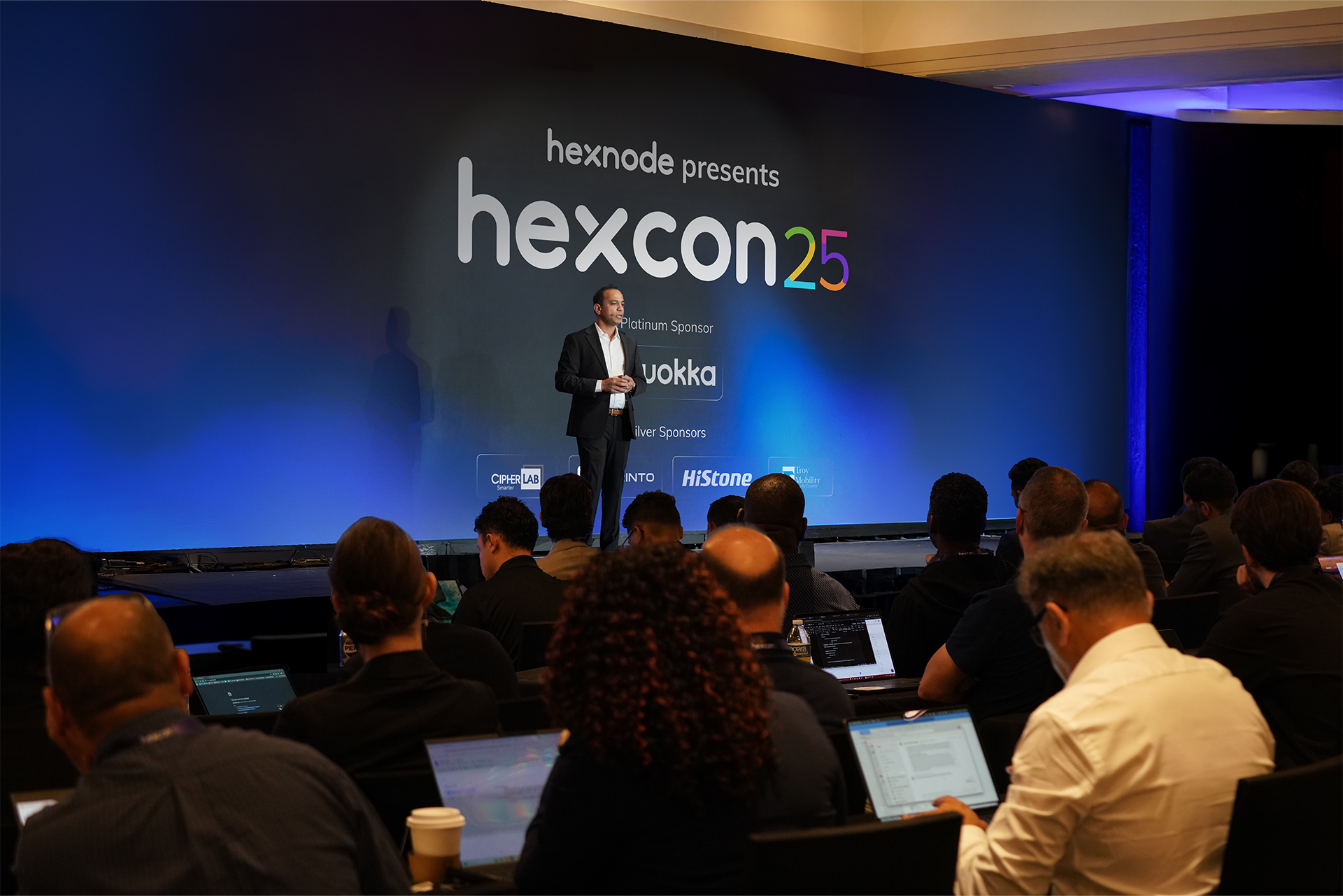
September’s HexCon26 brought the Synapse announcement: orchestration across Hexnode and other IT systems. The company presented a direction in which software coordinates workflows that administrators currently connect by hand. Its keynote also described consequential AI actions waiting for human approval. These announcements express a product strategy; each buyer still needs to establish which workflows are available for their environment.
“Grow and let grow”Mitsogo’s published workplace motto
People behind the policies
The company’s workplace pages have a warmer vocabulary than its product pages. Mitsogo advertises staff participation, health benefits, meals, parental leave and 180 days of paid maternity leave. These are the employer’s descriptions. They are specific enough to be useful to a prospective employee without requiring the reader to accept a sweeping verdict about office happiness.

There is also an elephant. In a published employee account, Vivek Krishnan describes finding a stuffed elephant with the Hexnode logo on his desk on his first day. Enterprise security is allowed a mascot. A small welcome has rather better odds of being remembered than another paragraph about corporate values.
Customers have their own learning curve. Hexnode Academy offers courses and platform certifications, covering enrollment, reporting, automation and patch management. That is a useful acknowledgment that purchasing software does not instantly confer the knowledge to run it.
Give the pilot a difficult day
The lesson to copy is straightforward: write a job description for the device before choosing its manager. Which apps must run? Who may sign in? What should happen when a worker leaves, a tablet disappears or an update causes trouble? Those questions turn a vague security purchase into an operational test.
Use a representative fleet for that test. Include a shared tablet, a desktop and a personally owned phone if those are part of the real deployment. Check enrollment, restrictions, remote assistance and recovery. Platform permissions, connectivity and plan boundaries matter. A tool cannot exercise control that the operating system or enrollment mode does not grant.
Mitsogo’s story starts with mobile devices and arrives at a larger ambition: connecting the rules governing devices, users and security incidents. The restaurant iPad remains a good judge of the whole enterprise. Does it keep taking orders? Can someone fix it from elsewhere? Can the company trust what happens on it? Software has plenty of elegant promises. Lunch supplies a deadline.