Andy Yin once spent three days finding out why a software system was slow. The customer had a simple complaint. The explanation was somewhere among hundreds of servers and the layers of software depending on them. Before he became the founder of Cloudwise, Yin was the programmer who had to go looking. Three days is an awkward amount of time to explain to somebody waiting for an answer.
He remembered another assignment involving performance tests for a Walmart application release. Cisco handled the network equipment. Oracle handled the database. Yin worked on the experience at the front end and cloud load testing. The project took nearly a month. Looking at the coordination and investigation involved, he began thinking about how much of it could be automated.
Those memories give his company a more tangible origin than the usual collection of cloud terminology. There was work to be done, it took too long, and a programmer could see reasons it ought to go faster. A slow application had supplied an unusually persistent business question.
Yin’s recollection of an early debugging ordeal.
A marketing degree, with software on the side
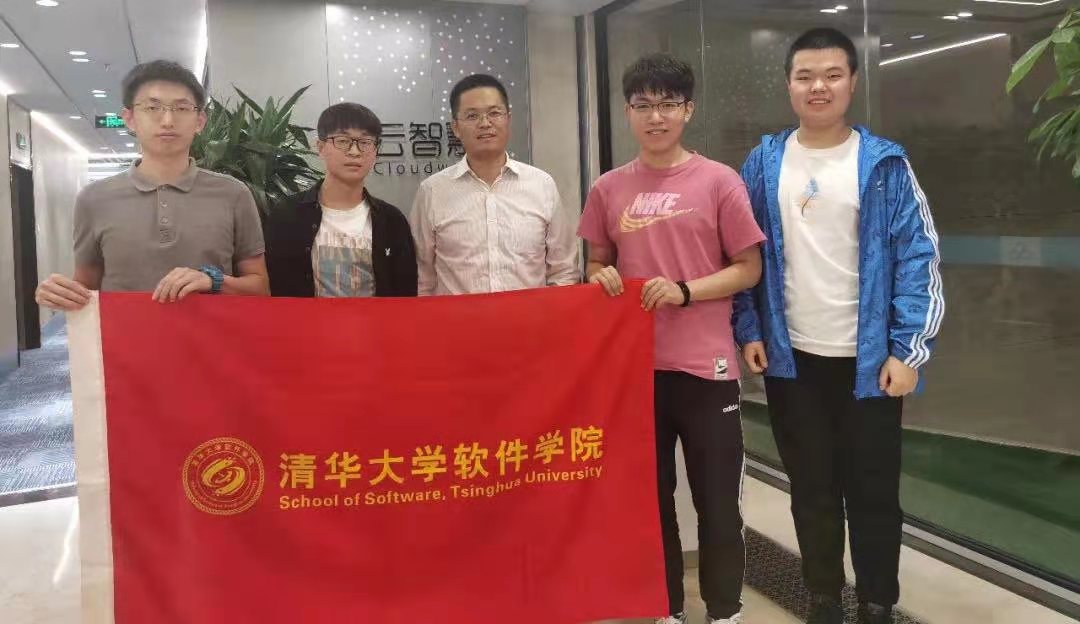
Yin’s route into programming began outside the subject. Born in Xinyang, Henan, in 1981, he earned a marketing degree in 2002. He liked writing software tools in his spare time. After graduation and a year of work, that interest brought him to Tsinghua’s School of Software. He completed his studies there in 2005.
Research at Tsinghua’s Automotive Research Institute followed in 2005 and 2006. His working life later included product development and technology leadership at Compuware and Everbridge. Application performance, cloud computing and software delivered as a service became the territory he kept returning to.
Cloudwise was founded in 2009. Its early proposition was practical: help the people responsible for keeping online services running see problems and locate their causes. The first monitoring product, Jiankongbao, launched in April 2010. Its audience included people familiar with the peculiar indignity of learning from a customer that their supposedly functioning system had stopped functioning.
When “up” is an incomplete answer
A website could be reachable from one place and troublesome from another. Different network operators, different locations and unreliable connections complicated a seemingly binary question: is it working? Cloudwise’s early product turned repeated, manual checks into automatic, periodic monitoring. As customers asked for more, the tool expanded into server and service monitoring.
That expansion exposed a less glamorous design problem. A tool built for an individual could struggle when a company needed several people to cooperate. Permissions and collaboration required changes underneath the interface. Growth meant revisiting the assumptions in the original product, including the assumption about who would be using it.
By 2016, Yin was explaining a set of three related offerings: Jiankongbao for monitoring, Toushibao for application performance insight, and Yacebao for load testing. They approached different moments in the life of a service. Could people reach it? What happened when they used it? What would happen when many more arrived?
The questions put human experience into a technical conversation. A server’s resource usage says something useful. It does not, by itself, tell you whether a customer has successfully placed an order. In his early thinking about performance management, Yin kept returning to response time, the path of a transaction and the ability to predict trouble before a complaint arrived.
In 2014, he was already describing performance management as a data-processing problem. Collecting information was only the beginning. The company needed infrastructure that could expand with demand, better analytical models and continued investment in machine learning. He wanted the platform eventually to accept more business data and support further applications. The first monitoring service was becoming an entrance to a much larger set of questions.
The founder also handled the premises
The beginning of Cloudwise involved a small group and a generous distribution of chores. Yin recalled handling logistics and public relations as well as programming. One early episode involved a lengthy negotiation with a neighbourhood committee representative about the company’s premises. Cloud computing had, inconveniently, failed to abolish the need for an office.
To explain the product, he used the example of parcel tracking. Knowing that something has been sent, and later that it has arrived, leaves a large interval unexplained. Tracking supplies information about the journey. His software sought to give customers a similar view between a website working normally and a failure becoming obvious. It was an accessible explanation from somebody whose first degree had been in marketing.
He remembered these demands with amusement. In a 2015 interview, he described taking pleasure both in getting past difficulties and in the odd encounters along the way. The attraction of coding had survived the discovery that running a software company involved a great many things that were not code.
His approach to office conversation was deliberately informal. Colleagues used English names and called him Andy. He disliked the ceremony of executive honorifics. A technical disagreement already has enough moving parts without requiring every sentence to bow on its way into the room.
“Do valuable things.”
Andy Yin’s stated principle
Translated from Chinese
His explanation was specific: distinctions between superiors and subordinates could obstruct full discussion of development ideas. The first-name convention made an everyday statement about how he wanted people to talk. Whether the subject was a software architecture or an inconvenient bug, useful information needed a short route to the person who could act on it.
The customer who made the company grow up
The move toward larger customers changed what Cloudwise had to deliver. An operation with skilled engineers might want a precise tool. A large organization could need a broader solution, support and help connecting technical evidence to its business. Winning such a customer also meant accepting its expectations.
Yin described an early enterprise client as a global restaurant chain with thousands of outlets in China. He did not name it. Its local IT team needed a level of service that stretched Cloudwise beyond its experience at the time. The relationship pushed the company to develop its consulting and delivery capabilities.
The lesson had commercial consequences. A company could monitor equipment efficiently and still miss the importance of a failure to the wider business. Yin wanted conversations with technology leaders to include lost business, operational risk and the value of keeping services available. The scope of the software followed the scope of the responsibility.
Getting there took time. Cloudwise’s shift from small-business SaaS tools toward broader solutions for major accounts included a difficult, roughly three-year period of stalled progress and transition. The neat product diagram was easier to draw than the organization was to change.
A $25,000 address for a distant ambition
One of Yin’s early purchases had very little to do with monitoring. Around 2012 or 2013, he recalled buying cloudwise.com from a Stanford student for $25,000. The team was small. The name was intended to travel.
Asked in 2021 what he would want to know if he could look ten years into the future, he chose whether many global customers would know Cloudwise. The domain purchase made sense in that light. An English name and an international address were available long before an international business could be taken for granted.
People occupied much of his attention too. He described travelling to Shenzhen to recruit someone and pursuing conversations even when a potential recruit was away on business. If they could not come to him, he could go to them. Recruitment, like performance investigation, rewarded a willingness to follow the trail.
Back at Tsinghua, facing the next problem
In December 2019, Yin returned to Tsinghua for a donation ceremony. Cloudwise committed RMB 10 million to the university. An intelligent operations research centre at the School of Software was established, bringing an academic relationship into the company’s work on a practical technical problem.
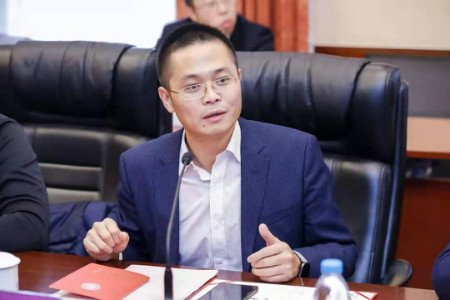
He spoke about combining research, industry and application. The intended direction was preventive operations: use data and intelligent analysis to recognize trouble earlier, rather than wait for a business to feel the consequences. The discussion brought him back to the delay he had encountered as a programmer, this time with university researchers in the room.
The ceremony also put him beside university leaders and representatives from large organizations concerned with the same operational questions. A former software student was helping establish a place where some of the next answers might be developed.
The name starts travelling
On January 31, 2024, Yin signed a Hong Kong and Macau distribution agreement with CTT Innovation. Alba Tsui, the distributor’s vice president, signed for the other side. An international ambition had acquired the practical form of a local partner, with responsibilities for reaching customers and supporting deployment.
Yin emphasized a continuing relationship and solutions that would change with the market. Cloudwise’s global leadership team also included Daisy Zhang, whose work building the international business covered sales, solution architecture, marketing and channels. Selling abroad required an organization capable of doing the work after the introduction.
At BEYOND Expo in Macao in 2026, Yin described a further expansion of the technical problem. He discussed reliability across power infrastructure, AI data centres and AI agents. He said Cloudwise had customers in mainland China, Singapore and Jakarta, and engineers on the ground in Abu Dhabi.
He described sensors, real-time information, root-cause investigation and automated responses. Deployment in power infrastructure could take four to eight weeks, he said, including integration and validation. For all the new language around AI, the account still involved careful installation, checking and people available to help locally.
The programmer’s original frustration remains recognizable. Someone needs to know what is happening inside a complicated system, and they need an answer while it can still make a difference. Yin began with the memory of three days spent searching. Years later, he is still working on the question of how much of that wait can be removed.
Continue the conversation
- Cloudwise leadership
- Andy Yin on LinkedIn
- Tsinghua alumni interview · Chinese
- The 2014 performance-management interview · Chinese
- The domain and global ambition · Chinese
- Tsinghua research centre ceremony · Chinese
- Hong Kong partnership · Chinese
- BEYOND Expo 2026 interview
- Cloudwise’s 2026 event account · Chinese