Before there was Tekmetric, there was a glass wall. Sunil Patel, running a European auto repair shop in Houston, had installed one so customers could see their cars and the technicians working on them. In a business where the customer often cannot judge the work, the wall offered something useful: a view.
Patel later described that experiment in an interview. Customers could follow the repair process. Trust grew. It is a small detail, but it explains the software company better than a list of features does. Tekmetric makes more of the repair shop visible, both to the person paying the bill and to the people trying to keep the business moving.
- One repair record: inspections, estimates, approvals and payments stay connected.
- Built for repair businesses: independent shops, tire shops and operators with multiple locations.
- Mind the billing: Start costs $199 monthly, or $179 a month with annual billing.
A very expensive first draft
The software came out of an owner's irritation. Patel had spent years dealing with unreliable systems and inadequate reporting. He wanted customers to receive pictures, video and explanations without someone manually attaching photographs to an email. The repair decision should arrive with evidence.
Getting there was expensive. In a public account of the early years, Patel said a year passed with developers who could not deliver. He sold his house and cars, reduced his living expenses and went without a salary. The first attempt failed. Tekmetric rebuilt, and Taylor Fuqua, its first engineer and now chief technology officer, helped bring in the team that reworked the platform.
Patel and co-founder Prasanth Chilukuri brought repair-shop experience to the project. Tekmetric's current company history dates the idea to 2015 and the official platform launch to 2017. The useful lesson is quite specific: knowing the customer's problem did not remove the need for the right engineering team.

The photograph does some of the talking
Consider the ordinary inspection. A technician finds a problem. A service advisor explains it. The driver must decide whether to authorize work they may never see. Every handoff creates an opportunity for delay, misunderstanding or suspicion.
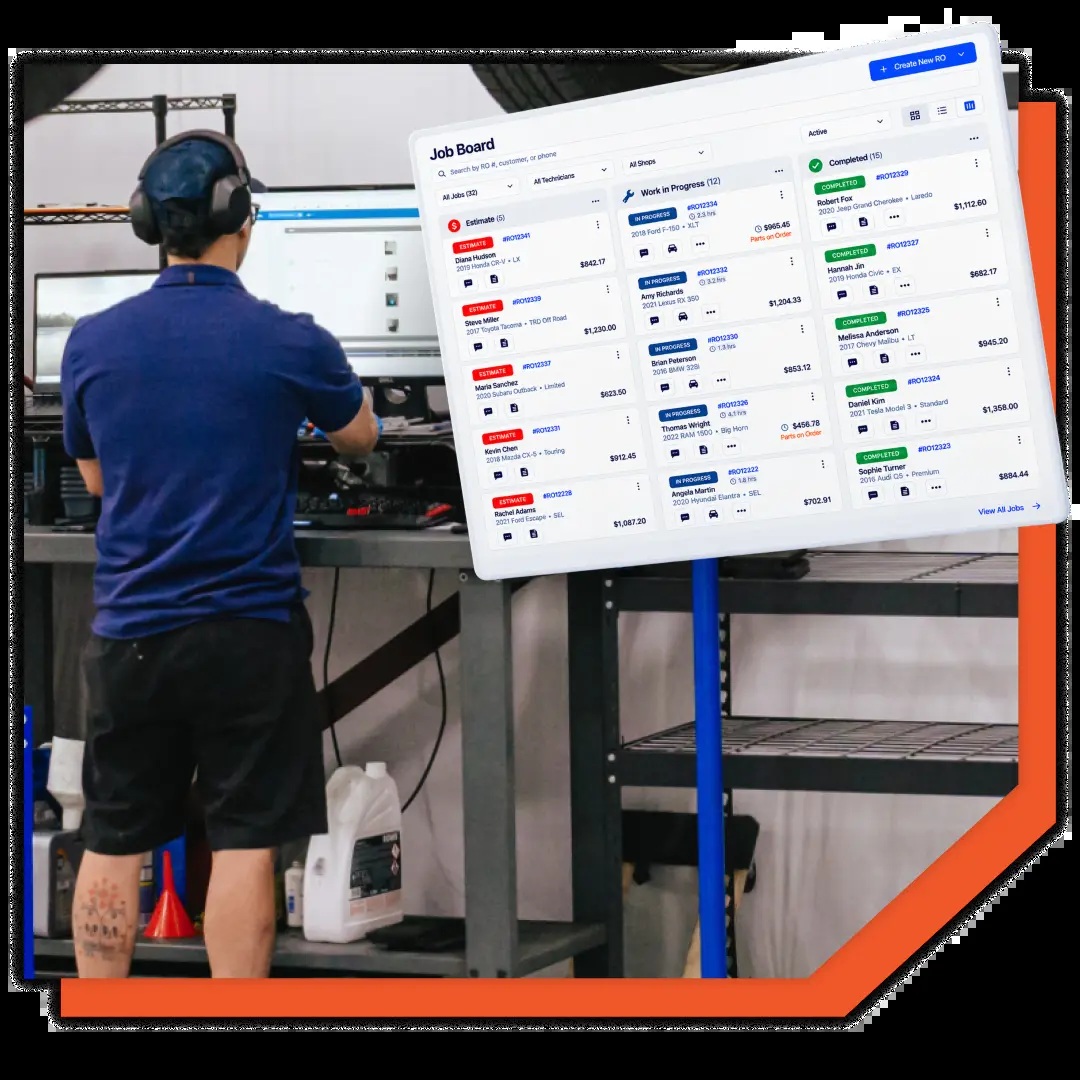
Tekmetric connects those handoffs. Technicians record findings with photos and videos in a digital vehicle inspection. Advisors prepare estimates; drivers review the evidence and approve work electronically. Inventory, parts ordering, labor information and repair orders sit within the shop's operating workflow. Owners can use reporting to see how work and money move through the business.
It is software for the front counter as much as the repair bay. A technician needs an accurate finding. An advisor needs an answer from the customer. An owner needs to know whether a busy shop is producing a healthy business. Those are related questions, and Tekmetric gives them a common record.
- 01InspectPhotos + findings
- 02ExplainDigital estimate
- 03ApproveCustomer authorization
- 04CollectConnected payment
The bill behind the dashboard
Tekmetric sells subscriptions per shop, with unlimited users and repair orders. Its published monthly prices are $199 for Start, $349 for Grow and $439 for Scale. Annual billing lowers the monthly equivalents to $179, $309 and $409. Enterprise pricing is quoted separately.
That makes the headline price only the beginning of a purchasing decision. Multi-Shop adds $70 per month per shop; Tire Suite adds $39; Marketing adds $345. Each location needs its own underlying subscription. Processing terms and financing arrangements need their own review alongside the software bill.
Scale ($439) + Marketing ($345), using published monthly subscription prices. Other services and processing charges are separate.
Payments help explain the company's position between software and financial services. In Stripe's customer account, Tekmetric moved from referring shops to an outside processor toward payments embedded in the repair workflow. Cards, digital wallets and payment links become part of the same system. For the advisor, the appeal is knowing which invoice has actually been paid without another round of reconciliation.
The company that stopped doing everything
There was also a change of mind. In a 2022 interview, Patel recalled the early ambition to build everything a shop needed. Then came a more practical conclusion. Tekmetric opened the platform to outside integrations so owners could choose specialist tools.
“We don’t need to do it all.”
Sunil Patel / on integrations, 2022
That is a useful distinction in a crowded market. Shopmonkey, AutoLeap, Shop-Ware and Mitchell 1's Manager SE are alternatives owners may consider. Digital inspections and cloud software alone do not settle the choice. Tekmetric's proposition rests on the combination: repair operations, customer communication, payments and the connections around them.
The boundaries keep moving. Susquehanna Growth Equity backed the company in an investment announced in March 2022. In October 2024, Tekmetric acquired Shopgenie, adding customer relationship and engagement capabilities. Tekmetric Marketing launched in September 2025 with booking, reminders, campaigns, follow-ups and reviews built into the platform.
A clearer view needs good inputs
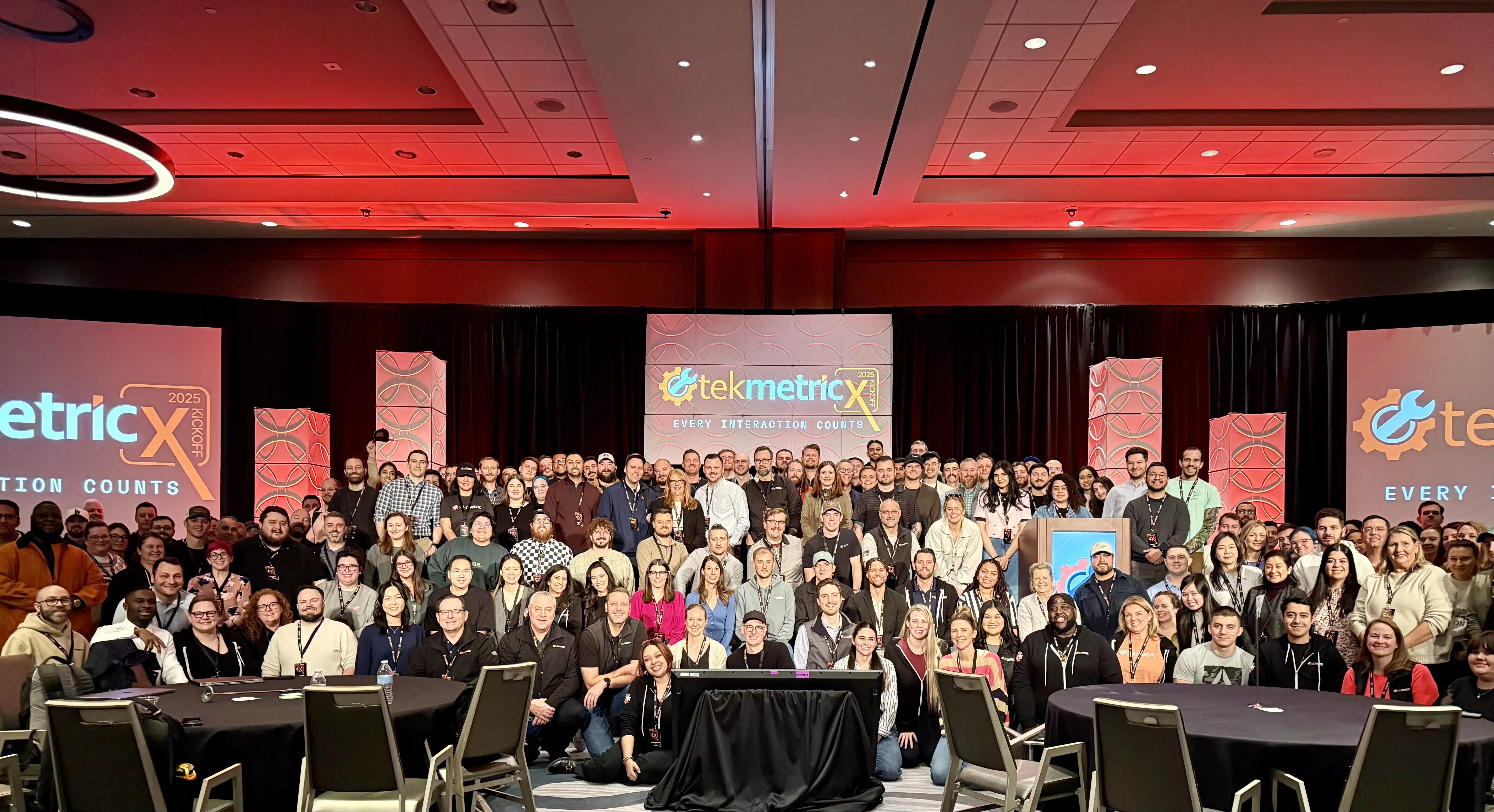
By July 2026, Tekmetric was reporting more than 15,000 shops and releasing its free Shop Index. Owners can compare average repair order, car count, parts margin and effective labor rate against aggregated platform data. No account is required. In August, the company appointed Kristen Young as its first chief financial officer.
The limits are practical. A cloud platform needs connectivity; Tekmetric recommends cellular tethering when a shop's internet fails. Inspection evidence still depends on technicians recording useful findings. And a benchmark drawn from participating shops is a reference point, not a promise about another shop's results.
What can another business copy? Make the evidence easy to see before asking for a decision. Keep approvals attached to the work. Measure where the handoffs slow down. The glass wall was a modest intervention. The software asks whether the rest of the business can become just as easy to follow.
Open the shop door
Go deeper: Patel on the glass wall · The first-build account · The integration decision · Inside the payments workflow · Latest company news