Consider the empty salon chair at three in the afternoon. At four, it may be occupied again. But the hour between them has gone. A retailer can keep an unsold bottle of shampoo until tomorrow. The stylist cannot warehouse Tuesday afternoon. For businesses that sell their attention by the appointment, the calendar is also a kind of inventory.
That is a useful place to begin with DaySmart. The Ann Arbor software company makes booking, customer management and payment tools for service businesses. Its customers include salons, pet groomers, veterinary practices, gyms and recreation operators. The resemblance between those businesses is obvious from a distance. Up close, their differences become the interesting part.
- Specialist software for businesses that sell time, care and access.
- Bookings connect to customer records, communications and payments.
- Acquisitions have added dog walking, fitness and children’s activities.
The formula in the customer file
Imagine selecting software by looking only at the calendar. A haircut and a veterinary consultation are both rectangles on a screen. Yet the information needed before the appointment, and the work required afterward, differ enormously. A useful booking tool has to survive contact with the actual business.
DaySmart Salon’s product tour offers a revealing detail: customer files can hold formulas. Alongside purchase history, notes and forms sits information a stylist may need to reproduce a previous result. A generic customer name tells the salon who is coming. A formula helps it remember what to do when that person arrives.
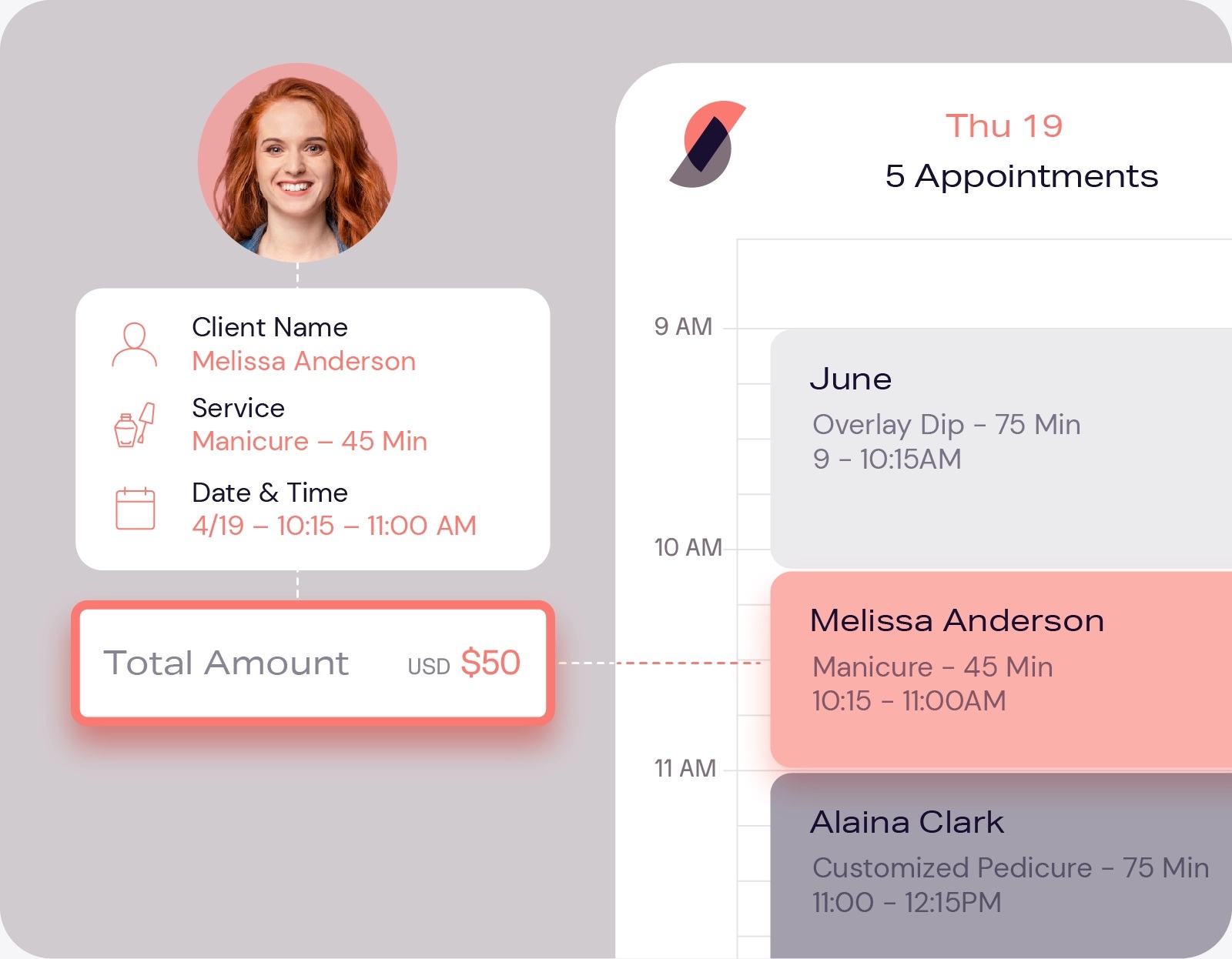
Elsewhere in the portfolio, Time To Pet offers GPS tracking and visit report cards. Those features address the peculiar problem of a service delivered while the customer is elsewhere. Dash handles facility reservations, leagues and registrations. Sawyer combines children’s activity management with a marketplace where parents can discover classes. These are different jobs, even when they share a booking button.
The competitive claim needs that qualification. Vagaro also serves specialist beauty, wellness and fitness businesses; Square Appointments also joins scheduling and payments. DaySmart’s distinction is its particular collection of products and accumulated workflows. A buyer should inspect the details of the relevant application before giving much weight to the parent company’s breadth.
Buying the next detail
Mark and Chris Jackson founded DaySmart in 1999, according to the announcement of SFW Capital Partners’ investment. The company’s own history reaches back further, dating Salon 2000’s launch to 1998. Software for pets and spas followed in 2005; InkBook brought tattoo studios into the portfolio in 2009.
In 2016, SFW invested alongside the founders. Its stated plans included stronger sales and marketing, new products and new markets. A report on SFW’s 2019 exit describes the less photogenic work underneath: rebuilding legacy software architecture and updating internal systems. Expansion required attention to the machinery already running.
LLR Partners and Parthenon Capital then completed a growth recapitalization designed to support product investment and acquisitions. The subsequent sequence is instructive. AppointmentPlus arrived in 2020. Vetter and Dash followed in 2021, TeamUp in 2022, Sawyer in 2023 and Time To Pet in 2024. DaySmart was buying expertise in adjacent kinds of work.
In May 2026, DaySmart announced the acquisition of Slick, a UK salon platform used by more than 8,000 hair and beauty professionals, according to the announcement. Slick supports employed and booth-rental models. That detail matters: even within one trade, the person taking the booking and the person running the business may have different arrangements.
The $29 question
The economics become easier to examine at the product level. DaySmart Salon lists Basic at $29 per month for one user and Deluxe at $69 for three. Deluxe Growth is $149; Premium, with six users, is $199. Premium Growth requires a quote. These are published subscription prices, checked in October 2026, rather than a universal DaySmart tariff.
The plans sell progressively more operating capability. Deluxe adds features including digital forms, loyalty tools and email marketing. Higher tiers add communication and management options. Processing charges and paid add-ons belong in the total buying calculation. The sensible comparison is the cost of the configuration a business will actually use.
Connecting checkout to the appointment also puts DaySmart near the money. The company reports $4 billion in payments processed annually. That number describes customer transactions flowing through its systems. It is not DaySmart’s revenue. Its significance is operational: scheduling software becomes harder to replace once it also helps reconcile the day’s receipts.
“It doesn’t get in my way. It just works.”Jenna Morehouse, KUSH Hair Studio
In a DaySmart customer testimonial
The customer test can be more concrete than a feature checklist. Rehearse a cancellation, a partial payment, an unusual service and a returning client. Check whether old records import cleanly. DaySmart’s Salon pricing page offers a 14-day trial and free data migration. Use that window to test your awkward day, when the exceptions arrive together.
A business coach behind the booking screen
The next layer is AI. In October 2025, DaySmart announced tools including Daisy, which drafts veterinary visit notes; Business Advisor, which turns operating data into recommendations; and a generator for service and class descriptions. These target recognizable chores inside existing products. Their usefulness can be judged against the work they actually save.

The lesson a reader can copy is straightforward: start with the work people repeat and the exceptions they remember. Then connect the steps. A specialist suite earns its cost when those connections remove effort. For a business needing only a simple calendar, or one whose essential workflows do not fit, the extra machinery may add little.
A recommendation also depends on the records beneath it. Incomplete data can limit business advice; drafted clinical notes still need professional review. DaySmart’s opportunity rests on getting ordinary things right often enough that customers trust the next feature. The chair at three o’clock remains a useful test. Did the software help someone make better use of that hour?