The most revealing thing about Daxko is how rarely a member notices it. A parent registers a child for camp. A retiree scans into the pool. A donor adds ten dollars at checkout. A gym owner watches a failed card draft turn into recovered revenue. Each action looks small from the lobby. Behind the desk, they belong to the same stubbornly complicated record: one person, inside one household, connected to programs, payments, permissions, messages and perhaps several branches.
That record is Daxko's business. Founded in Birmingham, Alabama, in 1998 by Tom Patterson, the company grew by making software for membership-based nonprofits whose work refuses to fit inside a generic customer database. Today Daxko says its products serve more than 19,000 fitness and wellness facilities and over 25 million members. Depending on which current company page you read, the footprint spans 55 to 68 countries. The precise geography moves; the scale does not.
A community center is five businesses in a trench coat
A YMCA can be a gym before breakfast, a preschool by nine, an aquatics school after lunch, a summer camp in June and a fundraiser all year. It may price memberships by household, award need-based assistance, restrict who can collect a child and report finances across several branches. The problem is not simply storing names. It is making every department act on the same truth without creating an export-and-spreadsheet relay race.
Daxko Operations attacks that tangle directly. It combines membership, program and childcare registration, recurring billing, donations, facility access, accounting, reporting and communications. Engage adds email, text messaging, lead management and predictive retention. Mobile gives organizations a branded member app. Payments, websites, digital marketing, access cards and performance analytics fill out the stack. Its pitch is integration, but the useful word is context: a missed visit can prompt outreach because the engagement tool understands the check-in record.
This is where Daxko differs from a general-purpose CRM or a collection of cheap point tools. A scholarship is not merely a discount. A family membership is not merely a company account. A camp roster has pickup authorization and capacity rules that a sales pipeline was never designed to understand. Daxko has spent decades collecting those awkward nouns and verbs.
“We tried Salesforce, and it wasn't working for us. Everything is connected.”Adam Alirez · Maui Family YMCA
The roll-up worked. Then the seams showed.
Daxko did not reach every corner of fitness by stretching one product until it snapped. It bought specialized ones. Zen Planner brought martial arts schools and boutique studios. Club Automation brought health clubs and multipurpose facilities. SugarWOD added workout tracking and community for affiliate gyms. Later deals brought ShapeNet, Applications Research, Vision and Exercise.com. In June 2026, Daxko acquired FitnessForce, an API-first platform aimed at international franchises and large multi-location operators.
The strategy is sensible: a dojo, a JCC and a global franchise share billing and member data, but they do not run the same way. Daxko now argues for purpose-built front ends on top of shared investments in payments, security, data, marketing automation and AI. That is more credible than promising one magical interface for everyone.
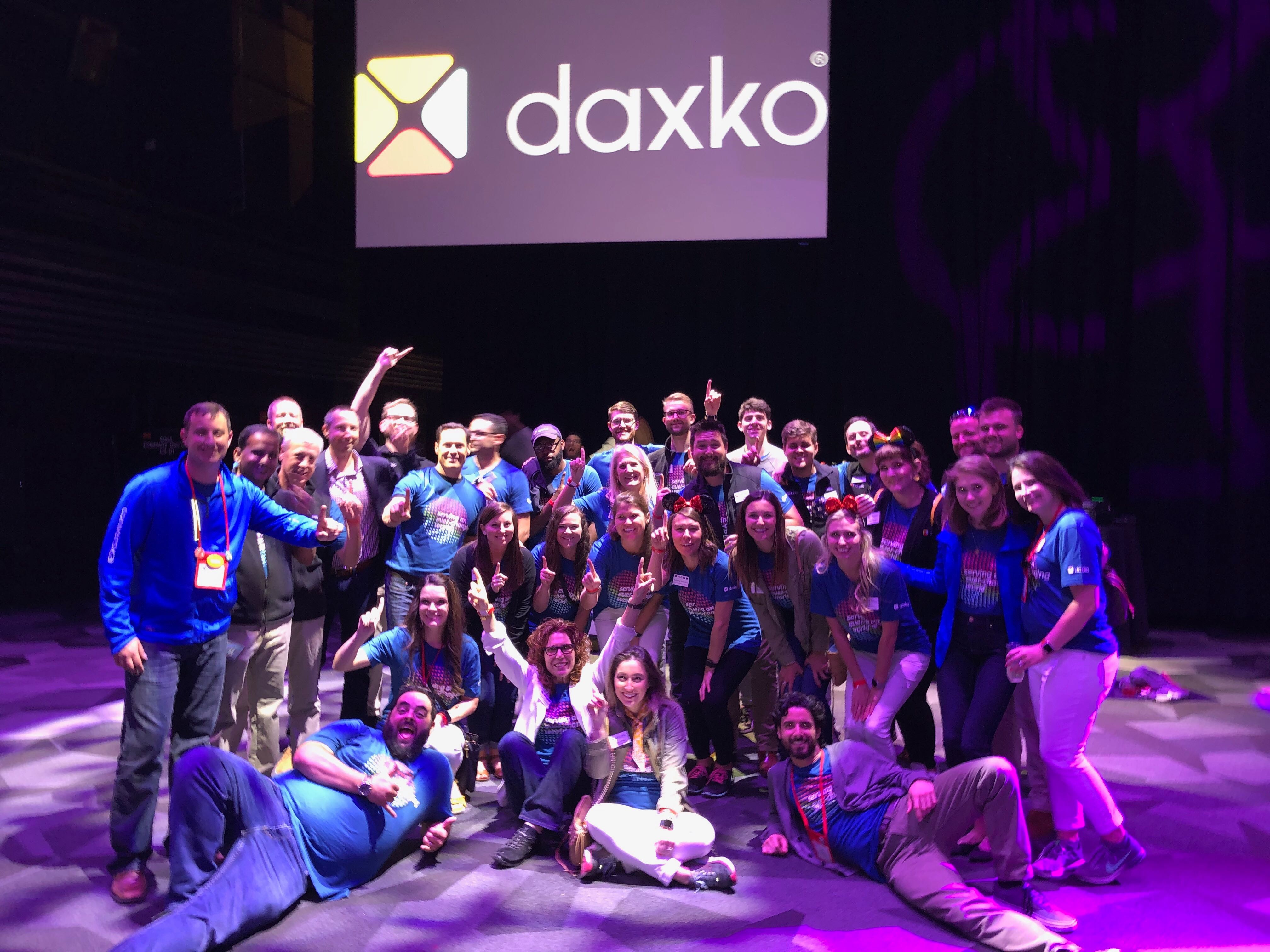
But acquisitions leave seams. In 2025, Daxko's own executives described the problem with unusual candor. The company had kept acquired products' original navigation and design. Customers did not always understand the breadth of the portfolio. Support could involve different brands and service teams. The first fix was visible - put Daxko's name across the family. The more important work was operational: consistent interfaces, fewer handoffs, clearer service-ticket status and shared billing support.
What failed first, then, was not the core vertical thesis. It was coherence. A collection can win market share before it feels like a platform. Daxko changed course after hearing that customers could not see or smoothly use the whole. Its answer was not to kill the specialized products. It was to make the transitions less obvious and the infrastructure more common.
The money lives in recurring work
Daxko is a private company backed by Genstar Capital and GI Partners. The model combines recurring B2B software contracts with integrated payment processing, implementation, support, digital services and partner integrations. That payments layer matters. Membership organizations collect recurring dues, program fees and donations; the software touches the moment money moves and can sell recovery services when a draft fails.
Daxko does not publish a standard price for Operations. Buyers request a quote, and cost varies with organization size, products and complexity. One useful but narrow public data point appears in the YMCA of Greater Grand Rapids' audited financials: an accounting software agreement ran about $23,000 a year over five years. That is not a Daxko price list. It is a reminder that enterprise vertical software is bought as infrastructure, not downloaded on a whim.
What an operator is really buying
- One operating record instead of nightly exports between departments.
- Workflows already shaped for households, rosters, scholarships and recurring drafts.
- Payments and engagement attached to behavior, not isolated from it.
- Implementation and support from people who know the sector's vocabulary.
The strongest public proof comes from customer outcomes, though the company properly notes that results vary. One YMCA attributed more than 1,000 additional memberships to enabling round-the-clock access. Mankato Family YMCA reported a 51 percent increase in community engagement after a website redesign, alongside higher registrations, pledges and donations. JCC customers report gains in camp registration, membership revenue and donations. These are case studies, not controlled experiments, but they show what customers expect the system to change: fewer workarounds and more participation.
AI, but inside the plumbing
In December 2025, Daxko declared itself AI-first. The phrasing invites skepticism; the implementation is more interesting. Daxko wants intelligence inside the system that already knows a member's check-ins, reservations, billing history and messages. That could mean flagging likely cancellations, drafting targeted outreach, following up with leads or handling routine account questions without giving staff another dashboard to watch.
FrontDesk is the clearest example: an always-on voice and web-chat agent that answers from an operator-approved knowledge base, logs conversations, captures leads and hands real decisions to staff. Daxko says the data stays inside its infrastructure and operators control what the agent may say or do. Elsewhere, Zen Planner Engage AI is already automating lead conversations; one customer says it books three to four meetings a day without staff chasing them.
The advantage is not the model. Models are widely available. It is permissioned operational context gathered through billions of scheduling, billing, check-in and engagement interactions. The risk is the same thing: sensitive household, access and payment data spread across products assembled over years. AI works only if those records are clean, governed and genuinely connected. Daxko's platform-unification job and its AI job are therefore one job.
“AI becomes truly transformative when it is tied directly to the systems and data that runs the operation.”Jeff VanDixhorn · CEO, Daxko
From weight rooms to weight-loss medicine
The strangest new branch of the portfolio is also the best illustration of Daxko's ambition. Elevate Wellness, launched in March 2026, lets fitness centers offer pathways into physician-guided metabolic care, including GLP-1 weight management and hormone therapies, without turning the club into a clinic. Licensed third-party telemedicine providers handle evaluation, prescribing and monitoring. The center supplies strength training, coaching and accountability. Daxko supplies the referral flow, marketing, automation and program machinery.
It is a three-sided business disguised as a gym program. The clinician owns clinical risk. The operator owns the relationship and the room where long-term habits happen. Daxko coordinates the handoff and opens a new stream of non-dues revenue. This will not suit organizations that lack coaching capacity, member trust or appetite for a medically adjacent program. It also depends on careful compliance and clear boundaries. But it shows where Daxko thinks the market is moving: fitness facilities as durable health communities, not rooms full of equipment.
Operations and Core for YMCAs, JCCs, Boys & Girls Clubs and recreation centers.
Club Automation, CSI and Motionsoft for health and multipurpose facilities.
Exercise, Zen Planner and SugarWOD for trainers, studios, martial arts and hybrid businesses.
FitnessForce for API-first, multi-brand and multi-country operations.
The part worth copying
Daxko's reusable lesson is not “buy a dozen products.” It is to pick a vertical where the work is recurring, regulated enough to be annoying and specific enough that generic tools create hidden labor. Learn the workflow until the software can connect revenue to daily behavior. Add payments where money naturally passes through. Expand into adjacent customers only when the underlying data and jobs rhyme. Then listen for the moment your portfolio becomes harder to understand than the problem it solves.
The approach breaks down for a tiny studio that needs a calendar and simple card payments, or for an organization willing to assemble specialist tools and maintain the integrations itself. Custom pricing and migration effort can outweigh the benefit when operations are simple. A sophisticated platform also cannot repair weak programming, indifferent service or a community that does not want what is being offered.
For everyone else, Daxko occupies an unusually sticky position. Competitors can copy a feature. They have a harder time copying 28 years of exceptions: the sibling discount, the authorized pickup, the lapsed card, the birthday check-in, the donation at checkout. The company's next chapter depends on making that institutional memory feel less like a cabinet of software and more like one quiet colleague who already knows what happens next.