A family membership is a small administrative miracle. One person pays. Another books a lesson. A child needs access to a different program. Somewhere behind the friendly greeting, software must decide who belongs to whom, what they can do, and which account gets charged. Multiply that arrangement across a busy athletic club and the front desk starts to resemble an air traffic control room.
- Club Automation connects memberships, bookings, payments, and reporting.
- Its natural customer has several programs, complicated accounts, or multiple clubs.
- The practical lesson: clean up the records before adding more locations.
That is the territory Daxko Club Automation occupies. Fitness may be the visible business. Coordinating all the promises made to members is the less photogenic business underneath it. The company sells software for that second business, where a duplicated record or an awkward billing arrangement can become a very human conversation.
A tennis calendar with bigger ambitions
Jeff VanDixhorn understood those conversations from the operator’s side. He bought his first club in 1995 and expanded into fitness and racquet facilities across the Midwest. In 2007, he partnered with developer Max Longin to build a web-based system for his clubs. The acquisition adviser First Analysis describes the product’s beginnings as a tennis scheduling tool.
A court booking is a useful starting point. It contains a person, a resource, a time, and often a payment. Club Automation expanded into front-desk operations, customer relationships, billing, payroll, messaging, and reporting. The calendar became part of a larger account of what a member actually did.
Daxko acquired the company in January 2018, when it served more than 400 facilities. The announcement said the team would stay together in the Chicago area. VanDixhorn eventually became Daxko’s CEO in May 2024. The operator who wanted better software ended up leading the parent company.
First, the software company hit its own ceiling
Before the acquisition, Club Automation faced an awkward version of the problem it promised customers it could solve. Growth was running ahead of the systems supporting it. A 2017 AWS case study describes a hybrid infrastructure that required capacity purchases before demand arrived, plus difficulty delivering consistent performance across the country.
Longin said the company had restrained expansion because it worried about service quality. Its customers were arriving through word of mouth. Selling harder would have made the underlying constraint worse.
“We needed the right platform to enable growth, and we have that.”
Max Longin · 2017 AWS case study
The team moved workloads to AWS and used Barracuda firewalls to protect them. The case study reported solution deployments becoming 30-40% faster and firewall setup dropping to under 15 minutes from hours or days. The change also gave management the confidence to hire inside sales representatives and develop marketing plans. Infrastructure had become a sales decision.
The member record is the meeting point
Today, Club Automation targets health clubs, racquet clubs, multipurpose facilities, and wellness centers. Its operating logic is straightforward: keep the member’s bookings, transactions, and account information connected so staff can act without reconstructing the story.
record
session
payment
activity
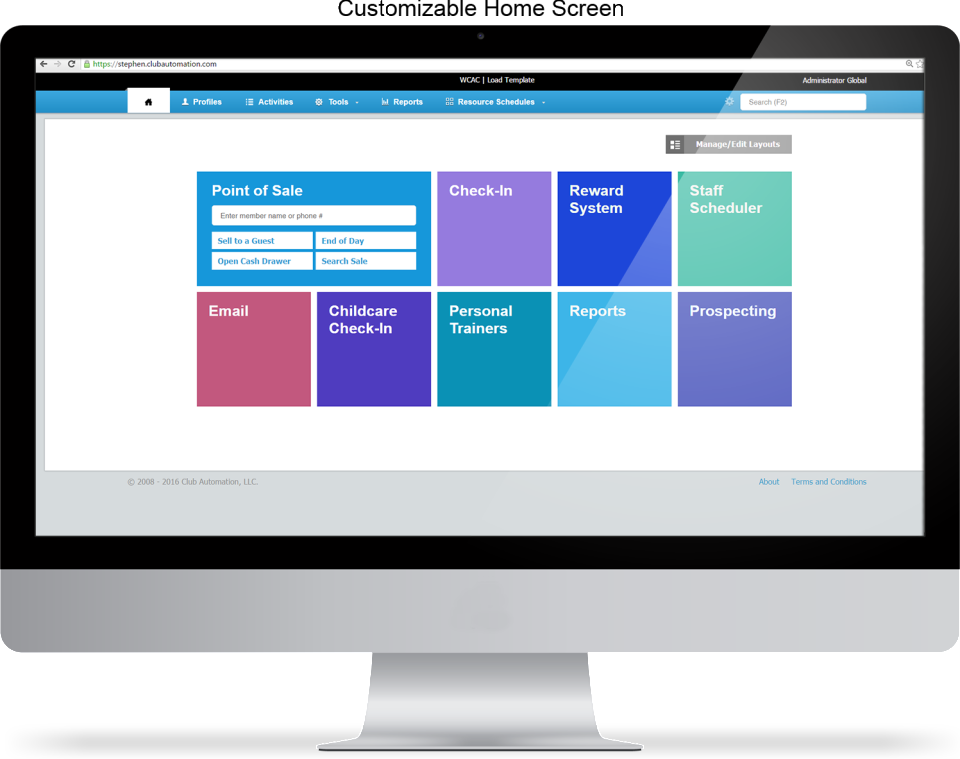
The core platform covers membership management, scheduling, point of sale, and reporting. The wider offering adds payment recovery, websites, digital marketing, and Engage Pro for lead follow-up. Its partner ecosystem advertises more than 70 integrations, including Perkville for rewards and referrals and Easalytics for predictive participation analysis.
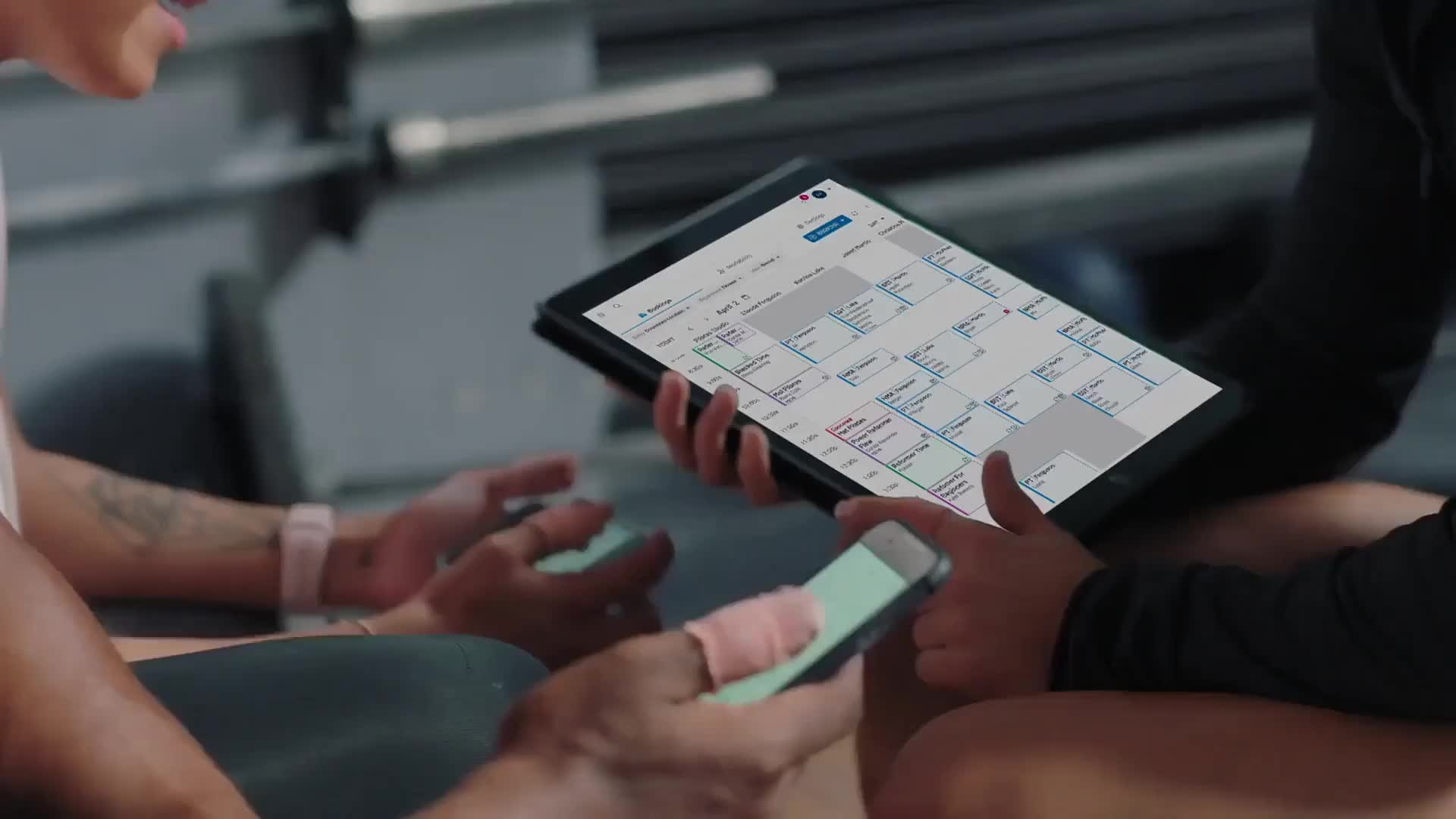
The company’s 2025 product review adds a telling detail: staff and members can use a unified app, switching views with one login. A rebuilt scheduler brings classes, personal training, and court reservations together. These are improvements aimed at the places where work crosses departmental boundaries.
An October 7, 2026 update makes that focus more tangible: repeat reservations, visible waitlist positions, and optional calendar syncing. Some functions need club configuration or support enablement. A feature appearing in release notes does not necessarily mean every member will see it immediately.
Fourteen gyms discover the same problem
Los Campeones provides a concrete example. Club Automation’s January 2026 customer story describes nine corporate gyms and five franchise locations. The previous system struggled with account merging, family memberships, reporting, and peak-hour reliability.
Laura Schirer, its head of corporate development, evaluated platforms using a MoSCoW spreadsheet: Must have, Should have, Could have, Won’t have. The eventual choice reflected enterprise functionality and the implementation team. The migration involved cleaning old records; training was organized by role and concentrated near launch.
The useful move to copy is that sequence. Decide which workflows matter. Standardize the information those workflows need. Teach each person the tasks they will actually perform. A new database alone cannot make differently configured locations agree.
Growth figures deserve their small print
Another customer, REPS Fitness & Nutrition, changed its website, marketing, CRM, app, and billing through Club Automation’s offering. A September 2024 case study reported leads rising 177% in the first month with Engage Pro, alongside year-over-year gains in new joins and check-ins.
Year-over-year figures published in September 2024. One customer, several changes; no isolated software effect.
Those numbers describe a bundled operational and marketing change. They offer a useful example, but they do not establish what a different gym would earn from buying the software. The starting conditions matter: a broken follow-up process has more room for improvement than an already disciplined one.
Read the agreement. Then test the awkward account.
Club Automation sells through custom quotes based on size, locations, and features. Most plans involve annual or multi-year commitments. Engage Pro is optional, and outside payment processors are generally unsupported. A buyer should price onboarding, processing, integrations, and staff time alongside the subscription.
Alternatives include ABC Fitness, Mindbody, and Jonas Fitness. Club Automation’s case rests on handling the intertwined operations of a full-service club. A small studio with simple bookings may have little use for that breadth. An operator determined to keep a separate processor faces a more immediate mismatch.
Bring a difficult family account to the demonstration. Add a cross-location reservation and a declined payment. Ask staff to complete the whole sequence. The value becomes easier to judge when the company has to make your ordinary day work.