- The job: carry one set of commercial terms from quote and signature through subscription, invoice, payment, reporting and revenue recognition.
- The buyer: a sales-led B2B company whose deals contain ramps, usage, credits, discounts or mid-contract changes.
- The price: Starter is $1,500 a month, billed annually; higher tiers are quoted.
- The wager: structured deal data can replace the human who currently keeps CRM, contract, billing and accounting systems in agreement.
A software deal has a curious double life. In its first life, it is a courtship. Salespeople debate seats, usage, ramps, discounts, pilots and the date when year-two pricing begins. Lawyers tune the clauses. Executives approve the exception. Then the customer signs, the room exhales, and the deal enters its second life: someone in finance opens the PDF and starts typing.
This is the seam Turnstile has chosen to occupy. The San Francisco company calls itself a quote-to-cash platform, a phrase that sounds as if it was designed to empty a room. Yet its subject is delightfully concrete: how does the promise made on page seven of a contract become the correct invoice six months later?
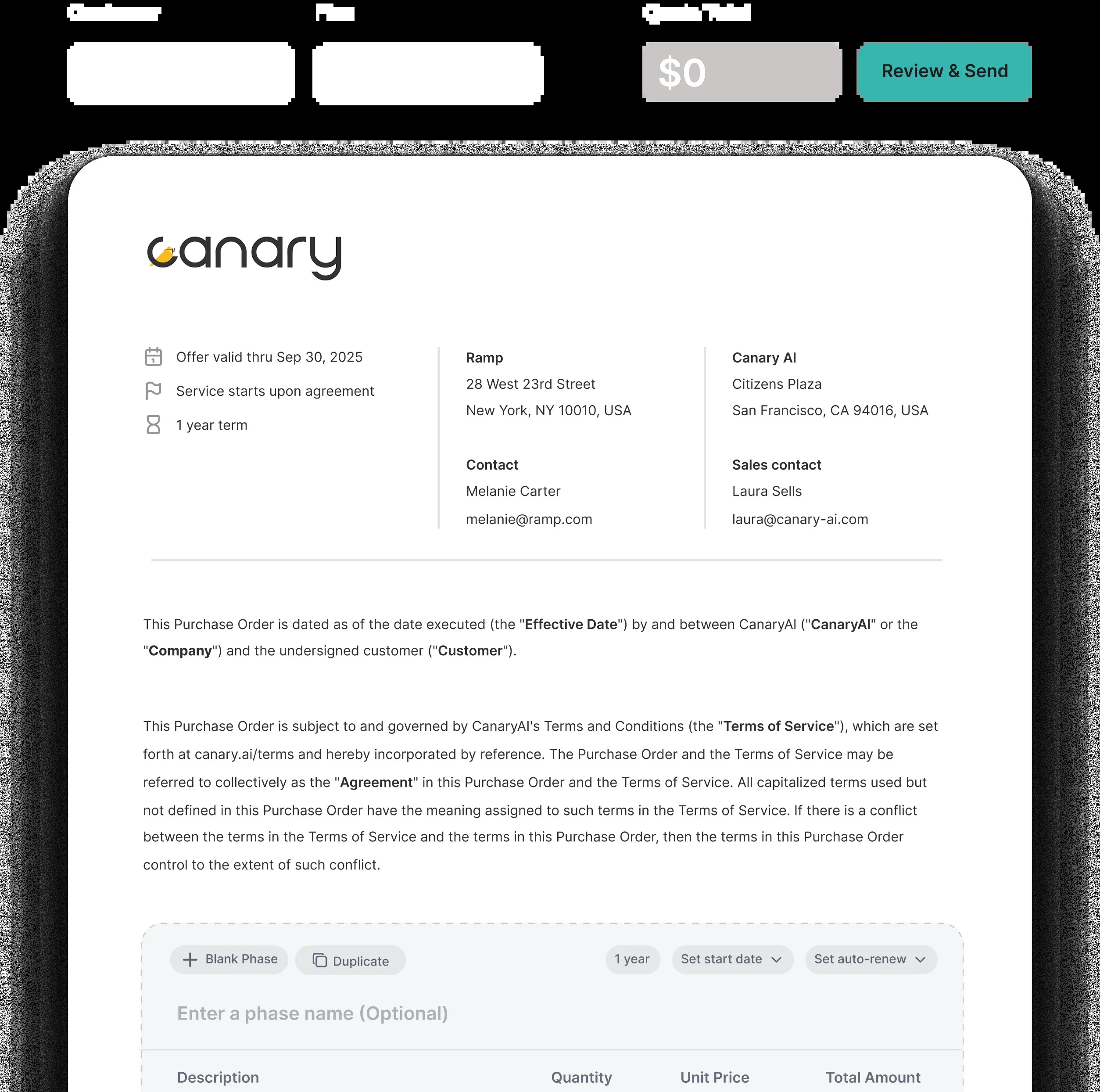
Turnstile's answer is to stop treating the contract as the end product. In its system, each price, credit, billing date, usage tier and amendment becomes structured data. A signed quote becomes a live subscription. The subscription generates invoices. Changes flow into reporting and revenue-recognition schedules. The same commercial record, in theory, survives the entire trip.
The first thing to fail is rarely the sale
Jordan Zamir and Michael Babineau founded Turnstile in 2021 after working together at Second Measure, the transaction-data company Bloomberg acquired in 2020. Zamir had worn legal, finance and operating hats. Babineau had built the engineering organization. Their shared annoyance was not abstract. It was the reconciliation marathon: the spreadsheet that began as a harmless shortcut and quietly became financial infrastructure.
That is also Turnstile's sharpest observation. Early customers do not buy six systems on day one. They improvise. A quote lives in a document, the signature in an e-signature tool, the terms in a PDF, the billing schedule in a sheet, the invoice in accounting software and the payment in Stripe. The founder or first finance hire becomes the integration layer. This works beautifully - until deals become different from one another.
“Before Turnstile, invoicing was a week-long grind.”Cyrus Shirazi, co-founder and CEO, Crafting
The failure is usually small before it is expensive. A recurring charge is not created. An expired discount survives. An amendment changes the contract but not the billing sheet. Then a board meeting arrives and bookings, billings and recognized revenue disagree. The team loses a night discovering which number is true.
What, exactly, does $1,500 buy?
As of September 2026, Turnstile's Starter plan costs $1,500 per month, billed annually, for companies with up to $5 million in revenue. Growth, Scale and Enterprise tiers correspond to larger revenue bands and require a conversation with sales. Every tier includes the central workflow - quoting, billing, account management, reporting, CRM and accounting connections - while advanced controls and integrations appear higher up the ladder.
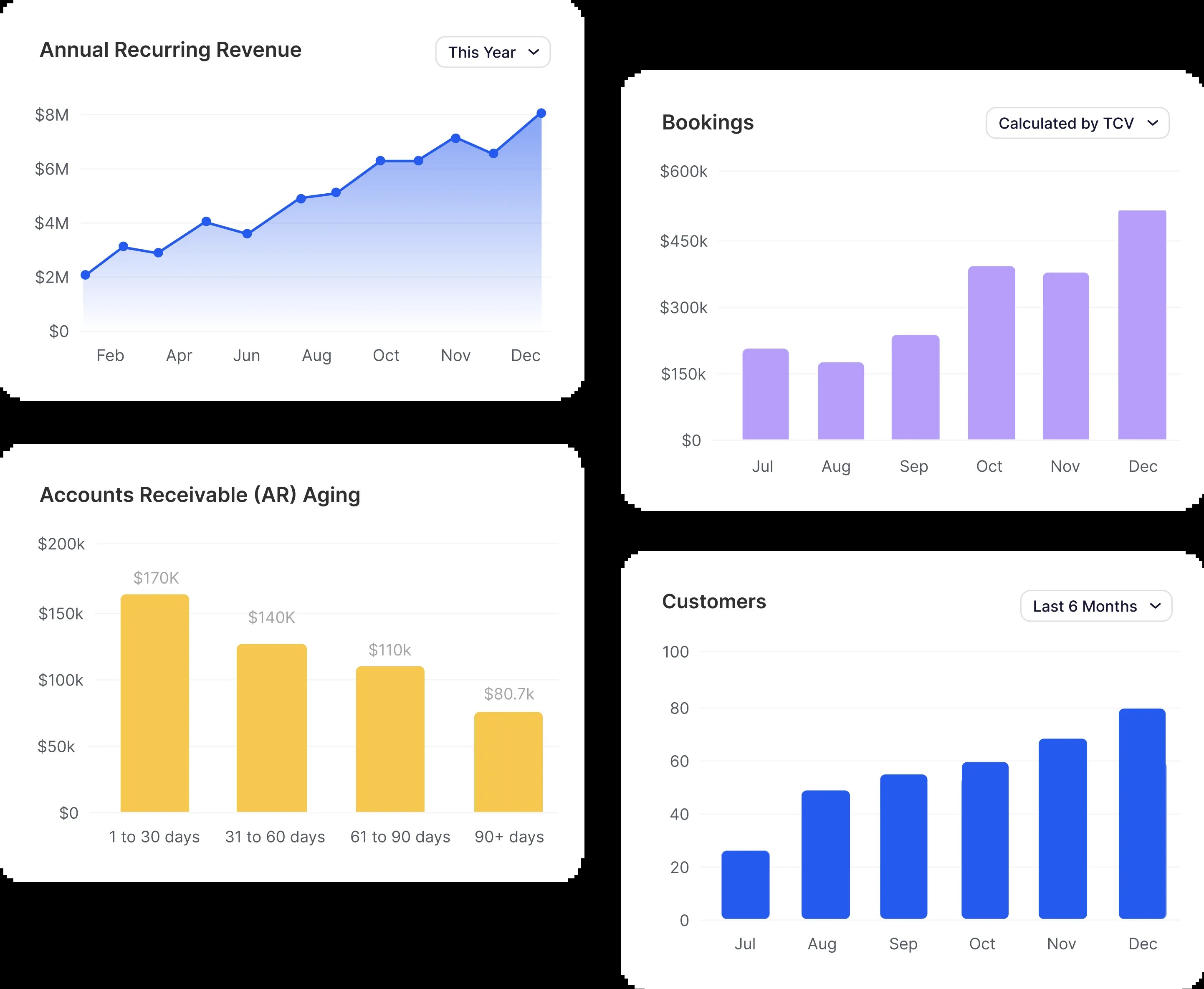
The buyer is not paying merely to send an invoice. Turnstile includes a configurable quote builder, approvals, e-signature, a product catalog, subscription changes, invoice generation, payment collection through Stripe, usage metering, collections, customer portals and real-time revenue reporting. It connects to CRMs including HubSpot, Attio and Salesforce; accounting systems including QuickBooks, Xero, Rillet and NetSuite; and tax services including Anrok, Kintsugi and Numeral.
Some edges remain visible. Stripe still handles refunds. Starter does not include Salesforce, NetSuite or API access. The most elaborate usage formulas live on Scale and Enterprise. These are useful boundaries because they reveal the business model: broad workflow coverage, segmented by the complexity and governance a growing finance operation needs.
Flexibility without folklore
Turnstile competes with several categories at once. Salesforce Revenue Cloud and Zuora represent the large-suite end. Chargebee, Maxio, Stripe Billing, Orb, Metronome and Tabs attack overlapping portions of billing and revenue operations. Then there is the stubborn incumbent: a hand-built chain of CRM fields, Docs, DocuSign, spreadsheets, calendar alerts and QuickBooks.
Its distinction is where it places the center of gravity. A conventional billing tool begins with the invoice. A CPQ product may stop after the signed quote. Turnstile begins with the commercial terms and tries to keep them alive downstream. This matters most when a company sells the way startups often sell: inventively, inconsistently and in response to what a valuable customer will accept.
The newer part of the pitch is AI. Turnstile can ingest existing contracts and turn their terms into operational subscriptions. Its Model Context Protocol interface gives approved AI agents read-and-write access to the quote-to-cash record. The practical ambition is less “chat with your revenue” than “let software act without guessing which spreadsheet is current.” Collections, renewals and reporting become plausible agent tasks only when the underlying terms are complete.
The useful idea to steal
A company does not need to buy Turnstile to copy its best lesson: decide where the authoritative commercial terms live. Capture pricing, start dates, renewal rules, usage definitions, credits and amendments as fields at the moment of agreement. Give each downstream process a single place to read them. Measure the time between signature and first correct invoice. Track amendments that required manual repair.
This discipline is most valuable when deals are negotiated, pricing changes frequently and a lean team owns both growth and accuracy. It is less compelling for a tiny self-serve business with one price and no negotiated terms, or for an enterprise already committed to a deeply customized revenue suite. Fast setup also does not abolish accounting policy, migration work or process design. Automation faithfully repeats the model it is given.
Strong fit
Sales-led B2B; custom or usage pricing; frequent amendments; lean finance; CRM and accounting handoffs; pressure for audit-ready numbers.
Weak fit
Simple self-serve checkout; few negotiated contracts; no recurring complexity; or a mature enterprise stack whose replacement cost exceeds the handoff problem.
The $29 million announced at launch came from First Round Capital, OMERS Ventures, Illuminate Financial and angel investors. It funds a deceptively unglamorous proposition: the deal should be entered once. The difficult part will be proving that one younger platform can earn trust across sales, finance and accounting while remaining as flexible as the spreadsheet it hopes to retire.
That spreadsheet endures for a reason. It accepts every exception without an implementation project. Turnstile's challenge is to preserve that freedom while adding the thing the spreadsheet never had: memory. Not the memory of what the team meant to bill, but a durable account of what the customer actually agreed to pay.