member-engagement
(22)
The Health Plan That Asked the Neighbors to Help
Wider Circle sells health plans an old-fashioned intervention: people who live near one another, meet regularly, and help each other get care. The machinery behind that simple scene is far more deliberate than a potluck.
NEP Services bets on the people who pick up
From direct-mail fundraising to union software, NEP Services has built a business around a stubborn problem: getting people to answer when their organization needs them.
Heywood and the surprisingly hard work of paying a pension
Behind a pension payment sits a small mountain of records, rules and unfinished forms. Heywood has spent half a century teaching computers to handle the paperwork - and its next test is taking that expertise overseas.
Daxko Built a Back Office for the YMCA - Now It Wants the Rest of Fitness
For 28 years, Daxko has digitized the unglamorous machinery behind YMCAs, JCCs, gyms and studios. Its next act is harder: make a shelf of acquired products feel like one system - and teach that system to do the work.
HealthEdge Is Building the Operating System Health Plans Were Too Scared to Replace
The dullest machinery in American healthcare may be the most expensive to leave untouched. HealthEdge spent 20 years turning claims rules, care workflows and provider records into one payer platform - then merged with the operator that knew how to move insurers onto it.
The $14 Billion Workout: How ABC Fitness Became the Gym Industry’s Invisible Operating System
It started with one Arkansas gym owner chasing unpaid dues. Four decades, several acquisitions and $14 billion in annual payment volume later, ABC Fitness is trying to make the gym’s front desk disappear into software - without taking the human part of fitness with it.

Alex Doonanco Is Teaching AI the Lost Art of Picking Up the Phone
A three-day visa run, a call to an engineer friend, and one unfashionable conviction: the future of software may sound less like a screen and more like someone who remembers why you called.
League Ditched the Wellness Marketplace. Now It Wants to Be Healthcare's Operating Layer
The Toronto company started by helping workers book massages. A decade and more than $285 million in venture funding later, it is selling the rails - and now the AI agents - behind healthcare's digital front door.
Aligned Marketplace's $31 Million Bet: Pay Doctors to Keep Workers Out of the Hospital
The New York startup bundles 3,000-plus independent clinics into one employer benefit. Its wager is simple, expensive and now measurable: better primary care can prevent the hospital bill before it arrives.

The Quiet War to Own the Audience You Rent
From a forum engine older than the iPhone to a fresh crop of venture-backed startups, a whole industry now sells institutions the same promise - a home for their people that no algorithm can take away overnight.

The Quiet Land Grab Inside Membership Software
Private equity spent a decade buying up the software that runs your professional association. Personify, Higher Logic, Glue Up and a bootstrapped upstart called GroupApp show what is left of the market - and who owns it now.

Everyone Is Suddenly In The Business Of Belonging
From a Fortune 500 CRM to a solo podcaster's chat room, four very different companies are chasing the same prize - the crowd that keeps coming back. Here is how the fight for online community actually breaks down.

Personify
Inside the Austin software company that quietly runs the back office of American associations - from neighborhood clubs to national nonprofits - and just merged into a 37,000-client giant.
Hivebrite
The community platform built for impact - combining a flexible engagement engine, AI agents, and expert support to help organizations turn scattered members into active networks.

Higher Logic
Engagement is changing. Make every connection count.

Gradual
Gradual is the seamless place to host events, educate and engage members, and grow your brand.
Glue Up
The all-in-one engagement platform betting that associations and chambers of commerce are done stitching together a dozen disconnected tools.

Community Platforms Put to the Member Test
Salesforce, Personify and Patreon promise different versions of belonging. A close look at the member journey - with Threado as a cautionary coda - shows where each experience connects, converts and creates friction.
careCycle
careCycle (YC W25) builds voice AI teams for Medicare agencies and Field Marketing Organizations. Its AI agents handle the non-licensed parts of the member journey - pre-screening, appointment booking, 24/7 questions, and post-enrollment follow-up - then warm-transfer to licensed human agents. The pitch is that a Medicare agency loses roughly half its members each year to poor post-sale engagement, and careCycle keeps those members answered, called back, and retained without the agency hiring a call center.
Simple HealthKit
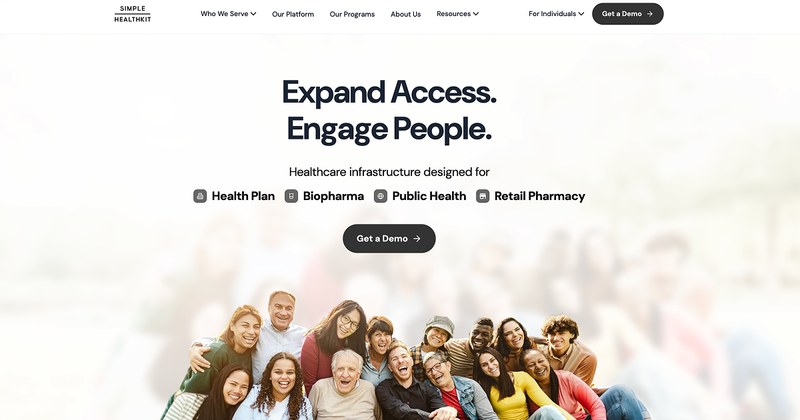
Simple HealthKit is a Milpitas, California-based digital health company building end-to-end healthcare infrastructure that unifies at-home and in-clinic diagnostics, a CLIA-certified lab, telehealth, and follow-up care into a single platform. Founded in 2018 by biochemist Sheena Menezes, the company targets health equity by making testing for sexual health, respiratory illness (COVID/flu/RSV), and chronic conditions like diabetes accessible and affordable for underserved populations, selling primarily to health plans, retailers, pharmacies, employers, schools, and public health organizations.
Legal Karma
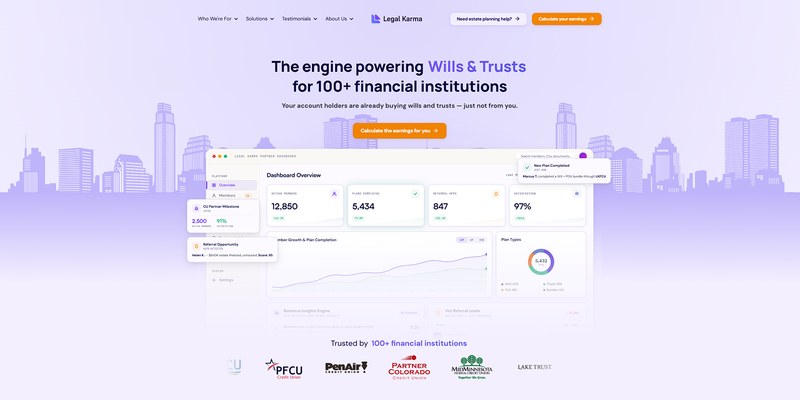
Legal Karma is an Austin-based B2B legaltech company that gives banks and credit unions a white-label engine for offering wills, trusts, and powers of attorney directly to their account holders. It handles the document automation, 50-state attorney-reviewed legal infrastructure, compliance, member support, and marketing so a financial institution can stand up a profitable estate planning department in about four weeks - while keeping 100% of the revenue and ownership of the customer relationship.
Curative
Curative is an Austin-based health insurance company that pivoted from being one of the largest U.S. COVID-19 testing providers into an employer-sponsored health plan with a simple promise: $0 copays, $0 deductibles, and $0 out-of-pocket costs for in-network care, provided members complete an annual preventive Baseline Visit. Founded in 2020 by Fred Turner, Isaac Turner, and Vlad Slepnev, the company packages insurance, pharmacy, telehealth, and care navigation into a single monthly premium aimed at removing the financial friction that keeps people from using their coverage.