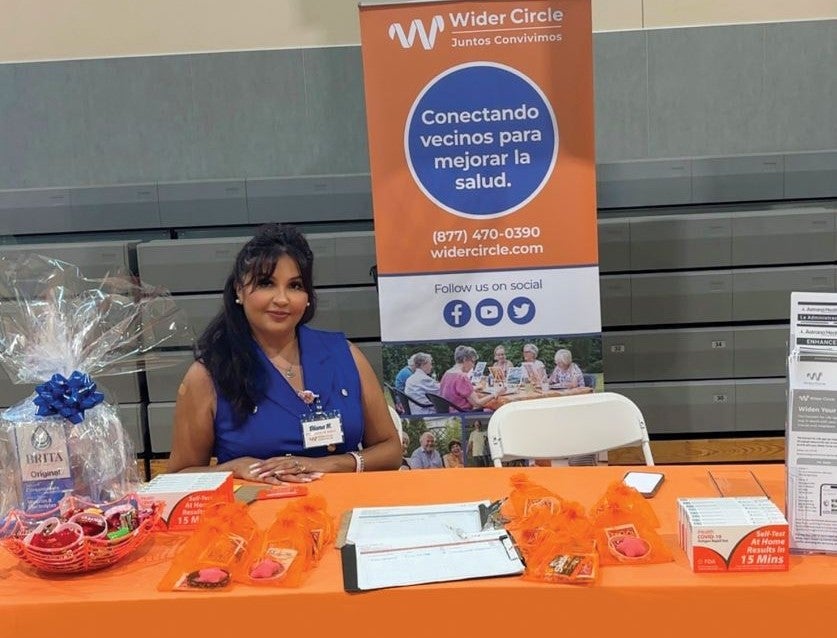
At a Wider Circle event, the scene can look almost suspiciously ordinary. People arrive, have a snack, meet someone who lives nearby, and talk. A health plan has paid for the occasion. The company behind it has studied claims data, invited members, hired local facilitators and prepared to recruit some of those guests as volunteer ambassadors. What looks like a social afternoon is also a carefully designed answer to a stubborn healthcare question: how do you reach someone who has stopped responding to the usual invitations?
- Wider Circle builds recurring, peer-led groups for Medicare Advantage and Medicaid members.
- Health plans and physician groups sponsor Connect for Life; eligible members join at no cost.
- Its edge is the handoff from staff to trusted neighbors who keep showing up.
- Its limits are equally concrete: local trust takes time, people and a sponsor willing to pay.
Wider Circle was founded in 2015 by Moshe Pinto and Darin Buxbaum, who say they had watched their own parents and grandparents struggle with healthcare. The company says its early testing led it toward community-level support. That is a consequential choice. A phone app can send a reminder to a million people at once. A neighbor can notice when one person has missed three meetings, ask what happened, and perhaps learn that the real obstacle is a ride, a confusing letter, or nobody to go with.
The second meeting is the product
The flagship program, Connect for Life, begins with a low-pressure invitation to a local gathering. If someone likes it, there are recurring neighborhood activities and, later, a larger chapter. The menu can include health education, social events, and help navigating benefits or finding transportation, housing and other resources. Some events happen online. The company says the groups are shaped by members' interests, from potluck picnics to conversations about care.
That first gathering matters less than what follows. People need a reason to return, and the group needs someone they recognize. Wider Circle employs facilitators and engagement specialists, then recruits willing members as ambassadors. Those volunteers become a familiar presence for others in the circle. The company calls this peer support; in plain language, it asks people who have found their footing to hold the door for the next person.
There is a technical backstage to this informal-looking production. Wider Circle says it analyzes a sponsor's claims data to cluster members likely to form durable local groups. Staff then seek out hard-to-reach members and invite them in. The model blends segmentation, culturally competent outreach and repeated face-to-face contact. It is easy to admire the algorithm; the difficult part is persuading strangers to come back next week.
Find nearby members with a basis for connection.
Invite them through local, culturally aware staff.
Ask members to become volunteer ambassadors.
Keep the group meeting and connected to care.
The sequence is Wider Circle's description of its operating model.
For the member, Connect for Life is free when a participating health plan or physician group sponsors it. For the sponsor, the proposition is more transactional: more reachable members, better use of preventive care, stronger retention, and fewer avoidable crises. Public prices for those contracts are not disclosed. The company also offers targeted home visits, and its newer WiderCare service pairs eligible people with care advocates who handle calls, appointments and paperwork. WiderCare says a person's cost depends on their plan.
“Wider Circle makes neighborhoods what they used to be – people looking out for each other.”Marilyn, a Wider Circle member in Redwood City
A social club with a balance sheet
Wider Circle's pitch to a payer is unusually direct. Its health-plan page reports results from past deployments: 41% lower disenrollment, 40% lower inpatient utilization, and 23% more annual wellness visits. These are company-reported outcomes, and the page says results vary. Optum's vice president of member growth separately describes a 23% increase in annual wellness visits among participating Medicare Advantage patients during the first year of that partnership.
Company-reported outcomes from past deployments; results may vary.
In 2023, actuarial firm Milliman reviewed Wider Circle's method for quantifying the potential impact of Connect for Life. Milliman called the approach and assumptions reasonable for their intended use. That conclusion is narrower than saying every number will repeat in every market. It does show that Wider Circle has had to translate friendship into a language a finance department can examine. The company also reports that Connect for Life has HITRUST CSF certification, a relevant credential when a model starts with health-plan data.
The $38 million Series B announced in September 2021 made that translation possible at greater scale. AmeriHealth Caritas led the round through its Social Determinants of Life subsidiary; Blue Venture Fund and Chicago Ventures participated. Wider Circle said the money would support national infrastructure, staff and technology. This is an expensive way to organize a conversation. It is also the point: a dependable local network does not materialize from a group text.
From friendly faces to care itself
Growth has brought a wider set of uses. A Detroit maternity program, Moms Connect for Life, brought expectant mothers together for support and education. A 2026 CalOptima Health partnership targets members eligible for both Medicare and Medi-Cal in Orange County, with particular attention to Spanish- and Vietnamese-speaking members. In August 2026, a Highmark Wholecare program began in six Pennsylvania counties, with about 5,000 Medicaid members expected to receive support. Wider Circle said Connect for Life was operating in 14 states at that point.
These examples reveal a condition that a national sales slide can conceal. The same format can travel, but the trusted person, language and practical obstacles must be local. A meeting in Orange County cannot simply be copied into York County and expected to carry the same social meaning. The repeatable piece is the operating sequence; the human chemistry has to be earned again.
Two newer moves push the company beyond the familiar circle. Hank, introduced as part of the Wider Circle family in 2025, is a social platform for adults over 55 to meet people and make friends in person. In May 2026, Wider Circle acquired Menda Health, whose virtual group-based behavioral care focuses on adults living with chronic pain. The Menda deal points from community engagement toward clinical support delivered in groups. It also raises an operational question: can a company preserve the ease of a neighborhood gathering while taking on the duties of a care provider?
The part worth copying
For a health plan, Wider Circle offers an alternative to sending another postcard or putting another outreach script in a call center. For an older member, it may mean a regular invitation, a person who recognizes them, or help understanding where to go next. Competitors include plans' own care-management teams, community health worker programs, senior centers and other vendors that connect people to social services. Wider Circle's particular bet is that peer relationships can become an enduring delivery channel, rather than a one-time intervention.
The useful lesson is smaller than the national ambition. Start with a recurring group people would attend even without the health lecture. Give it a local facilitator. Let participants shape the agenda. Invite trusted members to host. Connect practical problems to an actual person who can help. Then measure whether anyone returns, whether care gets easier to use, and whether the sponsor's economics improve. A free event with no second meeting is a party. A circle that keeps meeting may become part of the healthcare system's missing social infrastructure.