care-navigation
(26)
Maven Clinic Spent a Decade Selling Women’s Health to Bosses. Now It’s Coming Back for Everyone
Maven’s first consumer clinic arrived before patients were ready. Employers funded the long detour - and 28 million covered lives later, the company is reopening the front door with a broader bet on women’s health.
League Ditched the Wellness Marketplace. Now It Wants to Be Healthcare's Operating Layer
The Toronto company started by helping workers book massages. A decade and more than $285 million in venture funding later, it is selling the rails - and now the AI agents - behind healthcare's digital front door.

Crossover Health Couldn't Sell Better Primary Care One Patient at a Time - So It Sold the Whole System to Employers
A consumer clinic taught physician-founder Scott Shreeve that better care was not enough - distribution was the real diagnosis. Crossover's employer pivot turned one awkward storefront into a hybrid care network, and a 2026 merger gave the model national heft.

Tenure Health Bet That Medicare Needed a Better Front Door - Then Sold the Blueprint
Tenure Health started with a consumer problem - retirement healthcare feels like paperwork with a pulse. Three years, roughly $7 million and several stops and starts later, NCD bought the company for the product machinery behind the promise.
Recovery.com Built the Expedia for Rehab - Without Selling the Patient
The Madison startup began with a directory, an ethical constraint and an unfashionable launch market. Now it is assembling a large behavioral-health search network - while betting that transparency can be a business model, not merely a promise.

Redesign Health Turned Starting a Healthcare Company Into a Repeatable Process
The New York studio has launched more than 60 healthcare companies since 2018 by treating the messy work of starting one - ideas, diligence, hiring, capital - as a system you can run again and again.

Vishnukamal Golla Is Building the Missing Middle of Cancer Care
A surgeon trained to operate on the body turned his attention to the machinery around it - the incentives, handoffs and tools that determine whether specialty care actually works as one system.
Oscar Health
Oscar Health began with a friendly app and an unfriendly problem: American health insurance. Fourteen years later, its bigger bet is that the individual market can become the operating system for how people buy care.

Amigo
Amigo is a New York-based healthcare AI company that builds a platform for designing, training, and deploying patient-facing clinical AI agents. Using a 'digital residency' model, its agents train on millions of simulated patient scenarios before handling real interactions such as intake, triage, care navigation, and 24/7 patient support. Founded by Ali Khokhar and John Xing, Amigo integrates with major EHRs (Epic, Oracle Health, Athenahealth), operates in 100+ languages, and reports more than three million patient encounters with zero safety incidents. It raised an $11M Series A in March 2026 led by Madrona, bringing total funding to $17M.

Lōvu Health
Lōvu Health is a Cupertino-based digital maternal health company that follows mother and baby from pre-conception through two years postpartum. It pairs connected home devices - a blood pressure monitor, smart scale and fetal Doppler - with a pregnancy navigator, an OB-facing dashboard, and a marketplace of 50+ specialty vendors, using real-time remote patient monitoring and AI to catch complications like preeclampsia and perinatal depression earlier.

Vynca
Vynca is a healthcare company focused on serious illness and end-of-life care. Founded in 2013 out of Stanford Biodesign, it began as advance care planning software that put patients' end-of-life wishes into the electronic health record, then expanded into hands-on clinical services. Today it combines home-based and virtual palliative care, care navigation, and enhanced care management with technology, partnering with health plans and providers to keep seriously ill patients comfortable, out of the hospital, and cared for on their own terms.
Ceresti Health
Ceresti Health is a Carlsbad, California digital-health company that turns family caregivers into the front line of dementia care. Through a cell-enabled tablet, weekly one-on-one coaching from a personal care navigator, and claims-driven predictive analytics, Ceresti helps spouses and adult children spot the small changes - a urinary tract infection, a missed medication - that otherwise snowball into costly hospitalizations. The company sells to Medicare Advantage plans, ACOs, and providers operating under the CMS GUIDE payment model, and backs its program with a documented cost-savings guarantee: more than 50% fewer avoidable hospitalizations and roughly $6,800 in medical savings per enrolled patient per year.

Justin Holland
Justin Holland is the co-founder and CEO of HealthJoy, a Chicago-based digital health company that turns the maze of employee benefits into a single AI-guided app. An MIT-trained engineer and serial entrepreneur with two prior exits (OpenInstall to AVG/Avast and FreeCause to Rakuten), he started HealthJoy in 2014 after a personal run-in with the American healthcare system left him unable to find out what his own care would cost. He has led the company for more than a decade, raised roughly $108M in venture financing through a Series D, and built a platform now used by hundreds of thousands of members to navigate care, cut costs, and reach a virtual assistant named JOY.

Buoy Health
Buoy Health is a Boston-based digital health company that built an AI-powered symptom checker and care-navigation platform. Founded in 2014 out of Harvard Innovation Labs, Buoy lets people describe how they feel in a chat that mimics a conversation with a doctor, then steers them toward the right next step - from self-care at home to the ER - using an algorithm trained on thousands of medical studies. The company sells its navigation platform to employers, health plans and providers while keeping the consumer symptom checker free.

Cartwheel
Cartwheel is a Cambridge, Massachusetts company that delivers evidence-based mental health care to K-12 students through their schools. Working as a telehealth partner to school districts, it provides rapid-access individual therapy, group therapy, psychiatric evaluations, medication management, and family and parent guidance, with most care covered by insurance. By 2026 it had grown to roughly 350 school districts across 15 states, positioning itself as the largest school-based mental health telehealth provider in the United States.
Collective Health
Collective Health is a San Francisco-based health benefits technology company that operates an integrated platform for self-funded employers. It brings medical, dental, vision, pharmacy, and digital health partners together in one system, pairing claims administration with a member app, care navigation, and analytics so employers can control costs while making coverage easier for employees to understand, navigate, and pay for.

Curative
Curative is an Austin-based health insurance company that pivoted from being one of the largest U.S. COVID-19 testing providers into an employer-sponsored health plan with a simple promise: $0 copays, $0 deductibles, and $0 out-of-pocket costs for in-network care, provided members complete an annual preventive Baseline Visit. Founded in 2020 by Fred Turner, Isaac Turner, and Vlad Slepnev, the company packages insurance, pharmacy, telehealth, and care navigation into a single monthly premium aimed at removing the financial friction that keeps people from using their coverage.
Daymark Health
Daymark Health is a Philadelphia-based, tech-enabled cancer care company that delivers in-home and virtual supportive care to patients during the long stretches between oncology appointments. Working alongside patients' existing oncologists and partnering with health plans under value-based arrangements, Daymark combines a multidisciplinary care team - nurse practitioners, nurses, licensed clinical social workers, and health navigators - with a technology platform to provide 24/7 support, symptom and side-effect management, mental health care, care navigation, and help with practical barriers like transportation and finances.

Garner Health
Garner Health is a New York-based healthcare technology company that analyzes billions of medical claims to identify the highest-performing doctors, then pairs that data with employer-funded financial incentives so employees can see top providers at a fraction of the out-of-pocket cost. Founded in 2019 by Nick Reber, the company combines a member-facing care navigation app and concierge with a provider analytics engine (Garner DataPro / Garner Research Agent) used by employers and health plans to cut healthcare spend while improving outcomes.
Colby Takeda
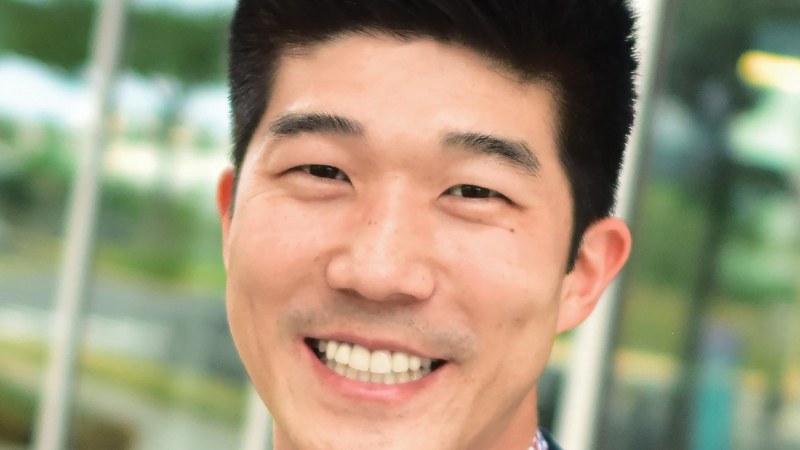
Colby Takeda is the co-founder and CEO of Pear Suite, a digital health company that gives community health workers the software, billing tools, and data infrastructure to be recognized as a foundational part of the healthcare system. A fourth-generation Japanese American from O'ahu, registered community health worker, and former senior living executive, he built Pear Suite during the pandemic on Google Sheets and Typeform before turning it into a care navigation platform that supports thousands of frontline workers. In October 2025 the company raised a $7.6 million Series A led by Rock Health Capital to expand its reach into Medicaid and Medicare markets.

Pear Suite
Pear Suite is a digital health company that equips community health workers (CHWs), promotores, doulas, and the community-based organizations they work for with an AI-powered care navigation platform. The software helps frontline workers document visits, track clients, address social determinants of health, and bill health plans, while connecting them into a national provider network that handles contracting, clinical, and claims infrastructure so community-based care can finally get reimbursed sustainably.

Sana
Sana is an Austin-based health insurtech building modern, tech-enabled health plans for small and medium-sized businesses. By cutting out the administrative bloat of the traditional 'Big 5' insurers and bundling free virtual primary care and care navigation, Sana says it can lower employer-paid premiums by roughly 20-30% while still offering rich benefits. It sells level-funded and group medical plans direct to employers and through brokers, pairing claims transparency with its own Sana Care clinical team.

Justin Bekelman
Justin Bekelman is the co-founder and CEO of Daymark Health, a Philadelphia-based value-based oncology company building a tech-enabled medical group that wraps clinical, mental health, and social support around people facing cancer. A radiation oncologist with roughly 200 published research articles, he spent two decades at the University of Pennsylvania, where he founded the Penn Center for Cancer Care Innovation at the Abramson Cancer Center before leaving to build a company that contracts directly with health plans to take on total cost of care. Daymark launched publicly in 2025 with $11.5M in seed funding and closed a $20M Series A in September 2025.
HealthJoy
HealthJoy is a Chicago-based digital health company that turns the tangle of employer-sponsored benefits into a single app. Its AI concierge, JOY, plus a team of human healthcare advocates, guides employees to the right care - from telemedicine and virtual primary care to MSK therapy, behavioral health, prescription savings and medical bill review - while helping employers cut healthcare spend. Founded in 2014, HealthJoy serves more than 1,800 employers and over 1.25 million members.

SimpliFed
SimpliFed is a virtual maternal health company based in Ithaca, New York, that helps families through pregnancy, postpartum, and baby feeding. Founded by biomedical engineer Andrea Ippolito in 2019, it began as insurance-covered virtual lactation support and has grown into a broader 'Maternal Health Operating System' (mOS) that pairs IBCLC lactation consultants and care navigators with prenatal and postpartum virtual OB services. Working in-network with most major commercial plans and Medicaid in multiple states, SimpliFed partners with health systems and OB clinics to extend judgment-free, evidence-based care into the home.

Sollis Health
Sollis Health is a membership-based concierge medical provider that runs 24/7 centers handling everything from a sore throat to an ER-level emergency, all without a wait. For an annual fee, members get unlimited same-day visits, on-site imaging and labs, telehealth, house calls, and access to a network of ER-trained physicians and specialists, positioned as a calmer, faster alternative to the traditional emergency room and the fragmented urgent-care system.