Born in Harvard Innovation Labs, 20142M+ people a month ask Buoy how they feel$66M+ raised across four roundsCigna, Humana & Optum all bought inReported near-$200M valuationFeeling off? Buoy itTrained on thousands of medical studiesBorn in Harvard Innovation Labs, 20142M+ people a month ask Buoy how they feel$66M+ raised across four roundsCigna, Humana & Optum all bought inReported near-$200M valuationFeeling off? Buoy itTrained on thousands of medical studies
Digital Health · Boston, MA
Buoy Health
The AI symptom checker that talks back like a doctor - then tells you where to actually go.
Founded 2014AI & Care NavigationSeries Cbuoyhealth.com
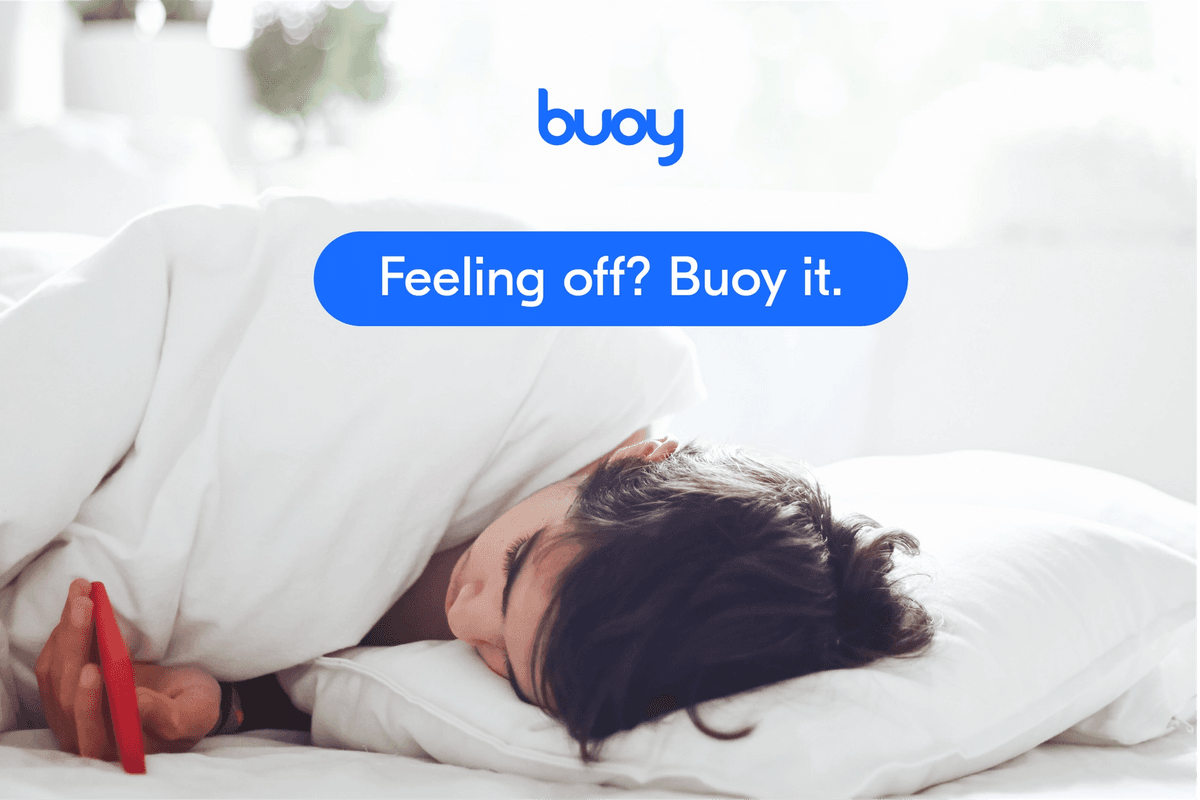
Exhibit A: the 11pm gut-check. A phone, a stuffy nose, and one quietly enormous question - is this nothing, or is this something?
It is the middle of the night and someone is awake, scrolling, half-convinced a sore throat is the beginning of the end. This is the most dangerous appointment in healthcare, and nobody books it. Buoy Health built a product for exactly this moment.
Today, more than two million people a month open Buoy and start typing how they feel. No waiting room, no co-pay, no friend-of-a-friend who once read something on a forum. Just a chat that asks the next sensible question, the way a calm clinician would - and at the end, a recommendation that is closer to "see your doctor this week" than "you may have eleven rare diseases." The company keeps that consumer tool free and sells the engine behind it to the employers, hospitals and insurers who would very much like their members to stop guessing.
Feeling off? Buoy it.- Buoy Health's three-word reframe of the entire "should I worry?" problem
The Problem They Saw
Everyone googles their symptoms. Almost no one should.
The internet is a remarkable place to learn that a headache is, statistically, almost never a tumor - and to become completely convinced it is one anyway. Search engines were built to return pages, not plans. They answer "what could this be?" and politely ignore the only question that matters when you feel sick: what do I do now?
That gap is expensive. People sit on warning signs until they land in an emergency room. Others rush to the ER for things a pharmacist could fix in four minutes. The system loses money at both ends, and the patient loses something harder to price - the confidence that they are doing the right thing. Buoy's founders looked at the panic of midnight self-diagnosis and saw a routing problem dressed up as a medical one.
Content created to be clear and actionable, not vague and alarmist.- The company's quiet shot at every "consult a physician immediately" pop-up
The Founders' Bet
A neurosurgery resident, a Harvard lab, and a phone call that came too late.
Andrew Le was on his final rotation at Harvard Medical School, training toward neurosurgery, when he kept noticing the same thing: patients had already googled themselves into a decision before they ever reached a doctor. Then it stopped being academic. His own father hesitated during a mini-stroke, waited too long, and the delay made the case in a way no lecture could.
In 2014, Le and co-founders Adam Lathram, Nathanael Ren and Eddie Reyes started building Buoy out of Harvard Innovation Labs. The bet was unglamorous and, in hindsight, obvious: feed an algorithm thousands of peer-reviewed medical studies, wrap it in a conversation rather than a search box, and let it ask the follow-up questions a real clinician would. They spent roughly three years building before they made much noise. Healthcare, it turns out, rewards patience more than swagger.
Andrew Le, MDCo-Founder & CEO
Adam LathramCo-Founder
Nathanael RenCo-Founder
Eddie ReyesCo-Founder
The inspiration became personal when his own father waited too long to seek care during a mini-stroke.- The origin story behind a company that hates hesitation
The Product
Less WebMD rabbit hole. More friend who happens to be a doctor.
Buoy's symptom checker does not hand you a list and wish you luck. It interviews you - adapting each question to your last answer, narrowing the field the way a doctor narrows a differential. The output is not a diagnosis stamped with false certainty; it is a sensible next step, sized to how worried you actually need to be. For the businesses that license it, the same engine becomes a "digital front door," steering members to in-network care that fits their specific benefits and zip code.
Free / Consumer
AI Assistant
A chat-based symptom checker trained on thousands of medical studies that asks adaptive questions and recommends a next step.
B2B Platform
Care Navigation
Guides employees and health-plan members from symptom to the right in-network care, personalized to their benefits.
Marketplace
Care Marketplace
A vetted set of telehealth and specialty partners surfaced inside the flow so users can act immediately.
Clinician-Reviewed
Health Content
Articles and curated recommendations written and edited by doctors and nurses - clear, not alarmist.
Like talking to your friend who happens to be a doctor.- How Buoy describes the thing it is trying not to make feel like software
The Receipts
Eleven years, four rounds, one stubborn idea.
A short history of refusing to let people guess
2014
Founded at Harvard Innovation Labs
Andrew Le and three co-founders start building the symptom checker while Le is still a medical resident.
2017
$6.7M Series A
F-Prime Capital and a strategic investor back the public launch and a push toward payers and providers.
2019
Series B
Optum Ventures joins; Buoy leans into being a navigation layer, not just a checker.
2020
"Back with Care" + $37.5M Series C
A COVID return-to-work tool ships; Cigna and Humana lead the Series C at a reported near-$200M valuation.
2022
Marketplace expands
Airrosti and Icon Health join the navigation initiative as care options for Buoy's 2M+ monthly users.
The Proof
When your investors are also your customers' insurers.
Here is the tell that Buoy is solving a real cost problem and not just a consumer one: the payers writing the checks are the same payers whose members the product is designed to route. Cigna, Humana and Optum led or joined its rounds. Consortium Health Plans named Buoy a preferred "digital front door," putting it in front of up to 25 million national-account members. Care providers lined up to be the recommended option on the other side of the conversation.
Funding raised, round by round
USD, millions · disclosed round sizes
2017 · A
$6.7M
2019 · B
~$15M
2020 · C
$37.5M
Total
$66M+
Bars scaled for readability. Round sizes vary slightly by source; figures reflect publicly reported amounts.
2M+Monthly users
25MPlan members reachable
$66M+Total raised
~$200MReported valuation
Named a preferred AI-enhanced digital front door for plans serving up to 25 million members.- Consortium Health Plans, deciding the rabbit hole had gone on long enough
The Mission
Start your health care on the right foot.
Buoy's stated goal is plain enough to print on a napkin: help people, from the moment they get sick, take the right first step. Strip away the funding rounds and the payer partnerships and the mission is the same as it was in a Harvard lab in 2014 - take the fear and confusion out of "I don't feel right," and replace it with a plan. The cynic's version is that Buoy is a routing layer for the healthcare-industrial complex. The generous version is that routing, done well, is the difference between catching something early and finding out too late. Both can be true.
Helping people seek the right medical care at the right time.- Andrew Le, CEO, on the whole point
Why It Matters Tomorrow
The first step is the one everyone keeps getting wrong.
AI can now write a sonnet about your sniffles. The harder, more useful trick is telling you, calmly and correctly, whether the sniffles are worth a doctor's time. As symptom-checking gets crowded with chatbots that sound confident and know nothing, the companies that win will be the ones a clinician would actually stand behind - and the ones a health plan will pay to put in front of millions. Buoy spent a decade building toward exactly that intersection.
So return to the bedroom at 11pm. The phone is still glowing, the sore throat is still there, the enormous question still hangs in the air. The difference is that the answer no longer comes from a search engine optimized for clicks. It comes from a conversation that ends with a plan - and a person who goes back to sleep instead of spiraling. That is a small thing, repeated two million times a month, which is another way of describing a big one.
Looking for video? Search "Buoy Health symptom checker demo" and "Andrew Le Buoy Health interview" on YouTube for product walkthroughs and founder talks.