SOLLIS HEALTH - the waiting room nobody waits in
Company Profile / Concierge Emergency Medicine
Sollis Health
The emergency room without the emergency room. A 24/7 membership that answers at 3am - and means it.
The emergency room without the emergency room. A 24/7 membership that answers at 3am - and means it.
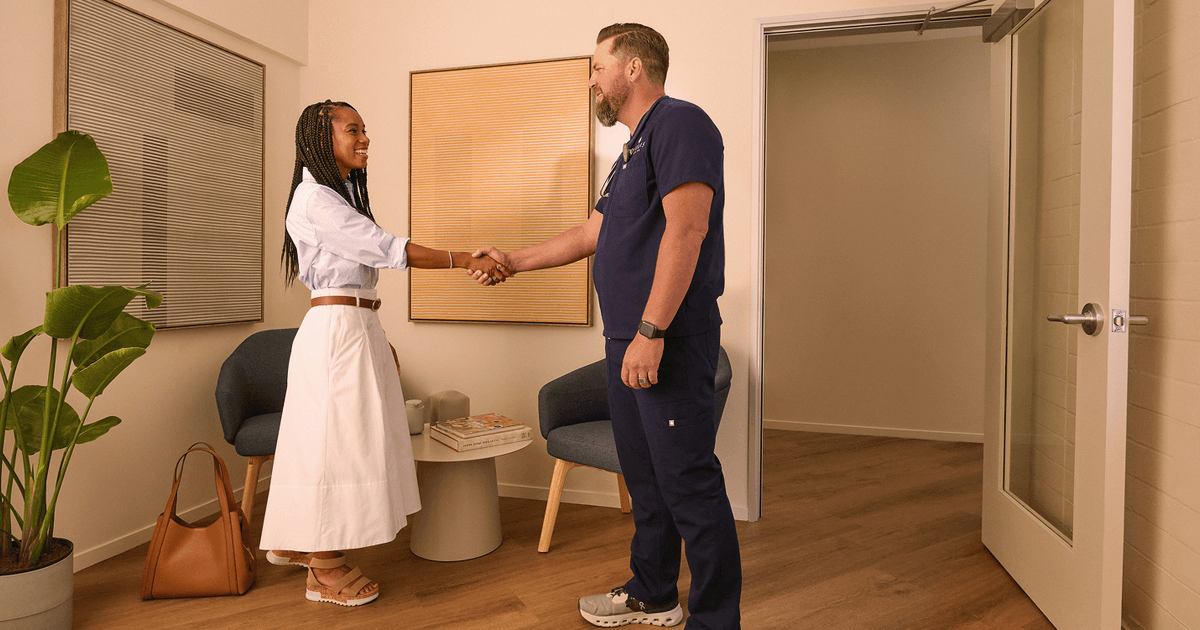
A child spikes a fever at 2am on the Upper East Side. The old script says: gather your things, drive to a hospital, sign in, and surrender to the fluorescent purgatory of an emergency waiting room. The new script, for a Sollis Health member, is shorter. You make a call. Someone who has done this ten thousand times answers. By the time you arrive at a center that looks more like a boutique hotel than a hospital, an ER-trained physician is already expecting you. Average wait: about three and a half minutes.
That is the company today - roughly ten centers across New York, California and Florida, more than 17,000 members, and a single, slightly heretical promise: that urgent and emergency care can be fast, calm, and on your schedule. Sollis is not a hospital and not quite an urgent care clinic. It invented a category somewhere in between and then dared the rest of healthcare to catch up.
"We handle about 90% of what the ER does - and keep members out of the emergency department roughly 99% of the time."
Here is the tension that Sollis exists inside of. If you get sick in America, you traditionally choose between two flavors of disappointment. Door number one: the urgent care clinic - convenient, cheap, and frequently unequipped to handle anything serious. Door number two: the emergency room - capable of handling everything, and structured so that handling it takes hours. Neither door was designed around the person walking through it.
The waiting room, that great equalizer, became the symbol of the whole broken arrangement. You could be having the worst day of your life and still spend a quarter of it filling out a clipboard. The founders - both veterans of healthcare investing and medicine - looked at this and asked the question that launches most companies: why does it have to be this way?
"Sollis bridges the gap between urgent care that lacks expertise and emergency rooms with long waits."
Sollis Health was founded in 2016 - originally under the name Priority Private Care - by Andrew Olanow and Dr. Bernard Kruger. Olanow had spent more than a decade as a healthcare investor and analyst at firms including Generation IM, Morgan Stanley and Merrill Lynch, which is a polite way of saying he had spent years studying exactly how healthcare makes and loses money. Kruger was a board-certified physician in oncology and internal medicine who had treated patients for over thirty years. One understood the spreadsheet; the other understood the bedside.
Their bet was unfashionable at the time: that people would pay an annual membership - not an insurance premium, an actual membership - for the privilege of skipping the line and getting hospital-grade care without the hospital. In 2019 the company rebranded from Priority Private Care to Sollis Health, complete with a new logo from a creative director at McCann. The name nods to sol, the sun. Always on. Always up.
In 2022 the company brought in Brad Olson as CEO. Olson is not a doctor; he is a growth operator, having served as Chief Business Officer at Peloton, where he helped scale the membership base roughly 100x. The choice signaled the next chapter: Sollis had proved the concept worked in one city. Now the job was to make it work everywhere, without the thing that usually breaks when concierge anything scales - the feeling that you are actually being cared for.
"Take every meeting. Some of the investors that emerged in this round weren't necessarily an obvious fit on paper."
Strip away the marble and what Sollis sells is access. The standard adult membership runs roughly $3,500 to $4,000 a year (children around $1,500), with Family plans starting near $10,500. That fee buys unlimited same-day visits with no co-pay, 24/7 telehealth, on-site labs and imaging with results that arrive in minutes rather than days, house calls, and a team of care coordinators whose job is to make the rest of the medical system behave. More advanced work - an MRI, a CT scan, deep bloodwork, a house call at midnight - carries an extra fee.
Notably, Sollis does not bill your insurance for a visit. It is direct-pay by design, which is either a feature or an outrage depending on where you sit. The trade is straightforward: you give up the fiction that insurance makes emergency care affordable, and in return you get a doctor who picks up.
In-center care handling about 90% of ER cases, with same-day appointments and a ~3.5 minute wait.
Hospital-grade labs and imaging - X-ray, ultrasound, and access to MRI/CT - with same-day results.
Around-the-clock virtual visits, plus in-home care for members who can't or shouldn't travel.
Coordinators and fast-tracked access to a network of 2,000+ ER-trained physicians and specialists.
The most luxurious thing money can buy in 2026 might simply be a doctor who answers the phone.
The skeptic's question is fair: is this just a velvet rope around medicine that already exists? The numbers suggest something stickier. Membership has tripled since 2021 to north of 17,000. In December 2024 the company closed a $33 million Series B led by Foresite Capital, with participation from Torch Capital, Montage Ventures, Friedom Partners, Read Capital and One Eight Capital - bringing total funding to roughly $80 million. Capital that arrives during a healthcare funding winter tends to be a vote of conviction, not enthusiasm.
Beyond individuals and families, Sollis serves corporate clients and film and television productions that need executive and on-set medical support - the kind of customer for whom a delayed diagnosis is also a delayed shoot. It is a quietly clever wedge: the same always-on infrastructure that calms an anxious parent also keeps a production running.
"Membership has roughly tripled since 2021 - turns out people will pay to skip the waiting room."
Sollis frames its purpose plainly: immediate, high-touch medical care that pairs the expertise of an emergency room with the comfort of concierge service. The competition is not really One Medical or Forward or the local urgent-care chain. The competition is the waiting room itself - the accumulated friction of a system that asks the sick to be patient. The 2024 launch of an integrated Family membership, folding pediatric emergencies and everyday checkups into one relationship, was the mission made concrete: not a clinic you visit, but a medical relationship you keep.
The honest critique is that Sollis is expensive, and a model that charges thousands a year will not fix American healthcare for the people who need it most. True. But categories rarely start at the bottom. The interesting question is whether the standards Sollis is setting - minutes not hours, results now not later, one team that actually knows you - drift downward over time, the way premium expectations have a habit of doing. Expansion into Texas, Miami and Silicon Valley will test whether the calm survives the scale.
Back to 2am. The fever breaks. Nobody filled out a clipboard. The waiting room - the one nobody waited in - is already empty.