Breaking
SimpliFed raises oversubscribed $10.8M Series A - April 2026 On track to support ~5% of all U.S. births in 2026 97% patient satisfaction · under 2% no-show rate ER utilization 2.6% vs 7.6% national average 96.6% breastfeeding continuation at one week In-network with most major commercial plans + Medicaid SimpliFed raises oversubscribed $10.8M Series A - April 2026 On track to support ~5% of all U.S. births in 2026 97% patient satisfaction · under 2% no-show rate ER utilization 2.6% vs 7.6% national average 96.6% breastfeeding continuation at one week In-network with most major commercial plans + Medicaid
Company Profile · Maternal Health

SimpliFed.

The hardest weeks of new parenthood, met by a video call you don't pay extra for.

SimpliFed - virtual maternal health and baby feeding support

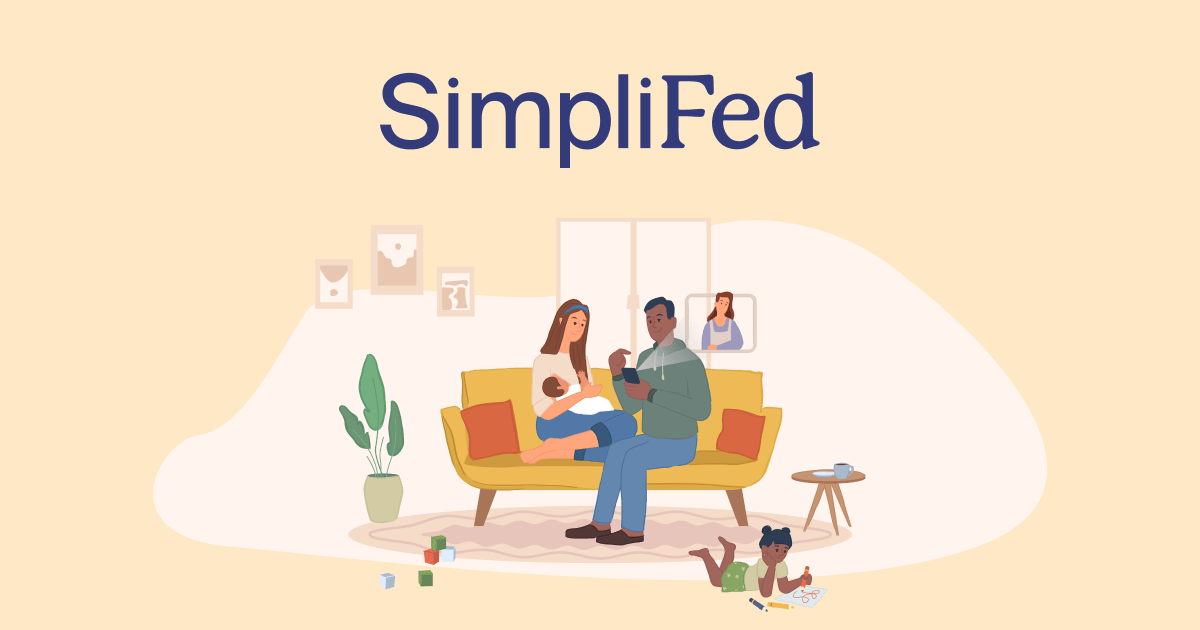
Above: the SimpliFed mark. The name is one part "simplify," one part "fed" - which is the whole job description, really. Feeding a baby is hard enough without a 40-minute drive to a clinic.

Founded2019 · Ithaca, NY
FounderAndrea Ippolito, CEO
StageSeries A · $10.8M
Team~73 people
Who they are now

It is 3 a.m. and someone picks up.

A new parent is awake on the couch, a baby that will not latch in one arm, a phone in the other. This is the moment SimpliFed was built for. Not the glossy nursery. The 3 a.m. one. The company connects that parent to a board-certified lactation consultant over video, and - this is the part that still surprises people - insurance covers it.

SimpliFed is a virtual maternal health company out of Ithaca, New York. It started as insurance-covered lactation support and has grown into what it calls a Maternal Health Operating System: feeding help, care navigators on call around the clock, and a growing line of prenatal and postpartum virtual OB care. The pitch is unglamorous and exactly right. Care that comes to you, when you actually need it, billed to the plan you already pay for.

"Compassionate, culturally competent care regardless of geography and status is a right, not a privilege."- SimpliFed, mission statement
The problem they saw

A benefit nobody could find.

Here is the inconvenient fact at the center of this story. Under the Affordable Care Act, breastfeeding support and counseling are supposed to be covered at no cost. In theory, help is already paid for. In practice, finding a lactation consultant who takes your insurance, has an opening this week, and can come to your living room is roughly as easy as finding a parking spot in Manhattan during a snowstorm.

So families improvise. They pay out of pocket. They give up. And the United States, for all its spending, posts some of the worst maternal health outcomes in the developed world. The gap is not a lack of benefits. It is a lack of access to them.

A covered benefit that almost nobody can actually use is, functionally, not a benefit at all.- the gap SimpliFed set out to close

That is the tension SimpliFed keeps pulling on. The money exists. The need exists. The bridge between them does not. Building that bridge - billing, scheduling, clinicians, and a platform health systems can plug into - turns out to be the entire hard part.
The founders' bet

An engineer who had been there.

Andrea Ippolito is a biomedical engineer, a Cornell faculty member, and a mom of three. Before SimpliFed she co-founded Smart Scheduling, a healthcare access startup that athenahealth acquired in 2016. So she knew the plumbing of American healthcare - the billing codes, the payer contracts, the unglamorous machinery that decides whether care actually reaches anyone.

She also knew the 3 a.m. couch personally. After the birth of her first daughter, breastfeeding was hard, isolating, and short on real help. The bet she made in 2019 was that this was not a personal failing but a systems failure, and that a systems person could fix it.

"This investment will benefit patients immediately, as we grow our technology and continue to focus on patient-centric care."- Andrea Ippolito, Founder & CEO

It is a slightly ironic origin: a scheduling-software veteran discovering that the thing healthcare most needs scheduled is a human being who will answer the phone with a baby crying in the background. The team she built leans into that lived experience - leadership bios on the company's own site cheerfully list "Mom of Three" and "Mom of Four" as credentials.

The product

Help, shaped like a phone call.

The front door is simple. A parent books a virtual visit with an International Board Certified Lactation Consultant (IBCLC). Care plans often start during pregnancy and run up to six one-on-one appointments. Between visits, 24/7 care navigators - the company calls them "allies" - answer the questions that do not wait for business hours.

SimpliFed is deliberately neutral about how a baby gets fed. Breastfeeding, chest feeding, formula, pumping, donor milk - all supported, no lectures. That judgment-free stance is both a value and, frankly, good medicine.

Virtual Lactation

Insurance-covered 1:1 telehealth with IBCLCs and certified counselors, planned from pregnancy onward.

Allies / Navigators

24/7 care navigators for ongoing, judgment-free guidance, resource connection, and escalation.

Virtual OB

Prenatal and postpartum care for low-risk patients, in partnership with health systems and clinics.

Maternal Health OS

A white-label, multi-tenant platform with HL7 / SMART-on-FHIR data exchange and risk stratification.

Underneath the friendly video call sits the less friendly engineering: a platform (the "mOS") that exchanges data bi-directionally with hospital systems, integrates with Epic MyChart, stratifies risk, and lets a health system deploy maternal care at home under its own banner. The consumer sees a kind face. The hospital sees an API.

The proof

The numbers do the arguing.

Skepticism is fair - "telehealth for feeding" sounds like the kind of thing that demos well and delivers little. SimpliFed's reported outcomes push back on that.

97%
Patient satisfaction
<2%
No-show rate
2.6%
ER utilization
~5%
of U.S. births, 2026 target
Breastfeeding continuation: SimpliFed vs. national average
// reported by SimpliFed, Series A announcement, April 2026
At one week - SimpliFed96.6%
At one week - national85.7%
At 12 months - SimpliFed55.3%
At 12 months - national40.8%
SimpliFed patients National average
ER visits at 2.6% against a 7.6% national average. Prevention, it turns out, is cheaper than a panic.- on why payers keep signing

The business model is what makes the outcomes durable. SimpliFed bills commercial insurance and Medicaid directly, and partners with health systems, OB clinics, and payers who fold its service into existing maternity pathways. It is in-network with most major commercial plans nationally and runs Medicaid partnerships across multiple states. Investors noticed: an oversubscribed $10.8M Series A in April 2026, led by Morningside and Hesperia Capital, with Foreground Capital, AHA Social Impact Fund, Elizabeth Street Ventures, and angels along for the ride.

Milestones

How a couch became a company.

2019

Founded in Ithaca

Andrea Ippolito starts SimpliFed to make baby-feeding support accessible and judgment-free.

September 2021

$500K pre-seed

Early capital to build out virtual infant-nutrition support, covered by TechCrunch.

2022

The formula shortage

SimpliFed helps panicked families navigate the national infant-formula shortage; Cornell Chronicle takes note.

February 2025

$4M raise

Led by Morningside, to build a more comprehensive maternal-care-at-home platform.

April 2026

$10.8M Series A

Oversubscribed round to scale lactation and expand into virtual OB care.

The mission

Bigger than the bottle.

Feeding is the wedge, not the whole. SimpliFed's stated goal is to turn the tide on maternal health outcomes in the United States - which is a polite way of saying the current numbers are unacceptable and somebody should do something. The company's something is infrastructure: an operating system that lets compassionate care scale without losing the part that makes a parent on the couch feel less alone.

Democratize access to baby feeding, then to maternal health, then watch the outcomes move.- the throughline, three rounds running

The expansion into virtual OB is the logical next move. If you already have a trusted line into a family during pregnancy and the postpartum fog, extending that relationship to prenatal and postpartum care is less a pivot than a widening of the same front door.

Why it matters tomorrow

Back to the couch.

Return to 3 a.m. The baby that would not latch. The phone in the other hand. In the old version of that scene, the parent is alone, scrolling forums, second-guessing everything, maybe loading the car for an ER visit that is more about fear than emergency.

In SimpliFed's version, someone picks up. The visit is covered. The advice is specific. The ER stays empty. Multiply that by the roughly five percent of U.S. births the company aims to touch in 2026, and a small act - answering the phone - starts to look like a public-health strategy.

A covered benefit that finally reaches the couch. That is the whole company, and it is plenty.- SimpliFed, in one line

None of this is guaranteed. Scaling clinical care across payers and states is genuinely hard, and outcomes reported by a company in a funding announcement deserve the same scrutiny as any other. But the bet is coherent and the early evidence is real. SimpliFed found a benefit nobody could use, and turned it into a phone that someone answers.

Spread the word

// share SimpliFed

// YouTube link points to founder interviews and talks; the product walkthrough lives on simplifed.com