A dog daycare and a fraternity have surprisingly similar administrative lives. Someone must keep the records, collect the money and explain what happens next. The details differ: one needs pet information; the other needs chapter finances. TogetherWork has built a company around those details. Its family of software brands serves organizations that bring people together, then helps those organizations handle the unglamorous business of staying open.
- Specialist brands handle bookings, members, billing and communication.
- Shared investment supports payments, technology and product development.
- Customers buy the brand that fits their work. Prices vary.
This is a different sort of community business. The product sits behind the dance lesson, the congregation and the climbing session. You encounter the experience; an administrator encounters the registration form, invoice and overdue payment. TogetherWork’s opportunity lives in that second encounter. When the administration goes wrong, the people delivering the experience inherit the cleanup.
01 The fraternity connection
The public origin story starts with OmegaFi, a provider of management, payment and fundraising tools for fraternities and sororities. In September 2016, private equity firm Aquiline announced Togetherwork as a holding company built on that foundation. Neil Platt became its chief executive. The plan was to acquire businesses serving adjacent markets, including camps and sports leagues.
There was a practical bargain. Acquired companies would retain their teams and identities while gaining access to payment infrastructure, development resources and capital. A specialist could keep understanding its customers without having to build every expensive capability alone. The parent company could repeat a useful commercial pattern across markets whose customers spoke different languages.
Consider the attraction of fraternity finance as a starting point. Membership creates records. Records create obligations. Obligations create payments and reminders. Versions of that sequence recur throughout the portfolio. The software must understand what each obligation means before it can make collecting the money feel straightforward.
02 Costume orders count
Look at Studio Pro. Alongside registration and tuition management, it offers costume management and recital planning. Those features tell you who the software was built for. Acceptd, another arts brand, organizes recruitment and auditions. A generic customer database would need considerable explanation before it could do either job well.
The same specificity appears elsewhere. ShulCloud handles synagogue membership, billing and events; Mitzvah Tools supports B’nai Mitzvah preparation. Rock Gym Pro combines memberships, waivers and check-in. CIRCUITREE manages camp administration. These are separate products addressing recognizable working days, each with its own awkward exceptions.
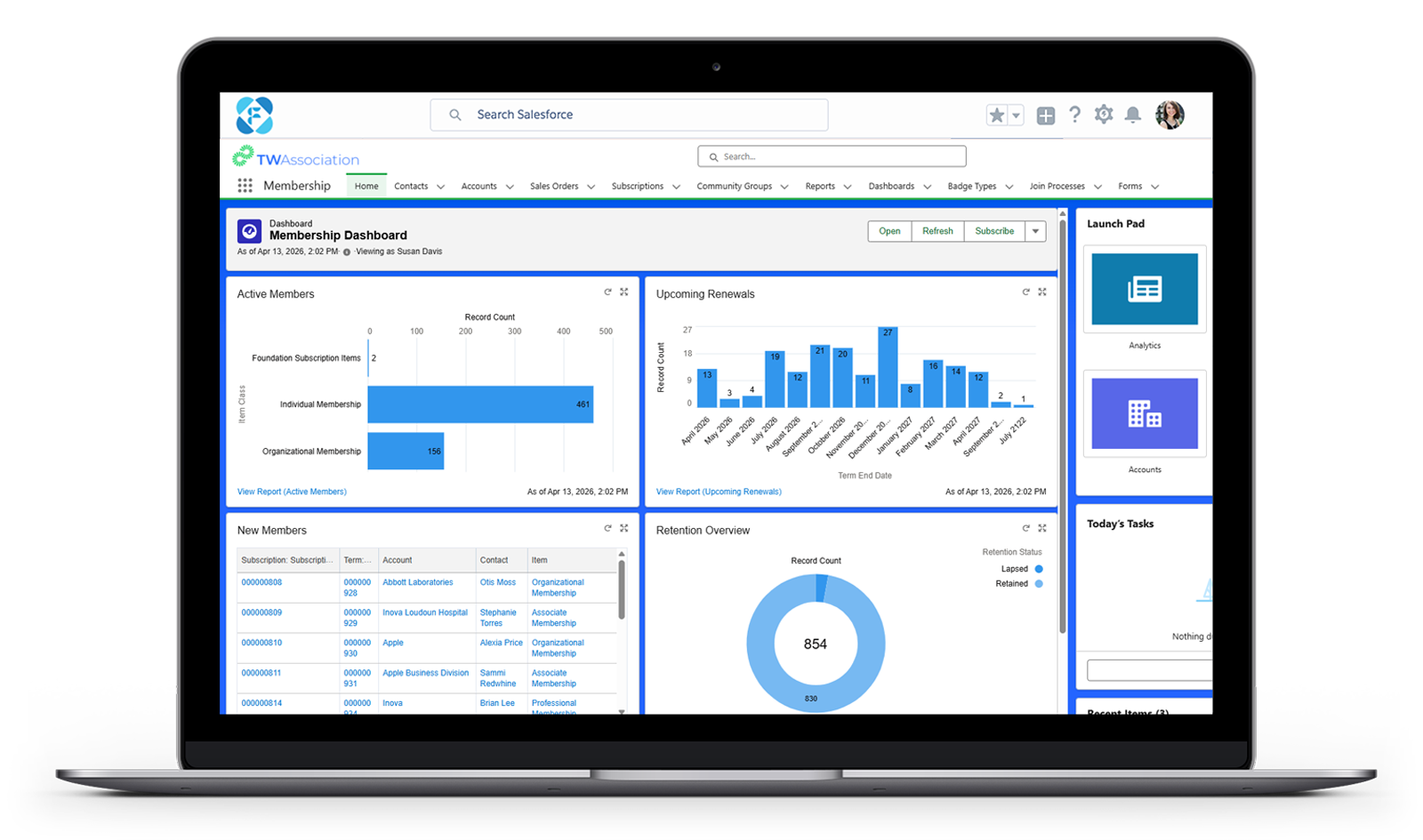
For associations, TogetherWork has two different technology routes. Fonteva runs on Salesforce, connecting membership, events and commerce. Protech works in the Microsoft ecosystem. Fonteva reports customers in more than 100 countries. An organization’s existing technology therefore matters when choosing a product. Being under one corporate roof does not make the tools interchangeable.
03 Follow the payment
The business model combines software subscriptions, payments and services. Studio Pro’s published plans offer a concrete entry point: $49, $79 or $165 per month, with unlimited students. Communication extras can carry additional charges. Its merchant services are powered by Stripe. Those prices describe one brand, rather than a standard TogetherWork package.
Published subscription range. Processing and optional charges require separate review.
Services widen the model beyond software. Kesef Accounting provides congregational bookkeeping and financial support. Pennington & Company works on fraternal fundraising. Some customers need a capable person doing the work as well as a system recording it. TogetherWork’s portfolio makes room for both.
GI Partners acquired Togetherwork from Aquiline in March 2018. Park Square Capital joined with a significant minority investment in July 2024. At that point, GI Partners said revenue had increased approximately fourfold since 2018. That is an investor’s growth claim covering an acquisitive business; it does not separate growth from existing operations and purchased companies.
04 The software was already there
The revealing customer story comes from Pinnacle Pets Play & Stay. In a Gingr-published account, operations executive Alex Varney describes money lost while the pet-care business was underusing features it already had. The remedy involved automated messages, adaptable templates and shared notes. The account points to a familiar implementation problem: buying capabilities does not ensure that staff use them.
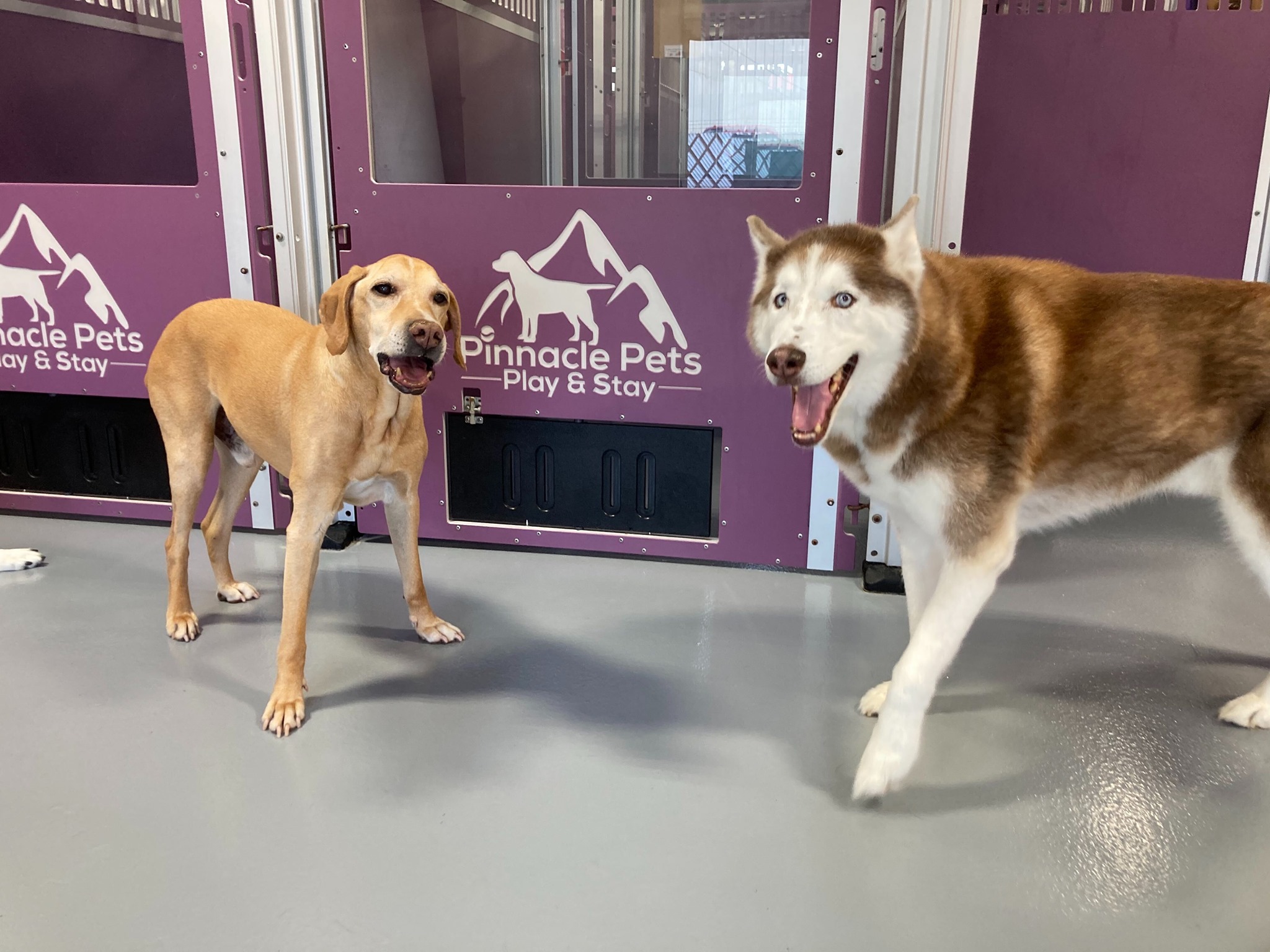
“We lost so much money our first few years by not utilizing a lot of Gingr features,” Varney says. His account emphasizes flexibility and easier customer communication. It is a vendor-selected example, with no controlled comparison. Still, the operational lesson travels: a note must reach the next employee, and a message must reach the customer. A feature helps when it changes that handoff.
A feature helps when it changes the handoff.An operational lesson from the Pinnacle Pets account
05 Try the awkward transaction
Competition depends on the customer. A studio can consider Jackrabbit Dance; an association can consider Personify. TogetherWork’s distinguishing proposition is the combination of specialist brands and shared backing. That puts the burden on each product to demonstrate useful depth. A large portfolio alone cannot tell a buyer whether an unusual refund or membership rule will work.
The company’s current leadership page names Brent Warrington as CEO and emphasizes investment in embedded payments, infrastructure and AI capabilities. Its careers material describes distributed work and shared accountability. These are statements of direction. For customers, the meaningful test remains whether the relevant brand improves the tasks their employees actually perform.
For a buyer, the portfolio is best approached through a particular job. A congregation with bookkeeping needs has a different purchasing decision from a studio adding classes. Ask which team handles migration, who trains employees and how a payment reaches the financial records. Those questions connect the sales demonstration to the Monday morning after installation. They also make comparisons with competing products more useful: each vendor must show the same task, using the same troublesome example, rather than choosing its favorite screen.
The copyable move is to start with one troublesome transaction. Follow a registration through the record, payment, reminder and reconciliation. Ask staff to demonstrate the exceptions. Compare subscription costs with processing, communication and implementation costs. When a workflow sits outside the product’s specialty, or nobody owns adoption, the case becomes weaker. TogetherWork’s interesting insight is how much community life depends on getting these ordinary sequences right.