There is a tiny financial disaster hiding inside every empty salon chair. Tuesday at 2 p.m. expires whether somebody books a balayage or not. The shampoo is still on the shelf, the stylist is still on payroll and the hour cannot be put back into inventory. Millennium Systems International has spent nearly four decades turning that peculiar math into software.
Its product, Meevo, is an operating system for beauty and wellness businesses. It starts where customers see it - online booking, reminders, gift cards and checkout - then keeps going through client records, staff schedules, commissions, inventory, memberships, marketing, reputation management, analytics and centralized control for franchises. Medical spas get charting, injectable tracking, intake forms and other workflows designed for more clinical settings. It is a lot more than a calendar because a salon is a lot more than a calendar with mirrors.
The teenager and the appointment book
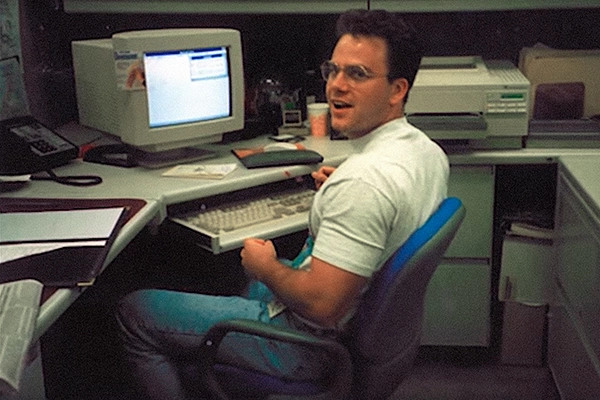
The origin story has the pleasing compactness of a good startup myth. In 1987, John Harms met a local Pennsylvania salon owner and wrote an early point-of-sale system while he was still 18. The product was called Salon Manager, then Millennium. Harms did not begin with a total-addressable-market slide. He began with a business he could watch.
That choice still explains Meevo's differentiation. Horizontal scheduling tools understand time slots. Meevo understands standing appointments, service prerequisites, rooms, equipment, stylist levels, color inventory, no-shows, tips, family memberships and the awkward fact that one guest may move among several locations while the business needs one coherent record. The company's vocabulary is part of its moat.
Its customer range makes the architecture legible. A solo artist can begin with five users, while an enterprise operator gets centralized staff management, market-based pricing, API access and a data warehouse. Woodhouse Spas calls Meevo its singular technology platform. J. Con Salon & Spa says it has used the company for more than two decades. On the smaller end, owners describe relying on it to move from service provider to manager. These are different jobs joined by a common problem: the customer experience occurs in public, but the information needed to improve it sits backstage. Meevo tries to connect the smiling appointment confirmation to the less photogenic questions about payroll, retail stock and whether a first-time guest ever came back.
The other half is instruction. Meevo Academy, certifications, touring events and Meevo LIVE! teach operators how to use the software and how to think about the business. That sounds like customer success dressed for a conference, but it is sharper than that. If a vendor teaches a salon to manage by prebooking rate, frequency of visit, retention and average ticket, then the dashboard tracking those numbers becomes harder to remove.
“Since we started with Meevo, we've taken our prebook rate from 19% up to 83%.”Christi Newell, co-owner, A Glo Salon & Spa
What it costs - and what the price really buys
Meevo publishes a useful price ladder. As of August 2026, promotional salon and spa plans run $129 a month for Lite, $229 for Essentials and $329 for Premier. The displayed regular prices are $179, $299 and $449. Enterprise customers request a quote; medical-spa plans start at $229 promotional pricing. Annual contracts underpin the listed subscriptions, and certain apps and services cost extra.
Public salon & spa promotional price / month
August 2026 promotional pricing for new customers. Enterprise is custom-priced; add-ons may be separate.
The price buys an expanding bundle. Lite includes five users, booking, client and staff management, inventory, online booking, marketing messages, payments, memberships, implementation, training and live support. Higher tiers remove user limits, add deeper client and inventory controls, advanced dashboards, API access, dynamic pricing and more marketing capacity. Most businesses, Meevo says, can be live in about 30 days.
The business model is classic vertical SaaS with a modern payments engine attached. Subscription revenue makes the base predictable. MeevoPay moves payment processing inside the product, where transaction volume can produce another recurring stream and make reconciliation less annoying. MeevoTips extends the checkout workflow through Tippy. In 2026, MeevoPay Giving added optional charitable donations on the terminal; the company says donations are separate transactions, participating businesses pay no costs on the donated funds and the full donation goes to the selected charity.
What failed first: the promise of “all in one”
No public postmortem identifies a single corporate calamity, and there is no reason to manufacture one. The visible failure is smaller and more instructive: depth creates friction. Independent review sites show strong marks for support, but some users describe Meevo as time-consuming, dated or packed with more capability than they need. A large salon may call that completeness. A solo esthetician may call it Tuesday afternoon spent configuring software.
Meevo's own release notes reveal the repair work. In 2022 the team shifted from two big releases a year to releases roughly every six weeks, emphasizing quality over sheer quantity. Customer requests produced duplicate-profile warnings, wait-list refinements and, in 2026, a simpler way for multi-location users to switch locations. The company also rebuilt online booking with a modern interface and performance-focused architecture. The product did not abandon depth. It started sanding down the steps between the user and the useful thing.
That is the market fight. Vagaro, GlossGenius and Square can tempt smaller operators with lower entry prices and familiar simplicity. Mangomint and Boulevard pitch modern experience. Mindbody, Zenoti and Phorest contest more complex accounts. Meevo's answer is not to become a prettier appointment link. It is to make an owner believe one connected system can run the front desk, treatment room, stockroom and weekly management meeting.
The 30-year change of mind
For three decades, Millennium grew without an institutional capital partner. Serent Capital had known the company since 2014, but the deal arrived in September 2021 as a minority investment. The amount was not disclosed. Harms said the company had waited 30 years and believed both the time and partner were finally right. The stated plan was straightforward: expand go-to-market work, keep building the product and use Serent's experience in vertical software and integrated payments.
What followed looks consistent with that thesis. MeevoPay launched in 2023. Connie Certusi became CEO in 2024 while Harms moved into the founder and chairman role. Product, marketing and finance executives joined in 2025. In August 2026, Michael Wagner arrived as CTO with a mandate to move product and engineering toward an AI-native model. Outside money did not change the niche; it accelerated the number of ways the company could monetize and defend it.
“Beauty businesses” is broad. Appointment gaps, service prerequisites, commissions and rebooking are concrete. Build around the work.
A dashboard is sticky when customers use its numbers to coach employees and plan the week.
Once checkout already happens in the system, payments, tips, gift cards and memberships belong on the same rail.
Training and events create better users, richer feedback and a community that a feature checklist cannot copy.
Who should copy it - and who should not
The playbook works when a vertical has repeat transactions, specialized language, measurable operating outcomes and enough complexity to reward one shared database. It gets stronger when software can sit next to money movement. Salons fit: visits recur, labor and inventory matter, customer history matters, and a booking can become a payment, tip, product sale, membership renewal and rebooking prompt.
It does not work when customers refuse process, rarely repeat, cannot afford onboarding or receive little benefit from connected records. Nor does it work if “all in one” becomes an excuse for indifferent design. A feature is not valuable merely because the vendor managed to put it in a menu.
Meevo makes sense when
- Several staff or locations share clients and inventory
- Retention, prebooking and average ticket guide decisions
- Payments, memberships and marketing need one record
- The team will use training and reporting
Look lighter when
- You are solo and need only a calendar and checkout
- Lowest monthly price beats operational depth
- Your team will not configure or learn the system
- You prefer several best-of-breed tools
Meevo's next test is whether it can apply AI to remove decisions and clicks rather than add another decorated layer. Its patented Convobar already accepts typed or spoken appointment commands. The new CTO is promising AI across product development and customer-facing software. Useful AI here will not be a chatbot reciting salon tips. It will notice the hole in Thursday's book, identify the clients due back, respect their service and provider preferences, then help fill it without creating a duplicate record.
That would be a fitting update to the original idea. Harms put the appointment book on a computer. Thirty-nine years later, the opportunity is to make the computer understand why the appointment book looks the way it does.