Most people expect to receive something on their birthday. In July 2017, Ashot Iskandarian gave up a salary. He left his technology job to work full-time on Shopmonkey, a software business for auto repair shops. He had a family to support and a short financial runway. Years later, he remembered having “three months runway for me and my family.” It was a rather demanding birthday present.
The business grew out of a familiar inconvenience. A person who likes fixing cars eventually becomes a person with other things to do. Fatherhood reduced the time Iskandarian could spend working on his vehicles. Taking them to independent shops gave him a customer’s view of their operations. He knew what skilled mechanical work looked like. He also knew software. The awkwardness between those two worlds became difficult to ignore.
Shopmonkey would eventually attract investors including Index Ventures and Bessemer Venture Partners. Its beginning was smaller: a car enthusiast watching people do useful work with tools that made the administrative part unnecessarily laborious.
A Ferrari at the gas station
Iskandarian was born and raised in Yerevan, Armenia. His family left for the United States in 1992, following the collapse of the Soviet Union. His parents worked at ampm gas stations along the California coast; he spent time there trying to help. The stations supplied an early education in cars, though one particular sight did more than the others.
In Monterey, during the Concours d’Elegance, he saw a Ferrari F40. He fell for it. A sports car obsession took hold, fed by learning whatever he could about vehicles. For a child hanging around a gas station, Monterey during car week offered unusually good material.
Another move introduced a second set of interests. His parents began working at Apple and Intel, and the family settled in the Bay Area. Software entered the picture alongside engines. He attended San Diego State University and later worked in product management, including roles at Financial Engines, Xactly and Intacct.
Those careers are easy to put in separate columns: cars on the weekend, business software during the week. In his case, the columns eventually met. The same person who enjoyed understanding a machine also spent his working life thinking about how people used software to run a business.
The customer at the counter
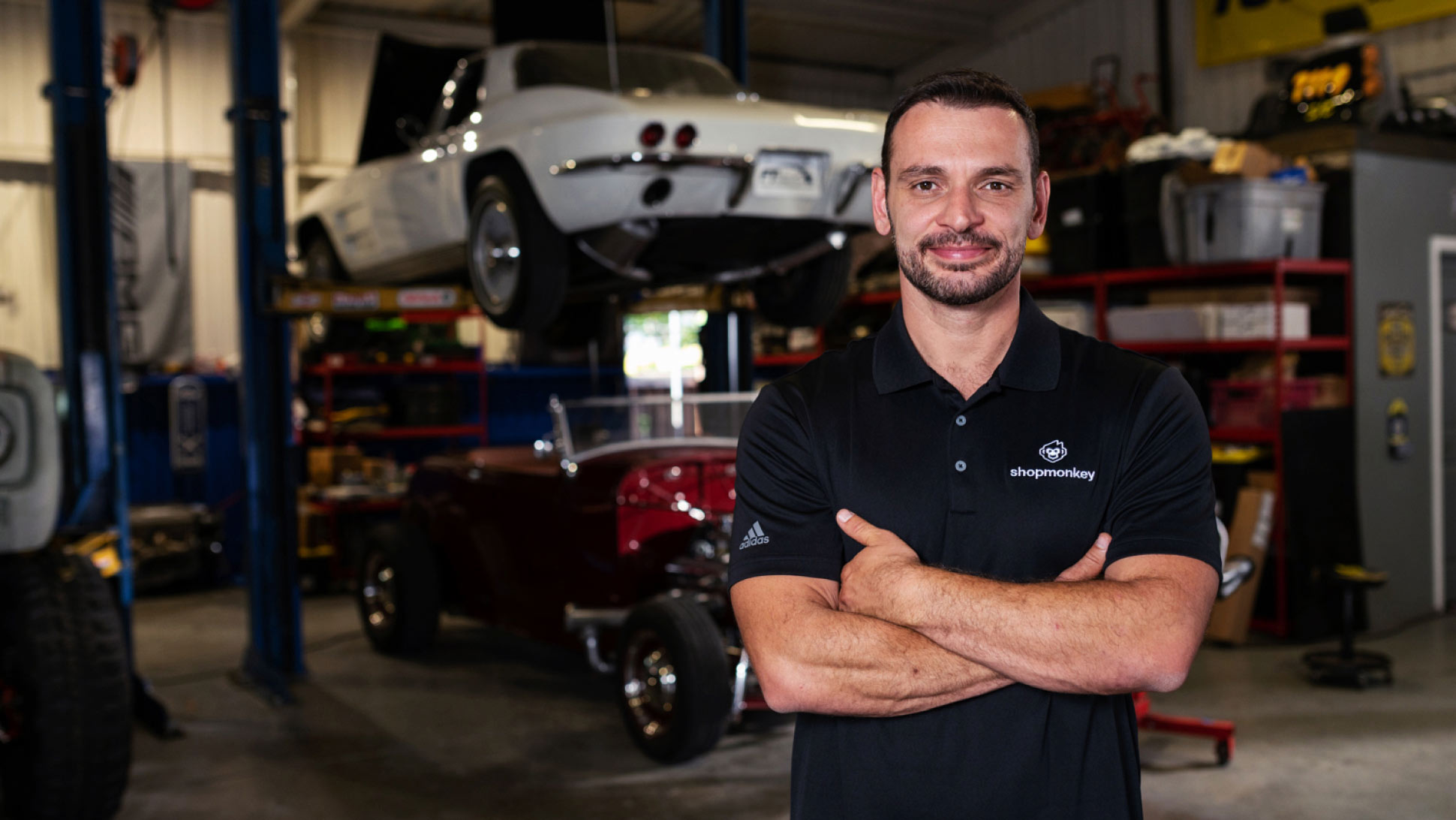
There was a 1995 BMW M3 in his wrenching history. There was also a 1965 Impala. He spent hours around local mechanics, learning and trading observations. His interest in the people doing the repairs preceded his interest in selling them anything.
When family life sent more of his own car work to independent shops, the experience exposed another kind of maintenance problem. The systems used to run the business were cumbersome. A repair involved an estimate, approval, parts, labor, a bill and payment. Information had to travel between those stages. Owners were left stitching together tools that did not make the journey easy.
The opportunity depended on understanding the whole job. A shop needed to know where work stood, communicate with its customer and collect payment. Making one screen prettier would leave much of that problem intact. Shopmonkey set out to bring the connected tasks into a system designed around the repair business.
For Iskandarian, this was an unusually close match between experience and audience. He had sat on both sides of the problem: the enthusiast who understood the repair, and the product manager who could see why running the shop required so much extra effort.
- 01Estimate
- 02Approve
- 03Repair
- 04Invoice
- 05Pay
One vehicle. Several handoffs. Plenty of room for paperwork.
Permission to want a business
Before the company could become his full-time work, Iskandarian had to decide how it fitted his beliefs. He has described struggling to reconcile a Christian commitment to service with his picture of profit-seeking corporations. Starting a business required him to examine what he thought a business was for.
His answer centered on creating value. Money could measure some of that value without becoming the sole purpose of the work. The distinction mattered to him because it made room for activities that helped people without producing an immediate financial return.
He and Annie made their faith part of the company’s intended direction. Even his morning routine reflected it: he described reading scripture before checking messages and praying before turning to advisers. These were practical choices about what would receive his attention first.
The move also required a household agreement. He wanted Annie’s alignment before surrendering the security of his job. The risk would be shared, whatever title appeared beside his name. His account of entrepreneurship leaves his wife inside the decision, where she belonged.
From one customer to a roomful of investors
Shopmonkey dates its founding to 2016 and its first code to January 2017. After the July leap into full-time work, the early routine included selling, marketing design and live customer support. The founder’s job description was broad because there were so few people to divide it among.
By September 2019, the company had raised a $10 million Series A led by Index Ventures. Nina Achadjian joined its board. She had met Iskandarian in 2018 and recognized the appeal of software built specifically for repair shops’ needs. His audience had become an investment thesis.
Bessemer led a $25 million Series B in August 2020, and Byron Deeter joined the board. Shopmonkey then reported more than 1,200 customers. Iskandarian described wanting to deliver “powerful, yet simple to use, software.” That little phrase contains a product manager’s headache: every added capability must still be usable by someone with a shop to run.
“powerful, yet simple to use, software”
Ashot Iskandarian, 2020
The investment case also reflected a broader change in business software. An industry-specific platform could earn a shop’s trust by handling its daily work, then offer connected services such as payments. Bessemer saw that possibility in Shopmonkey. For a repair business, the attraction was practical: keeping order workflow, inventory, customer conversations and invoices together, with a connection to QuickBooks. The founder’s familiarity with garages helped him understand the customer. Building a company around that understanding required colleagues and investors who could help turn it into a dependable product for many different shops.
In July 2021 came a $75 million Series C, led by Bessemer and Index, with participation from Headline, I2BF and new investor ICONIQ Growth. More capital meant more capacity to develop the product and team. It also put greater weight behind the promise he had made to small business owners.
Two ways to get a car back on the road
Ashot and Annie also built Maintenance for Moms, connecting their automotive work to families in their community. Annie led the organization as president. Her own family history informed the idea: before meeting Annie’s father, her mother had been raising twin boys alone. Helping another parent with reliable transportation gave that history a practical expression.
The program works with single mothers in Santa Clara County who need help paying for vehicle repairs. It is an adjacent use of the couple’s knowledge and relationships: knowing repair shops, understanding the work and finding resources to cover it.
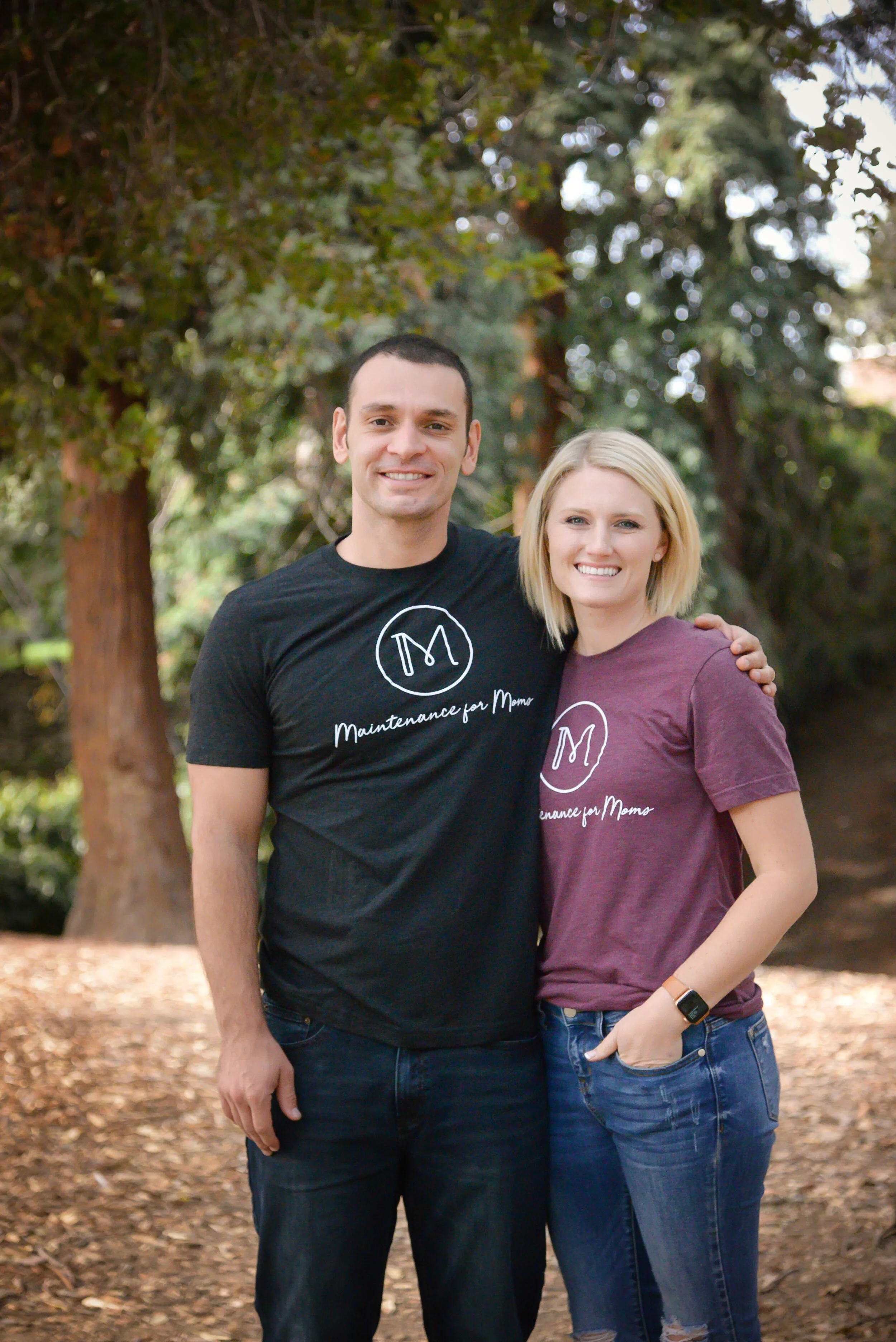
By February 2022, Maintenance for Moms had repaired more than 150 vehicles and replaced 25. Those are dated milestones, with a different unit of progress from venture funding. A repaired car lets a parent get children to school and get herself to work. A software feature may make the shop more efficient; a paid repair bill changes what the family can do tomorrow.
The February 2022 tally also included 151 resource bags and Christmas gifts for 64 families. Those activities show how the program extended beyond the mechanical task. A car could bring a family into contact with a network of people prepared to help with other immediate needs. Annie’s role gave the work a leader of its own, rather than leaving it as a charitable intention attached to her husband’s company.
The work has limits as well as intentions. In October 2026, its repair-assistance applications are closed because the available program funding has been exhausted. New requests await additional funding. That constraint belongs in any honest account of the undertaking.
Iskandarian’s commitment to the trade also took a more literal form. By May 2022, he had purchased an auto shop himself. Selling software to owners and becoming an owner put him in two relationships with the same business. Both involved the ordinary demands of keeping cars moving and customers informed.
The black notebook and the next repair
Some of his habits fit the business less neatly, which makes them more revealing. In 2019, when he was included in SEMA’s 35 Under 35, he listed a black, eight-by-ten notebook among his briefcase essentials. It contained prayers, fears, financial plans, wins and aspirations. The entries shared a binding even when they resisted sharing a spreadsheet.
He also admitted how difficult it was to build software that worked fully while remaining attractive and easy to use. Compliments from customers about that experience made the effort worthwhile. Asked for his favorite pizza topping, he answered, “I don’t discriminate.” A founder with strong views about interfaces apparently allowed the kitchen wider discretion.
The work at Shopmonkey has continued into smaller, specific problems. In April 2026, it added access to existing ALLDATA parts and labor accounts. September’s updates included purchase order changes that let shops correct quantities and costs without sending the order back through its earlier stages. Online payments gained Apple Pay and Google Pay. These are modest-sounding improvements with a recognizable purpose: fewer interruptions between getting something done and recording it properly.
That is a fitting continuation of Iskandarian’s original observation. His interest began with cars worth looking at, including a Ferrari in Monterey. His business grew around work that people would usually rather finish and forget. There is considerable distance between admiring an F40 and correcting a purchase order. He found a career in the space between them.
Keep the conversation going
- Shopmonkey
- Ashot on LinkedIn
- Maintenance for Moms
- His account of Shopmonkey’s beginning
- His essay on faith and business
- The repair-shop ownership conversation
- September 2026 product updates