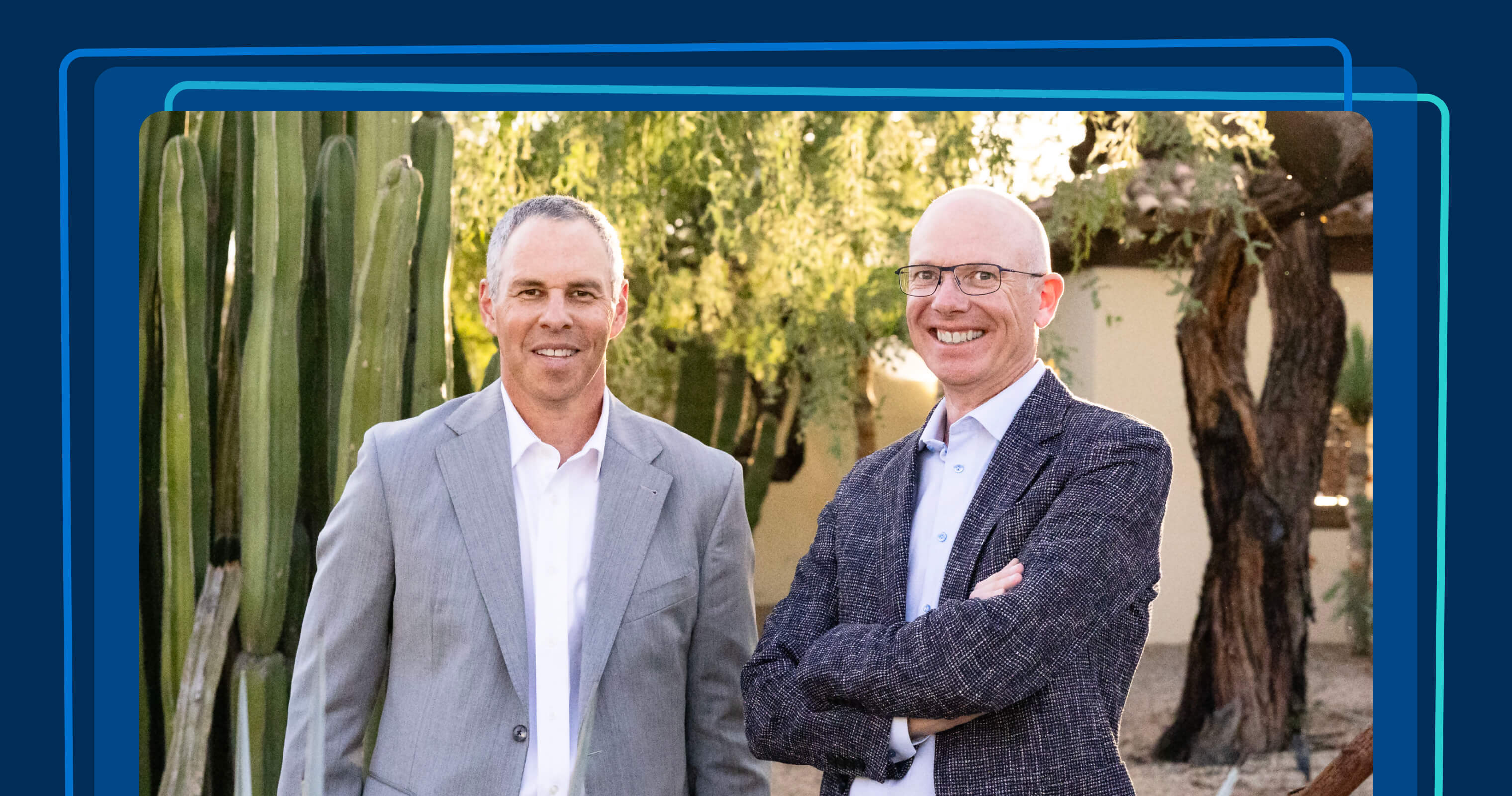
When Brian de Haaff and Chris Waters surprised their employees with a 10 percent raise, everyone received it. Tenure did not matter. The announcement came at a weekly all-hands meeting; de Haaff later recalled the wide eyes, then the delight. It was an unusually practical expression of a founder's philosophy. Independence had arrived in the payroll.
The increase, described in March 2022, followed years of building Aha!, the product development software company the pair founded in 2013. Profit sharing had started with their first employee in 2014. They later divided those payments into two installments a year. A business built without venture capital was making its freedom useful to the people doing the work.
“Freedom is being able to do what you think is right,” de Haaff wrote. That is an attractive sentence for any chief executive. It becomes more interesting beside an actual compensation decision. In Silicon Valley, independence can sound like an abstract argument about ownership. Here it had a percentage attached, and people could spend it.
Aha! had announced that month that it had passed $100 million in annual recurring revenue. De Haaff celebrated the figure while stressing the choices behind it: a distributed team, no outside funding, and product experts working with customers instead of a conventional sales force. The number made the argument harder to dismiss. The raise explained why he cared about making it.
Two exits, then a different entrance
De Haaff's route to Aha! passed through businesses that became parts of larger companies. In July 2007, Network Chemistry's wireless security business was sold to Aruba Networks. He and Waters then founded Paglo, which let IT professionals collect and search information about their networks. It was a different problem from product roadmaps, but another attempt to bring scattered information into view.
Citrix acquired Paglo in 2010. De Haaff, Waters, and their colleagues joined Citrix Online; the technology became part of its IT management offering. De Haaff subsequently held a product leadership role at Citrix. Aha! grew from a partnership that had already survived both building a company and handing it over.
When the pair started again in Menlo Park in spring 2013, they recognized a familiar irritation: teams could work very hard without clearly connecting that work to business goals. Product managers needed to show what they intended to build, why it mattered, and how the pieces fit. De Haaff and Waters had encountered this difficulty inside emerging businesses and established software organizations.
Their first Aha! Roadmaps beta involved conversations and demonstrations with more than 500 product development teams. The beta ended in fall 2014. Within four months, 125 enterprise customers were paying, and the business was profitable. Customer conversations preceded the respectable-looking milestone. There is something reassuringly unglamorous about that order.
Please do not serve the customers cat food
De Haaff has an amusingly inhospitable comparison for software that merely clears the minimum bar: cat food. In a 2017 essay, he asked readers to consider a tin that a human might technically eat but would have little desire to open again. His target was the habit of shipping the bare minimum and treating its arrival as proof of success.
He proposed the Minimum Lovable Product when Aha! began. The extra expectation was affection: software should solve a problem in a way customers actually appreciate. A first version could be limited in scope and still deserve care. Rushing something unsatisfying into circulation was a poor introduction to a relationship that a company hoped would last.
His book, Lovability, appeared in April 2017. It collected his thinking about products, companies, and the conditions under which people enjoy building them. Love is a conspicuous word to put into a discussion of business software. It forces the conversation beyond whether a feature operates and toward whether the experience earns another visit.
He also describes a Complete Product Experience. The customer's relationship with a company includes support, integrations, marketing, and the experience of getting started. A useful feature can be undermined by everything surrounding it. Anyone who has been delighted by a demo and defeated by setup will understand the distinction without requiring a management seminar.
In his ten building blocks of lovability, the progression begins with hope and satisfaction and moves through care, confidence, and trust. Later come scale, sustainability, motivation, fun, and halo. The sequence gives emotional language a practical shape: deliver what was promised, help when something goes wrong, and earn the confidence that you will still be helpful later.
The rude vendor who improved the rules
De Haaff's emphasis on kindness has a wonderfully ordinary origin. In June 2026, he recalled a vendor meeting in which the other person was dismissive and transactional, behaving as though the conversation was keeping him from something preferable. De Haaff left annoyed. Then he realized his own operating framework needed an explicit place for kindness.
The Responsive Method, formalized in July 2014, combines a clear goal with quick responses and an interest in useful interruptions. Aha! argues that a customer's request offers a short window: the customer is thinking about the problem right now. Leave it too long and that attention drifts elsewhere. A prompt response can produce a better conversation.
There is an apparent tension here. Deep concentration usually gets prescribed as the cure for office life, and interruptions receive the blame for its failures. De Haaff asks people to listen for information inside the interruption, then judge it against their goals. Explaining the reason for a decision matters too, especially when the answer is no.
The unpleasant vendor gave this method a social constraint. Speed alone can make an interaction efficiently miserable. De Haaff's later account treats kindness as something demanding: helping when it is inconvenient, acknowledging someone else's contribution, and admitting when your own behavior fell short. Those instructions are less decorative than a cheerful company value painted on a wall.
“Freedom is being able to do what you think is right.”Brian de Haaff / on Aha!’s compensation decisions
A company scattered across the map
Aha! has been remote from the beginning. De Haaff and Waters wanted colleagues to work where they were happiest. The decision predates remote work's broad adoption and means that the company was designed around distance rather than having distance added to an existing office routine. Geography became part of its operating choices early.
Distance does not remove the small absurdities of working together. De Haaff once described interviewing a candidate over video while dogs barked and the audio cut in and out. He turned the experience into advice about remote interviews. A company can reject a headquarters; it still has to negotiate with the dog.
In his public writing, he is concerned with the everyday mechanics of work as well as funding. In 2015, he singled out the word “Done” as particularly satisfying because it signals progress and tells a colleague that a request has been completed. There is no expensive theory attached. Someone needed something. Someone finished it.
His January 2023 lessons on bootstrapping apply a similar discipline to waste. Time, employees' efforts, unnecessary projects, and overgrown meetings all count. He urges founders to solve a narrow problem well and attend to the situation actually in front of them. A large ambition, in this account, is compatible with a carefully bounded next step.
The founder becomes the bottleneck
The plot changes when software becomes faster to build. In August 2026, de Haaff acknowledged that AI-assisted engineering was putting pressure on product managers, including him. Teams could produce functionality more quickly; deciding what deserved that effort, explaining it clearly, and learning from customers still required attention. The person setting direction could become the delay.
“It is humbling to realize that I also need to pick up my own pace,” he wrote. For a founder who has spent years offering guidance, the admission makes his recent work more revealing. He is asking how to change his own practice while the machinery around it changes, and doing that examination in public.
His proposed adjustments are specific: keep a scored list of features ready, simplify written definitions, prototype major capabilities, and let the intended users try them. Refine the prototype after feedback. More engineering speed increases the cost of muddled product decisions. A faster team needs a product manager who has already thought carefully about what comes next.
Aha! Builder became generally available on April 29, 2026, offering product managers a way to make prototypes and business applications with AI. De Haaff described months of conversations with product leaders ahead of the release. The opportunity was to let people who understood a problem participate more directly in building its solution.
In September, he appeared with Waters and senior product manager Sarah Moisan-Thomas in a Just Now Possible interview with Teresa Torres. They discussed Builder's path through paper prototypes, a proof of concept, early access, and general availability. Even an AI app builder had to be explored, tested, and revised. Knowing what to make remained consequential.
- 2007Paglo begins after the Network Chemistry sale.
- 2010Citrix acquires Paglo.
- 2013Aha! begins, self-funded and remote.
- 2026Aha! Builder becomes generally available.
What he takes into the next stretch
De Haaff's enthusiasm for new tools comes with questions about the people using them. In November 2025, he wrote about AI allowing one product manager to do work previously divided among several specialists. Thinking about his children's future careers left him with questions rather than a confident forecast. He called for humility as those roles change.
His May 2026 product manager's manifesto revisited the values he and Waters wrote down when Aha! started. Faster output, he argued, should still be judged by whether customers are delighted and whether the builder feels pride in the result. The founding ideas now have to hold up when production becomes easier and the temptation to ship more grows.
He is also explicit about the circumstances that made his own choices possible. In a September 2026 essay defending entrepreneurship, he acknowledged that he and Waters had the means to invest their own money, giving them options other founders might lack. That qualification belongs beside the bootstrapping advice. A useful example is easier to understand when its starting conditions remain visible.
Away from software, de Haaff pursues outdoor adventure and landscape photography on Bay Area and Sierra trails. He lives in Silicon Valley with his wife; they have three sons. Business and wilderness share space in how he describes his interests. The public record offers a founder who wants room for both, alongside the continuing work of building Aha!.
The company still presents itself as self-funded, profitable, and remote. Its tools now serve more than a million product builders, and the product family extends well beyond the original roadmaps. De Haaff's next test is already underway: maintain the care he asks others to bring to software while learning to move at a new pace himself. The freedom he wanted in 2013 includes the freedom to revise his own habits.