Buying something at work can require an improbable amount of work. The item has a price. The process has a cast: the employee who needs it, the supplier who sells it, the people who approve it, and somebody who knows which form everyone has forgotten. Sudhir Bhojwani has spent years thinking about that cast. He helped build the software around them. Eventually, he began wondering why so much of their effort still happened somewhere else.
His observation carries a particular sting because he came from inside the business. Bhojwani joined Ariba in 2010 and rose to become chief product officer at SAP Ariba. Procurement software was his profession. Yet looking back at his own experience as a business user, he could see how poorly the boundary of an application matched the boundary of a job.
“Everything I cared for happened outside my own tool.”
Sudhir Bhojwani
There is a whole company hidden in that complaint. A system can faithfully record a purchase while leaving the buyer to chase the decisions that make the purchase possible. The database is satisfied. The employee is still waiting for someone to reply. Bhojwani’s next venture, ORO Labs, took that unfinished work as its starting point.
The work outside the window
Consider a simple, illustrative purchase: hiring a consultant. Finding the person and agreeing a price are only part of the task. A contract may need review. Sharing information may require another check. Different people must decide different things, and their decisions need to reach one another. Nobody hired the employee for expertise in the company’s internal purchasing geography. The geography tends to introduce itself anyway.
This is the kind of problem Bhojwani discusses when explaining procurement. The difficulty grows when the purchase involves services or something that cannot be selected neatly from a catalogue. A process designed around a transaction has to accommodate conversations, conditions and exceptions. People supply the connective tissue, usually with their calendars and patience.
At SAP Ariba, Bhojwani’s responsibilities included engineering, product management and operations. His product leadership encompassed work on Guided Buying, Supplier Lifecycle and Performance, and Supply Chain Collaboration. He had experience improving the machinery. ORO would ask a wider question: could software help coordinate the whole trip?
A familiar team, an unfinished job
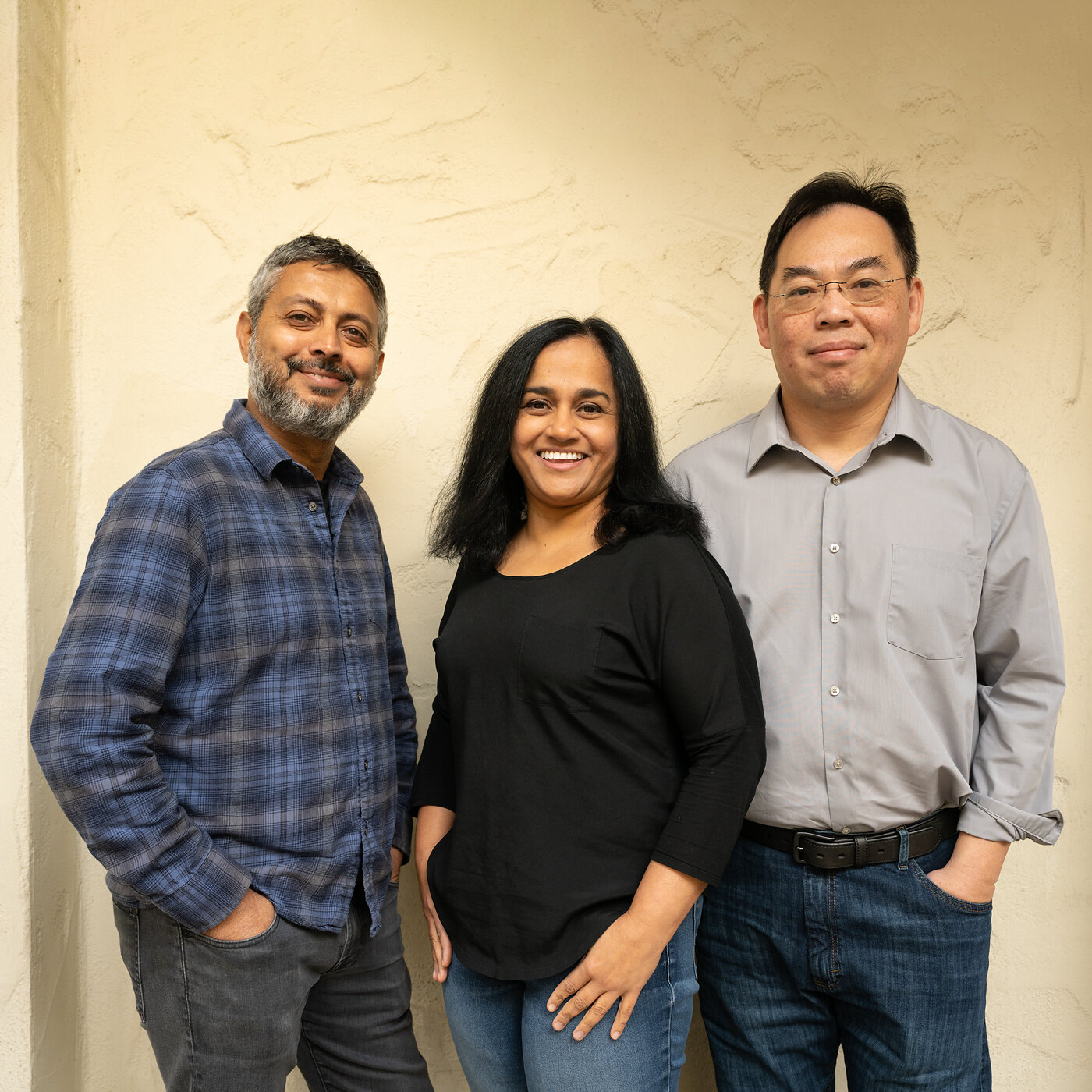
ORO was founded in 2020. Bhojwani’s co-founders, Lalitha Rajagopalan and Yuan Tung, were former SAP Ariba colleagues. They brought an existing working relationship to a new business: Bhojwani as CEO, Tung leading technology, and Rajagopalan working across strategy and operations. They knew the subject and had worked alongside one another before there was an ORO to explain.
Bhojwani also had experience of smaller, less settled organizations. His career includes founding Vayulogic and working as a senior software engineer at Wells Fargo. In conversations about entrepreneurship, he has discussed earlier projects that failed as well as ones that succeeded. The startup in his current biography sits at the end of several attempts, rather than at the beginning of his working life.
That history makes his interest in the difference between a large company and a small one more concrete. He has talked about the pull of financial priorities in an established organization and the sense of mission in a younger business. He has also argued for seeking different ideas when assembling a team. A founder can hire people who make a discussion comfortable. Building something useful may require a less comfortable discussion.
A customer teaches the vocabulary
One relationship gives a useful glimpse of how Bhojwani learned his subject. He knew BASF’s Matthias Dohrn from his SAP Ariba days and credits Dohrn with explaining supplier management to him. It is an appealing admission from someone who would make procurement his business. The customer gets to be the teacher.
Their collaboration continued after Bhojwani co-founded ORO. Dohrn had been running a business unit with an Excel-based process for tracking thousands of improvement measures. ORO worked with the unit on a workflow approach. When Dohrn later became chief procurement officer, the relationship expanded to a larger assignment.
The lesson is more interesting than the familiar claim that founders should listen to customers. Here, the learning has a name and a history. A software executive could describe a system; the person running a business could explain what it took to extract value from it. That difference matters. A well-organized screen can still sit inside a poorly organized working day.
A year with language models
Bhojwani’s interest in AI predates ORO. Before launching the company, he spent a year exploring natural language processing, experimenting with open-source libraries and building models at his own expense. It is a useful detail in a field now crowded with freshly acquired enthusiasm. He had been getting his hands dirty before procurement agents became a regular conference subject.
The practical attraction is easy to see in one of his recurring examples: classifying a purchase. Procurement categories determine how financial rules apply and help a business understand its spending. Employees making requests may have little idea which category is correct. Requiring them to guess introduces a problem at the very point where the system needs reliable information.
Bhojwani’s question is whether the software can do more of that interpretation. A person who arrives with a supplier’s proposal has already supplied useful context. The product should put that context to work. In this view, intelligence earns its place by reducing the amount of procedural knowledge an ordinary employee must carry around.
He also argues for keeping human judgment in the process. His description of agentic workflows gives automation a role in decisions it can handle and leaves a route for escalation. The aspiration is specific: procurement staff should spend more time applying expertise and less time shepherding routine work from one queue to the next.
Learning to sell the missing piece
Even an experienced founding team has to explain what it is selling. Bhojwani has described the early challenge of educating customers about procurement orchestration. A buyer knows what a purchasing system does. Explaining the value of coordinating work across existing systems takes another conversation. The proposed improvement lives in the gaps between familiar products.
The founders’ reputations helped open those conversations and secure early customers. Their experience gave buyers a reason to trust that they understood the problem. Trust did not eliminate the job of explaining a new category, but it gave the team somewhere to begin. For Bhojwani, years inside the industry became part of the young company’s working capital.
There was an equally practical architectural choice. ORO treated integration as fundamental from the beginning, including an embedded integration platform. Bhojwani has consistently argued that large enterprises need an ecosystem of tools. Companies already have software, investments and habits. A product that wants to coordinate their work has to get along with the other occupants.
The business has since acquired a larger footprint. In the founders’ review of 2025, ORO reported processing more than $100 billion in spend and serving over two million users in 103 countries. Those are company-reported figures for that year. They describe how far the assignment had travelled from a founding team’s complaint about the buying experience.
2025 platform figures reported by ORO Labs. Spend processed is not company revenue.
In March 2026, ORO announced a $100 million Series C led by Brighton Park Capital and Growth Equity at Goldman Sachs Alternatives. In August, it ranked No. 92 on the Inc. 5000. These milestones give the company resources and visibility. The daily product question remains stubbornly modest: can the next person making a request work out what happens next?
The road back to Ariba
Then the story turned back toward Bhojwani’s earlier employer. On October 5, 2026, ORO announced an agreement for its orchestration solution to be sold as an SAP solution extension. The name is SAP Ariba Procurement Orchestration by ORO Labs. The announcement planned general availability for November 2026.
For Bhojwani, the agreement has a personal dimension. He has credited his time at SAP Ariba with giving him the knowledge to found ORO and expressed gratitude toward former colleagues. He also remembers a shared ambition with Alexander Atzberger to improve procurement. The departure from SAP did not end his interest in the people or the problem.
Rajagopalan recalls presenting their Make Procurement Awesome message at Ariba Live, after debate about whether it sounded too much like marketing. It is a wonderfully earnest slogan for a profession associated with forms. The ambition survived the presentation, the change of companies and the years of product work that followed.
The new SAP relationship gives that continuity a commercial shape. It also fits Bhojwani’s preference for improving the experience across systems already in place. An enterprise cannot pause its buying while everyone agrees on an ideal future architecture. Somebody needs a supplier approved this week. The future will have to accommodate the diary.
His LinkedIn self-description remains three words: “Build awesome products”. The brevity is almost comic beside the complexity of the work. There are policies to interpret, systems to connect and people who would prefer to get on with their jobs. Bhojwani’s story keeps coming back to those people. A purchase order may be where the software records success. He wants the person who needed it to feel some success too.
Continue the conversation
His work, in his own words - and a few longer conversations.