The purchase request sounds innocent. Somebody needs a laptop, a laboratory service, perhaps a new supplier. Then corporate life begins its little opera: the form asks a question the employee cannot parse; one system knows the vendor, another knows the risk; legal enters, finance waits, procurement is blamed, and the person who merely wanted a laptop starts wondering whether pencils require board approval. Emily Rakowski has spent most of her career inside that gap between a simple human intention and an enterprise process determined to complicate it.
She is now chief marketing officer at ORO Labs, where the favored word for closing that gap is orchestration. The term can sound like enterprise software putting on evening wear. Rakowski makes it more concrete. She has called the usual collection of disconnected tools a “Franken-stack” - a creature assembled from ERP systems, source-to-pay suites, contract platforms, risk tools, inboxes, and good intentions. Every limb may be functional. The walk remains alarming.
Her job is to explain why a connective layer matters without pretending that another purchase order for software will, by itself, save anyone. It is an unusually apt assignment. Rakowski’s career has followed procurement technology through roughly three decades of changing architecture and vocabulary. The recurring plot is that companies buy systems of record, people invent workarounds, and the difficult handoffs persist. She has become a marketer of the handoff.
A career in the machinery room
Rakowski began at Kearney in 1995, after studying international relations at Stanford. Consulting engagements took her through high technology, banking, and energy. There was an early spell at Creative Good, the online customer-experience consultancy, followed by Kearney Procurement Solutions and Ariba. By 2001, she was working in solutions marketing in a field whose software rarely reached the glossy side of business magazines.
That obscurity was part of the opportunity. Procurement governs how an organization brings the outside world in: materials, services, suppliers, information, risk. Rakowski argued in a 2015 SAP interview that procurement’s desired “seat at the table” was really access to the leaders making decisions about lines of business, supply chains, strategy, and acquisitions. A buyer who understands supply markets can shape a product decision years before a contract lands. The function’s strategic reach was larger than its reputation.
Five chapters in the procurement stack
At SAP and Ariba, her titles grew longer as the remit expanded: procurement portfolio marketing, then global audience marketing and demand management. She wrote about the supply chain going digital, spoke about contract management, and helped translate networks and source-to-settle software into business outcomes. The work demanded fluency in both plumbing and politics. A workflow is never merely boxes and arrows; it is a record of who may decide, who must approve, and who will be blamed.
“Consumers vote every day with the products they purchase, and so do corporations.”Emily Rakowski, speaking about sustainable supply chains in 2018
Teaching sustainability to speak procurement
After a year leading solutions marketing at education-software company Ellucian, Rakowski joined EcoVadis as CMO in 2017. Business sustainability ratings were not yet a familiar budget line. EcoVadis evaluated suppliers across environmental performance, labor and human rights, ethics, and sustainable procurement. The practical argument was that corporate values become real when they affect whom a company pays.
Rakowski’s line about corporations “voting” with procurement budgets made the point cleanly. A category manager buying billions of dollars of goods has leverage. Reliable supplier information turns that leverage into action. Underneath the moral language sat an operating system: data, assessment, education, engagement, and improvement across a sprawling value chain.
Her farewell ledger in July 2024 was unusually specific. The marketing group grew from five people to more than 50, spanning dozens of nationalities, locations, and specialties. She cited more than tenfold ARR growth during her tenure, two major funding rounds, a supplier eLearning academy, new customer-feedback processes, and a network that had reached 2.4 million screened suppliers and more than 140,000 rated suppliers.
Then came the anecdote that reveals how an operator remembers scale: in 2020, the team moved its SUSTAIN conference online within 10 days of lockdown. A conference is a small city built for a few days - speakers, stages, sponsors, awards, graphics, conversations, and a thousand opportunities for the Wi-Fi to acquire a personality. Rebuilding it online at that speed required the sort of coordinated improvisation her later work would call orchestration.
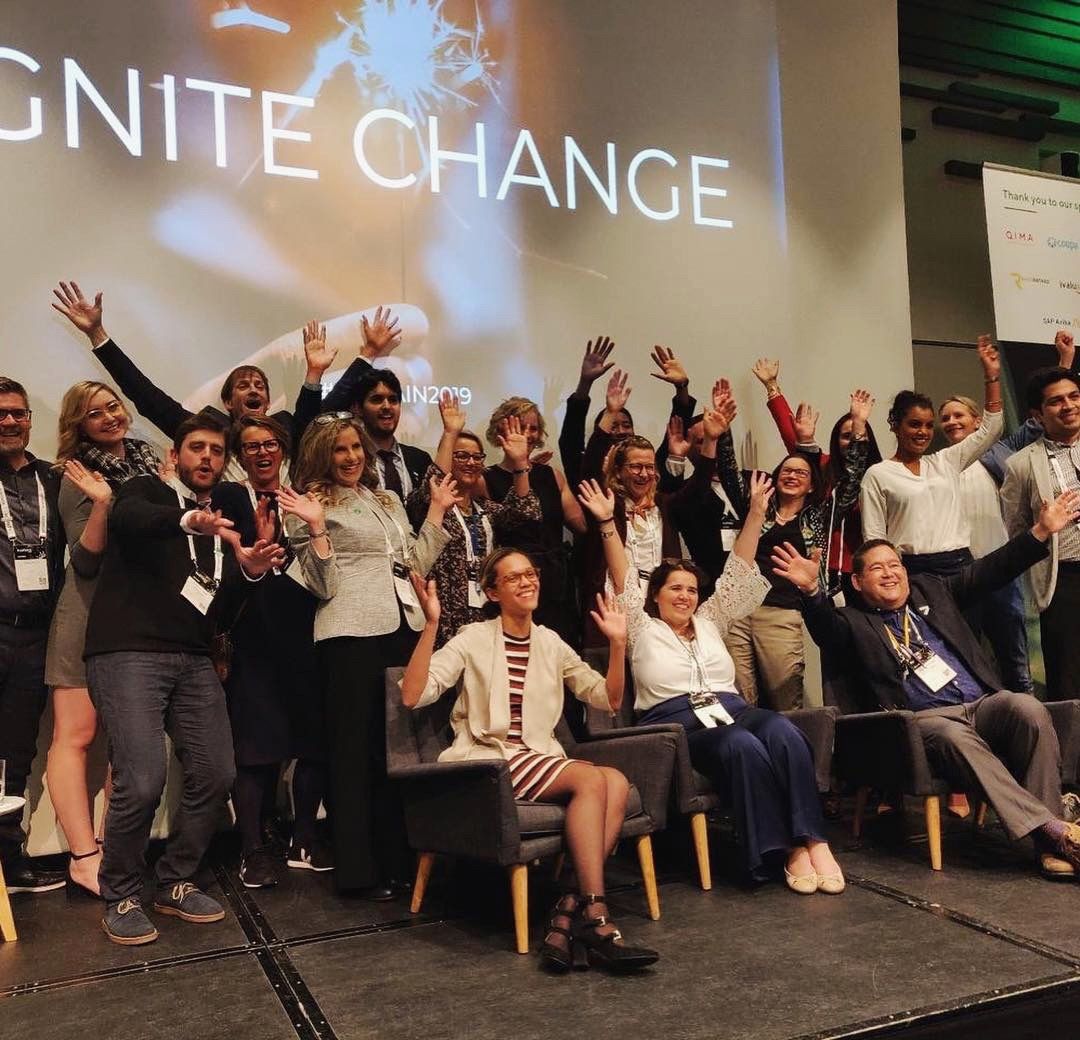
She was proudest of the team. Her note thanked colleagues for collaboration, persistence, passion, and optimism. Former teammates answered with descriptions of kindness, empathy, energy, and care during uncertain periods. Praise on a farewell post is not a performance review, but the repeated emphasis is telling. Rakowski measured the chapter in growth and funding; the people around her kept mentioning how the work felt.
The homecoming
Rakowski left EcoVadis on June 28, 2024. In her announcement, she allowed one spoiler about the next act: “I’m still a procurement software geek.” Less than a month later, ORO Labs announced her as CMO. She called the move a “coming home” because its three co-founders - Sudhir Bhojwani, Lalitha Rajagopalan, and Yuan Tung - were colleagues from her SAP Ariba years.
The reunion carried a fresh category problem. Companies had moved from ERP to broad source-to-pay suites and then to constellations of specialist tools. Each wave filled gaps and created new seams. Employees still struggled with where to begin. Procurement teams still chased approvals. Data still slept in separate systems. ORO’s proposition was not to rip everything out, but to coordinate the work across it.
That distinction is the center of Rakowski’s current message. Orchestration connects requests, systems, policies, data, and people into a process that can change without a multi-year replacement program. AI agents can review a request, gather information, screen a supplier, or route an approval. The value does not come from having more agents. It comes from giving their activity context, rules, visibility, and an accountable place in the workflow.
“Orchestration is the bridge that connects people, agents, data, and processes into something fluid and intuitive.”Emily Rakowski, writing after ORO Imagine 2025
This is not the carnival version of AI, in which autonomous bots roam the balance sheet after dark. Rakowski’s public writing emphasizes data readiness, monitoring, governance, and focused models for focused jobs. At ORO Imagine 2025, she highlighted an argument from enterprise practitioners: start small, learn quickly, connect the data, and keep refining. Technology can take repetitive work; people retain judgment, creativity, and collaboration.
The marketer as cartographer
Enterprise category building is partly the art of drawing a map before the market agrees on the names of the roads. The marketer must show an executive where the old system ends, where the new layer begins, and why the border matters. Too technical, and the idea becomes architecture homework. Too airy, and it floats away on a cloud of transformation verbs.
Rakowski’s useful instinct is to return to experience. The “Franken-stack” gives fragmentation a silhouette. The “front door” gives an employee somewhere to start. Orchestration turns a maze of handoffs into a flow. None of these metaphors replaces evidence. They make the evidence navigable.
Her own path has the same looping shape. International relations led to consulting; consulting led to technology; technology led to procurement; procurement led to sustainability; sustainability led back to procurement with AI attached. Each chapter added another stakeholder to the picture. She has advised the Sourcing Industry Group, joined a community of venture-backed C-level operators, and helped organize philanthropy relationships for a regional group of mothers and young men. The connective tissue is coordination across groups with different needs and languages.
In March 2026, ORO Labs announced a $100 million Series C after reporting 300 percent revenue growth over the prior year. The company said its platform was deployed in more than 100 countries. Rakowski’s contribution to a funding milestone is difficult to isolate, and serious profiles should resist turning teams into solo acts. One investor did credit her with bringing the pieces together for the company’s Nasdaq celebration. That phrase fits the work: making the pieces cohere, then making the result visible.
What she is really selling
The obvious answer is procurement software. The more interesting answer is institutional agility without institutional amnesia. Companies want to move faster, but they cannot forget compliance, risk, privacy, contracts, or the reasons approvals exist. They want AI to act, but they need to know what it did. They want employees to have a pleasant experience, but pleasant cannot mean invisible control.
Rakowski’s career has been a long negotiation among those demands. At SAP Ariba, the challenge was showing procurement as a strategic network rather than a back-office transaction. At EcoVadis, it was making sustainability data actionable in purchasing decisions. At ORO, it is connecting the systems and agents so the decision can move without losing its guardrails.
There is humor in dedicating 30 years to making corporate buying less maddening. Procurement has enough acronyms to qualify as a minor language and enough forms to exhaust a monastery. Rakowski appears to enjoy the absurdity without dismissing the stakes. She posts about standing on a chair to photograph a Women in Procurement gathering, calls herself a geek, and talks about making procurement “awesome” with the cheerful persistence of someone who knows the word will invite teasing.
The aspiration beneath it is sober: make procurement work for everyone. That means the requester who wants the laptop, the supplier answering the questions, the risk officer watching the rules, and the procurement team tired of being cast as the department of no. Software can coordinate their steps. Marketing can give the change a language. Neither works unless the people recognize themselves in the story.
Rakowski once wrote that the next phase of procurement is not only about doing things faster, but doing them better - with more insight, connection, and imagination. After three decades, that may be her most consistent thesis. The systems will keep changing names. The work remains: find the friction, connect what has been separated, and make the complicated path feel, at last, like it was designed for a human being.