There are careers that look inevitable only after somebody has lived them. Gretchen Eischen’s began with language, wandered into procurement, spent years close to customers, and arrived in marketing almost as a happy correction. From a distance, the itinerary seems eccentric. Up close, each stop taught the same craft: how to understand what people mean, how to make complicated systems legible, and how to get a room moving in one direction.
That craft is useful at Avetta, where Eischen became Chief Marketing Officer in July 2024. The company sits between large organizations and the contractors and suppliers who enter their worksites. Its software helps check qualifications, insurance, safety records, sustainability requirements and other evidence that a person or business is prepared for the job. The stakes can be physical. The vocabulary can become abstract in a hurry.
Eischen’s shorthand for the company is cheerfully self-aware: “the best company that you’ve never heard of.” It is both a compliment and a job description. Avetta was known and trusted by its customers, yet when she arrived, she found that ten employees could supply ten answers to the question of what it did. During a day of internal meetings, she might see nine distinct visual systems march past in nine PowerPoint decks. The company had a brand. It had rather too many of them.
First, learn the machinery
Eischen studied language, not marketing. In 2004 she entered Ariba’s world of sourcing and procurement, including work on a French-language European sourcing team and a pilot project in Prague. She has recalled the discovery with the delight of someone finding the hidden gears behind a clock: procurement showed her how businesses actually do business together.
She stayed close to those gears. Over the following years, her roles moved through global services operations, project management, customer success, seller solutions and account relationships. There was no brand campaign floating above the product. There were customers trying to make software work, colleagues trying to serve them and a large commercial network held together by process and trust.
The pivot came after SAP acquired Ariba. Alicia Tillman, then Ariba’s CMO and later the CMO of Delta Air Lines, became Eischen’s mentor and invited her into the marketing organization. Eischen calls it the second great light-bulb moment of her career. Strategic marketing offered a way to use brand, message and experience to produce growth. It clicked so thoroughly that she decided she was a marketer for life.
Her advantage was that she had already lived downstream of the promises marketers make. She knew where customers became confused, where account teams lost time, and where a tidy presentation collided with an untidy working day. In 2018, while leading marketing strategy and operations at SAP Ariba, she described collaboration as her favorite part of the job because it let her keep learning. She was trying to give separate marketing teams a shared campaign structure and a unified voice. The setting changes; the recurring enemy is fragmentation.
“My favorite part is the level of collaboration across our team. It gives me the chance to learn, which is the biggest motivation for me.”Gretchen Eischen, 2018
The whole strategy, please
By the end of her SAP chapter, Eischen led marketing across SAP Ariba, SAP Fieldglass and SAP Business Network. She had spent roughly 17 years inside Ariba and SAP, an unusually long education in both enterprise scale and procurement. Then the organization shifted marketing functions into a broader structure. Eischen wanted ownership of the full strategy, so in 2021 she left for Icertis.
Icertis offered a different machine: a fast-growing contract-intelligence company with startup velocity and enterprise customers. As CMO she was responsible for global brand, demand, product, partner and customer marketing. She also had to help salespeople find the right message at speed. During that period, the marketing team grew from 12 to 40 people in less than two years, while the sales organization was doubling. Her public account of the challenge was pleasingly practical: scattered collateral could cost sellers as much as two hours a day. A single source of truth was not a metaphor. It gave people part of their workday back.
Her next move brought her to a third kind of environment: Avetta, a midsize, private-equity-backed company with a two-sided community. Hiring clients need confidence that work will be performed safely and properly. Suppliers want to qualify quickly, deliver good work and grow. The platform is the meeting place. Eischen’s marketing task was to describe both sides without flattening either one.
Three words beat ten answers
The result of Avetta’s repositioning was not a paragraph stuffed with categories. It was three words: Ready to Work. The phrase gives clients and suppliers a shared destination. It can hold safety, qualifications, insurance, cyber risk and sustainability without forcing each subject into the first sentence. Most importantly, it sounds like something a person on a site might actually say.
Eischen’s stated leadership principle is to lead with clarity and empathy while remaining grounded in the customer’s reality. “Ready to Work” is that principle compressed into copy. It recognizes that a client has risk to manage and a supplier has work to win. Neither party wakes up longing to complete more compliance activities. Both want the confidence to proceed.
“Trust is at the heart of a safe and sustainable supply chain.”Gretchen Eischen, on joining Avetta
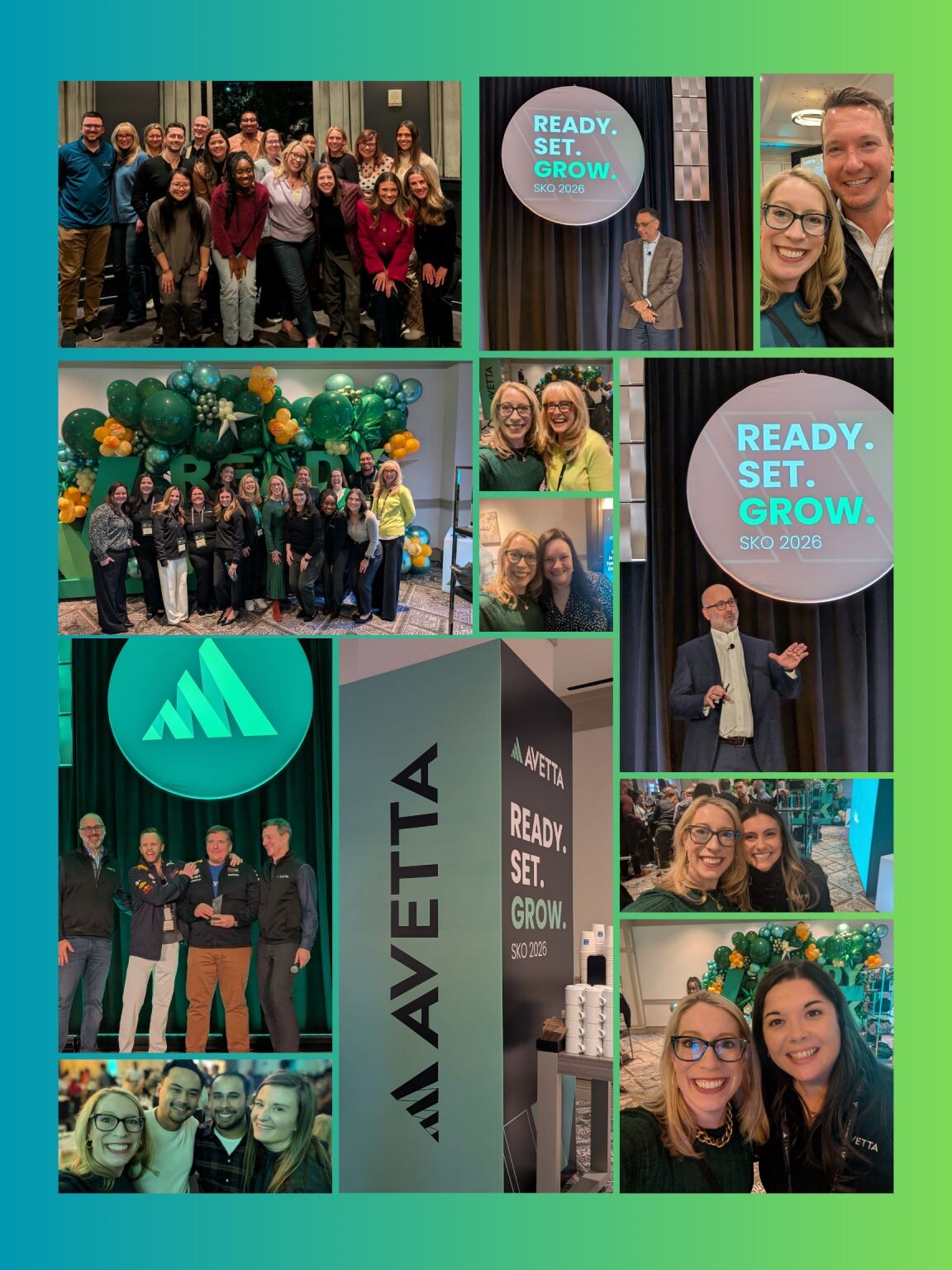
The internal debut included the necessary corporate theater - a global rollout, a sales kickoff and even a pop-up shop stocked with new socks and water bottles. Eischen appears to regard fun as infrastructure. Her LinkedIn introduction reads, “Collaboration. Service Leadership. Mandatory Fun.” After Avetta’s 2026 sales kickoff in Atlanta, she wrote that she had probably hugged half of the 300 colleagues in attendance, then offered the remainder free hugs at future summits. This is not the familiar executive performance of informality. Her colleagues’ replies suggest that the hugs were, indeed, plentiful.
Throw out the talking-head parade
The real test came when the company took the new promise to customers. Avetta’s user conference had already grown from about 100 attendees to roughly 270. Eischen went to the Chief Revenue Officer with a proposal to nearly double the next budget. She also wanted to discard a treasured ritual of corporate gatherings: the procession of executives explaining their own importance.
At the 2026 Chicago summit, former customer award winners spoke about their work. Current winners were interviewed rather than merely decorated. The agenda reflected the audience back to itself. At the center of the show floor, a Connection Center let suppliers meet clients looking to hire. Product teams demonstrated forthcoming features, watched customers try them and gathered reactions on the spot. Marketers recorded testimonials while the experience was fresh.
A conference thus became several useful things at once: a customer council, a modest job fair, a product lab and a place to hear how peers solve recognizable problems. Eischen argued for measuring pipeline and opportunity, not merely attendance or satisfaction. The distinction is important. Hospitality without utility is a party. Utility with hospitality can be a business model.
Her timing is sharp. Generative systems can now manufacture more marketing material than any audience could reasonably endure. Eischen’s answer is not to compete on volume. It is to make human contact scarcer and better: a conversation with the right client, a candid product reaction, a customer telling the story in language another customer believes.
A little weather forecasting
There is a wonderfully local footnote to all this earnest work on trust. Asked in 2018 what she would do if she were not a marketer, Pittsburgh-based Eischen chose executive director of the Groundhog Club. Her first mission, she added, would be correcting its lack of gender diversity. The answer contains a whole personality in two sentences: Pennsylvania loyalty, institutional critique and a joke good enough to survive eight years of executive biographies.
She says community keeps her optimistic - specifically, the chance to use technology and data to bring people around shared goals. That aspiration can sound vaporous until it is placed beside the actual work: unify nine visual systems, help a seller recover two hours, let a supplier meet a potential client, invite a customer to test the feature before the launch. Community becomes convincing when somebody has arranged the chairs.
Eischen’s career makes a quiet case for the long route. The customer-success manager notices what the CMO might miss. The language student hears when a sentence has become machinery. The procurement operator understands that trust is not an emotional garnish; it is what lets two businesses work together. And the aspiring Groundhog Club reformer knows that a solemn institution occasionally needs a better guest list.
At Avetta, her job is to make a complex company understood. Her larger trick is making understanding feel less like simplification and more like respect. The details still matter. The people asked to carry them simply deserve a clear reason why.