The ticket price was zero. The evening still asked something of you: walk into a room of founders, investors, companies and students, and find a reason to talk. For its February 2026 Road to START Summit event, START Stuttgart advertised free admission, food and drinks at STEYG. On the program were live pitches, exhibition booths and a route into the competition in St. Gallen. For a student curious about starting a business, it was a reasonably low-cost way to stop being curious in private.
That is the useful territory this nonprofit occupies. Founded in 2020, START Stuttgart connects students across the region with entrepreneurship through practical work and people. The offering includes founder conversations, workshops, pitch competitions and opportunities to build prototypes. Its members also run the organization. Someone has to recruit the partners, make the website work and get the event ready. Those jobs are part of the education.
The appeal is easy to understand. “Start a company” is an intimidating assignment. Meet some peers, join a project and put something in front of an audience is a sequence a student can begin this semester. START Stuttgart gives that sequence a social life, a set of responsibilities and, at useful intervals, a deadline.
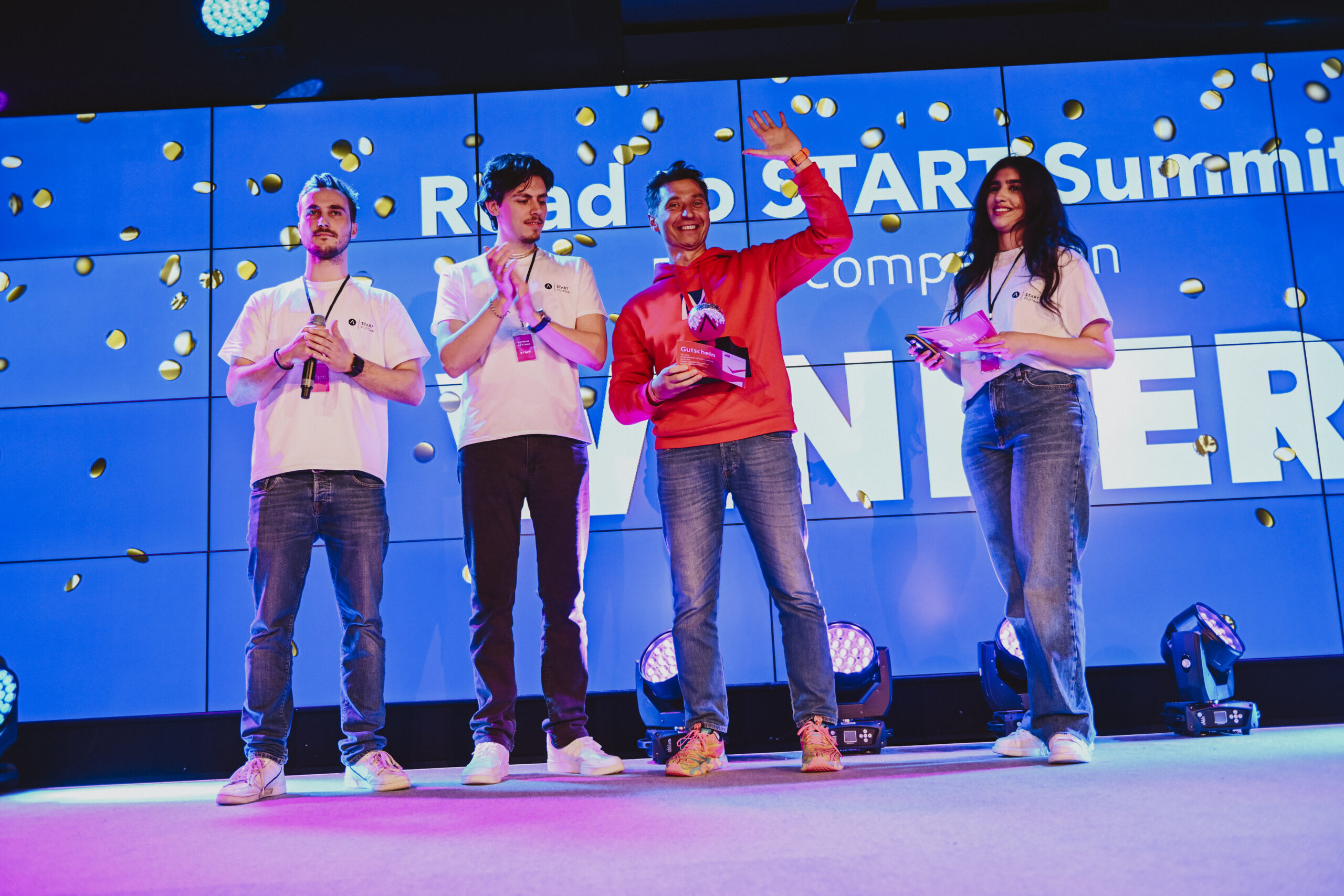
A regional room, a ticket to St. Gallen
The pitch competition supplies a concrete connection between the local chapter and the international START Network. Regional startups present to a jury; the winning venture gets a chance to compete in the START Summit quarter-finals. The arrangement gives a student-organized event a destination beyond its own closing drinks. A pitch in Stuttgart can become an introduction to a much wider audience.
The February 26, 2026 edition was listed as an English-language event running from 4 p.m. to 10:30 p.m. Its audience included early-stage startups, investors, companies, students and people interested in innovation. That mixture matters: a founder can practice explaining an idea to people who approach it with different questions. An investor wants one kind of evidence. A potential teammate may want another.
There is a history of bringing different expertise into the jury. For a March 2023 edition in Böblingen, START Stuttgart announced panelists including Robert Bosch Venture Capital’s Steffi Blumentritt, KOENA tec co-founder Manuel Armbruster and KIT-Gründerschmiede’s Ralf Stüber. Investment, company-building and startup support shared the judging table. The transferable idea is to recruit people whose experience can improve a conversation, then give the conversation a format and an end time.
- 01Pitch locallyRegional early-stage ventures
- 02Face the juryA winner is selected
- 03Go furtherOpportunity to compete in St. Gallen
Your welcome assignment: build something
New members are called STARTies, a name with the cheerful confidence of a club that expects you to come back. Their onboarding includes START Sprint: workshops intended to take an idea to a minimum viable product, or MVP. That means producing an initial working version that makes an idea tangible enough to examine.
At network level, START describes Sprint as a four-to-five-week program with teams, coaching and a Demo Day, while allowing chapters to adapt it locally. Stuttgart’s own description focuses on the journey from idea to functioning MVP. The useful feature is the assignment itself. A team has something to make together, so meeting other members can lead directly into working with them.
There are quieter formats, too. Knowledge Club meets monthly for workshops and discussion around entrepreneurship, productivity and personal development. Founder Insights offers conversations with active entrepreneurs about their journeys. The student program also points to conference visits, including Bits & Pretzels, VivaTech, Slush and START Summit. A member can move between small-group learning and bigger rooms without having to invent every introduction alone.
“inspire, learn and apply”
START Stuttgart’s description of its event philosophy
The organization welcomes academic backgrounds beyond business. Its application page names engineering, design and law among the disciplines in the community. That makes a practical difference to a prototype assignment: people bring different ways of defining a problem and judging an answer. The invitation starts before a company exists, when finding a workable team can be the most valuable work of all.
The people running the room are learning, too
START Stuttgart describes itself as self-organized and divides its work into five departments. Their responsibilities range from member onboarding to finance, technology, marketing and partnerships. This makes the association itself a working project. The venue, audience and tools have to function for real people, on real dates.
The technology team’s description includes website work, internal Notion systems, workflow automation and an event scraper. Partnerships members develop sponsorship packages and negotiate collaboration agreements. Finance and operations covers budgeting and reporting. These are specific things a student can point to afterward: a process improved, a partner approached, an event delivered.
For another student group, the useful lesson is to make responsibility visible. Give members work with an identifiable user or recipient, enough authority to carry it out and colleagues who depend on it. START’s departmental structure suggests how that can happen. The learning opportunity comes with an obligation to contribute; passive attendance would miss much of what the model offers.
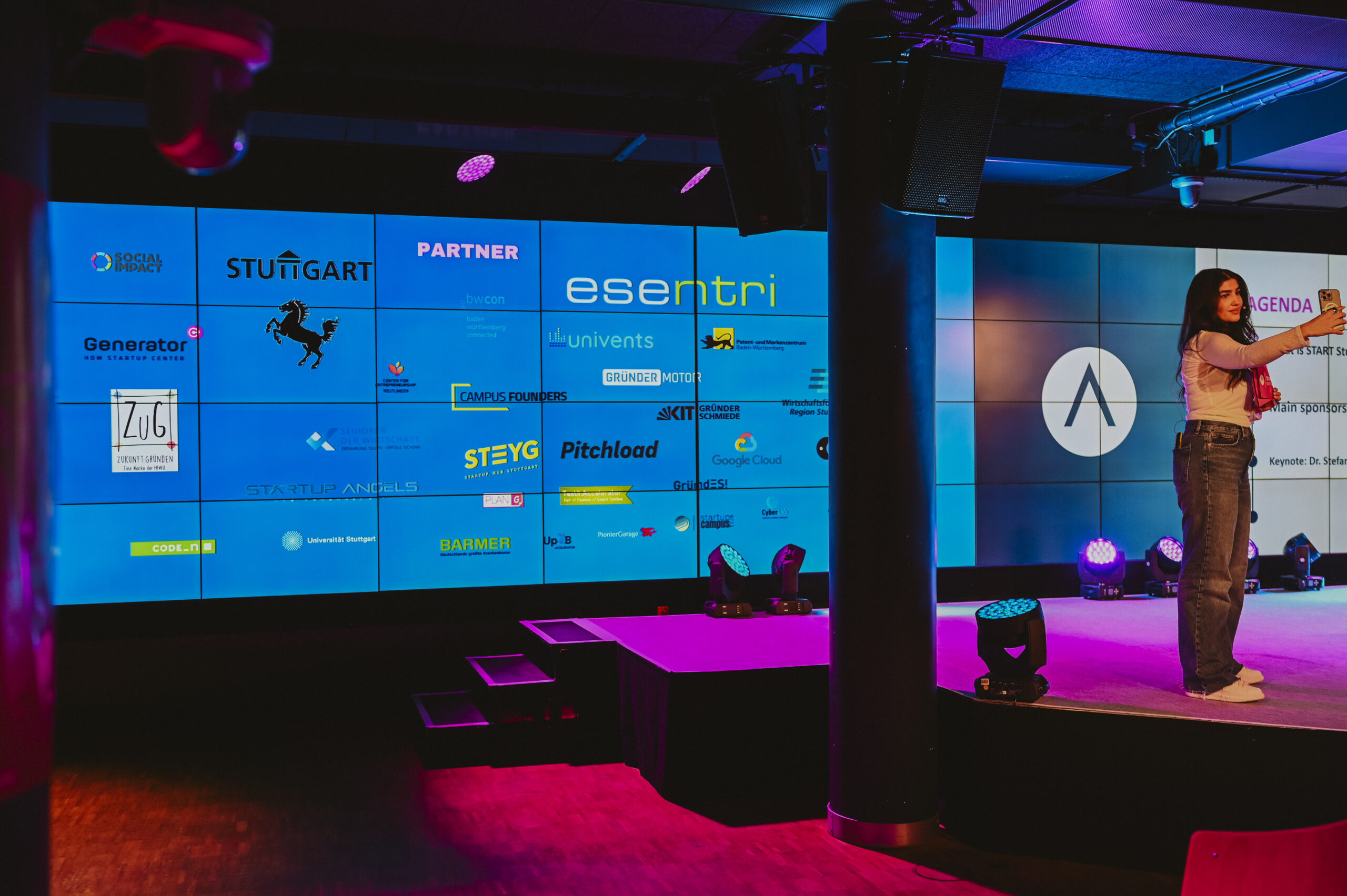
A weekend with €10,000 on the board
HackXplore 2025 shows how those relationships become a program. START Stuttgart joined NXTGN and MESH to organize the May 16-18 hackathon at SteamWork in Karlsruhe. ZEISS offered industry challenges and advertised a €10,000 prize pool. The format brought students into contact with problems supplied by companies, with a short window in which to develop a response.
Afterward, organizing-team member Mehmet Karaca reported more than 120 participants, five challenges and 48 hours of activity. Those figures describe the event’s working scale. They also make its proposition more legible than a general promise of networking: teams, a clock, a problem and something to show at the end.
Designer Paula Faust supplied a particularly telling detail in her public account of preparing the event. She had participated in a MESH hackathon the previous year; in 2025, she was helping organize HackXplore as design lead. Her work covered the visual identity, website, print and social materials. Participation had become responsibility, a progression other student organizations could deliberately make room for.
HackXplore 2025
by an organizer
by an organizer
The prize pool was money offered to competitors. It should not be mistaken for the cost of producing the weekend. The visible partnership exchange is broader: companies bring challenges and support, participants bring time and ideas, and organizers bring the people together. For a prospective sponsor, watching a team work can also be a more revealing encounter than reading a polished application.
Now the partners are bringing tokens
The same practical instinct appears in an AI hackathon announced for September 12, 2026, in Ludwigsburg. As of this profile’s September 10 publication, the event is still ahead. Its listing names MHP as location and case partner, Lovable as the vibe-coding partner and ElevenLabs as the voice AI partner. Food, drinks and tokens are covered for the day.
Here, the support addresses a specific building expense: access to the AI tools participants will use. Company and startup cases provide the prompts for the work. The event page asks people to arrive at 8 a.m., turning a broad invitation to experiment with AI into a place and a time. The live listing is the practical reference for attendance details.
For readers considering a similar event, the arrangement offers a useful design question: which resources would let participants spend more of the day making something? In this case, the advertised answer includes a workspace, cases, refreshments and token pools. A working prototype at the end would still need testing with users, but the event gives a team a defined opportunity to begin.
Before you join, choose your kind of work
START Stuttgart’s core audience is university students in the region. Its website welcomes students from nearby cities such as Karlsruhe, Heilbronn and Tübingen, provided they can come to Stuttgart from time to time. A business degree or an existing startup is not required. Interest, participation and the ability to show up are central to the offer.
It occupies a particular place among the region’s options. HFT Stuttgart’s PLAN G offers coaching and startup support, including advisory services. Startup Stuttgart e.V. serves a broader founder community. START Stuttgart emphasizes students organizing and learning alongside one another, with the international chapter network extending their connections. Depending on the task, these services can be complementary.
The earlier TeamUP collaboration makes that role clear. In April 2022, START Stuttgart helped organize an online event with Startup Campus 0711 to connect startups seeking co-founders with students seeking a team. The problem was specific: one side needed people; the other needed an opening. A structured meeting put them in reach of each other.
A student who wants this experience can begin by choosing an actual contribution: help with an event, join a departmental project or develop an idea through Sprint. A founder with a regional venture can look at the pitch competition. A company can bring a case and people willing to engage with the responses. Each route asks for more than a name on a membership list.
That is what gives this small organization its interest. The program keeps attaching entrepreneurship to things people can do together. There is a prototype to finish, a partner to call, a room to prepare. The ambition can stay large. The next assignment can be small enough to start.
Find your next room
Explore membership, events and the wider community.