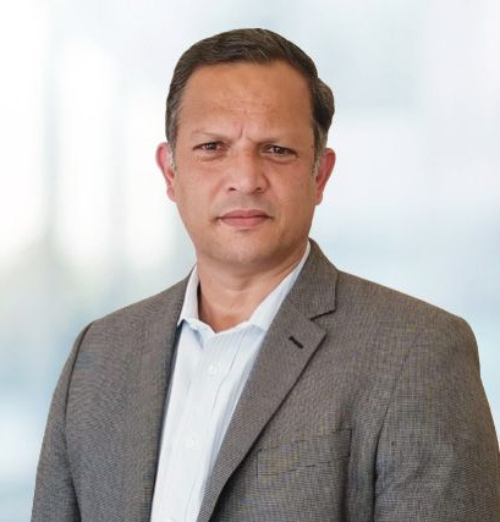
In 1988, a young officer from the National Defense Academy shipped out to join an infantry unit of the Indian Army. Within a few years, he was selected for the Parachute Regiment - India's special forces. He reached the rank of Major. The job required reading terrain, making fast decisions on incomplete information, and keeping people alive when the plan goes sideways. It turns out those skills have a second career.
When Sri Manchala left the army in 1994, he didn't land in a boardroom. He landed in a paint factory. Asian Paints, India's largest manufacturer of the stuff, handed him the logistics and imports operation for one of their leading facilities. It wasn't glamorous. It was exactly what it sounds like - moving raw materials, managing people, watching inventory. For someone whose previous job involved tactical operations in the field, this was a deliberate reset. Ground-level operations. Systems. The mechanics of how large organizations actually work, not just how they look in a strategy deck.
He moved on to the University of Southern California's Marshall School of Business for his MBA, then joined KPMG Consulting in Silicon Valley working with high-technology clients. By the time he landed at Cisco Systems in the company's IT division - the engine room, not the showroom - he had a view of enterprise technology that few consultants could match. He'd seen it from the factory floor, from the client side, and from the inside of one of the world's fastest-growing tech companies.
In 2001, at what many people would describe as a terrible time to start a technology firm, Sri founded Trianz. The dot-com crash was unfolding. Valuations were collapsing. Big names were shutting down. He launched anyway. The logic was simple: companies still had problems, they still needed help solving them, and the wreckage of the bubble had cleared away a lot of the noise. It was a good time to be useful.
Twenty-four years later, Trianz has more than 2,200 employees working across 19 countries, a client list that includes Mastercard, Equinix, NetApp, and MassMutual, and annual revenue of $315 million. The company has grown more than 25% per year for five consecutive years - a streak that earned it a spot on Forbes' "America's Best Consulting Firms" list for three years running and put Sri alongside the heads of Arthur D. Little and IQVIA in CEO Today's list of top management consulting leaders globally.
None of which, he would probably tell you, is the interesting part. The interesting part is what Trianz discovered when it looked at why most companies fail at the thing they spend billions trying to do.