A solar-cell manufacturing process can work beautifully and still need help finding its next investor. HighLine Technology, a spinout from Fraunhofer ISE, offers a useful example. Grünhof’s account of the company’s progress records €400,000 through Start-up BW Pre-Seed, followed by €1.2 million from HTGF and FTTF. SMART GREEN, the startup hub operated by Grünhof, helped the business make progress on financing. The technology belonged to the founders. Getting it financed was another piece of work.
That distinction explains this Freiburg operation better than the usual photograph of smiling people around a laptop. SMART GREEN works in the space between technical possibility and commercial commitment. Its customers and users include founders looking for a first buyer, researchers weighing a spinout, investors searching for opportunities and established companies seeking a solution they can actually deploy.
Capital raised by supported startups
The hub reports that its supported startups have raised €550 million, with 430 teams accompanied and 2,400 jobs created by teams. Those figures establish the scale of the network’s claim, not a causal experiment proving that every euro came from an introduction. The more revealing evidence is smaller: a pilot with an energy supplier, a financing application prepared for a jury, an industrial customer willing to try something new.
The first buyer is part of the product
Greenventory puts that proposition into focus. The energy-planning startup, with roots in Fraunhofer ISE and KIT, used its software in two pilot projects with EWS Schönau and Greenpeace Energy through SMART GREEN’s GROW program. Grünhof also records its 2019 MakeItMatter award. For a business selling complex planning software, an opportunity to work with an actual energy company makes the proposition tangible.
Another GROW participant, the Dutch company Dexter Energy, joined in 2019. Grünhof credits SMART GREEN with helping accelerate its German market entry. Dexter’s work concerns forecasts of energy consumption and generation. The common thread is sector access: these companies needed conversations with people responsible for energy systems, where a compelling demonstration must eventually become a working business relationship.
Carbonfuture’s early development offers a related view. Freiburg’s economic-development account says Grünhof and the accelerator helped with questions around financing, team formation and internationalization. That is a broad brief, but a practical one. A carbon-removal business must organize a company around its underlying idea, including the people and money needed to take it beyond its home market.
Buy a small trial before a big promise
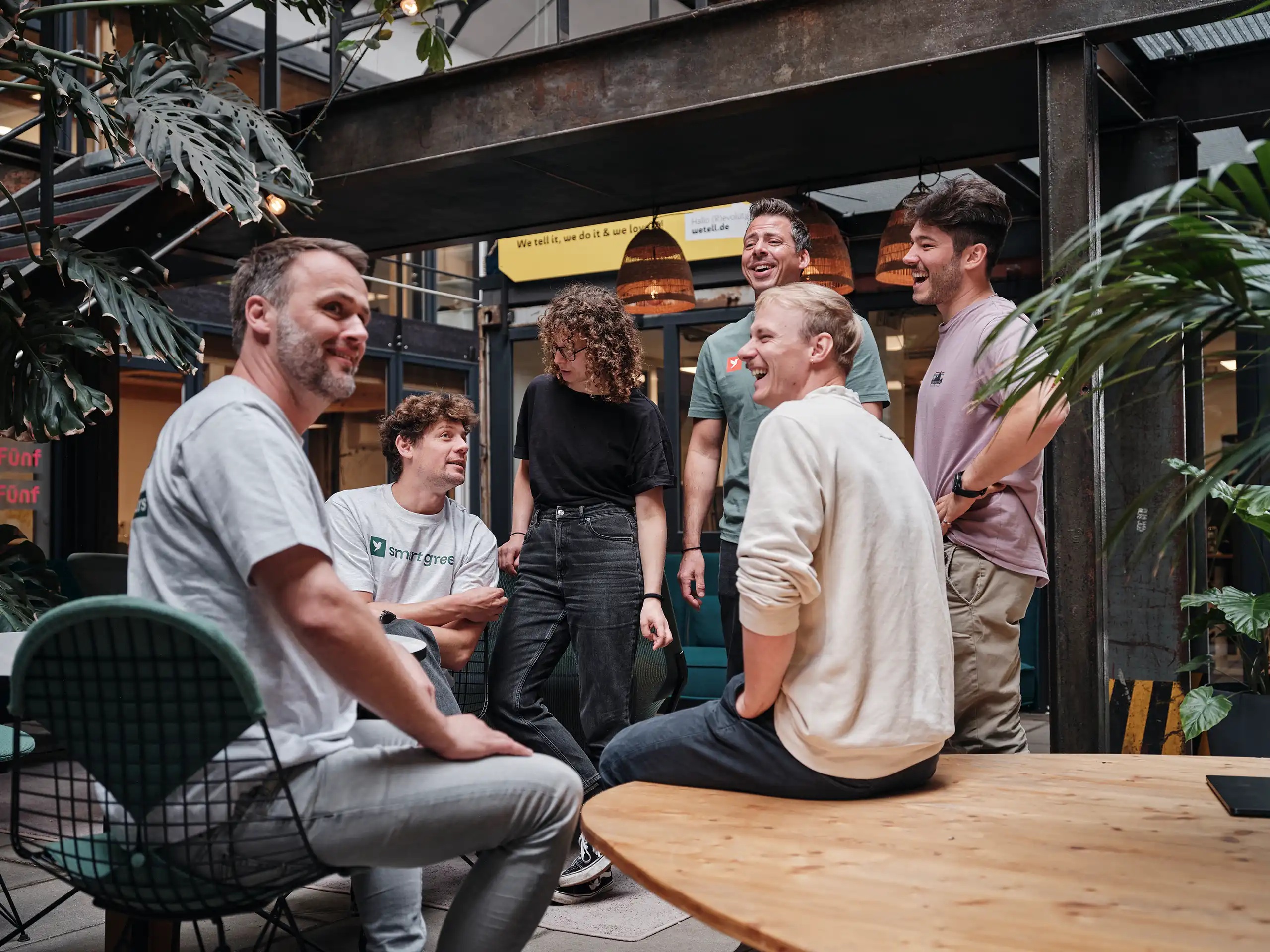
For established businesses, the service has a more specific name: venture clienting. SMART GREEN helps a company define an operational problem, identify relevant startups and supervise a limited first deployment. The company then evaluates the result and potential return before deciding whether to expand it. A purchase or trial gives the relationship a job to do.
Its published corporate examples describe three useful jobs. One involves improving digital planning for heat-network transformation. Another adds energy-management software to smart-meter hardware, producing an ongoing collaboration and joint offering. A third uses a startup’s white-label software to automate photovoltaic advice on a company website. These are changes to products and processes, with a customer already in view.
- 01Name the problemDefine a specific industrial need.
- 02Find the startupSource and qualify relevant solutions.
- 03Test the valueRun a limited deployment; assess the result.
The sequence contains a lesson readers can borrow: write the problem before shopping for the technology. Then make the first test small enough to evaluate. That is an inference from the published process, rather than a promise of success. It depends on having a sufficiently mature solution and a buyer with a concrete need. A research project still establishing whether its technology works belongs earlier in the support system.
The laboratory has a different entrance
SMART GREEN’s research offering starts further upstream. It includes EXIST application support and coaching, pre-incubation, venture building with research institutions and help developing founding teams. It also works on getting technology used by existing startups and industrial companies. A new company is one route out of a laboratory; a useful application inside an existing business is another.
Hahn-Schickard institute director Roland Zengerle singles out Ionysis and evoMIP as teams that benefited from the accelerator. That endorsement helps locate SMART GREEN in the market: close to scientific institutions, but concerned with what comes after the research. Its expertise includes business-model development, funding preparation and the human work of assembling a venture around a technology.
Founders entering through the business-model service begin with a conversation about their current position and next milestone. The advertised deep dives cover the value proposition, business model, competitive and regulatory environment, and pitch deck. The unglamorous question running through them is who pays. A sustainability benefit matters, but it still needs a workable explanation of how value reaches a customer.
Money comes with a process
Early financing is one of SMART GREEN’s more concrete services. Its current Start-up BW Pre-Seed offer advertises financing up to €320,000, with exceptional cases reaching €640,000 and a co-investor contributing 20 to 50 percent. Those are program terms for qualifying startups. They should not be confused with a cheque automatically handed to everyone entering the hub.
The preparation starts with a pitch deck and financial plan, then moves through advice, jury preparation and a co-investor letter of intent. SMART GREEN remains a support partner through the L-Bank financing contract. Its page describes a company-level loan with a later conversion option. The earlier HighLine figures belong to a historical case, rather than a statement of today’s standard ceiling.
Investors have their own entrance, including curated deal flow, sector-focused scouting and co-investment opportunities. SMART GREEN’s investor page reports 38 investments made with its involvement, €2 million in pre-seed co-investments and €6.5 million in associated public funding. These are useful signs of activity. They describe financing relationships around startups, rather than the assets of a SMART GREEN investment fund.
“Thriving economy in planetary boundaries”
SMART GREEN’s stated vision
Some doors are free. Others have a ticket.
The business sits within Grünhof GmbH, the operator named in its legal imprint. SMART GREEN dates its beginnings to 2014; Freiburg describes the accelerator initiative formed by Grünhof and municipal economic-development organization FWTM in 2017. Its present identity combines that public-private foundation with services for companies, founders, researchers and investors. EU and state support remain part of the picture.
One accessible entry point is EXI.green, the statewide advisory network in which Grünhof participates. It advertises eight hours of advice, including preparation and follow-up, at no charge to participants. Public and local support finances that offer. Its workshops cover questions such as product value, sales, business models and financing. Free advice here has a defined scope, rather than implying every SMART GREEN service is free.
At the other end of the menu are paid spaces and events. For the GreenTech Capital Forum on September 24, 2026, published tickets are €95 for startups and €290 for investors. The format is designed around qualified participants and structured one-to-one meetings. The published plan calls for 100 teams and 50 capital providers across three technology verticals. As of September 10, these are event plans, not attendance results.
After the applause, back to the business
The MakeItMatter-Award supplies a different kind of money. EWS funds a 2026 prize pool of €32,500, divided into €15,000, €10,000 and €7,500 awards. The ceremony is scheduled for the September forum. Earlier editions supported quite different technologies: EWS’s 2024 account names pineapple-residue pulp maker eco:fibr, e-methanol developer ICODOS and peatland business ZukunftMoor.
The award’s own testimonials describe practical uses for the support, including work on a first peat-moss operation and commissioning a pilot plant in Mannheim. The prize sits alongside publicity and introductions. It is one intervention in a company’s development, with its value tied to what recipients can do next.
Two October 2026 courses bring the story back to business mechanics. The Sales Masterclass, led by Nicolas Schwaab, runs across four virtual modules covering topics from market selection to sales operations and customer relationships. The Venture Capital Masterclass, led by Lionel von Dobeneck, covers fundraising preparation, investor outreach, deal terms and the relationship after an investment. Both instructors bring their own company-building experience.
A railway hall, a network, a next step
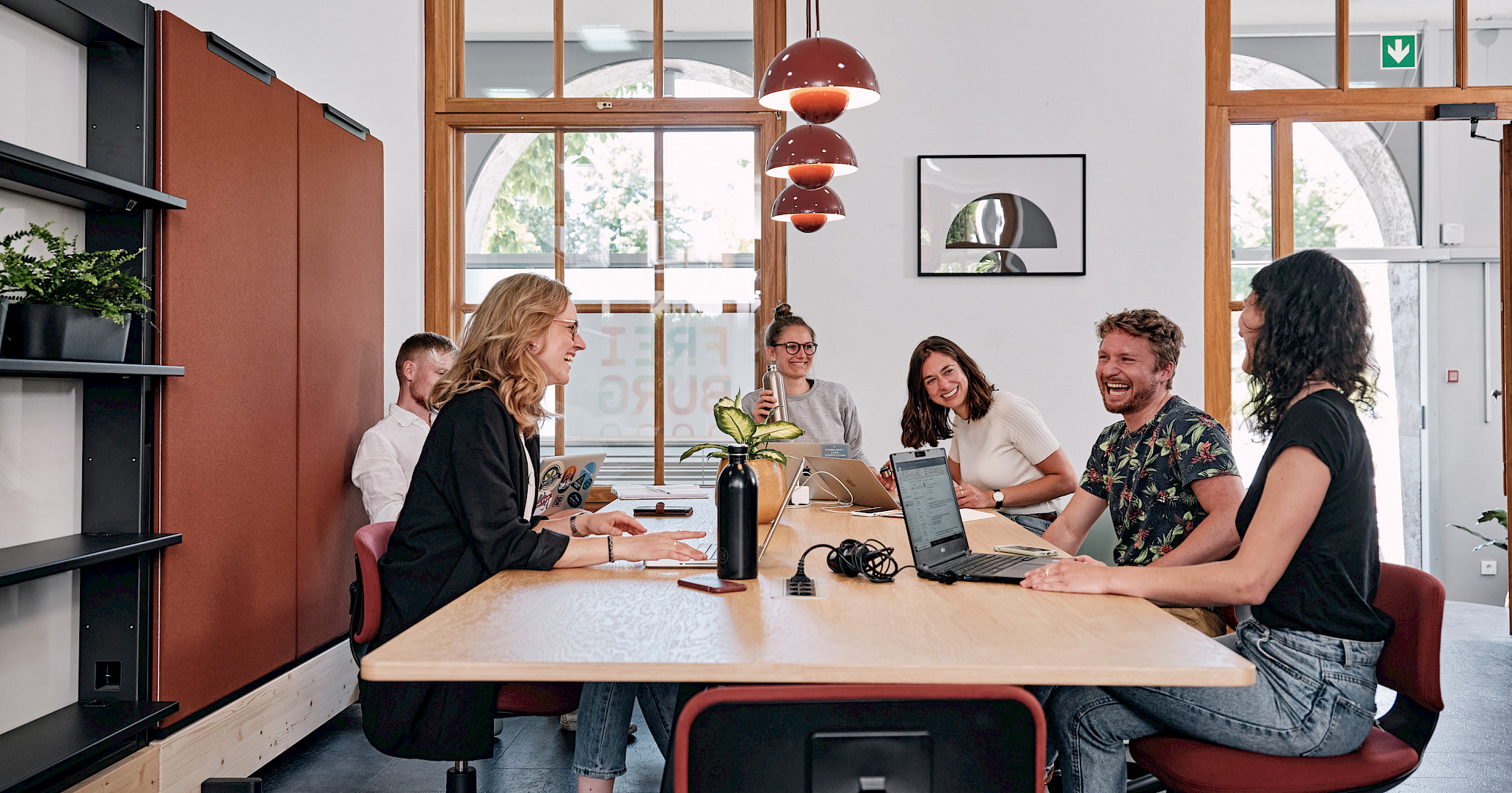
The setting has some personality of its own. EWS describes the Lokhalle as a former railway building now fitted with converted shipping containers for offices and meeting rooms. SMART GREEN’s spaces offering connects to Grünhof’s broader network of three locations and more than 600 members. Those members belong to the wider coworking community, not a count of accelerated startups.
The people doing the work span startup consulting, strategic venturing, events, coworking and organizational development. Konrad Pfitzer is listed as managing director for startups; Jürgen Gomeringer leads startup consulting. This mixture helps explain the offer’s difference from a standalone course or a general coworking membership. Advice, working space and industry access can be reached through the same organization.
For a founder considering the hub, the useful starting point is a precise next step: test a business model, prepare a funding application or find a pilot customer. For an industrial company, it is a problem worth solving with an outside supplier. SMART GREEN’s proposition becomes persuasive at that scale. The big numbers invite attention. A specific buyer, trial or financing decision gives that attention somewhere to go.