The modern IT department can patch 5,000 laptops from a browser, reset a password across an ocean and provision cloud storage before breakfast. Then a new employee arrives, needs a laptop and meets the stubbornly analog end of digital transformation: a locked room, a spreadsheet and somebody named Dave who is at lunch.
Signifi Solutions built a machine for that awkward moment. The Mississauga, Ontario company makes smart lockers, robotic vending systems and remote-support stations that authenticate a person, release the right device and update the software record. The same engineering can hand a traveler a pair of headphones at an airport, give a shopper an online order at Canadian Tire or dispense a security key to an employee at midnight.
This is vending, technically. But calling Signifi a vending-machine maker is like calling a data center a shed. The cabinet is the visible part of a larger operating system: its SignifiVISION cloud platform manages permissions, inventory, transactions, content and machine health, while integrations connect each physical handoff to IT service-management, commerce and payment systems.
The origin
The dust-bunny corner becomes a storefront
Founder and CEO Shamira Jaffer started Signifi in 2005, when automated retail mostly meant soda and chips. By 2012 she was telling Canadian reporters that machines could sell iPads, cosmetics and video games in a fraction of the space of a staffed shop. The proposition was plain: no clerk, lower rent, more hours.
The hardware had to change for that argument to work. A spiral coil is fine for crackers. It is a bad way to deliver a tablet. Signifi's Spark machines use an elevator-based dispensing system designed for fragile goods and irregular packaging. Touchscreens handle browsing and payment. Companion modules expand capacity. The exterior can wear a retailer's brand rather than the machine maker's.
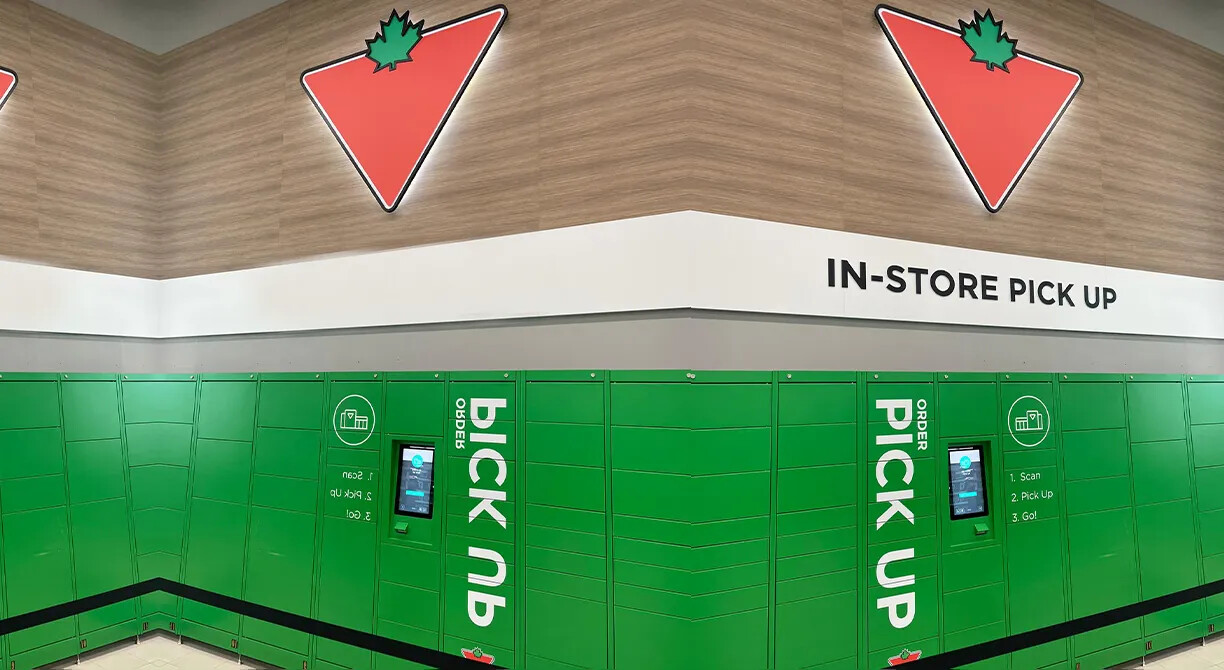
The first model Signifi attacked was expensive square footage and repetitive retail labor. The next failure was subtler: retailers had added e-commerce, but pickup still ended at a counter. Signifi completed a nationwide BOPIS locker deployment at more than 600 Canadian Tire, SportChek and Mark's locations. The locker became a physical endpoint for the online order system - secure, quick and available without asking an employee to hunt through a back room.
“Customers have done their research and understand what they want to buy, but they're time-starved.”Paul Medieros, Canadian Tire associate dealer
The pivot hiding in plain sight
A laptop is inventory, too
Retail taught Signifi how to protect, release and count valuable objects. Hybrid work gave that skill a fresh target. When employees stopped appearing at the same office on the same schedule, the staffed IT storeroom began to fail first. Opening hours caused delays. Manual handoffs produced incomplete records. Returned devices went missing between the former employee, the courier and the shelf.
Signifi reframed the IT counter as an autonomous depot. A new hire can receive a QR code, badge in at a locker and collect an assigned laptop. A departing employee can return equipment after hours. A worker with a dead machine can pick up a loaner. The system logs who opened which compartment and tells the existing IT platform what happened.
The company says one consulting customer cut lost devices by 90 percent and saved thousands of IT hours a year after deploying smart lockers connected to its IT service-management application. Another published example says a global technology company halved asset-delivery time. These are Signifi case studies, not controlled experiments, but they identify the expense buyers care about: less technician time on handoffs, fewer unaccounted laptops and less employee downtime.
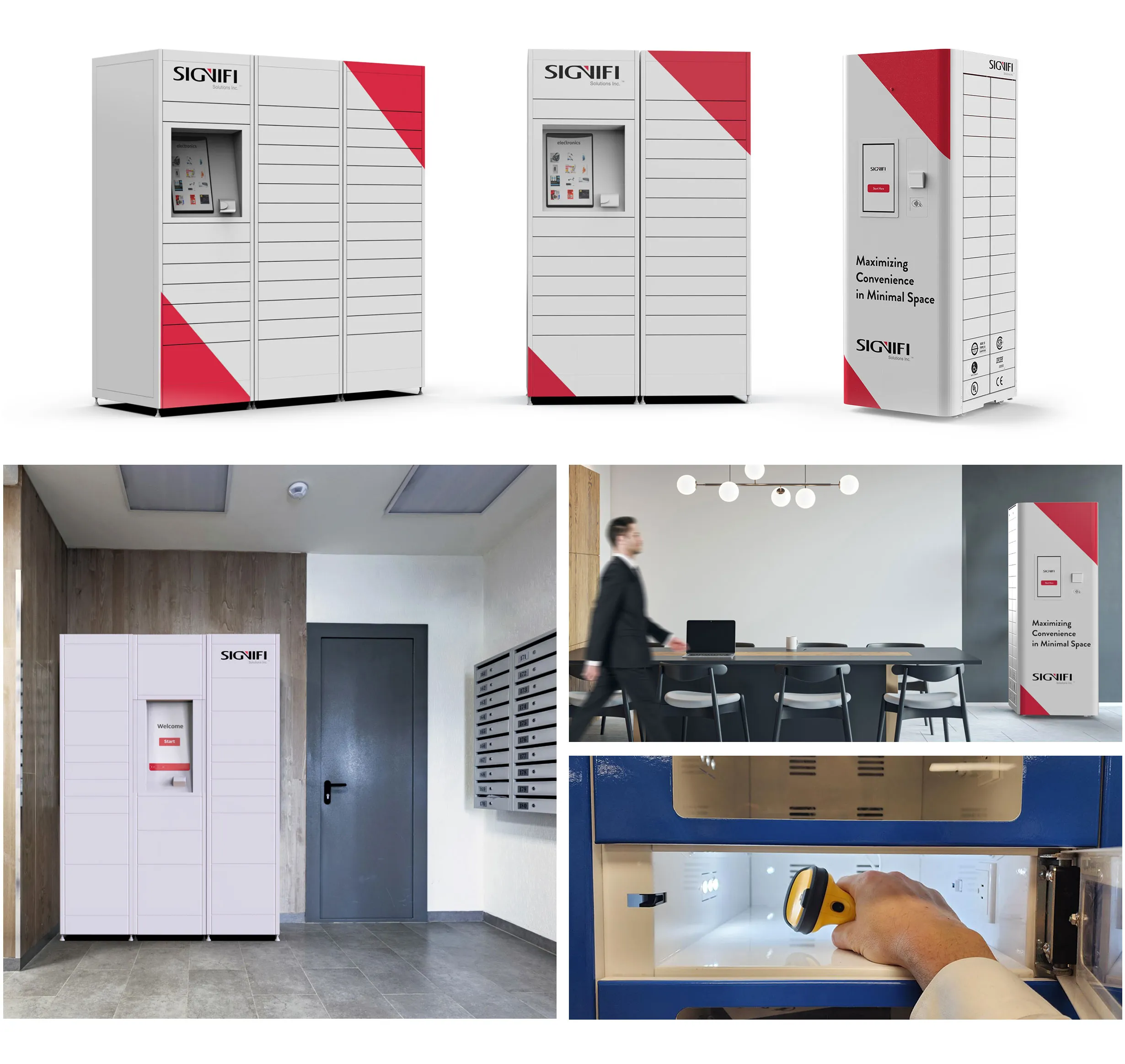
For remote help, the Tech Express Desk adds a second screen and secure storage. One display handles the locker; another connects a user to an IT technician through tools such as Teams, Zoom, Webex or Cisco. The technician can diagnose the problem, then direct the worker to return or collect equipment from the same station. It is a help desk with no help-desk employee physically sitting there.
What it costs
The box is capex. The workflow is the bill.
Signifi sells custom deployments, so there is no universal sticker price. Its newer ITAM-as-a-Service offer makes the economics easier to see: a public entry package starts at $1,000 USD per month, while an enterprise package is listed above $1,800. Depending on the tier, that can bundle a kiosk or lockers, branded software, installation, SignifiVISION access, reporting, API or ServiceNow connection, support and scheduled hardware refreshes.
That packaging is revealing. Customers are not simply buying sheet metal and locks. They are paying to avoid coordinating a cabinet fabricator, payment vendor, software shop, installer and field-service network. Signifi designs and engineers its hardware and software together, then supports the deployment. In physical automation, one throat to choke is a feature.
From $1,000/month
Signifi's public ITAMaaS entry point. Custom builds, integrations, site work and capacity can raise the number.
Manual minutes
One Signifi retail model calculated 12 minutes saved per employee per day - roughly $100,000 a year for a 100-person store under its assumptions.
Why it is different
Software with doors, motors and consequences
The smart-locker aisle is busy. Parcel networks sell pickup boxes. Industrial suppliers place tool vending on factory floors. Automated-retail companies offer sleek kiosks and cashierless cabinets. A buyer can also assemble a system from contract hardware and separate software.
Signifi's distinction is vertical integration. It controls the cabinet design and the SignifiVISION layer, allowing it to change a compartment layout, authentication method or software workflow as one product. Its machines support PINs, badges, QR codes, biometrics and payments. Lockers can add charging, heating or cooling, and outdoor protection. Products are designed around ADA and Section 508 accessibility requirements. The platform connects to systems such as ServiceNow and Remedy through APIs and manages fleets across locations.
That final bar matters. A system becomes more valuable as it absorbs a customer's rules, branding and data. It also becomes less like a toaster. The rollout needs identity access, inventory accuracy, network connectivity, site preparation and somebody who owns replenishment. Signifi's customization is an advantage when the workflow is valuable and repeated at scale. It is overhead when a company only needs six ordinary doors in one quiet office.
What changed the buyer's mind
The exception became the normal workday
Three shifts improved the pitch. E-commerce trained shoppers to expect pickup without a queue. Hybrid work made nine-to-five equipment counters incompatible with employee schedules. Labor shortages made repetitive handoffs harder to staff. The cabinet did not suddenly become clever; the surrounding process became expensive enough to automate.
The range of current deployments shows how far that logic travels. At Toronto Pearson, 10 iStore machines in Terminals 1 and 3 sell electronics and travel accessories with multilingual screens and AI-assisted inventory management. In a corporate lobby, similar hardware dispenses headsets and laptops. In a store aisle, it can release a high-value item after payment, reducing the annoyance of hunting down an employee with a key.
The clever part is not opening a door. It is making the physical handoff obey the same rules as the digital workflow.
The copyable playbook
Start with the queue, not the kiosk
The lesson worth stealing is smaller than “buy a robot.” First, find a repeated handoff where people wait, staff repeat the same steps and inventory routinely loses its owner. Second, keep the user's action brutally simple: authenticate, open, take or return. Third, connect the event to the system of record. If the locker opens but the ITAM or order platform remains wrong, the automation has merely hidden the mess behind a nicer door.
Fourth, design the exception path before the happy path. What happens when a badge fails, a compartment jams, a user returns the wrong device or a machine loses its connection? Remote monitoring, support and field service sound less exciting than facial recognition. They determine uptime. Finally, make the physical layer modular. Signifi's Control, Companion and locker architecture lets customers add capacity or change compartment mixes without replacing the whole installation.
The company now sits in a useful market seam. It is part industrial manufacturer, part enterprise SaaS provider, part systems integrator and part field-service operator. That hybrid is harder to scale than pure software, but it also handles a job pure software cannot: moving a physical object into the right hands.
Twenty years after Jaffer imagined iPads coming out of machines, Signifi's larger opportunity is not novelty retail. It is mundane infrastructure. The office storeroom, locked display case and pickup counter are all small queues with inventory trapped behind them. Signifi makes those queues behave more like an API - authenticated, logged and open around the clock.
Explore Signifi