The ninth customer got the peanuts for free. On one of F. A. Wittern Sr.’s early penny dispensers, a bell rang after every ninth purchase and the machine delivered a bonus portion. Eight people paid. One received a small mechanical celebration. Even a peanut, apparently, could benefit from a little theatre.
That detail is a useful way into The Wittern Group. A vending machine looks like a box for holding things. Its more interesting job is arranging an exchange: who gets the thing, under what conditions, and what happens afterward. Over the decades, Wittern has kept finding customers with a different version of that problem.
- What it sells: vending machines, smart lockers, controlled dispensers and the software that records their activity.
- Who buys: vending operators, retailers, industrial suppliers, workplaces and healthcare organizations.
- Why it matters: the group puts manufacturing, financing, payments, parts and support within the same business family.
- The lesson to borrow: find the obstacle between your product and a customer actually using it.
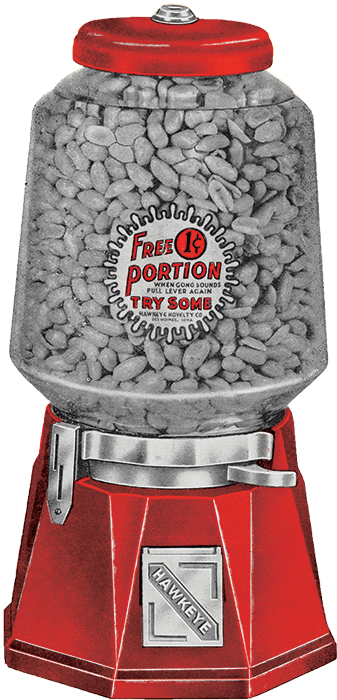
A bell. A free portion. A reason to pay attention to the next purchase.
01 / The machine needed a customer who could afford it
Wittern began as Hawkeye Novelty in 1931, in a Des Moines garage, with $12.50 spent on used tools. The business made peanut vendors, matchbox dispensers and other small devices. In 1947 it became FAWN, a name assembled from the founder’s initials and the last letter of his surname. A family business can be unusually literal about its branding.
The consequential addition came in 1952: an in-house finance company. Entrepreneurs and retailers needed a way to buy the equipment. Wittern supplied one. Financing moved the company further into its customers’ businesses, beyond the factory’s ability to turn metal into machines.
Art Wittern, the founder’s son, joined as sales manager in 1957. The company’s history credits him with recognizing that equipment alone could take the business only so far. Operators also needed support across the stages of ownership. That observation helps explain the collection of brands Wittern runs today.
“If we take care of our customer we take care of ourselves.”
F. A. WITTERN / CHAIRMAN, AS QUOTED IN THE COMPANY’S HISTORY
U-Select-It supplies vending equipment. eVending sells combination machines online. Vending.com serves operators directly. Vendnet handles parts and technical support. Federal Finance and Inland Finance help qualifying buyers acquire equipment. Greenlite provides card and mobile payment options. These businesses cover several of the jobs that begin when a customer says yes.
In-house equipment financing enters the picture.
IDS and Fastenal begin their industrial vending relationship.
02 / A cupboard with a memory
Consider the ordinary workplace supply cupboard. Someone takes gloves. Someone else takes a tool. A third person borrows a scanner and means to return it. The cupboard is excellent at storing objects and rather poor at explaining where they went.
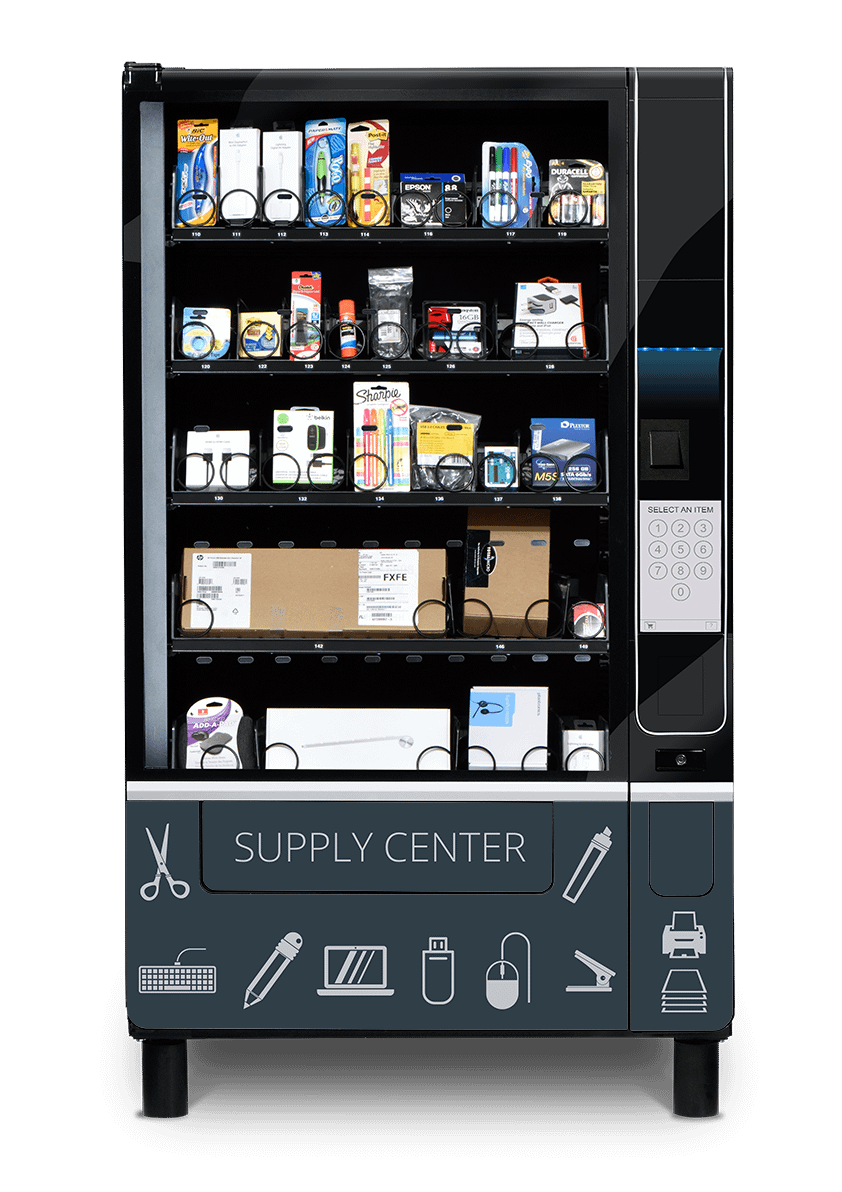
Intelligent Dispensing Solutions, Wittern’s controlled dispensing business, gives that cupboard a record of its transactions. Its dispensers and lockers restrict access; the accompanying iQ Technology software processes inventory data, produces reports and helps administrators manage use. Different software packages offer different capabilities, including integration options and tracking beyond a physical machine.
In an industrial deployment, an employee can scan an ID, receive authorized supplies and leave a transaction tied to that access. Managers can set limits and receive low-stock alerts. Reusable equipment can be checked out and returned through suitable locker systems. The object behind the door might be a tool rather than a chocolate bar; the need to account for the exchange remains familiar.
- 01 / IDENTIFYWho needs it?An employee authenticates using the configured access method.
- 02 / AUTHORIZEWhat may they take?Permissions and usage rules determine access.
- 03 / DISPENSEOpen the right door.The dispenser releases an item or the locker allows access.
- 04 / RECORDRemember the exchange.Inventory records and reports support the next stock decision.
A simplified workflow. Hardware, access methods and software features depend on the deployment.
Fastenal and IDS began working together in 2008. An industrial distributor has an obvious interest in helping customers manage the supplies it sells. Wittern contributes dispensing expertise to that relationship. The fit puts the machine close to the work, where access and accountability are useful.
03 / When the night shift needs something
The failure that makes this proposition legible is often mundane: manual inventory loses track. In IDS’s account of Auto Body Specialties, the collision-repair supplier’s customers were overpulling products. Counting happened by hand; reordering involved guesswork. ABS put iQ-powered dispensers and lockers into customer facilities to track use and control stock.
IDS reports improved accountability, lower costs and new business for ABS. Those are supplier-published outcomes, without a numerical saving attached. The mechanism is clear enough: a distributor gives its customers a more orderly way to obtain and account for expensive supplies. The equipment becomes part of the service relationship.
Healthcare adds another concern: the cupboard must be available when the office is closed. IDS publishes accounts from Birmingham Fire and Rescue, Tulsa Fire Department and Mastic Beach Ambulance Company. These describe faster supply access, overnight equipment availability and less time spent on physical counts and paperwork.
“If there is an incident overnight and a critical piece of equipment is needed”
MICHAEL BAKER / TULSA FIRE DEPARTMENT CHIEF OF EMS
EXCERPT FROM HIS IDS-PUBLISHED CUSTOMER ACCOUNT
Baker’s account explains that crews can obtain equipment immediately. That is the appeal of self-service in this setting. Permission, availability and a useful record matter more than the novelty of retrieving medical supplies from a machine.
04 / The coil gets company
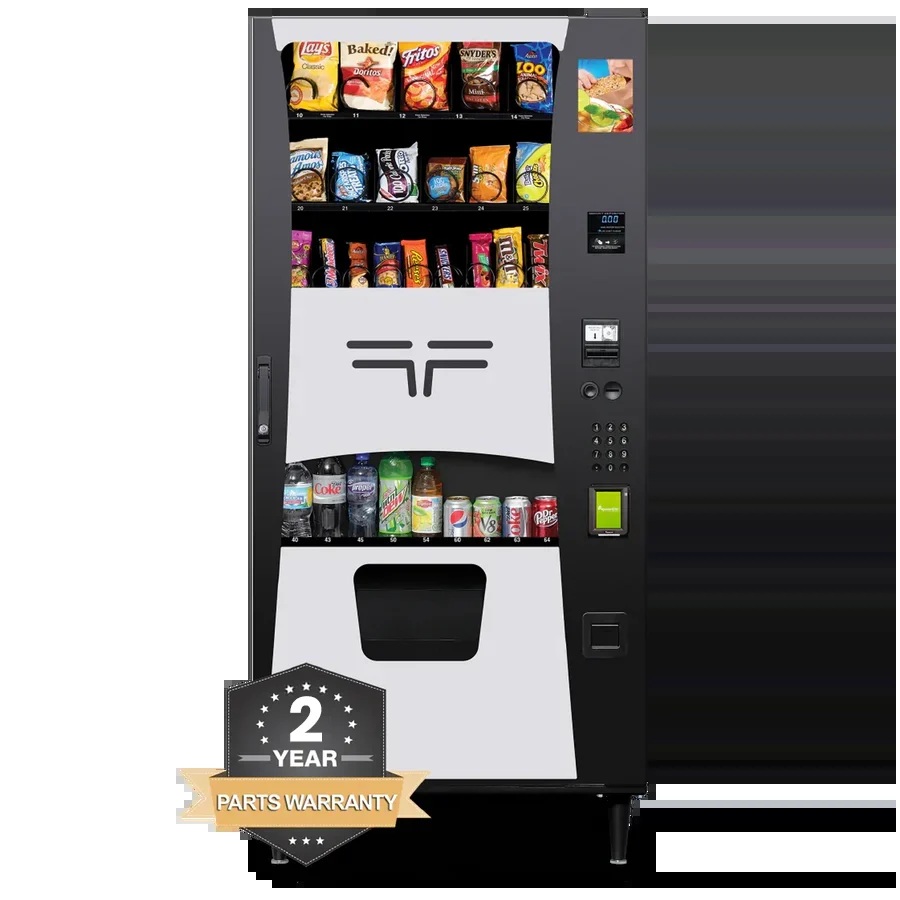
Traditional vending remains part of the business. The Futura combination machine offers 20 snack selections and nine drink selections in one cabinet. Operators still have to decide whether that assortment suits their location, then keep it stocked.
In April 2026, USI introduced Spectra smart coolers ahead of the NAMA Show in Los Angeles. The range uses computer vision to recognize products, build a shopping cart and complete cashless checkout. Customers open a door and choose items; the technology accounts for their purchases. Launch, Core, Pro and Elevate offer different levels of equipment and features.
This is a market with alternatives. Seaga also makes retail and industrial vending equipment, and acquired AMS in 2022. Wittern’s case rests on the combination of its manufacturing experience, software, sales channels and ownership support. A buyer should compare that package with the actual needs of a location.
The family remains involved. Wittern’s 2022 anniversary announcement described third-generation leadership and fourth-generation ownership. Published employee programs include tuition assistance, career development and scholarships. The business has institutional habits alongside its experiments with new kinds of dispensing.
05 / Count the cupboard before buying the cabinet
What does this cost? IDS scopes pricing around machine type, quantity and the equipment or supplies being dispensed. The decision therefore begins with a deployment quote and a ledger: hardware, installation, software, servicing and replenishment on one side; avoidable consumption, missing assets and staff time on the other.
The small model below isolates supply spending. It lets you see how an assumed reduction compares with an assumed monthly operating cost. Every number is editable. None is a Wittern quote or a promised customer result.
What would a better record be worth?
A simple supplies-only model. It excludes financing, tax, labor savings and other costs. Enter a complete setup cost and recurring cost for your own comparison.
TEAL: REMAINING SPEND · YELLOW: ASSUMED AVOIDED SPEND
There are practical conditions. A connected cooler needs connectivity for payments, inventory synchronization and remote monitoring. A dispenser must suit the size and packaging of the product. Someone must replenish it. A permission rule that prevents the right worker getting a needed item will require revision. These are operating decisions that deserve attention before installation.
For a small cupboard with little loss and easy manual oversight, the expense may outrun the benefit. For a busy facility with missing tools, uncertain counts or awkward after-hours access, the calculation can look different. Measure that difference. Start with one supply category, record the baseline and compare the result after deployment.
The same habit applies outside vending. Wittern saw customers needing help to purchase and operate machines, then built businesses around those needs. Its controlled dispensing systems address another obstacle: access without losing the record. The peanut dispenser’s bell announced a transaction. The software leaves one in the ledger, where the next person managing the cupboard can use it.