BREAKING
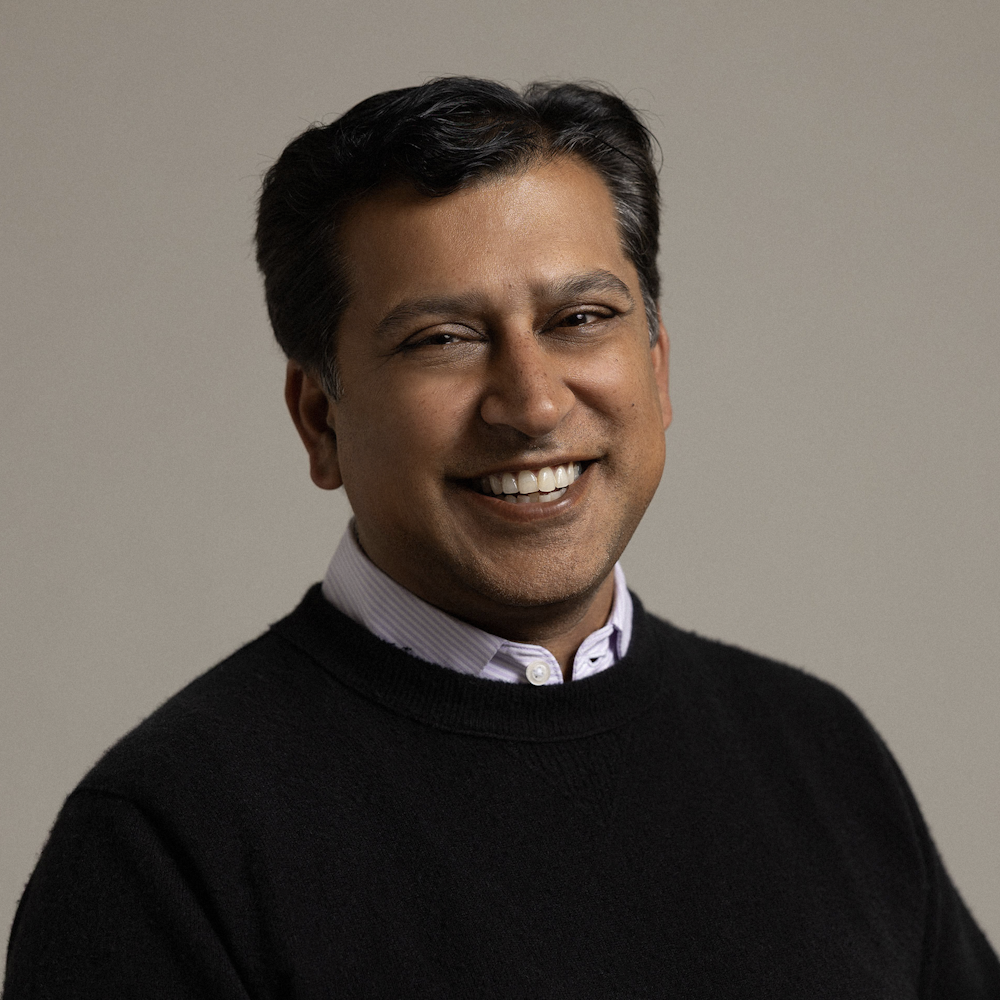
Shishir Mehrotra, CEO of Grammarly
YesPress Profile

Shishir
Mehrotra

"The man who sat on a document for four and a half years - and was right to."

CEO at Grammarly  |  Co-founder, Coda  |  Former VP, YouTube
Founder Operator MIT AI Productivity Team Rituals Enterprise
40M
Grammarly Daily Users
$1.4B
Coda Peak Valuation
4.5
Years Building in Stealth
186M+
Coda Docs Engaged

He spent four and a half years building a product before showing it to the public. Not because he was cautious. Because he was certain.

In December 2024, when Grammarly announced it was acquiring Coda, the headline was about writing software swallowing document software. The real story was simpler: a founder who had spent a decade quietly rebuilding how teams think on paper got handed the keys to a platform used by 40 million people every day.

Shishir Mehrotra is not the kind of person who shows up in profiles because he wants to. He shows up because the things he builds eventually become impossible to ignore. Coda - the all-in-one work operating system he co-founded in 2014 - spread through the Fortune 100 the way all genuinely useful software does: because one person in a company used it, and then everyone else wanted to know what they were doing.

Before Coda, there was YouTube. Mehrotra joined in 2008 and became VP of Product, Engineering, AND UX - a title that almost never belongs to one person, because those three disciplines tend to fight each other. He ran all three for six years through the most consequential growth phase in internet video history. The platform he helped scale now serves over two billion users a month.

He is, in his own words: husband, father, maker, entrepreneur. In that order. This is either a carefully cultivated personal brand statement or an honest confession about where his head actually is. From the evidence of his public writing - 16 shared documents on Coda, including a Wordle habit tracker - it reads as the latter.

Do you have an idea you can't imagine not working on? Do you have a person you can't imagine not working with?
- Shishir Mehrotra on his two criteria for starting a company
Quick Facts
Current Role CEO, Grammarly
Previous Co-founder & CEO, Coda
Before That VP Product, Eng & UX, YouTube
Education MIT
Co-founder Alex DeNeui (CTO)
First VC Backer Vinod Khosla
Twitter @shishirmehrotra

The Long Game

2000-2003
Centrata
Co-founder
Fresh out of MIT, Mehrotra co-founded Centrata with backing from Vinod Khosla - one of Silicon Valley's most celebrated venture capitalists. His first startup established the pattern: find a co-founder you cannot imagine not working with, find an idea you cannot imagine walking away from. The lesson absorbed here would take another 14 years to fully apply.
2003-2008
Microsoft
Product Management
Six years across SQL Server, Windows, and Office - the triple crown of enterprise software. At Microsoft, Mehrotra developed his conviction that the document interface had not fundamentally evolved since its invention. The row of tabs at the top. The blank page with a cursor blinking. Forty years old and frozen. He filed this observation away and kept working.
2008-2014
YouTube / Google
VP of Product, Engineering & UX
The strange job title was the point. Mehrotra took responsibility across all three disciplines at YouTube during its hypergrowth phase - a period when the platform went from interesting to indispensable. Most companies separate product, engineering, and design into warring factions. He ran them as one. The rituals he developed here - structured meetings, documented decisions, asynchronous reviews - became the intellectual foundation of everything that followed.
2014-2024
Coda
Co-founder & CEO
Mehrotra and his MIT collaborator Alex DeNeui spent 4.5 years building before a single user outside the company saw the product. When Coda launched publicly in February 2019, it was not a beta. It was a thesis: that documents, spreadsheets, databases, and applications should be the same thing. By 2021, a $100M Series D valued the company at $1.4 billion. 80% of the Fortune 100 used it. 186 million documents were created. The document had been reinvented.
2024-now
Grammarly
CEO
In December 2024, Grammarly acquired Coda. Rahul Roy-Chowdhury - who had known Shishir since their Google days together - stepped aside as CEO. Mehrotra stepped in. He now leads a platform with 40 million daily active users, combining Grammarly's writing AI with Coda's document infrastructure. The mandate: build the definitive AI-native productivity platform. He has done this sort of thing before.

The Document Has Not Changed in 40 Years

The earliest version of the Microsoft Word document appeared in 1983. The blank white rectangle with the blinking cursor. The toolbar running across the top. The Save icon that still looked like a floppy disk in 2010. For four decades, the document was not updated so much as it was ported - the same interface moved from desktop to browser to cloud.

Mehrotra noticed this at Microsoft. He spent six years inside three of the biggest productivity products ever made and walked out with a single insight: the document is the primitive unit of how organizations think, decide, and remember - and no one had actually reinvented it.

Coda's answer was to make documents programmable. A Coda document could contain a table that behaved like a database. A button that triggered an action. A view that filtered differently for different people. A form that wrote back to the same data that the table was reading from. Not a document and a spreadsheet and an app - just one surface that could be any of them, depending on what the team needed.

The pricing model reflected the philosophy. Coda charges only for "Doc Makers" - the people who create and configure. Viewers are free. This was not generosity; it was a bet that once a team's workflow lived inside a Coda document, the document would spread on its own. The bet paid off. 80% of the Fortune 100 used it. Most of them came in through a single team.

Coda By the Numbers

Before it became part of Grammarly, Coda had grown to become one of the most quietly influential pieces of enterprise software in Silicon Valley.

4.5yr Stealth period
80% Fortune 100 usage
600+ Integrations
$1.4B Peak valuation
Coda's Funders
EARLY STAGE Reid Hoffman
SERIES D Greylock Partners
SERIES D Kleiner Perkins
GROWTH Madrona Venture Group
"Do you have an idea you can't imagine not working on? Do you have a person you can't imagine not working with?"
- On starting a company
"Organizations run on documents, but the document interface has not fundamentally changed in over 40 years."
- The core Coda thesis
"To be the blinking cursor of choice for the next billion makers to collaboratively solve problems for themselves, their teams, and the world."
- Coda's mission statement
"We're excited to announce that Grammarly is acquiring Coda. Here's a look at Coda's next chapter."
- December 2024 announcement
"I've known Shishir since our Google days together many years ago and deeply respect him."
- Rahul Roy-Chowdhury, outgoing Grammarly CEO
"Do you have an idea you can't imagine not working on? Do you have a person you can't imagine not working with?"
- On starting a company
"Organizations run on documents, but the document interface has not fundamentally changed in over 40 years."
- The core Coda thesis
"To be the blinking cursor of choice for the next billion makers to collaboratively solve problems for themselves, their teams, and the world."
- Coda's mission statement
"We're excited to announce that Grammarly is acquiring Coda. Here's a look at Coda's next chapter."
- December 2024 announcement
"I've known Shishir since our Google days together many years ago and deeply respect him."
- Rahul Roy-Chowdhury, outgoing Grammarly CEO

How He Thinks About Work

Mehrotra has become one of Silicon Valley's most-cited thinkers on team rituals and meeting design. His frameworks - all published publicly in Coda documents - have shaped how thousands of teams run their week.

01
The Multi-Threaded Meeting
Most meetings run one thread at a time. Someone speaks. Others wait. Mehrotra's approach runs multiple structured threads simultaneously - using shared documents to let everyone comment, vote, and escalate in parallel. Less talking. More deciding. The framework spread through tech companies because it cuts meeting time roughly in half while increasing the quality of outcomes.
02
Rituals for Hypergrowth
A detailed case study of the rituals YouTube built between 2008 and 2014 as it scaled from a fast-growing video site to a global infrastructure. The core insight: ritual is not ceremony. Ritual is the repeated behavior that encodes a company's values into its calendar. Weekly reviews, monthly retrospectives, quarterly objectives - not as formality, but as the actual mechanism by which a growing team stays coherent.
03
The Dory / Pulse System
A structured approach to decision-making in meetings, where questions are collected asynchronously before the session (Dory) and pulse-checked on priority before discussion begins. Named internally after the fish who keeps asking questions. The system ensures no question gets crowded out by whoever speaks loudest, and no decision gets made without the relevant people being heard.
04
Rituals of Great Teams
A publicly-shared Coda document (and companion book project) synthesizing Mehrotra's observations across Centrata, Microsoft, YouTube, and Coda about what distinguishes teams that compound over time from teams that plateau. The argument is specific: great teams do not work harder, they ritualize better. The cadence of review, reflection, and realignment is the competitive advantage hiding in plain sight.

40 Million People a Day

When the Grammarly acquisition closed in December 2024, Mehrotra inherited something he had never run before: scale. Coda had 50,000 teams. Grammarly has 40 million daily active users. The operational difference between those two numbers is not linear.

The strategic opportunity is. Grammarly knows how people write. Coda knows how teams structure their thinking. Mehrotra's bet is that the combination - writing assistance embedded inside flexible, programmable documents, animated by AI - is the thing that comes after the productivity apps of the 2010s. Not a better Word. Not a smarter Google Doc. Something new.

In June 2024, six months before the acquisition closed, Coda launched Coda Brain: an AI assistant that let teams query their own company's knowledge rather than the internet's knowledge. Ask it who made a decision last quarter and it returns the meeting notes, the Slack thread, and the Coda doc where the decision was documented. It is the kind of tool that is obvious in retrospect and nearly impossible to build without a decade of understanding how teams store information.

Mehrotra does not talk about AI as a trend. He talks about it as a change in the medium. Documents that used to be read are now documents that can read themselves back to you. Decisions that used to be buried in email are now searchable by intent. The work of a team, previously stored in dozens of disconnected tools, can be made legible and queryable. This is the thesis he is building at Grammarly in 2025.

His self-description has not changed since he ran Coda: husband, father, maker, entrepreneur. He still uses Coda to track his Wordle results. He still publishes his frameworks publicly. He still answers the same two questions anyone who wants to start a company has to answer honestly. The scale around him has shifted. The orientation has not.

Latest Move
Dec
'24
Becomes Grammarly CEO
After Grammarly's acquisition of Coda, Mehrotra stepped into the CEO role, replacing co-founder Rahul Roy-Chowdhury who moved to an advisory position.
Before That
Coda Brain Launch - June 2024
An AI enterprise knowledge assistant that queries a company's own documents, decisions, and meeting notes - not the open web. The product that made the Grammarly acquisition make sense.
And Before That
Coda acquires Plato - May 2024
Engineering leadership platform Plato was absorbed into Coda, expanding its enterprise surface area months before the Grammarly deal was announced.

Things Worth Knowing

🎓
He met his Coda co-founder Alex DeNeui at MIT. Their working relationship spans MIT, Microsoft, Google, and Coda - more than 20 years and counting. DeNeui's previous company DocVerse was acquired by Google, making both founders experienced with the M&A side of tech before Coda was even an idea.
⏱️
4.5 years in stealth before Coda's public launch in February 2019. For context: Instagram was acquired by Facebook 18 months after it launched. Mehrotra spent nearly three times that long before he showed Coda to the world. Not building slowly - building precisely.
🎯
His first startup Centrata was backed by Vinod Khosla - one of the most selective and storied venture capitalists in Silicon Valley. Khosla backs companies that bet on fundamental technological shifts. The fact that he backed Mehrotra's first startup in the early 2000s is a data point worth noting.
🎬
At YouTube, Mehrotra held the title VP of Product, Engineering, AND UX simultaneously. These three functions have historically been kept separate to avoid any one person having too much control over a product. YouTube gave him all three. The platform he helped build now serves over two billion users monthly.
🟩
He built and published a public Wordle habit tracker in Coda. This is either a charming detail about a founder who genuinely uses his own product for personal tracking, or a very effective piece of product marketing. Probably both.
💰
Coda's pricing innovation: charges only "Doc Makers" not viewers. A team of 200 where five people configure the documents pays for five seats, not two hundred. This pricing model was designed to remove the barrier to adoption and let the product spread organically through organizations - and it did.

The Network

🤝
Alex DeNeui
Co-founder, Coda CTO - MIT to present
🔗
Rahul Roy-Chowdhury
Former Grammarly CEO - Google to Grammarly
💡
Reid Hoffman
Early Coda investor & LinkedIn founder
🚀
Vinod Khosla
Backed Centrata - Mehrotra's first startup

The Record