The Company That Turned a Dead Battery Into an 80-Year Business
For 79 years Schumacher Electric has sold the same quiet promise - your battery will not leave you stranded. The bet now is that the promise scales from a dead sedan to an electric car.
You have almost certainly held a Schumacher product without knowing whose it was. It is the heavy yellow-and-black box in the corner of a garage, the clamp-and-cable jump starter in a truck's toolbox, the trickle charger clipped to a boat over winter. Schumacher Electric Corporation makes the hardware nobody thinks about until a battery dies - and then, briefly, it is the most important object in the world.
That is a strange kind of business to be in. The product is invisible right up until the moment of crisis, and the entire brand rests on a single question: does it work when you need it? Schumacher has been answering that question since 1947, which makes it older than the interstate highway system it helps keep running.
01 / OriginsThe bookmaker's transformer shop
The origin story is better than the product suggests. Schumacher traces back to Woodward-Schumacher Electric, a transformer manufacturer co-founded in 1947 - reportedly seeded, in part, with a bookmaker's gambling winnings. It was a small industrial outfit making the unglamorous coils of copper and iron that step voltage up and down. Power conversion, in other words, was the business from day one. Everything since has been a variation on that theme.
The figure who turned it into a global name was Don Schumacher. Before he ran the company, he was a Funny Car driver nicknamed "The Shoe," winner of the 1970 U.S. Nationals and, by his own accounting, roughly 70% of some 560 match races. In 1974 he left the track to focus on family and the family business. He grew Schumacher Electric's value roughly tenfold, then used the proceeds to found Don Schumacher Racing in 1998 - a team that would go on to win more NHRA championships than any other in the sport's history.
02 / What it makesA catalog that maps the history of the battery
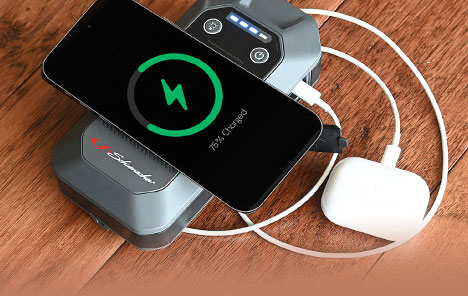
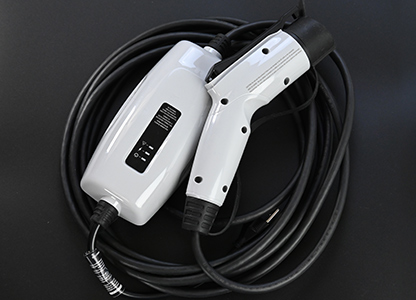
Line up Schumacher's product range and you are looking at a timeline of battery chemistry itself. Flooded lead-acid, AGM, gel, lithium - the company builds a charger for each, plus the maintainers that keep a battery topped up between uses, the testers that tell you whether it is dying, and the jump starters that revive it when it does. Around that core sit power converters, custom transformers, portable lithium power packs, solar maintainers, rechargeable work lights and, most recently, electric-vehicle chargers.
Chargers & Maintainers
Automatic smart chargers and trickle maintainers across every common battery chemistry.
Jump Starters
Consumer and DSR ProSeries units, AGM and lithium, some with built-in inverters.
Testers & Diagnostics
Digital load testers and tools like the SDT1 advanced diagnostic device.
EV Chargers
Level 2 charging equipment for home and commercial use.
Portable & Lithium Power
Power packs, stations and emergency kits for off-grid and backup.
Solar & Work Lights
Solar maintainers plus rechargeable LED work lights with magnetic bases.
It is a wide catalog for a company most people could not name, and that breadth is the strategy. A retailer stocking Schumacher can fill an entire aisle - charger, starter, tester, light - from one supplier, in one distinctive livery. For the buyer, the brand becomes shorthand for "the automotive power stuff."
03 / Who buys itThree customers, one aisle
Schumacher sells to three audiences at once. There are consumers and DIYers - the car, boat, RV and powersports owners who want a charger that will not fry a battery. There are professionals - the mechanics and service shops that need diagnostic-grade testers and heavy-duty starters that survive daily abuse. And there are the retailers and distributors in between, plus OEM customers who buy custom transformers by the reel.
That mix is unusual. Most hardware companies pick a lane: cheap-and-consumer or premium-and-professional. Schumacher runs both from the same brand, using the ProSeries name to signal the shop-grade end without abandoning the shelf at the mass retailer. The through-line is the promise - it works when you need it - which travels equally well to a first-time car owner and a fleet garage.
04 / The moatTrust is the product; the hardware just delivers it
The problem Schumacher solves is deceptively narrow: safely moving electrons into a battery without overcharging, undercharging or starting a fire. Get it wrong and you ruin a $200 battery, or worse. That failure mode is exactly why the category rewards incumbents. A shopper who once had a cheap charger cook a battery does not give that brand a second chance. Reputation compounds; a bad review is close to permanent.
So the real asset is not any single circuit board - it is 79 years of the product working. Competitors like NOCO, Battery Tender and CTEK compete on smarts and design, and the shelf at any auto-parts store is genuinely crowded. Schumacher's answer is durability of both product and name, plus a second, quieter edge: it owns its supply chain.
Schumacher runs a vertically integrated, company-owned supply chain with plants in Belgium, India, Mexico and Vietnam. When global logistics seized up in the early 2020s, owning the factories - rather than renting capacity from contract manufacturers - meant more control over what actually shipped. Vertical integration is unfashionable and expensive, and in a components business it can be the difference between a full aisle and an empty one.
05 / The moveEverything under one Texas roof
In 2021 Schumacher left the Chicago suburbs, where it had operated for decades, and relocated its headquarters to Fort Worth. The new campus is a statement of how the company thinks: roughly 30,000 square feet of open-plan office attached to a 300,000-square-foot warehouse, with an in-house R&D lab and an actual testing garage where engineers can crank real vehicles. Design, distribution and testing sit close enough to argue in the same hallway.
The logic was partly geographic - Foreign Trade Zone status near DFW Airport suits an automotive-aftermarket importer - and partly about talent and a one-distribution-center model that Texas made cheaper to run. The move also drew a line under the founder era; Don Schumacher, who had built the company into a global brand, died in 2023 at 79.
06 / The betFrom a 12-volt battery to an electric car
Ownership has changed hands twice in recent years. Lincolnshire Management invested in 2020; in April 2022 it sold Schumacher to private investment firm Ripple Industries, which framed the deal around three growth vectors: EV charging, battery maintenance and e-commerce. That last one matters - a brand built on retail aisles is learning to sell direct online, where the crowded shelf becomes a crowded search page.
The EV bet is the most interesting because it is not a pivot so much as a restatement. An EV charger does the same job Schumacher has done since 1947 - move power into a battery, safely, and know when to stop - only the battery is now bolted to a car and measured in kilowatt-hours. Whether decades of 12-volt expertise translates into a high-voltage, fast-moving market against dedicated EV startups is the open question. But it is rare for an incumbent to already own the exact skill a new category demands.
07 / MilestonesSeven decades, in brief
A transformer shop is born
Woodward-Schumacher Electric is co-founded, rooting the company in power conversion.
Don Schumacher takes the reins
The Funny Car champion leaves racing to grow the family business.
Racing returns
Profits fund Don Schumacher Racing, which becomes the winningest team in NHRA history.
First PE investment
Lincolnshire Management invests; Mickey Leech joins as president and later CEO.
Move to Fort Worth
HQ relocates to a Texas campus with warehouse, R&D lab and testing garage.
New owner, EV focus
Ripple Industries acquires the company, targeting EV charging and e-commerce.
End of an era
Don Schumacher, who built the global brand, dies at 79.
08 / Where it fitsThe quiet giant of the aisle
Schumacher sits in a category that gets no glamour and never goes away. Cars, boats, RVs, powersports vehicles and now EVs all run on batteries, and batteries all eventually need charging, testing or reviving. It is a mature, unsexy, recession-durable market - which is precisely why private equity keeps circling it. The upside is not a moonshot; it is a nine-figure business with an 80-year head start and a product people buy at their worst moment.
The interesting tension is between heritage and reinvention. The lead-acid charger business is stable and defensible. The lithium, solar, portable-power and EV lines are where growth has to come from, against nimbler competitors and a shift to selling online. Schumacher's argument is that the underlying skill - power conversion done safely and reliably - is exactly the same as it was in 1947. Only the battery keeps changing.
Explore Schumacher Electric
Frequently Asked
What does Schumacher Electric make?
Battery chargers, maintainers, jump starters, battery testers, EV chargers, power converters, portable and lithium power, solar chargers, work lights and custom transformers.
Where is it headquartered?
Fort Worth, Texas, after relocating from the Chicago area in 2021. It also runs facilities in Belgium, India, Mexico and Vietnam.
When was it founded?
1947, originally as Woodward-Schumacher Electric, a transformer manufacturer.
Who owns Schumacher Electric?
Private investment firm Ripple Industries, which acquired the company from Lincolnshire Management in April 2022.
Who are its main competitors?
NOCO (Genius), Battery Tender, CTEK and other automotive battery-charger and jump-starter brands.