Somewhere in your house there is a wall, and somewhere behind that wall there is a wooden stud, and for most of human history the only way to find it was to knock with a knuckle and listen for the spot that sounded less hollow. It was a guessing game with a drill at the end of it. In 1980, a small company in Campbell, California, ended the game. Zircon Corporation put the first handheld electronic stud finder on the shelf, called it the StudSensor, and quietly invented a product category that now lives in tens of millions of junk drawers.
Zircon does not make software, and it did not raise a venture round. It makes electronic hand tools - the kind you hold against a wall and trust to tell you something you cannot see. Stud finders. Wall scanners. Metal detectors. Water-leak alarms. Circuit-breaker finders. The company celebrated its 50th anniversary in 2025, which makes it older than most of the technology brands that share its Silicon Valley zip code. And it got there by solving problems so ordinary that most people never stop to notice they were problems at all.
"We make tools, not gadgets - as reliable as a hammer, but with a technological advantage."John Stauss, CEO
01 — The OriginA garage, a patent, and a string of no's
The idea did not start at Zircon. It started with Robert Franklin, an engineer at Beckman Instruments, who worked out in the 1970s that you could find a stud by measuring how the density of the wall changed. Wood behind drywall shifts the wall's dielectric constant, and a capacitor plate can feel that shift. He patented the device in 1977 and did the sensible thing: he took it to the big tool companies. Not one was interested.
So the invention sat. What unstuck it was proximity. Franklin met Chuck Stauss, who ran a consumer-electronics outfit called Zircon, and the two discovered they were neighbors. Stauss saw what the tool executives had missed, and Zircon agreed to build and sell the thing. The company had spent its first five years making LED watches; the stud finder became the product that defined it.

02 — The BreakHow a stud finder ended up in every hardware store
Inventing a category is one thing; getting a skeptical retail world to stock a battery-powered tool nobody had heard of is another. Zircon's opening came from a side door. It already supplied Sears with computer games, and Sears owned Craftsman, the tool line that dominated American garages. Once Sears agreed to carry the StudSensor, the product had a foothold. From there, Chuck's son John Stauss pushed it into the hardware channel by pointing at the Sears numbers until the buyers said yes.
There was a second, quieter advantage. The device was genuinely hard to build. Capacitive sensing demands tight tolerances, so Zircon manufactured the StudSensor itself to hold quality - and, conveniently, that difficulty kept casual copycats out. Zircon remained the sole producer of internal-capacitor stud finders until the original patent expired in 1998.
03 — The ProductsA tool for every thing you cannot see
Five decades on, the lineup has grown well past that first sensor. The through-line is constant: point a Zircon tool at a surface and it reports on what is hidden behind it. The tools split into a good/better/best range so a first-time homeowner and a working electrician can each find their price.
StudSensor
The original. Locates the edges of wood and metal studs behind walls - the tool that started it all.
MultiScanner
Finds stud center and edges, metal, and live AC wiring in a single multi-mode pass.
SuperScan
Target Control technology finds the wood and ignores the plumbing; DeepScan mode doubles the depth.
MetalliScanner
Locates rebar in concrete, nails, screws, and buried pipe - metal the eye cannot reach.
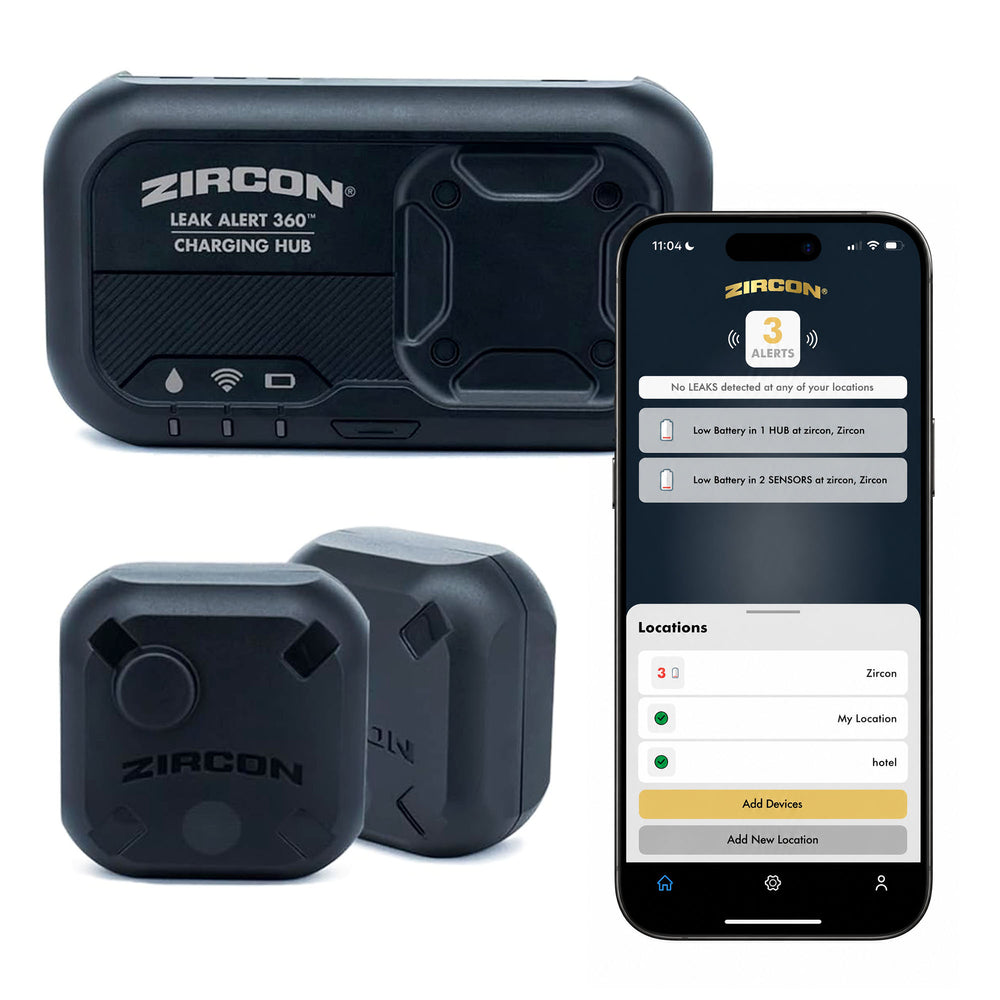
Leak Alert 360
A battery-powered alarm that sounds at the first sign of water near appliances and plumbing.
Breaker ID
Identifies which breaker controls an outlet - no more trial-and-error trips to the panel.
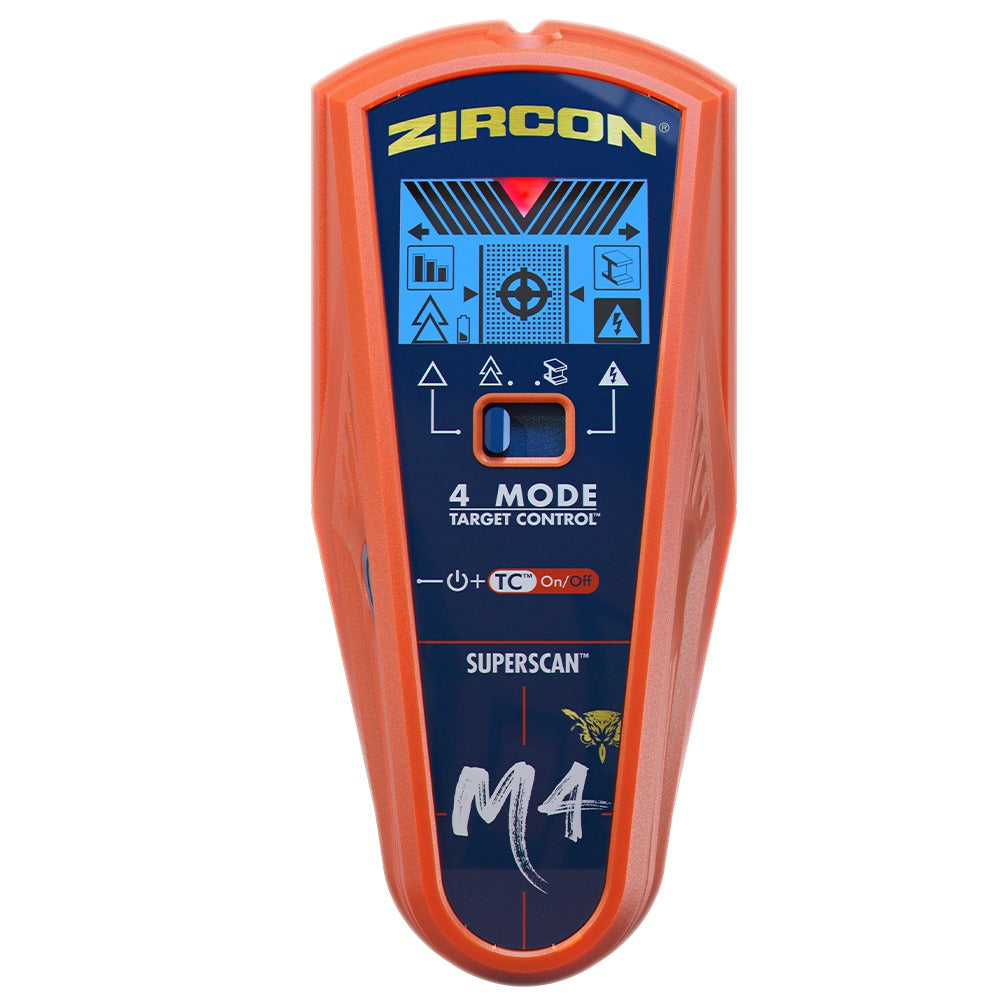
The engineering that separates a Zircon from a magnet on a stick lives in that SuperScan line. Target Control technology analyzes a complex signal while a filter cancels out low-density, non-metallic targets - the plastic pipe, the wiring, the tubing that fool cheaper tools into false positives. DeepScan mode roughly doubles the scanning depth for walls hiding under extra drywall or paneling. It is, in effect, a very small, very specialized computer that Zircon designs the chips for in-house.
The original StudSensor sits in IEEE Spectrum's Consumer Electronics Hall of Fame - alongside gadgets that cost a hundred times as much and did a fraction as much work.Consumer Electronics Hall of Fame
04 — The CustomersTwo very different people, one wall
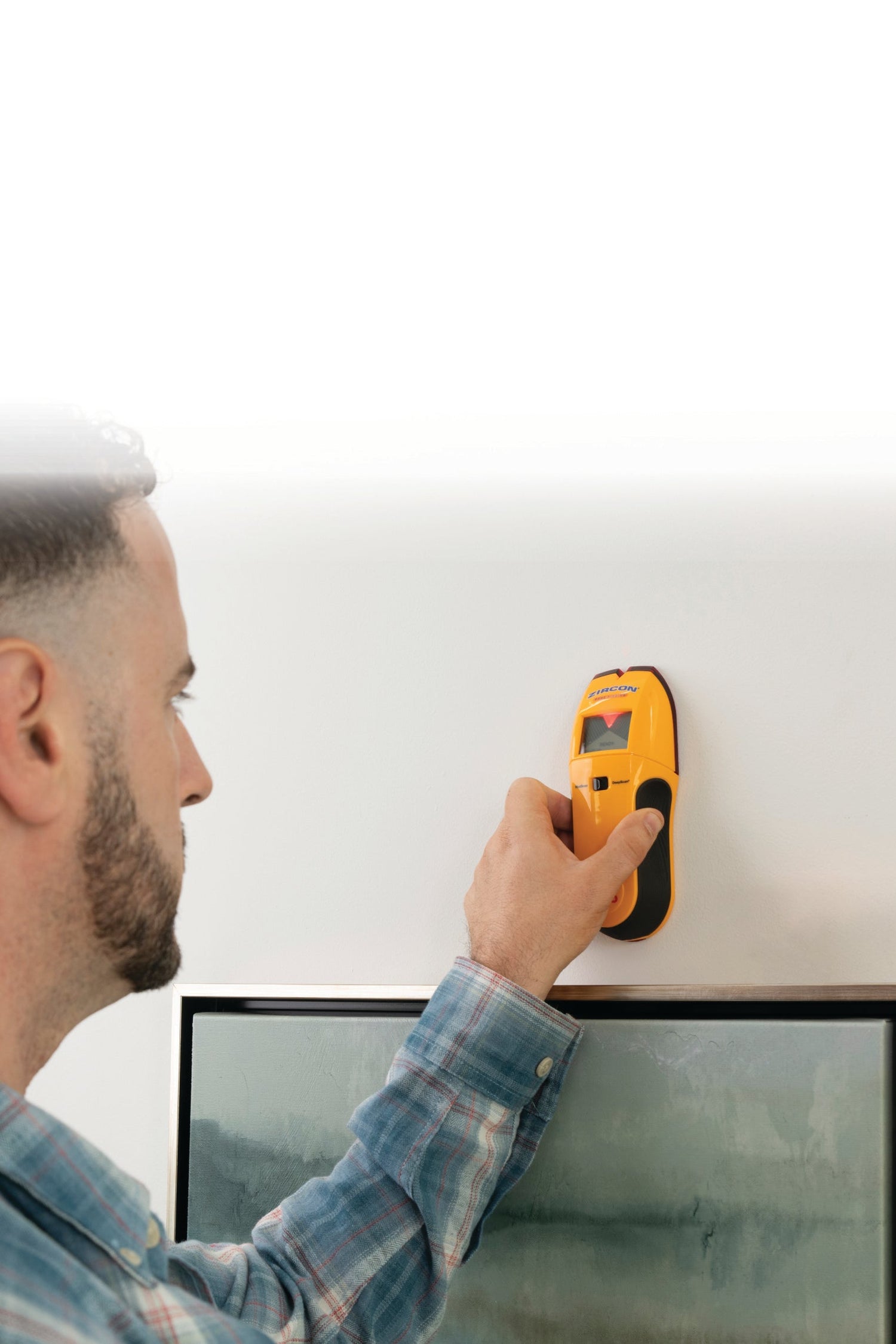
Zircon sells to two audiences that rarely overlap. There is the professional - the contractor, electrician, or remodeler who needs a reading to be right the first time because a mistake means a hole, a callback, or a nicked water line. And there is the DIY homeowner mounting a television, hanging a shelf, or child-proofing a bookcase, who buys one tool and expects it to work without a manual. The good/better/best ladder is how one company keeps both happy.
05 — The MoatWhat happens when your patent runs out
The most interesting stretch of Zircon's history is the part after 1998, when the founding patent expired and the field opened. A company that had spent eighteen years as the only game in town suddenly had rivals - Franklin Sensors, Bosch, the big cordless brands, and a long tail of low-cost imports. Zircon's response was not a wall of lawyers. It was more engineering: new sensor modes, better filtering, deeper scans, and a steady drip of patents that now numbers more than eighty.
Where the tools sell — share of attention by channel (illustrative)
That mix is its own story. Zircon has outlived three retail eras - the Sears-and-Craftsman age, the big-box age of Home Depot and Lowe's, and the Amazon age - and it is now leaning into a fourth by selling directly to customers through its own Shopify storefront. In 2020 the SuperScan Mx family even launched exclusively on Home Depot's website, a sign of how comfortable a 45-year-old tool company had become with digital retail.
06 — The BusinessA public company built on $25 tools
In February 2025, Zircon's parent, ZRCN Inc., began trading on the OTCQX Best Market under the ticker ZRCN. It is a modest, family-rooted micro-cap rather than a headline IPO, and that is rather the point: this is a durable business, not a growth-at-all-costs one. The model is unglamorous and sturdy - design a tool, protect it with patents, manufacture for quality, and sell units across every channel that will carry them, from a $20 water alarm to an advanced pro scanner.
Fifty years, eight moments
- '75Founded. Zircon starts in Silicon Valley making LED watches.
- '77The patent. Robert Franklin patents the capacitive stud-detection device.
- '80StudSensor ships. The first handheld electronic stud finder creates a category.
- '98Patent expires. After 18 years as the sole producer, rivals arrive.
- '06New CEO. John Stauss, with the company since 1984, takes the top job.
- '20Target Control. The next-gen SuperScan Kx family debuts new sensor tech.
- '2550 & public. Golden anniversary; ZRCN Inc. lists on OTCQX.
- '26New COO. Jackie Zou joins as Chief Operating Officer.
07 — The LessonWhy the boring stuff wins
There is a founder lesson buried in the drywall here, and it is not about sensors. It is that a company can build fifty years of demand by owning a small, real, repeatable moment of anxiety - the second before you drill - and removing it. Zircon never had to convince anyone the problem existed. Everyone who has hung a heavy mirror already knew. The work was making the solution feel as ordinary and trustworthy as the hammer sitting next to it in the toolbox.
The caution attached to that lesson is just as real. This is hardware, with thin-margin manufacturing, big-box buyers who hold the leverage, and a flood of cheap imitators the moment a patent lapses. Zircon's defense has been to keep out-engineering the copies and to design the chips nobody else can easily source. Copy the strategy without the R&D and you are just another magnet on a stick.
Fifty years after a rejected garage invention found a neighbor willing to build it, the pitch has not changed. Point it at the wall. Trust what it says. Drill once.