The revealing sentence in Sajin Nair’s public record is not about a promotion, an award or a triumphant graph. It is about failure. Looking back on the campaigns he had designed and executed, Nair described “many with damp squib responses and few outstanding results.” In a profession fond of laundering every experiment into a case study, the phrase lands with the small, honest pop of its subject.
He wrote it while announcing his second self-published book in 2022. By then, Nair had spent nearly two decades moving through the commercial machinery of technology companies: business development, demand generation, social media, inside sales, product marketing and leadership. He had seen what a funnel looks like from both sides of the departmental border. More importantly, he had noticed how elegant the funnel can appear while real buying behavior remains stubbornly untidy.
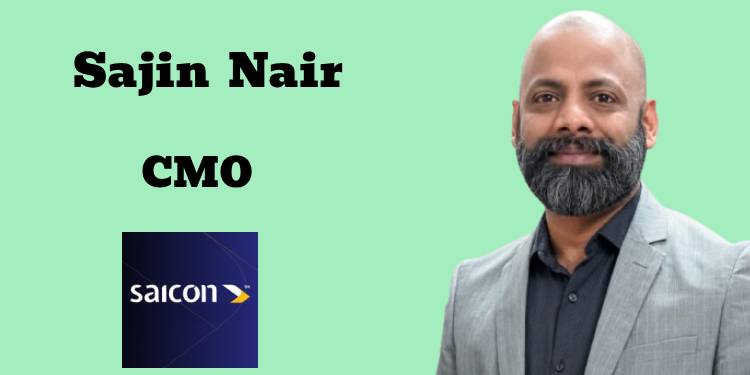
That tension now defines him. Nair is Chief Marketing Officer at Saicon, the US-headquartered technology services and staffing company founded in 1998. He is also the voice behind “Anti-Marketing with Sajin Nair,” a YouTube channel with roughly 149,000 subscribers, 244 videos and more than 703,000 views as of early September 2026. One job asks him to build a marketing institution. The other invites him to question many of the habits such institutions inherit.
A career built at the handoff
Nair’s route into marketing did not begin with a grand theory of brand. In his own telling, it began at entry level in demand generation for a mid-sized IT services company. His early résumé reads like an education in the practical anxieties of selling technology: business-development posts at Nihilent Technologies and SIP Technologies, an account role at Adaequare, and a senior executive stint at Jeevan Technologies. By 2008, he was at Cybernet-SlashSupport, working in business development for four years.
Then the center of gravity shifted. At Aspire Systems, his remit expanded across demand generation, social media and senior marketing management. At Origin Learning, he joined marketing and inside sales in the same title, a useful clue to the problem he would later make central. Marketing generates interest. Sales decides whether that interest has arrived at a useful moment. Put the teams too far apart and each acquires its own flattering version of reality.
Visible motion→Buyer signal
Changed condition→Revenue conversation
Useful timing
His later roles sharpened that cross-functional view. He served as Director of Marketing at Synergita, then Associate Vice President of Marketing at Innominds from 2024 to 2026. His farewell to Innominds named the range plainly: marketing, account-based marketing, inside sales, sales enablement, campaigns, events and growth initiatives. He also wrote that his daughter joined him on his last day. It is a quiet detail, and an unusually warm one in the antiseptic genre of the corporate departure post.
Twenty-two years near the revenue line
Role progression, not a quantitative performance measure
The funnel’s in-house critic
Anti-Marketing is a theatrical name for a fairly sober complaint. Funnels imply orderly descent. Buyers do not oblige. They appear, disappear, consult peers, gather information without announcing themselves and enter a sales conversation after a chain of steps the dashboard may never see. Nair’s language instead favors signals: observable changes suggesting that an account’s circumstances, interest or timing have shifted.
The target of his criticism is not marketing itself. It is the comforting substitution of countable output for commercial consequence. In a reflection on four years of industry recognition, Nair thanked the organizers and then argued that much of what the industry celebrates has little to do with revenue. He listed the traps with the efficiency of a man clearing a cluttered desk. Campaigns can work and still fail the business. Content can perform and still not convert. A full funnel can still leave the pipeline motionless.
A market can ignore volume. It cannot buy what it cannot understand.
That thought connects his anti-funnel work to his writing about category design. In a 2025 essay, he argued that category leaders do more than tell a better story inside a settled market. They establish the beliefs through which buyers understand the market itself. The distinction sounds philosophical until one remembers how often technology-services websites blur together: the same clouds, the same transformations, the same earnest promises to unlock value. Volume is a poor cure for sameness.
Nair’s remedy is clarity before amplification. What does the company believe has changed? Which old assumption no longer holds? What condition makes action sensible now? A positioning statement should not merely polish a capability list. It should help a buyer recognize a problem, a choice and a reason to move.
Two books and a camera
Before Anti-Marketing became a channel identity, Nair was already turning operating experience into instruction. His first book, published in 2021, focused on influencer marketing with webinars and carried a wonderfully specific promise in its title: generating 15,000-plus B2B leads. His second, Winning the Battle of B2B Demand Generation, arrived in 2022 as a 188-page guide for start-ups and growth-stage companies.
Influencer Marketing with Webinars
A compact playbook about co-hosted webinars as a route to B2B reach and customer acquisition.
Winning the Battle of B2B Demand Generation
A broader guide to designing, developing and executing acquisition campaigns, written from both successful and disappointing experiments.
The books belong to an earlier vocabulary of leads and funnels, while the channel now promises an “Anti-Funnel Operating System.” The change is revealing, not embarrassing. Practitioners are allowed to update the map after walking the terrain. Nair’s public archive shows the revision happening in daylight: 2017 articles about shifting buying processes; books about lead generation; later videos and essays about category belief, timing and the limitations of attribution.
Video gives that revision a different tempo. A book freezes a thesis. A channel lets its owner argue, test, interview and correct course hundreds of times. Nair’s channel description is combative about MQLs, attribution and vanity content, but the underlying practice is cumulative. More than 200 videos amount to a working notebook with an audience attached.
Now the theory has an office
Saicon appointed Nair in June 2026 with a mandate to strengthen market presence, build differentiated positioning and develop marketing capability for the company’s next phase. The assignment suits his recurring subject: translating complicated technology into a story another human can repeat. Saicon spans consulting, digital engineering, enterprise applications, data, AI, managed services and talent solutions. Its breadth is commercially useful and narratively unruly.
Soon after his arrival, that story acquired another chapter when Saicon announced the acquisition of Pragmatyc, a Nagpur-founded specialist in enterprise AI, AIoT, data and intelligent automation. Nair framed the combination in terms of applied AI and connected operations, joining Pragmatyc’s concentrated technical depth with Saicon’s scale, client base and delivery centers. Acquisitions create capability faster than they create coherence. Marketing gets the less glamorous job of making the new whole intelligible.
His public comment on joining Saicon was notably free of personal coronation. He praised the company’s long-built capabilities and committed to working with leadership and business teams to tell its story clearly. The verbs matter: work, tell, create. A CMO can issue a narrative from above, but buyers will eventually compare it with the sales conversation, the delivery experience and the product truth. Coherence is collaborative or cosmetic.
There is also a geographic translation folded into the role. Nair works from Hyderabad; Saicon is headquartered in Overland Park, Kansas, and serves US enterprise customers through a wider network of operations and delivery centers. The message has to travel between time zones, business lines and professional dialects. Engineers speak in capabilities, sellers in objections, executives in priorities, and customers in the language of whatever is keeping them late at work. A good market narrative does not flatten those voices. It gives them a sentence they can share without each having to surrender what they know.
The experiment is no longer whether Nair can critique a funnel on camera. It is whether Anti-Marketing can survive a Monday meeting.
That is what makes this chapter worth watching. The internet rewards clean frameworks. A global services business supplies edge cases by the hour. Sales needs usable opportunities, delivery teams need credible promises, acquired companies need room for their own identity, and executives need evidence that the story is changing outcomes. The theory will be tested by calendars, handoffs and clients.
Nair has one advantage: he does not present himself as someone who has only known outstanding results. The damp squibs remain in the record. So do the years spent on the sales side, the books written before the framework changed, and the hundreds of videos that make his evolving argument inspectable. It is less tidy than a victory lap and more useful than one.
A tired funnel will not be revived by renaming every stage. It may be replaced by better attention: to what buyers are doing, to what a category teaches them to believe, and to whether marketing has produced movement or merely evidence of motion. Nair has built an audience by making that case. At Saicon, he now has the harder and more interesting task of making it operational.