The useful thing to know about RPA is that it did not begin with a manifesto. It began with an account conflict. In 1986, the merger that created Omnicom put the Los Angeles office of Needham Harper, which served Honda, into the same corporate family as Volkswagen's agency. Cars are jealous clients. One of them had to go.
Gerry Rubin and Larry Postaer, who ran the office, chose a third route. They bought the operation, kept its people together and held on to Honda. Rubin Postaer and Associates was less a startup than a carefully executed escape. The new firm's founding proposition was wonderfully concrete: the people who understood the client should continue doing the work.
That proposition has aged better than the long name, now compressed to RPA. The company is a privately held, full-service agency based in Santa Monica, with regional teams in Atlanta, Chicago, Dallas, Denver and Philadelphia. It puts strategy, creative, customer experience, analytics, media, technology and production inside the same operation. Its clients are organizations with awkward machinery behind their brands: car dealers, insurance agents, regulated utilities, healthcare systems, rental marketplaces and franchise networks. RPA is not selling an ad so much as a way to keep the parts from disagreeing.
The breakup that explained the marriage
Longevity can sound like a soft virtue until it disappears. In 2013, Honda split its business among agencies. RPA retained Honda creative but lost Acura creative and the media planning and buying assignment. The agency cut roughly 200 people, close to one-fifth of its workforce. The first thing to fail was not the creative relationship. It was the assumption that a long relationship could protect every part of the account.
Four years later, the pendulum swung back. Honda returned media planning and buying to RPA, an account then covering about $600 million in annual ad spending. The company expected to hire around 100 people. Honda's Tom Peyton gave the reason plainly: a landscape shaped by content, social platforms and data favored a consolidated structure, and an agency placing the content it created could be more effective.
The work gets more coherent when the people making the message can see where it travels, what it costs and what happened next.
That reversal sharpened RPA's difference. During the years when creative agencies shed their media departments, RPA kept media inside. Independence let it make that unfashionable choice without asking a holding company which sibling agency should receive the revenue. The model does not guarantee good work. It simply removes an alibi: one team owns the thinking, the placement and the measurement.
One account, four decisive turns
The product is a system, not a slogan
RPA's public work makes the integrated pitch easier to see. For Apartments.com, the agency identified an emotional mismatch: finding a new home is exciting, while searching for one is miserable. The solution was Brad Bellflower, Jeff Goldblum's grandiose inventor of the "Apartminternet." CoStar launched the character with a reported $100 million campaign in 2015. As Apartments.com moved into the lead, the positioning changed from "Change your apartment, change the world" to the more useful "The place to find a place." RPA says annual revenue increased 1,300 percent after launch; the platform won a 2025 Gold Effie for sustained success.
The transferable move is not hiring Jeff Goldblum, although it rarely hurts. It is letting the claim mature with the business. A challenger needs surprise. A leader needs to turn that attention into a habit.
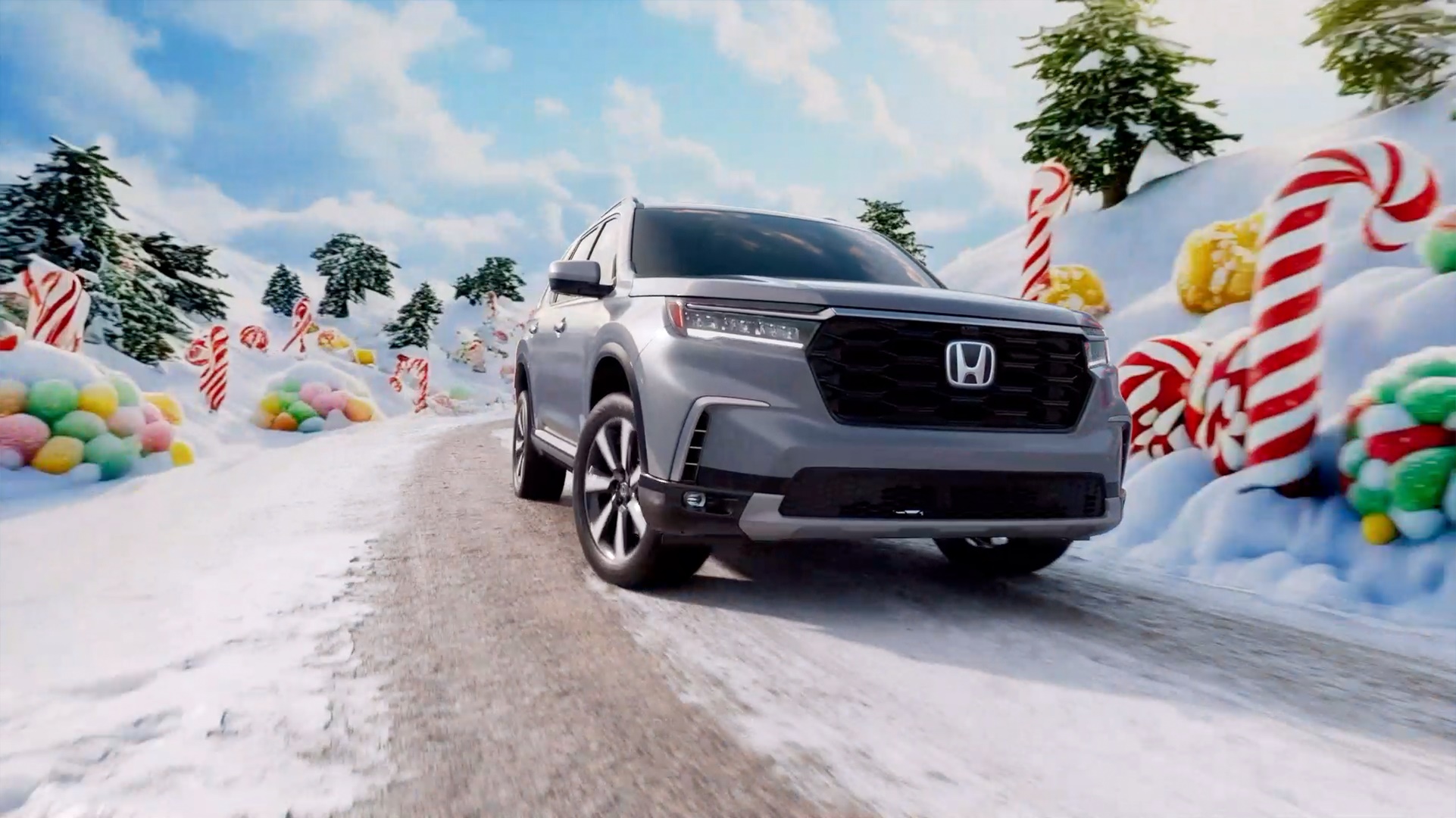
On Honda retail, the problem was more prosaic and arguably more instructive. National brands need hundreds of local variations, changing offers and fresh vehicle footage. Producing every version as a handcrafted object is slow and expensive. RPA built modular creative that could swap footage and offers, connected templates to APIs, and automated repetitive resizing and trafficking. The agency does not disclose the savings, but it describes the system as lowering cost while allowing faster market responses and larger testing libraries.
Separate the repeatable layer from the judgment layer. Template sizes, feeds and versioning. Protect concept, strategy and the decisions that actually require a person.
The same product-first instinct appears in Project Courage. RPA conceived Honda Shogo, a child-sized electric vehicle that lets young hospital patients drive through corridors. Honda Racing engineers made it accessible to children using IVs or with mobility constraints. Sixty vehicles were planned for hospitals around the country, and the work earned a 2024 One Show Bronze Pencil. It is advertising that has to work as an object before it works as a story.
Independence has a price
RPA's business model is familiar: clients pay for strategic planning, creative development, production, technology, analytics, media planning and media buying. The distinction is ownership. There is no public parent routing assignments among agencies. That gives RPA room to retrain teams, invest across disciplines and put senior leaders close to clients. It also concentrates risk. A holding company can absorb a large account loss across a portfolio. An independent feels it in the building.
This model works best for marketers willing to share business context, agree on outcomes and let one partner see the entire system. It works less well when procurement splits every discipline into a separate contest, when a client wants a narrow project vendor, or when scale buying across dozens of countries matters more than local integration. Continuity is powerful only if both sides keep investing in it. Otherwise, history becomes overhead.
RPA's culture is built to reinforce the long game. Its phrase is "Respect and Results." The internal 6F program, named for the hexadecimal code #FFFFFF - a blank white page - gives teams six-week sprints to make something new. RPA Up develops mid-career leaders. RPA Represent organizes inclusion work; Be Well supports health; RPA Cares handles employee-led philanthropy. The programs matter because the pitch depends on people remembering a client's business long enough to become useful.
A new driver, the same road
Leadership is now testing whether continuity can survive succession. In 2025, longtime executive Brett Bender became president and chief operating officer after 32 years at RPA. Later that year, chief media officer Jim Helberg succeeded Pete Imwalle as CEO. The pairing says something about where the agency thinks the market is going: operational memory beside media strategy.
There are new accounts to prove the idea beyond Honda. Resorts World Las Vegas appointed RPA its integrated agency of record for media and creative. Yuengling selected the firm to build a unified platform as the brewery expands into new states. RPA answered with "It's a Yuengling Thing," a master brand idea intended to stretch across products without sanding away nearly two centuries of family-owned identity.
The agency's real achievement is not that one client stayed forever. Honda did not, at least not with every assignment. The achievement is that RPA learned what the rupture meant. Creative, media and data are not valuable because an organization chart puts them in adjacent boxes. They are valuable when the same people can follow a decision from an insight, through an ad, into the market and back again.
That is the forty-year handshake: not sentiment, not loyalty for its own sake, and certainly not immunity from a review. It is accumulated context, tested under pressure. In a business forever introducing the next new thing, RPA has made a stubborn case for remembering what happened last time.