There is a deceptively simple question hiding inside every advertising agency: who owns the good idea? The copywriter who found the line? The strategist who found the problem? The client who paid the invoice? At Zehnder Communications, the answer acquired a second meaning in 2023. The company itself came to belong, through an employee stock ownership plan, to the people doing the work.
That is an unusual ending to an agency story, so it helps to begin at the beginning. In 1996, Jeff Zehnder opened shop in New Orleans with one client and a team of three. His premise was almost stubbornly unfashionable: strategy and creative should not be kept in separate rooms. The clever part had to solve a business problem. The business part had to leave enough room for something clever.
Thirty years later, the rooms have multiplied. Zehnder has offices in New Orleans, Baton Rouge, Nashville and Rosemary Beach, Florida; more than 60 employees; and a public tally of 400-plus clients served. The menu covers brand strategy, creative, media, public relations, social, websites, performance marketing, analytics, AI and production. “Full service” is the industry label. The more useful description is a company built to reduce handoffs.
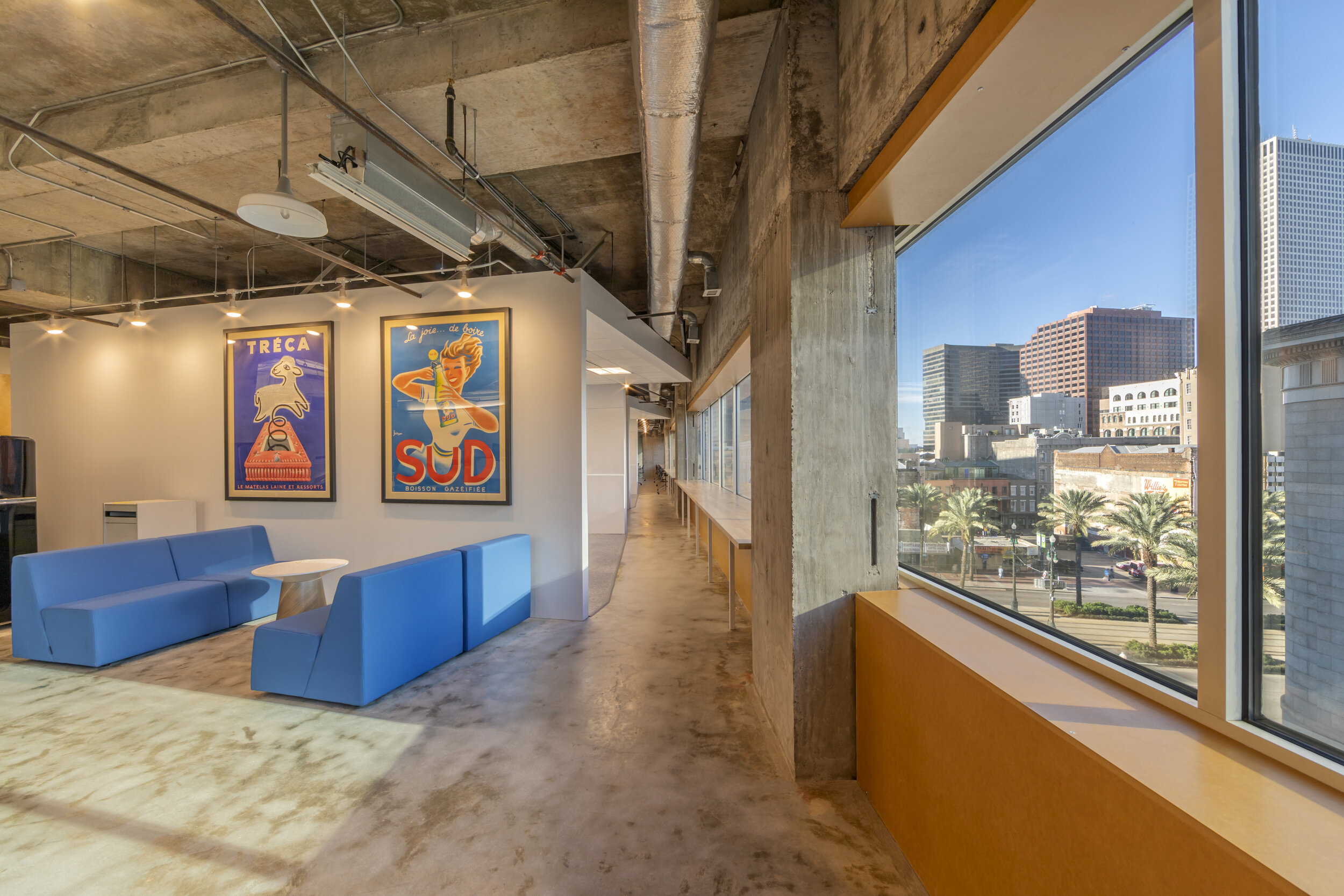
The first thing that failed was geography
In August 2005, Hurricane Katrina supplied a brutal test of that design. Zehnder's first concern was locating employees and their families. The next was restoring enough of the business to give them jobs to return to. Staff reassembled operations in Baton Rouge, and the emergency outpost became a permanent office. Redundancy, usually a dull word from an IT manual, became a cultural memory.
The lesson was not that every disruption is an opportunity. Some disruptions are simply awful. The lesson was narrower and more useful: when the system breaks, study the break. Katrina exposed geographic concentration. The scattered digital landscape later exposed a different weakness - clients could see activity everywhere but understanding nowhere. So, in 2013, Zehnder invested in a dedicated research and analytics group. At the time, founder Jeff Zehnder described the logic without perfume: clients wanted to know where the money went and what it did.
“It's either evolve or die. We have to be very aggressive in the evolution.”Jeff Zehnder, 2014
This is the thread running through the company. A backup office answered a continuity problem. Analytics answered an accountability problem. In 2025, Research & Analytics became Analytics and AI, with custom tools meant to identify patterns, personalize messages and improve decisions. A year later, the company launched Spelunker Mountain, a separate studio for quick-turn photography, 4K interviews, drone footage, motion graphics and virtual tours. Neither move makes much sense as fashion. Both make sense as missing links in a workflow.

The work begins where the brochure stops working
Consider Origin Bank. Fraud education traditionally arrives as an email telling customers to be careful - correct, forgettable and usually read too late. Zehnder and Origin built a web simulator that uses realistic phishing messages and AI-generated voice prompts. Customers can make decisions, receive feedback and rehearse a response before a real scammer calls. In its first 90 days, the tool reached more than 7,000 customers and was credited with avoiding more than $350,000 in potential losses.
The transferable idea is not “add AI.” It is to replace advice with rehearsal. A safety program, onboarding process or complicated service can all be redesigned around a safe first attempt. AI is valuable here because it makes the simulation believable and scalable; it is not the headline pasted on after the fact.
Tourism poses the opposite problem. Nobody needs to be warned that a Florida beach exists. Walton County Tourism needed visitors to know which beach destination they were actually visiting, then to consider it outside the summer crush. Zehnder's long-running assignment, dating to 2012, joined consumer research, identity, media, web, social, influencers and on-the-ground activations. Reported South Walton brand awareness rose 67 percent. Shoulder-season occupancy grew even through COVID restrictions.
The same pattern appears in healthcare. Amedisys had a website full of important information that was hard to navigate, dense with technical language and poorly suited to mobile visitors and people with disabilities. Zehnder reorganized the service journey, rewrote the language, built responsive foundations and added a “Not Sure Where to Start” guide. More than 37,000 people used that guide. The useful craft was not decoration. It was making a complicated choice feel possible.
Succession without an exit sign
By 2023, Zehnder faced a problem that no campaign could solve: what happens after the founder? The conventional options were familiar - sell to a larger network, sell to management, or keep delaying the decision. The company chose an ESOP. Employees earn stock over time as a retirement benefit; management did not vanish, but the future value of the firm began flowing toward the people building it.
Ownership changed; the org chart did not.
The practical promise is alignment over time: the strategist, developer and media buyer serving a client are also building an asset they share.
Two numbers make the choice less sentimental. Zehnder reports average employee tenure of eight years, while many client relationships stretch beyond a decade. In an industry organized around pitches, churn and reinvention, continuity becomes a capability. People remember why a decision was made. Clients do not have to re-teach their business every spring.
In 2025, Henry Chassaignac became CEO and Jeff Zehnder moved to chairman. Chassaignac had first joined the agency as a senior copywriter in 1999, left to run a boutique, then returned in 2010 to open Nashville. That is less a handoff between strangers than a long institutional sentence with a new subject.
Small enough to answer, large enough to reach
Zehnder occupies the awkward middle of the market. A specialist shop can be sharper in one discipline. A global holding company can place more flags on a map. Zehnder's pitch is that one senior, integrated team can keep strategy, creative, media, technology and measurement attached to one problem. Its 2026 membership in AMIN Worldwide adds a network of more than 70 independent agencies across 30 countries without turning Zehnder into a branch office.
That model suits organizations with tangled problems: a bank that needs customer education and software; a health provider that needs brand language and accessible navigation; a destination that needs research, content, media and local diplomacy. It is less convincing for a company seeking one isolated commodity at the lowest price, or for a client unwilling to share data, access decision-makers or measure outcomes. Integration needs something to integrate around.
The copyable part is the sequence, not the service list.
Start with the failure people actually experience. Put research next to the people making the thing. Build a usable intervention. Agree on the behavioral measure before launch. Then give the team enough continuity to learn from the result.
Advertising agencies like to say they are only as good as their last idea. Zehnder's history suggests a better standard: an agency is only as durable as the system that produces the next one. The hurricane, the dashboard, the ownership plan and the fraud simulator all belong to the same story. Something stopped working. The company redesigned the arrangement around it.