Ronen Lavi offered a fellow founder a modest piece of advice: try doing fewer things. The other founder had three products in the pipeline. Lavi thought one would be sensible. They settled on two. Even focus, it seems, occasionally has to negotiate.
The exchange, with CatAmmon CEO Gilad Lando in March 2026, is a useful place to meet Navina’s co-founder. Lavi had arrived at a point in his career where he could discuss persistence without pretending it was simple. He had built inside a large institution, left it, and helped build a company. He understood the appeal of keeping an option open. He also understood that options eventually send an invoice.
His advice carries an interesting complication. Lavi believes entrepreneurs need to retain some naivety. Knowing a field deeply can make its obstacles so visible that attempting anything begins to look unreasonable. The trick, in his account, is to learn enough to act intelligently while preserving enough belief to act at all.
For someone whose first career lasted 24 years, that is an unusually generous view of the beginner.
A second career, with homework
Lavi spent those years in Israeli military intelligence, including Unit 8200, and in the Prime Minister’s Office. He established and led an AI laboratory that worked with technology companies and academic institutions on making complicated information useful. In 2018, he received Israel’s National Security Award. His eventual co-founder, Shay Perera, received the award too.
There is a temptation to treat a background like that as a complete explanation for what follows. It supplies technical credibility, a network, a certain tolerance for difficult assignments. But a long first career can also leave a person extremely competent at operating inside a world whose assumptions everyone already shares. Leaving requires discovering how many of those assumptions need translating.
Lavi retired as a lieutenant colonel. The problem he described from intelligence work was abundance: information arrived in quantities and forms that exceeded what people could absorb. Gathering more had become easier than deciding what mattered. His work involved systems intended to help decision-makers make use of that flood.
The distinction matters to his biography. His experience concerned the awkward meeting between a machine’s capacity and a person’s attention. A machine can keep collecting long after a person has run out of afternoon.
With Perera, Lavi founded Navina in 2018. Lavi became CEO; Perera became CTO. The partnership brought a shared working history into an unfamiliar commercial setting. They knew each other’s capabilities before they had to discover what customers would buy.
The company before the company
The search for a business took the pair through petrochemical plants, oil exploration, European energy companies, and agriculture. They were examining problems before committing to an industry. Grove Ventures helped open doors during that process. Entrepreneurship, in this version, involved rather more investigation than the customary drawing on a napkin.
It is an appealing detail because it makes the eventual choice look like a choice. A founder with a technical background can start with a capability and spend years explaining why somebody ought to want it. Visiting unfamiliar businesses creates the possibility of hearing an answer that ruins the original plan. It also gives a prospective customer the opportunity to be unimpressed before anyone has printed the stationery.
Lavi later acknowledged the limits of the founders’ experience in a letter about Navina’s financing. Outsiders, they had to listen closely to the people who understood the daily work. He described bringing that expertise into the company itself. The practical admission underneath is straightforward: knowing how to build software does not settle what software should do.
That is a useful way to read his move into entrepreneurship. The award and the laboratory belong to the first chapter. The second requires customers who owe him no allegiance, colleagues with different expertise, and a reason for people to return tomorrow.
The small matter of being used
When Lavi talks about deploying technology, he returns to working with users early and understanding their routines. The emphasis is less theatrical than a demonstration. It asks what happens after the impressive meeting, when someone opens the software during an ordinary working day and has something else to finish.
In a 2024 conversation with entrepreneur and podcast host Eric Thrailkill, he described building a decision-support system around human-machine interaction and trust. His concise verdict was: “It’s way more than technology.”
“It’s way more than technology.”
Ronen Lavi, 2024
There is plenty of room for engineering inside that sentence. There is also room for explanation, habits, skepticism, and the small indignities of a poorly placed button. A person deciding whether to use a tool is judging the interruption as well as the output. However elaborate the machinery, its invitation has to make sense.
Lavi’s account of building from the bottom up gives the customer a part in the invention. Working alongside users can expose an assumption while it is still inexpensive to abandon. That makes listening an operating method. It also makes it harder to confuse an enthusiastic presentation with a useful product.
Money arrives. The work stays.
In their November 2022 announcement, Lavi and Perera celebrated a $22 million Series B. They reported a tenfold revenue increase that year and a team that had more than doubled. Their message also thanked colleagues for direct conversations, agility, and friendship. The vocabulary is revealing: growth described through the people doing the growing.
Those details give scale a texture that funding totals alone lack. More colleagues mean more handoffs, more explanations, and more opportunities for two people to leave the same meeting with different ideas. A founder can approve a hiring plan quickly. Creating shared understanding takes longer.
On March 25, 2025, Navina announced a $55 million Series C led by Growth Equity at Goldman Sachs Alternatives. Existing investors Vertex Ventures Israel, Grove Ventures, and ALIVE participated. The announcement put total funding at $100 million.
A financing round buys possibilities, and each possibility asks for a decision. Which people should join? Which work should move faster? Which tempting project should wait? The numbers make a clean graphic. Their consequences are distributed across calendars.
By the beginning of 2026, Lavi was reporting that Navina had doubled annual recurring revenue in 2025 for the third consecutive year. He also said the company planned to repeat that in 2026. The first statement describes a result he reported; the second describes an intention. Keeping the two distinct is a small courtesy to the future.
Three products enter. Two leave.
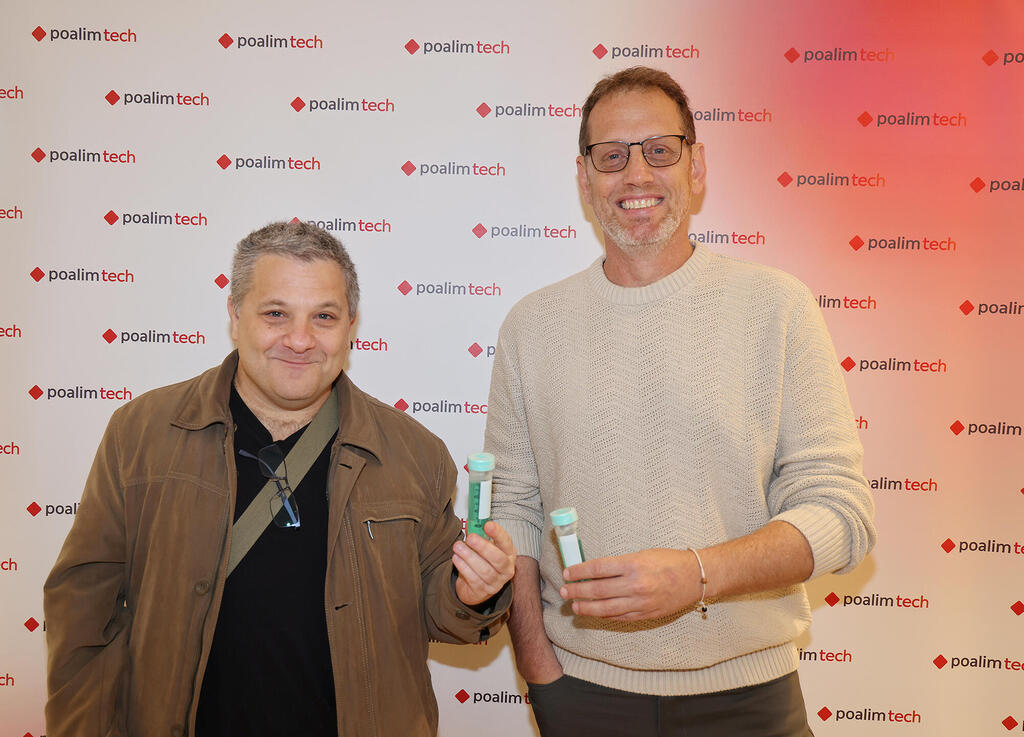
Against that background, the conversation with Lando has a pleasing lack of ceremony. Lavi’s suggestion was specific: “It’s better for a small startup company to focus on one product.” Lando accepted the argument, then negotiated the number.
There is something reassuring about advice that survives being discussed. Founders are repeatedly asked for rules, preferably short ones that fit beside a headshot. Actual companies supply exceptions. A useful exchange allows room for the other person’s constraints, including constraints the adviser has only just encountered.
Lando’s business involved materials and chemistry, territory Lavi acknowledged was different from his own. The encounter let him revisit a familiar entrepreneurial question from an unfamiliar direction. How long should flexibility last? At what point does keeping several paths alive prevent a company from moving decisively along any of them?
The arithmetic of their compromise is funny because it is recognizable. Most people would like focus to involve somebody else surrendering an option. Three becomes two, and progress has occurred, even if the adviser’s ideal remains one.
Success needs a little suspicion
Lavi’s account of difficulty includes an uncomfortable episode after strong growth and a financing round. Market conditions changed, and expected growth failed to arrive on schedule. The timing unsettled him. He and Perera held themselves to demanding standards; apparent success offered no exemption from doubt.
His lesson was to preserve humility even when the business looked healthy on paper. Optimism still mattered. So did a measure of unease. The two attitudes can coexist, though they make an awkward pair at a celebration.
This helps explain why his public advice includes both commitment and changing assumptions. In an earlier founder interview, he urged openness to change and continual questioning. Holding a purpose steady leaves plenty of room to reconsider how to reach it. Otherwise every operational habit acquires the dignity of a founding principle, and suddenly changing a meeting feels like betraying the mission.
His ambition remains tied to usefulness: building AI that people can trust and work with, and a company able to keep doing that at greater scale. There is a human demand inside that ambition. The founder has to remain curious about work he no longer performs personally and decisions he can no longer make alone.
Lavi’s second career began with accumulated expertise and an admission that there was much to learn. Years later, his advice still leaves room for the beginner who believes something difficult might be possible. Keep learning. Choose where to commit. And if the discussion starts with three products, getting down to two may be a respectable afternoon’s work.
Continue the conversation
More from Lavi, his co-founder, and the people building alongside them.