Every Monday, somewhere in enterprise software, a sales representative opens the CRM and performs a small act of administrative optimism. The fields must be ready for the forecast meeting. Perhaps the deal moved; perhaps it did not. Either way, a box will acquire an answer. By breakfast, the dashboard looks informed. By lunch, the manager is still trying to work out what the buyer actually said.
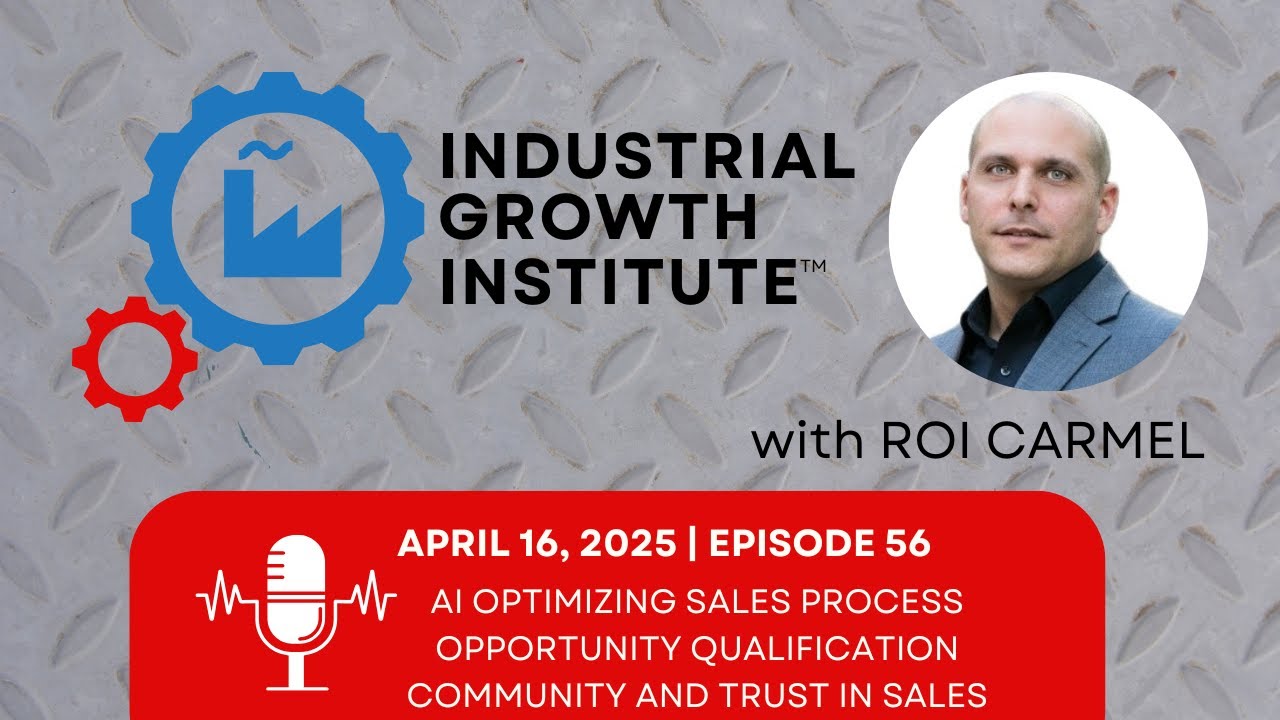
Roi Carmel has spent enough time around those meetings to distrust the neatness. His career has moved through HP Software, Perfecto Mobile and Cybereason, across product, strategy, marketing and go-to-market leadership. Now, as CEO and co-founder of Spotlight.ai, he is working on the gap between the sales process as designed and the sale as lived. The first is a sequence of stages and acronyms. The second is a noisy human drama conducted across video calls, email threads, Slack messages and pauses nobody remembered to write down.
Spotlight's proposition begins with a mildly impolite question: what if the CRM record is not the evidence, but merely somebody's account of the evidence? Carmel's answer is software that listens to buyer interactions, breaks them into structured signals, maps them to a company's sales playbook and carries the relevant facts into the tools where people already work. The ambition is autonomous deal execution. The immediate relief is simpler. A manager can discuss what to do next without spending most of the meeting reconstructing what happened last.
“One of the main problems we create for ourselves as organizations is telling our reps, ‘You need to have the fields ready for your Monday meeting.’ Because even if they don't have an update, something will get filled.”Roi Carmel, on the incentive behind unreliable CRM data
A résumé built around the messy middle
Carmel did not arrive at sales technology from the usual motivational-speaker route. He came through enterprise software, where a product can be technically excellent and still fail in the long, political corridor between demo and purchase order. At HP Software, he held executive positions spanning strategy, business development, DevOps and automated quality. At Perfecto Mobile, he worked across corporate strategy and marketing before the company was acquired by Perforce. In 2018, Cybereason appointed him chief strategy and product officer; his remit later included marketing as the cybersecurity company expanded its portfolio.
Those jobs trained attention on the junctions: product and market, strategy and execution, seller and buyer. Spotlight, founded in 2021, is a company made almost entirely of junctions. It connects conversation data to methodology, methodology to action, and action back to evidence. Carmel describes a loop of listening, understanding, deciding and acting. The verbs sound plain. Making them reliable inside a large enterprise sale is anything but.
This loop reflects a lesson that product people often learn late: the user's working day is not waiting to be improved by another tab. Spotlight is designed to operate inside Salesforce, Slack and email. It can ingest activity from conversation and enablement systems, but the salesperson is not expected to make a daily pilgrimage to a separate dashboard. Adoption, in this philosophy, is partly an architectural decision.
Forty million small answers
The fashionable way to apply a language model is to ask it a large question. Is this contact a champion? Is the deal healthy? Will it close? Carmel's preferred method is to dismantle the question. Did the contact describe a personal win? Have they shared internal information? Did they provide access to the economic buyer? Each observation is small enough to trace back to a real interaction. Spotlight says its knowledge graph contains more than 40 million atomic signals, combined to produce answers that can show their working.
A large conclusion is assembled from granular observations. The number matters less than the discipline: ask smaller questions, preserve provenance, then compute the answer.
There is an appealing modesty to this machinery. It does not ask the model to become a mystical sales oracle. It asks the system to notice, categorize and connect. In a demonstration, evidence captured automatically is visually distinguished from information entered by a representative. The color difference becomes a management tool. A manual entry is not rejected; it is recognized as a claim worth discussing. The conversation moves from “is the field complete?” to “what makes us believe it?”
The same structured record can generate practical objects. After discovery, Spotlight can assemble a business value assessment, a follow-up deck or a handoff document. Carmel estimates that a business value assessment that once consumed 10 to 20 hours can be produced in a fraction of that time. A rep is spared the ritual of finding last quarter's deck, changing most of the logos and hoping the old customer's name did not survive on slide 17.
Leave the room to the humans
For someone building autonomous sales software, Carmel is notably insistent on the buyer's humanity. As long as there is a human buyer, he has argued, there is a role for a human representative. His forecast is not an empty office in which agents negotiate with agents while the revenue team takes up ceramics. It is a change in job description. Sellers, leaders and RevOps teams move from executing every task to orchestrating systems that execute many tasks around them.
The boundary is important. Software can remember every stated use case, compare stage velocity with past deals and notice that a high-influence stakeholder arrived with negative sentiment. A person can sense the politics of the meeting, earn confidence and decide when the script deserves to be ignored. Carmel lists trust, empathy and organizational navigation among the work humans do well. The machine keeps the receipts; the seller reads the room.
“The future is a true partnership between AI and humans.”Roi Carmel on the autonomous go-to-market team
That division owes something to his life outside software. Carmel is a former judo teacher and an archer. In a long 2025 conversation, he connected archery with mental toughness, practice and resilience. The comparison suits enterprise sales. The archer cannot negotiate with the wind, and the seller cannot control an acquisition, a budget freeze or a new executive arriving halfway through a deal. Both can improve the preparation, inspect the miss and return to the line without dressing chance as certainty.
His earlier military service also shaped his public biography. Carmel served as an officer and special operations commander and received a Medal of Honor from the State of Israel. Colleagues quoted on his professional profile describe him as determined, customer-focused and people-oriented. The combination is visible in the operating cadence he described in 2026: 30 to 40 percent of his time spent directly with customers, even as Spotlight works with large enterprise sales organizations.
Start with the bottleneck
Carmel's most portable idea has little to do with sales. When every vendor is offering an AI transformation, begin inside the workflow. Find the recurring bottleneck. Ask which decision is poorly informed, which activity steals human attention and which evidence disappears before it reaches the system. Only then choose the machinery.
For Spotlight, the bottleneck was never a shortage of dashboards. It was the fidelity of the data underneath them. Enterprise selling produces more conversation than any manager can absorb and less structured truth than any forecast deserves. Required fields helped create tidy databases and resentful sales teams. Generative AI added eloquent summaries, but a summary is not necessarily a qualification decision. Carmel's knowledge graph is an attempt to join language with a playbook precise enough to act.
The aspiration is larger than better inspection. Spotlight wants its system to identify risks, recommend the next move, update the record, create the asset and execute routine work across the deal. Carmel calls the destination autonomous deal execution. He is careful about the route. Complex decisions require context; context requires structured evidence; evidence must remain traceable to something a buyer did or said. Autonomy arrives by earning trust one small answer at a time.
There is a useful irony here. The more capable the automation becomes, the more Carmel talks about giving people back the work that looks least like software: relationships, empathy, face-to-face selling. The CRM will still contain fields. Monday will still come. But if his thesis holds, the rep may enter the meeting without a Sunday-night homework session, and the manager may finally have enough evidence to discuss the future instead of inventing the past.