NBC wanted a custom contract. Roger Patterson was prepared to let it walk. By 2021, Later had attracted customers whose names could dress up almost any sales presentation, but its co-founder kept returning to the people who would never appear on a Fortune list. A famous customer was welcome to use the software. Rewriting the business around that customer was another proposition.
There is something pleasingly awkward about this scene. Founders are supposed to collect recognizable logos, then show them to anyone who might supply money or applause. Patterson was describing the freedom to disappoint one. Later was for small businesses. If a large one wanted exceptions, it could find them elsewhere. The company had chosen its customer, and the customer did not automatically get to choose a different company.
That decision is a useful way into Patterson’s life in technology. He has spent years making things easier for people running their own businesses, while trying to preserve enough independence to run his own.
A costly introduction to independence
His first experiments were smaller still: crafts sold at a farmer’s market when he was a child. The adult route passed through corporate software, including Nortel and Newbridge Networks. After four years in cubicles at large technology employers, he wanted a different working life. He joined a startup shortly before the dot-com bubble burst in 2000. It failed, and he described the experience as financially punishing.
The sequence matters because Patterson did not arrive at entrepreneurship with only the attractive half of the picture. He had experienced both the cubicle and the collapsed venture. He went on to start companies anyway. His advice to aspiring founders included a compact instruction: “Just start.” Coming from someone who had already paid for an unsuccessful start, the words carry a little more weight.
His technical work ranged across broadband systems, mobile streaming, and data extraction. He co-founded Metalogix Software and founded Datacomb Data Services, which supplied business intelligence and data analysis to web retailers. A later venture explored multiplayer games tied to real-world locations. Social media scheduling came after a career spent considering the machinery beneath other people’s activities.
He studied computer science and mathematics at the University of Victoria and earned an MBA from Queen’s. That combination helps explain the range of his working life: designing software, finding customers, teaching would-be founders, and eventually managing a company whose product lived inside other people’s marketing routines.
A room before a company
In 2012, Patterson helped establish Launch Academy in Vancouver. It gave technology entrepreneurs a place to work around other entrepreneurs. The apparently ordinary act of putting people in the same room would become part of Later’s history. Patterson, Ian MacKinnon, Cindy Chen, and Matt Smith came together through that startup community.
A hackathon in late 2013 produced the beginning of an Instagram scheduling tool. It was called Latergramme, a name that made its intended purpose reasonably hard to miss. The original project grew while the founders were still occupied with other ventures. The eventual company would date its founding to 2014.
MacKinnon brought the scheduling idea. Patterson’s account of the early period describes customers arriving before the founders made the business their main occupation. In March 2015, they committed full-time and hired their first employee. The experiment had begun demanding a more permanent arrangement.
Then, in April 2016, Latergramme shortened its name to Later. Instagram preferred other companies to avoid “gram” in their brands. The founders also wanted room to serve visual marketing beyond one network. A community member had suggested the simpler name. Their announcement, signed by Matt, Roger, Ian, and Cindy, recalled that the hackathon project had begun without plans to become a company.
There is a modest pleasure in that origin. The useful thing arrived before the grand declaration. People wanted help with a recurring task; the founders kept working on it. Eventually, the name needed to catch up with the possibilities.
- 2012Launch Academy begins
- 2014Latergramme launches
- 2016A shorter name: Later
- 2022The Mavrck combination
Selected milestones, rather than a measure of time between them.
The rules needed debugging, too
Patterson’s engineering instincts also found work inside the company. During his leadership, Later used a transparent salary system and declined to negotiate individual starting salaries. The intended principle was that equivalent work should receive equivalent pay. A talented negotiator should not receive a private bonus simply for being a talented negotiator.
Advancement proved harder to formalize. The company tried promotion scorecards, then discovered that the first version favored years of experience too heavily. People developing quickly could be disadvantaged. Employees and managers instead agreed on measurable criteria, evaluated every six months. Patterson described the revision himself. The system had needed correcting, and he was willing to say so.
Meetings produced a smaller but telling example. Remote colleagues could see a town-hall presentation yet miss the conversations happening around it in the room. An employee suggested that the presenter join from a private room too. A different arrangement gave the distant audience a more equal experience. Sometimes organizational design requires moving one person and a laptop.
“If you’re a maker, then practice talking to people.”
Roger Patterson, on learning to be an entrepreneur
He also had to learn from people younger than himself. Patterson identified as a Gen Xer running a business closely involved with Instagram and TikTok. One content marketing leader had built an audience through her own blog and social accounts. Her firsthand understanding of creators was useful to senior leadership, whatever the difference in years on their résumés.
Later made room for that exchange through staff presentations, desk swaps, and activities that crossed departmental boundaries. Patterson recalled learning about caring for succulents during one employee presentation. It is an agreeable detail: a software founder with an international customer base, briefly receiving instruction in keeping a small plant alive.
His argument was practical. People at different ages knew different things, and customers were not all the same age either. A company selling help to business owners needed both commercial experience and familiarity with the platforms those owners used. The seating plan could either help those forms of knowledge meet or keep them politely apart.
When the small-business bet got bigger
The business grew while maintaining that attention to smaller customers. In November 2021, Later announced revenue growth of 1,135% over the period measured for Deloitte’s technology rankings. It placed 19th on the Canadian Technology Fast 50 and 119th on the North American Fast 500. Patterson credited the team’s work giving smaller businesses tools and education to compete with larger enterprises.
Revenue growth reported for the Deloitte ranking period.
The product had also moved beyond arranging posts on a calendar. Linkin.bio helped connect social content to destinations where customers could take action. That made the next question increasingly commercial: what did attention actually produce for the person doing the work?
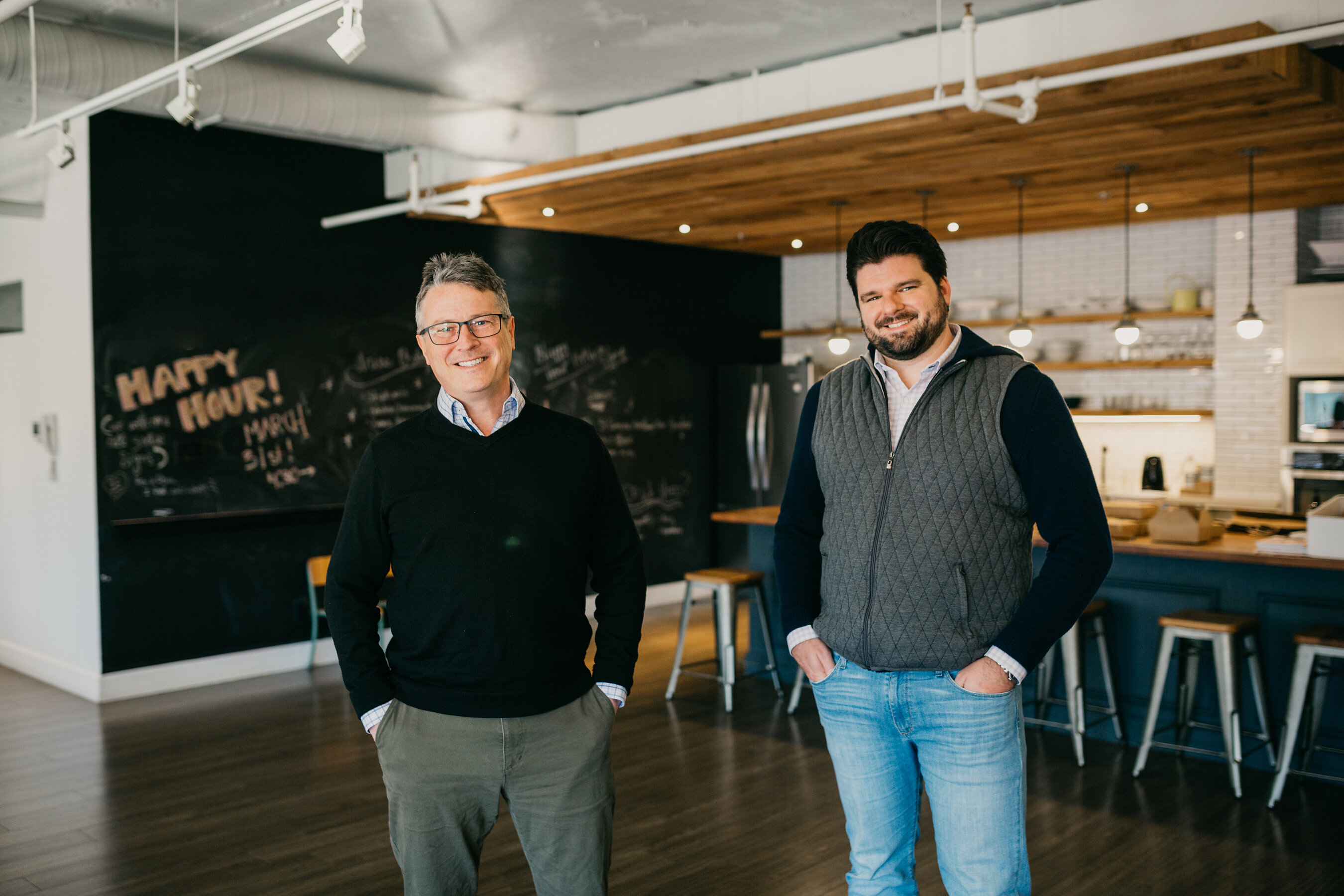
In April 2022, Later joined Mavrck, an influencer marketing business serving enterprise brands. The combination connected Later’s small-business and creator audience with a company working on the brand side of creator partnerships. Patterson was assigned the Later business-unit presidency and a seat on the board.
By January 2024, the businesses had united under the Later name, with Lyle Stevens named CEO in that announcement. Patterson’s CEO years at the original Later ran from 2014 through 2023. His subsequent board role belongs to a different phase of the story, as the company he helped establish became part of a broader operation.
A creator with too many job titles
Patterson’s interest in creators grew from a problem he recognized personally. Starting his first business had required a software engineer to learn marketing, sales, and a collection of other jobs. Being able to hire specialists eventually brought relief. Until then, the founder had to supply an entire cast.
Writing about generative AI in 2023, he approached it through that workload. He saw an opportunity for creative entrepreneurs to handle routine business tasks before they could afford employees. Drafting material, exploring ideas, or organizing the administrative parts of a venture could become less expensive. The attraction was the extra room this might give somebody to create and sell.
He also warned that relying too heavily on those tools could produce bland work or repeat falsehoods. His optimism came with a demand for judgment. A creator still needed a purpose, an audience, and the ability to decide whether the output deserved to leave the screen. More available assistance would not remove the decisions.
The next person at the starting line
Alongside building companies, Patterson has taught entrepreneurship. He designed courses and workshops for postgraduate students, including teaching associated with Queen’s, Waterloo, UBC, and the University of Toronto. Creative Destruction Lab lists him as an associate in Vancouver’s Compute stream, with board roles at Later and Launch Academy. His mentoring biography emphasizes founders who listen and act on feedback.
Away from that work, his interests include board games, game design, screenplay writing, and disc golf. The Gulf Islands figure among his favored destinations. Asked about a guilty pleasure, he supplied whisky and promptly declined the guilt. It is a small declaration of independence, consistent with someone who has spent much of his working life arranging to make his own decisions.
His early advice paired making things with learning to talk to people. That remains a fitting description of the work: build something, let somebody use it, hear what happens. In Patterson’s case, the conversation has sometimes produced a company. At other times, a better rule. And occasionally, when a very recognizable customer wanted the wrong arrangement, a perfectly serviceable no.